
Search results for "Real world examples" in Home Design Ideas

 The Boutique Real Estate Group
You've seen the world, tasted its finest flavors, beheld its proudest splendors. Wanderlust romanced and beauty stayed you. EXPERIENCE THE INTERACTIVE FILM.
An Iconic, World-Class Destination
Neighbor to the Ritz Carlton and newly built Montage, you're at home with a standard of living consistent with the world's finest resorts.
Whether in its days as a private retreat for A-list celebrities or as a home to its discerning designer, Hale Ali'i has always been a generous host. Within the Kapalua resort, your complimentary shuttle drives you and your guests to local restaurants, shops, beaches, and hiking trails. Five-star restaurants, shopping, and world-famous spas call this resort community home. One of America's best surf spots is minutes north while "America's best beach" (Conde Nast Traveler) is a short walk south. The quiet, white sand beach of Oneloa Bay is a single step from your backyard just past the plumeria tree.
Inspired Hawaiian Living
Tastefully decorated and furnished by world-renowned designer Mary Philpotts, this Hawaiian plantation revival residence accommodates a wide range of tastes – from traditional formal to contemporary casual. Home to a wide range of the world's most coveted woods, luxury finishes, and modern conveniences, the structure is built to exacting standards. From African Sapele Mahogany cabinetry to a myriad of floor-to-ceiling pocket sliding walls, no expense was spared in crafting the finest estate on Maui's coast.
Designed according to the timeless principles of feng shui, Hale Ali'i invites nature in, protects on all sides, and honors the elements. Appraised by feng shui expert Kanoe Merino and blessed by Hawaiian native and cultural advisor to the Ritz Carlton, Clifford Nae'ole, this iconic Maui estate brings life, energy, and peace to those who call it home.
For Life Abundant
In concert with whitewater ocean views, warm fragrant breezes, and the rolling of the Pacific, Hale Ali'i harmonizes luxurious features with a genuine spirit.
It's a comfortable place, yet never taken for granted. Each feature, flower, and fauna inspires a spirit of hospitality. Investments in modern conveniences, stately finishes, and ethereal design inspire the life within. An abundant life amongst the world's most magnificent landscape.
Designed according to the timeless principles of feng shui, Hale Ali'i invites nature in, protects on all sides, and honors the elements. E Komo Mai, traveler. It's been worth the wait.


 Architessa
From drab and outdated, to a fantastic modern farmhouse feel, Architectural Ceramics designers were able to give these residents the kitchen of their dreams with the help of the latest trend in tile- cement! Cement tiles are made one at a time by hand, with blends of cement, marble powder, fine sand, and natural mineral color pigments to create the patterns the world has fallen in love with. After helping the client narrow down their favorite selections from Architectural Ceramic’s thousands of high quality tile options, a custom concrete design in shades of blue and grey for their backsplash turned out to be the perfect match to the rest of the kitchen. Architectural Ceramics designers eagerly work to make your project their top priority with a one of a kind design you can brag about for years to come. Visit our website to make an appointment at http://www.architecturalceramics.com/.
Find the right local pro for your project

 Midwest Mosaic, Inc.
We love the penny round tiles and we think completes very well the modern industrial style in that space, it’s like a highlight for the countertop.
Trendy home design photo in Detroit with a farmhouse sink, granite countertops, white backsplash, mosaic tile backsplash, stainless steel appliances and an island
Trendy home design photo in Detroit with a farmhouse sink, granite countertops, white backsplash, mosaic tile backsplash, stainless steel appliances and an island

 SnapSports® Athletic Floors & Outdoor Courts
rizona Residential Basketball Gym / Barn Conversion.
This AZ family has two boys who plays high-school basketball and wanted a home a court that played like real hardwood, without the high-cost and maintenance issues.
They went with our multi-patented BounceBack® Maple with ShockTower® Technology, the world's top rated Safe Play & Performance modular Court - A full-suspension sports flooring system with over 1200 support legs and '16' individual ShOcK AbSoRbErS ft2 -
http://www.snapsports.com

 Drewett Works
Designed to embrace an extensive and unique art collection including sculpture, paintings, tapestry, and cultural antiquities, this modernist home located in north Scottsdale’s Estancia is the quintessential gallery home for the spectacular collection within. The primary roof form, “the wing” as the owner enjoys referring to it, opens the home vertically to a view of adjacent Pinnacle peak and changes the aperture to horizontal for the opposing view to the golf course. Deep overhangs and fenestration recesses give the home protection from the elements and provide supporting shade and shadow for what proves to be a desert sculpture. The restrained palette allows the architecture to express itself while permitting each object in the home to make its own place. The home, while certainly modern, expresses both elegance and warmth in its material selections including canterra stone, chopped sandstone, copper, and stucco.
Project Details | Lot 245 Estancia, Scottsdale AZ
Architect: C.P. Drewett, Drewett Works, Scottsdale, AZ
Interiors: Luis Ortega, Luis Ortega Interiors, Hollywood, CA
Publications: luxe. interiors + design. November 2011.
Featured on the world wide web: luxe.daily
Photo by Grey Crawford.

 Departure l Architecture
We designed our own trusses to allow adjustable overhead lighting to be be incorporated into the design.
Example of a large arts and crafts open concept light wood floor living room design in Portland with green walls, a standard fireplace and a stone fireplace
Example of a large arts and crafts open concept light wood floor living room design in Portland with green walls, a standard fireplace and a stone fireplace
Sponsored
Columbus, OH
Free consultation for landscape design!

Peabody Landscape Group
Franklin County's Reliable Landscape Design & Contracting

 Lolio Architect
Mid-sized farmhouse white two-story mixed siding house exterior idea in Philadelphia with a shed roof and a shingle roof

 Envision Web
Stuart Wade, Envision Virtual Tours
The second-largest and most developed of Georgia's barrier islands, St. Simons is approximately twelve miles long and nearly three miles wide at its widest stretch (roughly the size of Manhattan Island in New York). The island is located in Glynn County on Georgia's coast and lies east of Brunswick (the seat of Glynn County), south of Little St. Simons Island and the Hampton River, and north of Jekyll Island. The resort community of Sea Island is separated from St. Simons on the east by the Black Banks River. Known for its oak tree canopies and historic landmarks, St. Simons is both a tourist destination and, according to the 2010 U.S. census, home to 12,743 residents.
Early History
The earliest
St. Simons Island Village
record of human habitation on the island dates to the Late Archaic Period, about 5,000 to 3,000 years ago. Remnants of shell rings left behind by Native Americans from this era survive on many of the barrier islands, including St. Simons. Centuries later, during the period known by historians as the chiefdom era, the Guale Indians established a chiefdom centered on St. Catherines Island and used St. Simons as their hunting and fishing grounds. By 1500 the Guale had established a permanent village of about 200 people on St. Simons, which they called Guadalquini.
Beginning in 1568, the Spanish attempted to create missions along the Georgia coast. Catholic missions were the primary means by which Georgia's indigenous Native American chiefdoms were assimilated into the Spanish colonial system along the northern frontier of greater Spanish Florida. In the 1600s St. Simons became home to two Spanish missions: San Buenaventura de Guadalquini, on the southern tip of the island, and Santo Domingo de Asao (or Asajo), on the northern tip. Located on the inland side of the island were the pagan refugee villages of San Simón, the island's namesake, and Ocotonico. In 1684 pirate raids left the missions and villages largely abandoned.
Colonial History
As
Fort Frederica
early as 1670, with Great Britain's establishment of the colony of Carolina and its expansion into Georgia territory, Spanish rule was threatened by the English. The Georgia coast was considered "debatable land" by England and Spain, even though Spain had fully retreated from St. Simons by 1702. Thirty-one years later General James Edward Oglethorpe founded the English settlement of Savannah. In 1736 he established Fort Frederica, named after the heir to the British throne, Frederick Louis, prince of Wales, on the west side of St. Simons Island to protect Savannah and the Carolinas from the Spanish threat.
Between 1736 and 1749 Fort Frederica was the hub of British military operations along the Georgia frontier. A town of the same name grew up around the fort and was of great importance to the new colony. By 1740 Frederica's population was 1,000. In 1736 the congregation of what would become Christ Church was organized within Fort Frederica as a mission of the Church of England. Charles Wesley led the first services. In 1742 Britain's decisive victory over Spain in the Battle of Bloody Marsh, during the War of Jenkins' Ear, ended the Spanish threat to the Georgia coast. When the British regimen disbanded in 1749, most of the townspeople relocated to the mainland. Fort Frederica went into decline and, except for a short time of prosperity during the 1760s and 1770s under the leadership of merchant James Spalding, never fully recovered. Today the historic citadel's tabby ruins are maintained by the National Park Service.
Plantation Era
By the start of the American Revolution (1775-83), Fort Frederica was obsolete, and St. Simons was left largely uninhabited as most of its residents joined the patriot army. Besides hosting a small Georgia naval victory on the Fort Frederica River, providing guns from its famous fort for use at Fort Morris in Sunbury, and serving as an arena for pillaging by privateers and British soldiers, the island played almost no role in the war.
Following the war, many of the townspeople, their businesses destroyed, turned to agriculture. The island was transformed into fourteen cotton plantations after acres of live oak trees were cleared for farm land and used for building American warships, including the famous USS Constitution, or "Old Ironsides." Although rice was the predominant crop along the neighboring Altamaha River, St. Simons was known for its production of long-staple cotton, which soon came to be known as Sea Island cotton.
Between
Ebos Landing
the 1780s and the outbreak of the Civil War (1861-65), St. Simons's plantation culture flourished. The saline atmosphere and the availability of cheap slave labor proved an ideal combination for the cultivation of Sea Island cotton. In 1803 a group of Ebo slaves who survived the Middle Passage and arrived on the west side of St. Simons staged a rebellion and drowned themselves. The sacred site is known today as Ebos Landing.
One of the largest owners of land and slaves on St. Simons was Pierce Butler, master of Hampton Point Plantation, located on the northern end of the island. By 1793 Butler owned more than 500 slaves, who cultivated 800 acres of cotton on St. Simons and 300 acres of rice on Butler's Island in the Altamaha River delta. Butler's grandson, Pierce Mease Butler, who at the age of sixteen inherited a share of his grandfather's estate in 1826, was responsible for the largest sale of human beings in the history of the United States: in 1859, to restore his squandered fortune, he sold 429 slaves in Savannah for more than $300,000. The British actress and writer Fanny Kemble, whose tumultuous marriage to Pierce ended in divorce in 1849, published an eyewitness account of the evils of slavery on St. Simons in her book Journal of a Residence on a Georgian Plantation in 1838-1839 (1863).
Another
Retreat Plantation
large owner of land and slaves on St. Simons was Major William Page, a friend and employee of Pierce Butler Sr. Before purchasing Retreat Plantation on the southwestern tip of the island in 1804, Page managed the Hampton plantation and Butler's Island. Upon Page's death in 1827, Thomas Butler King inherited the land together with his wife, Page's daughter, Anna Matilda Page King. King expanded his father-in-law's planting empire on St. Simons as well as on the mainland, and by 1835 Retreat Plantation alone was home to as many as 355 slaves.
The center of life during the island's plantation era was Christ Church, Frederica. Organized in 1807 by a group of island planters, the Episcopal church is the second oldest in the Diocese of Georgia. Embargoes imposed by the War of 1812 (1812-15) prevented the parishioners from building a church structure, so they worshiped in the home of John Beck, which stood on the site of Oglethorpe's only St. Simons residence, Orange Hall.
The first Christ Church building, finished on the present site in 1820, was ruined by occupying Union troops during the Civil War. In 1884 the Reverend Anson Dodge Jr. rebuilt the church as a memorial to his first wife, Ellen. The cruciform building with a trussed gothic roof and stained-glass windows remains active today as Christ Church.
Civil War and Beyond
The
St. Simons Island Lighthouse
outbreak of the Civil War in 1861 put a sudden end to St. Simons's lucrative plantation era. In January of that year, Confederate troops were stationed at the south end of the island to guard the entrance to Brunswick Harbor. Slaves from Retreat Plantation, owned by Thomas Butler King, built earthworks and batteries. Plantation residents were scattered—the men joined the Confederate army and their families moved to the mainland. Cannon fire was heard on the island in December 1861, and Confederate troops retreated in February 1862, after dynamiting the lighthouse to keep its beacon from aiding Union troops. Soon thereafter, Union troops occupied the island, which was used as a camp for freed slaves. By August 1862 more than 500 former slaves lived on St. Simons, including Susie King Taylor, who organized a school for freed slave children. But in November the ex-slaves were taken to Hilton Head, South Carolina, and Fernandina, Florida, leaving the island abandoned.
After the Civil War the island never returned to its status as an agricultural community. The plantations lay dormant because there were no slaves to work the fields. After Union general William T. Sherman's January 1865 Special Field Order No. 15 —a demand that former plantations be divided and distributed to former slaves—was overturned by U.S. president Andrew Johnson less than a year later, freedmen and women were forced to work as sharecroppers on the small farms that dotted the land previously occupied by the sprawling plantations.
By
St. Simons Lumber Mills
1870 real economic recovery began with the reestablishment of the timber industry. Norman Dodge and Titus G. Meigs of New York set up lumber mill operations at Gascoigne Bluff, formerly Hamilton Plantation. The lumber mills provided welcome employment for both blacks and whites and also provided mail and passenger boats to the mainland. Such water traffic, together with the construction of a new lighthouse in 1872, designed by architect Charles B. Cluskey, marked the beginning of St. Simons's tourism industry. The keeper of the lighthouse created a small amusement park, which drew many visitors, as did the seemingly miraculous light that traveled from the top of the lighthouse tower to the bottom. The island became a summer retreat for families from the mainland, particularly from Baxley, Brunswick, and Waycross.
The island's resort industry was thriving by the 1880s. Beachfront structures, such as a new pier and grand hotel, were built on the southeastern end of the island and could be accessed by ferry. Around this time wealthy northerners began vacationing on the island.
Twentieth Century
The
St. Simons Island Pier and Village
opening in 1924 of the Brunswick–St. Simons Highway, today known as the Torras Causeway, was a milestone in the development of resorts in the area. St. Simons's beaches were now easily accessible to locals and tourists alike. More than 5,000 automobiles took the short drive from Brunswick to St. Simons via the causeway on its opening day, paving the way for convenient residential and resort development.
In 1926 automotive pioneer Howard Coffin of Detroit, Michigan, bought large tracts of land on St. Simons, including the former Retreat Plantation, and constructed a golf course, yacht club, paved roads, and a residential subdivision. Although the causeway had brought large numbers of summer people to the island, St. Simons remained a small community with only a few hundred permanent residents until the 1940s.
The
St. Simons Island
outbreak of World War II (1941-45) brought more visitors and residents to St. Simons. Troops stationed at Jacksonville, Florida; Savannah; and nearby Camp Stewart took weekend vacations on the island, and a new naval air base and radar school became home to even more officers and soldiers. The increased wartime population brought the island its first public school. With a major shipyard for the production of Liberty ships in nearby Brunswick, the waters of St. Simons became active with German U-boats. In April 1942, just off the coast, the Texas Company oil tanker S. S. Oklahoma and the S. S. Esso Baton Rouge were torpedoed by the Germans, bringing the war very close to home for island residents.
Due in large part to the military's improvement of the island's infrastructure during the war, development on the island boomed in the 1950s and 1960s. More permanent homes and subdivisions were built, and the island was no longer just a summer resort but also a thriving community. In 1950 the Methodist conference and retreat center Epworth by the Sea opened on Gascoigne Bluff. In 1961 novelist Eugenia Price visited St. Simons and began work on her first works of fiction, known as the St. Simons Trilogy. Inspired by real events on the island, Price's trilogy renewed interest in the history of Georgia's coast, and the novelist herself relocated to the island in 1965 and lived there for thirty-one years. St. Simons is also home to contemporary Georgia writer Tina McElroy Ansa.
Since
Epworth by the Sea
1980 St. Simons's population has doubled. The island's continued status as a vacation destination and its ongoing development boom have put historic landmarks and natural areas at risk. While such landmarks as the Fort Frederica ruins and the Battle of Bloody Marsh site are preserved and maintained by the National Park Service, and while the historic lighthouse is maintained by the Coastal Georgia Historical Society, historic Ebos Landing has been taken over by a sewage treatment plant.
Several coastal organizations have formed in recent years to save natural areas on the island. The St. Simons Land Trust, for example, has received donations of large tracts of land and plans to protect property in the island's three traditional African American neighborhoods. Despite its rapid growth and development, St. Simons remains one of the most beautiful and important islands on the Georgia coast.
 Apex Fireplaces and Masonry
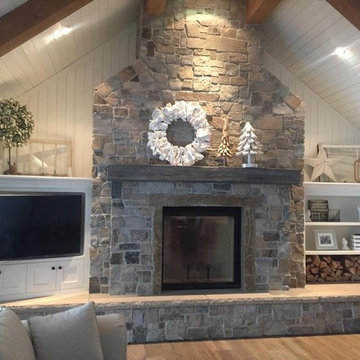
The Renaissance Rumford™ model was the world’s first certified open-door clean-burning fireplace. The design is taken from a true Rumford fireplace, making it much taller than a traditional fireplace. The shape of a Rumford fireplace is renowned for an unparalleled level of performance. Our patented Rumford design has taken the traditional elements of a Rumford fireplace to the next level thanks to custom engineering, precision manufacturing, and quality materials.

 Sweetbriar Cabinetry & Design, Inc
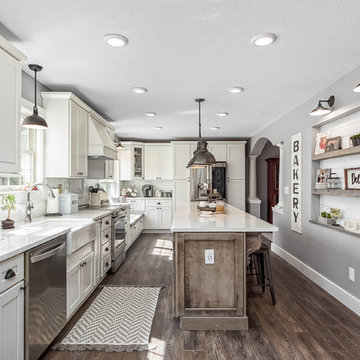
Kitchen - country l-shaped medium tone wood floor kitchen idea in Philadelphia with an undermount sink, recessed-panel cabinets, white cabinets, stainless steel appliances and an island

 Lydia DeMent Real Estate
McAdam custom built home in Walnut Cove, Northridge CA. To find out more about this mid century home for sale, contact Lydia DeMent at lydiadement.com

 Quarry Mill
The Quarry Mill's Copper Ledge dimensional ledgestone real thin stone veneer adds a classic feel as an interior accent wall to this beautiful living room. Copper Ledge natural stone veneer consists of random textures and various colors including: whites, tans, browns, yellows, and specs of lighter colors throughout. This stone comes in numerous sizes of rectangular shapes that will work well with any size project. Backsplashes, shower and tub surrounds, and fireplace walls are a few examples where Copper Ledge can really stand out.
Sponsored
Sunbury, OH

J.Holderby - Renovations
Franklin County's Leading General Contractors - 2X Best of Houzz!
 The Boutique Real Estate Group
You've seen the world, tasted its finest flavors, beheld its proudest splendors. Wanderlust romanced and beauty stayed you. EXPERIENCE THE INTERACTIVE FILM.
An Iconic, World-Class Destination
Neighbor to the Ritz Carlton and newly built Montage, you're at home with a standard of living consistent with the world's finest resorts.
Whether in its days as a private retreat for A-list celebrities or as a home to its discerning designer, Hale Ali'i has always been a generous host. Within the Kapalua resort, your complimentary shuttle drives you and your guests to local restaurants, shops, beaches, and hiking trails. Five-star restaurants, shopping, and world-famous spas call this resort community home. One of America's best surf spots is minutes north while "America's best beach" (Conde Nast Traveler) is a short walk south. The quiet, white sand beach of Oneloa Bay is a single step from your backyard just past the plumeria tree.
Inspired Hawaiian Living
Tastefully decorated and furnished by world-renowned designer Mary Philpotts, this Hawaiian plantation revival residence accommodates a wide range of tastes – from traditional formal to contemporary casual. Home to a wide range of the world's most coveted woods, luxury finishes, and modern conveniences, the structure is built to exacting standards. From African Sapele Mahogany cabinetry to a myriad of floor-to-ceiling pocket sliding walls, no expense was spared in crafting the finest estate on Maui's coast.
Designed according to the timeless principles of feng shui, Hale Ali'i invites nature in, protects on all sides, and honors the elements. Appraised by feng shui expert Kanoe Merino and blessed by Hawaiian native and cultural advisor to the Ritz Carlton, Clifford Nae'ole, this iconic Maui estate brings life, energy, and peace to those who call it home.
For Life Abundant
In concert with whitewater ocean views, warm fragrant breezes, and the rolling of the Pacific, Hale Ali'i harmonizes luxurious features with a genuine spirit.
It's a comfortable place, yet never taken for granted. Each feature, flower, and fauna inspires a spirit of hospitality. Investments in modern conveniences, stately finishes, and ethereal design inspire the life within. An abundant life amongst the world's most magnificent landscape.
Designed according to the timeless principles of feng shui, Hale Ali'i invites nature in, protects on all sides, and honors the elements. E Komo Mai, traveler. It's been worth the wait.

 Sullivan Building & Design Group
As part of an overall renovation of an old farmhouse the bathrooms are always a little more di cult to plan. In this case our client wanted to create a real “masculine” overall feel but with enough class to make it comfortable for a woman. Bold forms and solid lines needed to be o set by subtle softness in the design.
THE RESULTS
The overall bathroom is both handsome and bold. We custom built the walnut vanity from wall to wall of the existing space. We used wall mounted faucets with just a bit of a rounded profile to soften the square edges of the soapstone tops and walnut mirror.
The shower is a combination of very bold blackened steel framed glass around a clean white subway tile background. The black and white theme is quite typical in this period home. Our client was an active participant in the overall design process and was thrilled with the result.
This bathroom is a total remake of a small bathroom that existed in an old stone farmhouse in which the whole house was totally renovated. As this was a bachelor pad of sorts there was a real desire to blend bold forms and dark colors with a touch of class and sophistication. Bold walnut vanity with soft baskets for storage blended perfectly with black metal shower frame and clean white subway tile. A very cozy modern bath with a charming old world feel.

 DIMOCK REAL ESTATE & CONSTRUCTION
Spacious Master Bedroom with flat screen TV and blackout blinds.
Example of a mid-sized trendy master linoleum floor and multicolored floor bedroom design in San Diego with green walls
Example of a mid-sized trendy master linoleum floor and multicolored floor bedroom design in San Diego with green walls
Sponsored
Columbus, OH

Hope Restoration & General Contracting
Columbus Design-Build, Kitchen & Bath Remodeling, Historic Renovations

 Sonoma Sage Hill
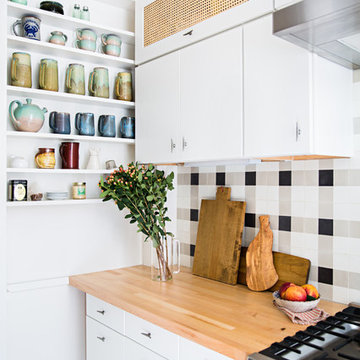
This white contemporary kitchen is idea for any small apartment or townhouse space. With an eat up bar and matching white stools.
Inspiration for a small contemporary l-shaped laminate floor eat-in kitchen remodel with a drop-in sink, flat-panel cabinets, white cabinets, quartz countertops, white backsplash, stainless steel appliances and subway tile backsplash
Inspiration for a small contemporary l-shaped laminate floor eat-in kitchen remodel with a drop-in sink, flat-panel cabinets, white cabinets, quartz countertops, white backsplash, stainless steel appliances and subway tile backsplash

 Maraya Interior Design
Old World European, Country Cottage. Three separate cottages make up this secluded village over looking a private lake in an old German, English, and French stone villa style. Hand scraped arched trusses, wide width random walnut plank flooring, distressed dark stained raised panel cabinetry, and hand carved moldings make these traditional buildings look like they have been here for 100s of years. Newly built of old materials, and old traditional building methods, including arched planked doors, leathered stone counter tops, stone entry, wrought iron straps, and metal beam straps. The Lake House is the first, a Tudor style cottage with a slate roof, 2 bedrooms, view filled living room open to the dining area, all overlooking the lake. European fantasy cottage with hand hewn beams, exposed curved trusses and scraped walnut floors, carved moldings, steel straps, wrought iron lighting and real stone arched fireplace. Dining area next to kitchen in the English Country Cottage. Handscraped walnut random width floors, curved exposed trusses. Wrought iron hardware. The Carriage Home fills in when the kids come home to visit, and holds the garage for the whole idyllic village. This cottage features 2 bedrooms with on suite baths, a large open kitchen, and an warm, comfortable and inviting great room. All overlooking the lake. The third structure is the Wheel House, running a real wonderful old water wheel, and features a private suite upstairs, and a work space downstairs. All homes are slightly different in materials and color, including a few with old terra cotta roofing. Project Location: Ojai, California. Project designed by Maraya Interior Design. From their beautiful resort town of Ojai, they serve clients in Montecito, Hope Ranch, Malibu and Calabasas, across the tri-county area of Santa Barbara, Ventura and Los Angeles, south to Hidden Hills.
Christopher Painter, contractor

 Mullican Flooring
The Nature Collection is a 3/4-inch-thick solid product that is available in hickory. Manufactured in the United States and offered in random lengths up to 7 feet, the Nature Collection offers a classic hardwood flooring look with a smooth finish. Available in a 5-inch width and five colors, the Nature Collection is backed by Mullican's Alpha A'Lumina Real World Finish and carries a 25-year warranty Order a sample at http://www.mullicanflooring.com/index.php/our-flooring/shop-prefinished-solid/?searchkey=%60COLLECTION%60:Nature
182