
Search results for "Reduce birds" in Home Design Ideas


 BP Design
Today's city living requires that exterior spaces serve as flexible, multi-purpose outdoor rooms. This patio was designed to suit the client's need for a gathering space, parking and increased privacy. A bluestone patio defined an outdoor dining room and enhanced the existing architectural vocabulary. A structural lawn, capable of bearing the weight of a truck, provided flexible parking. A grape trellis, matched with small evergreen shrubs, increased privacy while native plants were selected to attract birds and butterflies while reducing water use.

 CYAN Horticulture
photo and landscape: Dave Demers - CYAN Horticulture
architecture: Darrell Epp
In close collaboration with Darrell Epp, Architect, CYAN Horticulture was invited to maximize use of the very limited space surrounding this newly renovated single-family residence. Perched atop a 75-feet forested ravine and overlooking a protected salmon stream, this low-lying house seems to be floating in the wilderness. On the more exposed side, sunny and connecting to the street, the distinctive silhouette of gingkos and squared-off beeches, mounding lavenders and graphic maiden grasses, play against expanses of raw concrete and accents of reclaimed, century-old barn wood. On the sheltered side, shady and sloping down to the stream, a variety of dark green foliages merge into the surroundings.
Find the right local pro for your project

 Torrey Pines Landscape Co., Inc
Jasmine around fountain, Birds of Paradise, Bougainvillea
Design- Harry Thompson, Torrey Pines Landscape Co., Inc
A San Diego Home and Garden 2014 award winner
Maintenance- Torrey Pines Landscape Co., Inc, A CLCA award winner
Photo-Martin Mann

 Mayita Dinos Garden Design
This front yard (as seen from the sidewalk) was a grouping of mature birches underplanted with ivy and azaleas. That thirsty bunch was replaced with a waterwise habitat garden that provides year round visual interest for the owners and neighboring residents, and habitat needs for the butterflies and birds that also live in the neighborhood. We vastly reduced the water use and created a beautiful landscape.
Mayita Dinos Photography

 Sweet Smiling Landscape Design
The backyard of this house was a no-man’s land when the owners moved in. With little more than a few established trees and a big, noisy air-conditioning unit, the yard was an almost open canvas bordering the Los Padres National Forest in a high-fire zone. We installed a large infiltration swale to capture as much rainfall as possible from the house rain gutters, so the water can be stored in the soil where plants can access it, reducing the amount of irrigation this landscape needs. Plantings obscure the air-conditioning unit, and a water feature was installed so the sound of trickling water would drown-out its sound. The plants we chose are drought tolerant and attractive to native birds and insects. We paid special attention to the plantings nearest to the house, keeping them fairly low growing as to not create a fire ladder beneath the eves. The plants also hold a good deal of moisture in their stems and leaves and are easily kept free of desiccated material, making them fire-wise plants that can actually reduce the chances of the property burning in the event of a nearby wildfire.

 Billy Goodnick Garden Design
Constructed from a recycled washing machine, birds visit the garden to bathe and drink. Below are various forms of grass and sedges.
Billy Goodnick
Design ideas for an eclectic landscaping in Santa Barbara.
Design ideas for an eclectic landscaping in Santa Barbara.
 Sweet Smiling Landscape Design
The backyard of this house was a no-man’s land when the owners moved in. With little more than a few established trees and a big, noisy air-conditioning unit, the yard was an almost open canvas bordering the Los Padres National Forest in a high-fire zone. We installed a large infiltration swale to capture as much rainfall as possible from the house rain gutters, so the water can be stored in the soil where plants can access it, reducing the amount of irrigation this landscape needs. Plantings obscure the air-conditioning unit, and a water feature was installed so the sound of trickling water would drown-out its sound. The plants we chose are drought tolerant and attractive to native birds and insects. We paid special attention to the plantings nearest to the house, keeping them fairly low growing as to not create a fire ladder beneath the eves. The plants also hold a good deal of moisture in their stems and leaves and are easily kept free of desiccated material, making them fire-wise plants that can actually reduce the chances of the property burning in the event of a nearby wildfire.


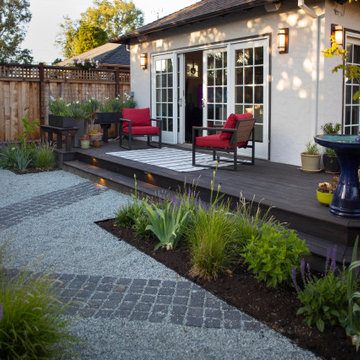


 Susan Friedman Landscape Architecture
California native flowers and grasses add seasonal color and textures while attracting pollinators and birds to the garden.
This is an example of a rustic drought-tolerant backyard flower bed in San Francisco.
This is an example of a rustic drought-tolerant backyard flower bed in San Francisco.
 Sweet Smiling Landscape Design
The backyard of this house was a no-man’s land when the owners moved in. With little more than a few established trees and a big, noisy air-conditioning unit, the yard was an almost open canvas bordering the Los Padres National Forest in a high-fire zone. We installed a large infiltration swale to capture as much rainfall as possible from the house rain gutters, so the water can be stored in the soil where plants can access it, reducing the amount of irrigation this landscape needs. Plantings obscure the air-conditioning unit, and a water feature was installed so the sound of trickling water would drown-out its sound. The plants we chose are drought tolerant and attractive to native birds and insects. We paid special attention to the plantings nearest to the house, keeping them fairly low growing as to not create a fire ladder beneath the eves. The plants also hold a good deal of moisture in their stems and leaves and are easily kept free of desiccated material, making them fire-wise plants that can actually reduce the chances of the property burning in the event of a nearby wildfire.
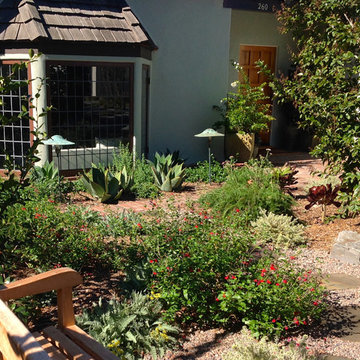 Mayita Dinos Garden Design
This front yard was a grouping of mature birches underplanted with ivy and azaleas. That thirsty bunch was replaced with a waterwise habitat garden. This garden now provides year round visual interest for the owners and neighboring resident humans, and habitat needs for the butterflies and birds that live in the neighborhood. We vastly reduced the water use and created a beautiful landscape.
Mayita Dinos Photography
 Sweet Smiling Landscape Design
The backyard of this house was a no-man’s land when the owners moved in. With little more than a few established trees and a big, noisy air-conditioning unit, the yard was an almost open canvas bordering the Los Padres National Forest in a high-fire zone. We installed a large infiltration swale to capture as much rainfall as possible from the house rain gutters, so the water can be stored in the soil where plants can access it, reducing the amount of irrigation this landscape needs. Plantings obscure the air-conditioning unit, and a water feature was installed so the sound of trickling water would drown-out its sound. The plants we chose are drought tolerant and attractive to native birds and insects. We paid special attention to the plantings nearest to the house, keeping them fairly low growing as to not create a fire ladder beneath the eves. The plants also hold a good deal of moisture in their stems and leaves and are easily kept free of desiccated material, making them fire-wise plants that can actually reduce the chances of the property burning in the event of a nearby wildfire.


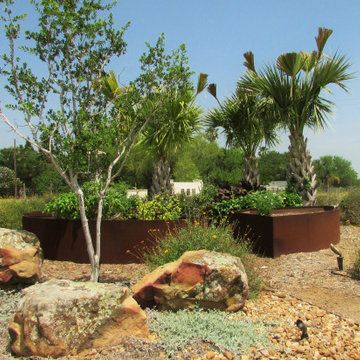
 Heffner Design Team, PLLC
Raised steel planters are located in the center of the circle drive to provide vegetable gardening space. Bird, bat, and butterfly habitat is provided by the Texas sabal palms, Texas persimmon, orange zexmenia, and wooly stemodia. The artful placement of trees, shrubs, ground cover, boulders, gravel, edging, and planters create a landscape worthy of its placement on the site.

 Sarco Architects Costa Rica - Caribbean
A bird's eye view allows a glimpse of the green roofs of the home, nestled into the treelines and overlooking the bay and small islands. Green roofs provide visual beauty from the roadway access on the top of the hill, and reduce the air conditioning load on the interior spaces in the home.
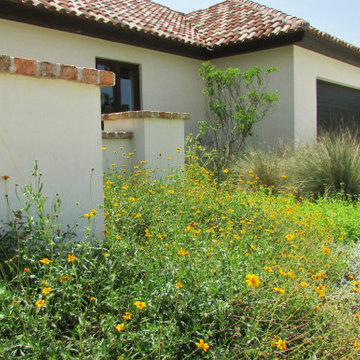 Heffner Design Team, PLLC
A combination of Texas persimmon, Turk’s cap, gulf muhly grass, orange zexmenia, gregg’s mistflower, and wooly stemodia create a soft, lush meadow planting that requires little water and provides habitat for a variety of birds and butterflies. A limited amount of photos were taken because we were having such a good time with the clients!
 Sweet Smiling Landscape Design
The backyard of this house was a no-man’s land when the owners moved in. With little more than a few established trees and a big, noisy air-conditioning unit, the yard was an almost open canvas bordering the Los Padres National Forest in a high-fire zone. We installed a large infiltration swale to capture as much rainfall as possible from the house rain gutters, so the water can be stored in the soil where plants can access it, reducing the amount of irrigation this landscape needs. Plantings obscure the air-conditioning unit, and a water feature was installed so the sound of trickling water would drown-out its sound. The plants we chose are drought tolerant and attractive to native birds and insects. We paid special attention to the plantings nearest to the house, keeping them fairly low growing as to not create a fire ladder beneath the eves. The plants also hold a good deal of moisture in their stems and leaves and are easily kept free of desiccated material, making them fire-wise plants that can actually reduce the chances of the property burning in the event of a nearby wildfire.
3