
Search results for "Reduce birds" in Home Design Ideas


 BP Design
Today's city living requires that exterior spaces serve as flexible, multi-purpose outdoor rooms. This patio was designed to suit the client's need for a gathering space, parking and increased privacy. A bluestone patio defined an outdoor dining room and enhanced the existing architectural vocabulary. A structural lawn, capable of bearing the weight of a truck, provided flexible parking. A grape trellis, matched with small evergreen shrubs, increased privacy while native plants were selected to attract birds and butterflies while reducing water use.

 Sarco Architects Costa Rica - Caribbean
A bird's eye view allows a glimpse of the green roofs of the home, nestled into the treelines and overlooking the bay and small islands. Green roofs provide visual beauty from the roadway access on the top of the hill, and reduce the air conditioning load on the interior spaces in the home.
Find the right local pro for your project



 Heffner Design Team, PLLC
The client wanted a heavy use of native and bird/butterfly attracting plants that complimented the architecture of the home. We designed and managed the installation of all site elements (driveway, courtyard, entrance gate, landscape bed, raised vegetables garden beds). The use of boulders, gravel, ground cove, ornamental grasses, and cacti create a welcoming and low water use entrance to this home .


 Basic Landscape
The gracefully flaring entry walk creates a sense of drama and elegance for a newly constructed home in Glen Ellyn. The small multi-stemmed tree in the background is Autumn Brilliance Serviceberry (Amelanchier X 'Autumn Brilliance') Premium shredded hardwood bark mulch gives the freshly planted beds a finished appearance and will reduce maintenance by conserving moisture and keeping weed seed from germinating.
The bright blue/green material is a treated excelsior blanket. It's used to restore the turf and acts as a mulch, protecting grass seed from birds, erosion and moisture loss..
Ron Levinson, Basic Landscape

 Deck and Patio Company "Outdoor Living Experts"
Violet-colored Liatris Spicata (Gayfeather):
Gayfeather (tall purple plant on the left) is an extremely easy plant to grow. is an extremely easy plant to grow. It blooms in late summer and grows from corms that sprout in spring. Part of the sunflower family, it, too, is native to North America. It likes full sun, well-drained soils; it attract birds and butterflies, and is an ideal perennial.
Because the Gayfeather often grows to a robust 2-4’ feet tall, it may require staking or some other support.
www.deckandpatio.com
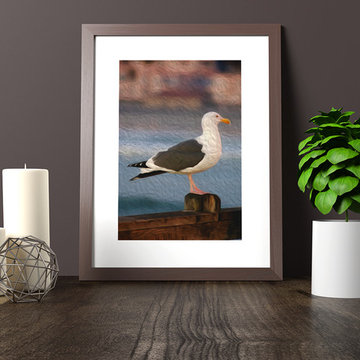
 Fine Art Expressions
"A Bird's Eye View" at the Pier in Oceanside, CA Fine Art Print
My fine art prints are just the way to add that beautiful finishing touch to a room! Each is printed on archival quality paper and a perfect matte finish for framing.
• Printed on Breathing Color Pura Smooth paper (archival quality)
• 300gsm weight
• Matte finish, no surface glare
• Printed using an eleven-color printer and archival inks
• Inks are museum quality and feature print permanence ratings of up to 200 years
• Resistant to humidity, UV and atmospheric ozone
*Various border options are available for all fine art prints. Note: Selecting on an option will reduce the image size and add more white space. The overall dimensions of the piece will remain the same. This will help ensure that all elements of the scene are visible when framed.

 Land Studio C
Inspiration for a small contemporary drought-tolerant and full sun backyard concrete paver landscaping in San Francisco.


 Spin Design Limited
The feature wallpaper is Elitis Wallpaper Natives Maori. It runs floor to ceiling over two stories. The wallpaper reflects Oceania.
The Diphy_P3 Pendant by Grok looks like sea creatures swaying and floating and the wing lights in the hall evoke sea birds hovering above the ocean.
The carpet chosen is a new premium fibre made with 37% renewably sourced polymer from corn sugar. Extremely soft, it provides high stain, soil, wear and colourfast performance.
It is to evoke the sea and its softness really makes you want to lie down on it.


 Pennsylvania Landscape & Nursery Association
Terran Landscapes http://www.terranlandscapes.com
Project Entry: Fishers Woodland Garden
2014 PLNA Awards for Landscape Excellence Winner
Category: Theme Garden $15,000-$30,000
Award Level: Bronze
Photo Description:
We were contracted by the client to design a calming space for their staff to relax, take a walk, and enjoy a leisurely lunch as well as to provide their grandchildren a place to run and pick flowers. The space was originally dominated by large trees and had been overgrown with ivy, sumac and aggressive vines, providing an unwelcome, dark space with little color or visual appeal. The client requested a colorful blend of shrubs and perennials that would provide interest throughout the seasons, as well as provide privacy by screening the street traffic along Carisbrooke Road.
Our goal was to create the privacy screen along the road by layering plants from the ground to the tree canopy. The theme was to let nature inspire the landscape, allowing a space that was originally woodland to become an enhanced version of itself, creating a beautiful habitat for birds and butterflies to excite the senses and satisfy all who enjoy the beauty of nature.
We began by clearing the brush and removing all aggressive vines and ivy that jeopardized the health of the trees. We kept and transplanted all non- invasive or native plant material in the area to various locations throughout the property. Several yards of compost were then tilled into the soil and the existing trees fertilized to provide a rich growing environment.
A few challenges occurred during the design process. It was decided that a new generator was to be installed in the woodland and due to a future addition to the house, we were forced to eliminate planned additional impervious pathway surfaces. We provided screening to hide the generator and buffer the noise, and created a meandering path and sitting area out of natural woodchips instead of the proposed bluestone to solve the impervious space issue. The woodchips add a sense of informality and invite the viewer to walk slowly through the space. The reduced noise from the additional screening of the generator allows for quiet reflection as chipmunks scurry and hummingbirds dart about between the flowers.
Our plant palette consists of shady understory plants that thrive and flower vigorously from spring through fall. A tall, lush, evergreen backdrop of Ilex opaca and Prunus laurocerasus ‘Schipkaensis’ provides the screening and blends into a middle layer of ‘Ivory Halo’ dogwood, hydrangeas and winterberry hollies. Beautiful perennials and groundcovers bloom along the woodland path, providing a low visual layer of color and texture. Movement throughout the garden is provided by the graceful Calamagrostis brachytricha and Hakenchloa that soften the nearby hardscaping. The woodland floor is full of shade-loving Solomon’s seal, hosta, astilbe, ferns, bleeding heart, Tiarella and Aconitum.
The street side of this woodland required plants with a preference for a little more sun and drought tolerance. A palette of oakleaf hydrangea, Agastache, Liatris and Rudbeckia softens the fence line and provides the desired color.
As designed and installed, the woodland garden successfully provides the client’s family and office staff a quiet space where they can take a peaceful moment and enjoy nature.
Photo Credit: Lisa C. Falls


 Dianne Davant and Associates
Master Bedroom with Red Bed Frame and custom drapery and bedding.
Bedroom - traditional master light wood floor bedroom idea in Charlotte
Bedroom - traditional master light wood floor bedroom idea in Charlotte

 Pete Veilleux, East Bay Wilds
Photo by Pete Veilleux, East Bay Wilds.
'Island Pink' yarrow (Achillea millefolium 'Island Pink') with woolly blue curls (Trichostema lanatum).
 Artisan Custom Closets
Brian Nadeau
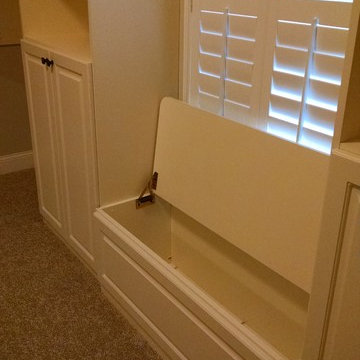
Home design - mid-sized traditional gender-neutral carpeted home design idea in Atlanta with raised-panel cabinets and white cabinets
Home design - mid-sized traditional gender-neutral carpeted home design idea in Atlanta with raised-panel cabinets and white cabinets

 Regenesis Ecological Design
Tall cedar privacy screens block views to the side yard, and create a backdrop for a blooming front yard perennial garden with Symphyotrichum novae-angliae (Aster).
 Pennsylvania Landscape & Nursery Association
u2014 ALE: Wayne Rain Garden
Pennsylvania Landscape & Nursery Association
u2014 ALE: Wayne Rain Garden
Terren Landscapes http://www.terrenlandscapes.com
2014 PLNA Awards for Landscape Excellence winner
Category: Residential Up to $15,000
Award Level: Gold
Project Description:
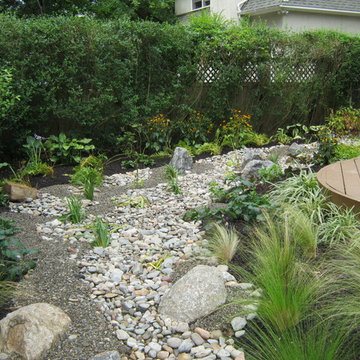
Our company was contracted by the client to provide a creative solution to an ongoing drainage problem. Their property is located within 30 feet of a local stream that collects storm water from the surrounding area. The nearby stream and high water table caused the lawn area at the side of their home to flood and to remain waterlogged for a few days after each storm. The client not only had difficulty growing plants in the existing conditions, but also had a problem with mosquitoes due to standing water.
Our goal was to design a self-contained, naturalistic rain garden that slowed storm water runoff, allowed for percolation, and promoted infiltration while permitting excess clean water to enter the nearby stream with diminished force. As designed, the rain garden allows the earth to slowly and more naturally
absorb excess storm water while filtering out toxins such as excess nitrogen and phosphorous which are frequently found in the landscape, therefore reducing the contaminants entering the stream.
A percolation test was conducted with criteria of absorbing a one-inch rainstorm within four hours without overflow. The one-inch storm calculation included an existing downspout from the home, which would be piped into the rain garden to reduce roof runoff. The first test failed due to a deep layer of high clay-content soil. Excavation continued until a layer of sandy loam was reached, the percolation test was repeated, and a successful test result was achieved. Next, the entire rain garden basin was excavated to the sandy loam layer and the soil amended with compost and sand to create a highly porous planting media.
Geotextile fabric was placed to help reduce migration of the surface stone into the soil and allow for minimal maintenance. Gravel, river stone and small boulders were carefully placed to achieve the look of a natural streambed.
A palette of mostly native plants with a few non-invasive ornamentals were chosen for their ability to survive in extreme conditions ranging from floods to drought and were placed according to their specific preferences.
Wetland plants were chosen for the lowest portion of the rain garden as that area remains saturated for longer periods of time, with a Chionanthus virginicus as a focal point surrounded by irises and ferns at the lowest depth.
Plants tolerant of drier conditions were chosen for the upper edges of the garden. The beautiful colors of Monarda, Ligularia, Eupatorium, Solidago, Chelone, and Rudbeckia were scattered within the upper edge, while movement and softness were incorporated by use of the graceful Nassella that lines the border. Finally, winter interest was provided with a backdrop of Cornus sericea.
As built, this small rain garden creates tremendous impact by decreasing the amount of storm water runoff not only on our client's property, but also in the neighboring stream. It serves as a means of slowing the water and providing an area for infiltration back into the earth. The plants provide a habitat for birds, butterflies, and insects, working in harmony with nature and providing beautiful visual interest year-round.
Photo Credit:
Lisa C. Falls
4