
Search results for "Remaining moisturized" in Home Design Ideas
 Pavers Of The World
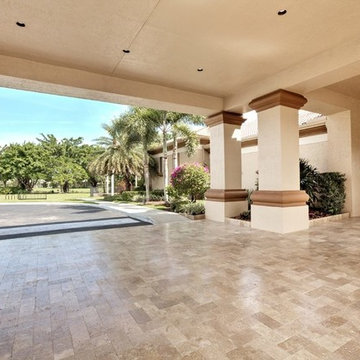
Travertine pavers are tumbled, honed and unfilled. They are resistant to moisture, cold, heat and erosion. Travertine pavers do not retain heat and its surface remains cool to the touch. They are also slip-resistant making them a perfect addition around a pool area.
 Pavers Of The World
Travertine pavers are tumbled, honed and unfilled. They are resistant to moisture, cold, heat and erosion. Travertine pavers do not retain heat and its surface remains cool to the touch. They are also slip-resistant making them a perfect addition around a pool area.
 Muna Home
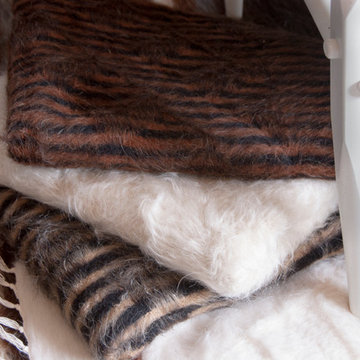
These luxury authentic flat-weave collection represent an ancient method of creating a faux animal hair pile which was widespread amongst nomads from Central Asia to Turkey. Woven with cotton warps and Angora goat hair wefts. The goat hair creates the long haired fur-like look. Angora goats are named after the Turkish province of their origin, Ankara and these goats produce the fibre known as mohair. The lustrous hair of the angora goat occurs in every natural shade ranging from black through browns to white, thus making possible a wide variety of colour-schemes with no dyes.
More about Mohair…
Mohair is one of the oldest textile fibres in use. The Angora goat is thought to originate from the mountains of Tibet, reaching Turkey in the 16th century. Mohair is warm in winter as it has great insulating properties, while remaining cool in summer due to its moisture wicking properties. It’s possible to use double-side, hairy side for winter, woven side for summer. It is durable, naturally elastic, flame resistant, crease resistant, and does not felt.
It is a luxury fiber, like cashmere, angora and silk, and is more expensive than most wools that comes from sheep. Mohair is composed mostly of keratin, a protein found in the hair, wool, horns and skin of all mammals.
Find the right local pro for your project
 Tile Doctor Ltd
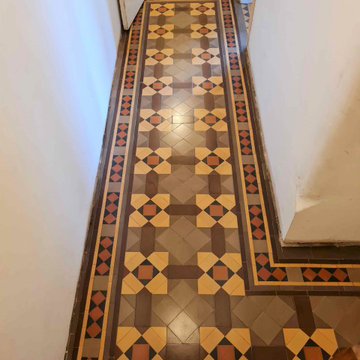
We were contacted by a customer in West Kirby who needed help renovating a Victorian tiled hallway in a house they had just purchased. Kirby is a desirable seaside location North of Heswall that expanded with the arrival of the railway in 1848. The railway brought a demand for property and so it’s not unusual to find housing stock in this area dating back to the Victorian era.
The Victorian tiles at this property appear to have been neglected by the previous owner and were now looking very dull and marked by paint from decorating; all the colours looked washed out and the floor was now looking very unappealing.
The good news however is that this problem is not uncommon and with a deep clean and a fresh sealer applied it can be transformed. I gave the owner a quote which was accepted a date agreed for my return to do the work.
On the first day the floor was sprayed with a neat solution of Tile Doctor Remove and Go which is a powerful alkaline cleaning and stripping agent used to remove old seals and paint. The solution was left to dwell for about twenty minutes so it could soak in and get to work. It was then scrubbed into the tiles using a coarse 200-grit pad fitted to a heavy buffing machine. Water was then added to the floor for lubrication and the soils released from the pores of the tile during scrubbing was removed by with a wet vacuum.
To treat the stubborn paint stains and remains of what I suspect was carpet adhesive a hand scraper and wire brush was used, this was made easier by the Remove and Go which had softened the paint etc.
The next stage was to give the Victorian tiles a mild acid wash using Acid Gel which is applied to the floor, scrubbed in, and rinsed off with a little water then extracted using the wet vacuum. We always recommend an acid wash for old floors like these as it will counter any efflorescent salts resident in the tiles and helps to remove other mineral contaminates and old grout that can mask the true beauty of the tiles.
I left the tiles to dry out for two days before returning to apply the sealer, first checking it was dry by testing for moisture in various places with an electronic damp tester. It’s not a good idea to apply a sealer to a damp floor so we always check first.
Satisfied the floor was dry, I started applying a coat of Tile Doctor Colour Grow which is a colour enhancing impregnating sealer that helps to bring out the true colours in the tile. This was allowed to dry for thirty minutes and then followed up five coats of Tile Doctor Seal and Go Extra which is a breathable sealer that leaves a lovely satin finish and builds on the protection.
Once done the Victorian hallway tiles looked so much cleaner and healthier. It was quite a transformation and the new sealer had given the floor a nice low sheen shine which the customer was very happy with.
For aftercare cleaning I left them with a bottle of Tile Doctor Neutral Cleaner which is specially formulated for cleaning sealed tiles. We don’t recommend tile cleaning products you find on supermarket shelves as the are usually too strong and can strip a sealer off the floor prematurely. If your choosing another product to clean your floor always read the label to make sure its compatible.
Andrew Robb
Merseyside Tile Doctor
 Tile Doctor Ltd
I was contacted about a Georgian property in the Kent village of Leeds , to see if I could do anything to improve a Travertine tiled floor. The use of Travertine was extensive and had been installed throughout the ground floor including the kitchen, dining room, utility and bathroom WC. Travertine is probably my favourite stone, but it is acid sensitive and attracts dirt easily, due to its ‘holey’ composition.
Initially we discussed the floor over the phone where I got to know about the issues they were experiencing, and I detailed the renovation process I normally use to restore it including the products and timelines. Naturally they wanted to me to provide a quote for the work however its tricky to do that accurately without seeing the floor, so I arranged a date to pop over.
Upon arriving I could see the tiles and the wide grout joints had extensive, ingrained dirt indicating the previous sealer had long since worn away. This is a common issue with stone floors, and to re-assure myself and the client it could be resolved I cleaned a small area in the utility room with pleasing results!
This test clean helped me to understand which products and methods would work best on the floor and later that day I emailed over a detailed quote for the renovation. Happy with the quote I received a reply the same day asking when I could start.
My colleague and I arrived on the agreed date and work started with adding protection to all areas that required it. We use a lot of water during the cleaning process and some materials such as MDF can become damaged with water ingress, so it makes sense to do this.
To get the floor clean, a coarse Carbide Brush fitted to a rotary machine was run over the Travertine tiles to scrub in a strong solution of Tile Doctor Pro-Clean. This process generates a lot of slurry as the dirt was washed out of the stone and grout which is extracted with a wet vacuum as we progressed.
Next it was on hands and knees with more Tile Doctor Pro-Clean and handheld brushes run over stubborn areas and along the grout lines to take them from 80% up to 100%.
Happy with the results, the next step was to renovate the stone using a series of diamond encrusted burnishing pads. Using only water for lubrication this process starts with the application of a coarse 400-grit burnishing pad attached to the floor buffer. This produces a lot of slurry which again was removed with a wet vacuum.
This left the Travertine clean, but the pores of the stone had been opened giving the floor a matt finish and more absorbent than it was originally. To further refine the appearance of the stone the next two burnishing pads were applied which are 800 and 1500-grit. These pads polish the stone and close the pores, restoring the natural sheen in the process. After each pad was applied the slurry was rinsed off the floor with water and extracted with the wet vacuum. Once complete the floor was left to dry off fully overnight.
I arrived the next day and took several moisture readings from the floor to check that it had dried off sufficiently overnight. The results were good, so work moved onto sealing the Travertine with two coats of Tile Doctor Ultra Seal which is a natural look impregnating sealer. It works by soaking into the stone, occupying the pores and thereby preventing dirt from becoming ingrained there. This ensures dirt remains on the surface where it is easily cleaned away.
The final step in the floor’s renovation was to apply the last of the diamond polishing pads which is a very fine 3000-grit. This pad further improves the polished appearance of the stone resulting in a satisfying sheen.
The work made a massive difference to the floor, and I received an email the next day from one of the owners who was really pleased with the transformation:
”Floors look brilliant. Very pleased.”
For the care and maintenance of polished sealed floors I recommend the use of Tile Doctor’s Stone Soap which is a gentle but effective cleaning product that won’t impact the sealer and contains a patina enhancer. When it comes to sealed floors my mantra is:
“If you look after the sealer, the sealer will look after the floor!”
Graham Davis
North Kent Tile Doctor
 Laqfoil Ltd.
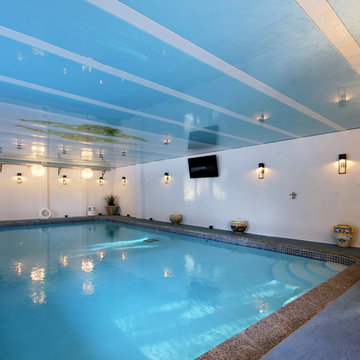
This Caledonia, Ontario bungalow has a pool with walk-out access to an outdoor patio on the foundation level. Above the ceiling, which is I-beam construction, is the living room. The owner wanted to contain moisture and sound within the pool area, while creating aesthetic appeal and remaining within budget. Most residential spaces only require stretch ceiling support around the perimeter of the room, but swimming pool rooms are unusually large, so we opted to install the stretch ceiling in sections, attaching the support profiles directly to the I-Beams. The client chose a golden classical graphic to print on the centre sections. The entire family is happy with the results. The whole project came in at under $10, 000 and a turnaround time of less than 2 weeks.
 Griggstown Construction Co.
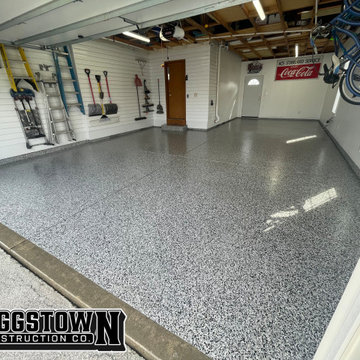
Transform your space with our high-performance epoxy flooring. Beyond its visually appealing glossy finish, it offers unparalleled resistance to wear and tear. Designed to combat stains, chips, and abrasions, our epoxy ensures your floors remain pristine and vibrant for years to come.
Sponsored
Delaware, OH

Buckeye Basements, Inc.
Central Ohio's Basement Finishing ExpertsBest Of Houzz '13-'21

 Soak Barrel Co. – Cedar Hot Tubs & Outdoor Saunas
This project features a handcrafted cedar barrel sauna with a panoramic front window and integrated porch, installed as a complete outdoor wellness setup.
The sauna is built from solid Western Red Cedar and equipped with a wood-burning sauna stove capable of reaching temperatures of up to 194°F, providing a traditional and authentic sauna experience.
Western Red Cedar is naturally resistant to moisture, mold, and decay, making it one of the most durable wood species for long-term outdoor use. The solid cedar construction remains stable through seasonal temperature changes and requires only simple and occasional maintenance. The interior typically needs only basic cleaning and ventilation, while the exterior can be treated with standard wood oils if desired.
The front porch provides a convenient entry area and a comfortable space for cooling down between sauna sessions.
This project can also be expanded into a complete Fire & Ice setup by pairing the sauna with a cedar hot tub or cold plunge for contrast therapy.
 Garden of Ease Landscaping & Design
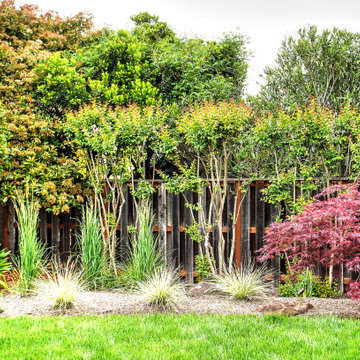
Our stone workers were hard on the job, updating the dated driveway, pathways both front and back, as well as the back patio of this suburban home. We created a warm front vista using earth-toned pavers for the driveway, and tied that into the back pathways for continuity. Tying in with some of the remaining greenery, the new plantings offer colorful accents, and the mulch will help retain moisture for water retention in the hot months.
 Pavers Of The World
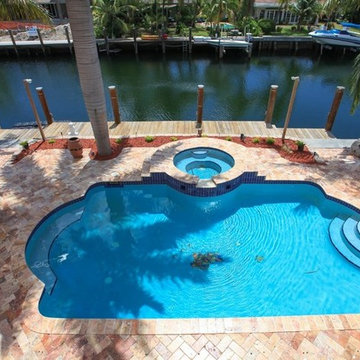
Travertine pavers are tumbled, honed and unfilled. They are resistant to moisture, cold, heat and erosion. Travertine pavers do not retain heat and its surface remains cool to the touch. They are also slip-resistant making them a perfect addition around a pool area.

 Art-tek Painting co.
Art-Tek Construction transformed this weathered fence and deck with a complete restoration and premium staining system using Dulux WoodPride Hybrid Solid Stain. Proper preparation was the key to achieving a beautiful, long-lasting finish, beginning with a thorough pressure wash to remove dirt, mildew, weathered wood fibres, and previous coating residue.
Once the wood was clean and properly prepared, we applied Dulux WoodPride Hybrid Solid Stain, a high-performance coating engineered to provide exceptional durability and protection against Alberta's harsh climate. Its advanced hybrid technology offers outstanding adhesion, excellent UV resistance, superior colour retention, and strong resistance to peeling, cracking, and moisture penetration while allowing the natural texture of the wood to remain visible.
The finished project gave the fence and deck a rich, uniform appearance while providing years of protection against sun, rain, snow, and seasonal weather changes. This project reflects Art-Tek's commitment to premium products, meticulous preparation, and craftsmanship that helps homeowners protect their investment while enhancing the beauty of their outdoor living spaces.
 Pavers Of The World
Travertine pavers are tumbled, honed and unfilled. They are resistant to moisture, cold, heat and erosion. Travertine pavers do not retain heat and its surface remains cool to the touch. They are also slip-resistant making them a perfect addition around a pool area.
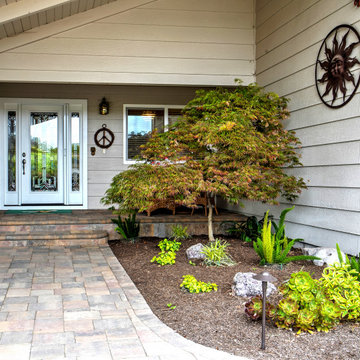 Garden of Ease Landscaping & Design
Our stone workers were hard on the job, updating the dated driveway, pathways both front and back, as well as the back patio of this suburban home. We created a warm front vista using earth-toned pavers for the driveway, and tied that into the back pathways for continuity. Tying in with some of the remaining greenery, the new plantings offer colorful accents, and the mulch will help retain moisture for water retention in the hot months.
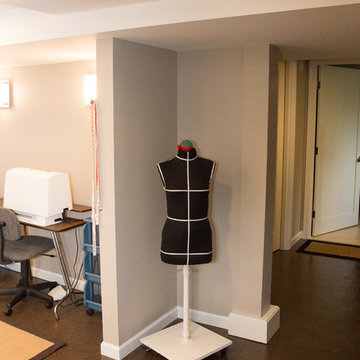
 Design Perspective Interior Design, LLC
I designed and assisted the homeowners with the materials, and finish choices for this project while working at Corvallis Custom Kitchens and Baths.
Our client (and my former professor at OSU) wanted to have her basement finished. CCKB had competed a basement guest suite a few years prior and now it was time to finish the remaining space.
She wanted an organized area with lots of storage for her fabrics and sewing supplies, as well as a large area to set up a table for cutting fabric and laying out patterns. The basement also needed to house all of their camping and seasonal gear, as well as a workshop area for her husband.
The basement needed to have flooring that was not going to be damaged during the winters when the basement can become moist from rainfall. Out clients chose to have the cement floor painted with an epoxy material that would be easy to clean and impervious to water.
An update to the laundry area included replacing the window and re-routing the piping. Additional shelving was added for more storage.
Finally a walk-in closet was created to house our homeowners incredible vintage clothing collection away from any moisture.
LED lighting was installed in the ceiling and used for the scones. Our drywall team did an amazing job boxing in and finishing the ceiling which had numerous obstacles hanging from it and kept the ceiling to a height that was comfortable for all who come into the basement.
Our client is thrilled with the final project and has been enjoying her new sewing area.
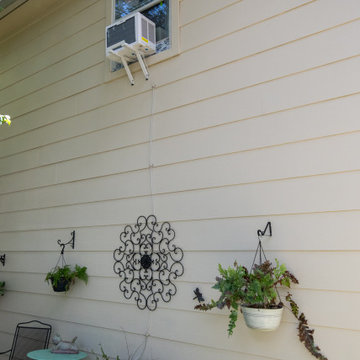
 Deskins Group LLC
This siding repair started with a challenge: a poorly performing window unit had leaked down the side wall, destroying the remaining fiberboard siding. The lower half had already been replaced with Hardie siding, but the damage above called for a full upgrade. We removed the compromised material and installed new 12" Hardie Cedarmill siding to match. After a deep clean of the existing Hardie Plank and fresh coat of paint across the entire wall, the transformation is seamless—everything looks brand new.
We also helped install the new window unit and rerouted the drain line to prevent future water damage. It’s a small detail that makes a big difference in long-term performance.
✅ Why it matters: Fiber cement siding like Hardie offers superior durability, moisture resistance, and curb appeal—especially when installed with attention to drainage and detail.
? Serving Cypress, Tomball, and Northwest Houston, we specialize in siding upgrades that blend architectural integrity with hands-on craftsmanship.
? Check out the before-and-after in our gallery, and if your siding’s showing signs of wear—or if a leaky window unit has caused hidden damage—let’s talk. We’ll walk you through your options and deliver a solution that’s built to last.
? Ready for a refresh? Contact Deskins Siding & Exteriors today for a free consultation and see how thoughtful design can elevate your exterior.
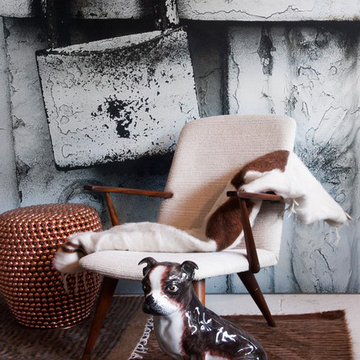 Muna Home
These luxury authentic flat-weave collection represent an ancient method of creating a faux animal hair pile which was widespread amongst nomads from Central Asia to Turkey. Woven with cotton warps and Angora goat hair wefts. The goat hair creates the long haired fur-like look. Angora goats are named after the Turkish province of their origin, Ankara and these goats produce the fibre known as mohair. The lustrous hair of the angora goat occurs in every natural shade ranging from black through browns to white, thus making possible a wide variety of colour-schemes with no dyes.
More about Mohair…
Mohair is one of the oldest textile fibres in use. The Angora goat is thought to originate from the mountains of Tibet, reaching Turkey in the 16th century. Mohair is warm in winter as it has great insulating properties, while remaining cool in summer due to its moisture wicking properties. It’s possible to use double-side, hairy side for winter, woven side for summer. It is durable, naturally elastic, flame resistant, crease resistant, and does not felt.
It is a luxury fiber, like cashmere, angora and silk, and is more expensive than most wools that comes from sheep. Mohair is composed mostly of keratin, a protein found in the hair, wool, horns and skin of all mammals.
 Pennsylvania Landscape & Nursery Association
Terren Landscapes http://www.terrenlandscapes.com
2014 PLNA Awards for Landscape Excellence Winner
Category: Residential $30,000-$60,000
Award Level: Silver
Project Description:
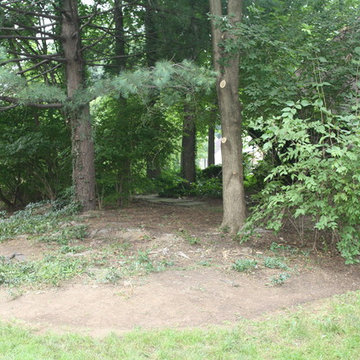
Our company was contracted to do a master plan for the family who was in desperate need of a rear yard renovation. The existing lawn area remained saturated throughout most of the year and the runoff from the neighboring property ran across their back yard, down the side of their property and all the way to the sidewalk in front of their house. The water was so intense that it had begun to cut through the back yard and erode the soil across the sidewalk and into the nearby storm drain.
By identifying these drainage problems and discussing solutions with the homeowner, we were able to design and create the aesthetically pleasing and sustainable solution of a rain garden. The goal was to slow down storm water runoff, and catch pollution and sediment by creating a rain garden that acts as a filter prior to entering the storm drain, while enhancing the aesthetics of the property.
The rain garden created was a shallow depression, 12 - 16" deep that collects rainfall runoff from all downspouts of the home and water collected into perforated pipes underneath the lawn area. The perforated pipe begins at the highest elevation in the yard and ends in the rain garden, the new lowest elevation that has been excavated down to an 8" depth. The perforated pipe captures the runoff water and allows the water to seep slowly back into the
ground as it runs across the property and into the garden. The garden was lined with a geotextile filter fabric to aide in removing contaminants from the water, prevent migration of the stone in to the soil, and minimalize maintenance.
A large variety of plant material was chosen, focusing mainly on native wetland species for their tolerance of our local soil types, moisture conditions and
the habitat they provide for wildlife. The garden was abundant with native wildlife and was a sustainable ecosystem for birds and butterflies upon completion of the project.
After planting, we arranged decorative stone throughout the garden to slow the flow of water and help prevent erosion. The combination of vegetative and stone surfaces provides temporary storage for runoff before the water either evaporates or infiltrates the soil.
The surrounding beds throughout the property were also all amended with compost and replanted with plants that work in harmony with the rain garden. The front, side, and rear yards are a beautiful display of colors that bloom throughout the seasons and the plants throughout the entire property provide food and shelter for native wildlife.
The rear yard that was once a muddy play space for the kids is now a dry lawn space that can be utilized by the family and their neighbors. This multi functional garden has become the focal point of the residence.
Photo Credit:
Terren Landscapes
 Muna Home
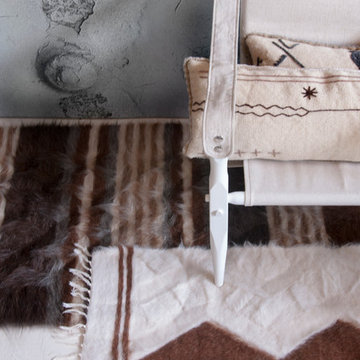
These luxury authentic flat-weave collection represent an ancient method of creating a faux animal hair pile which was widespread amongst nomads from Central Asia to Turkey. Woven with cotton warps and Angora goat hair wefts. The goat hair creates the long haired fur-like look. Angora goats are named after the Turkish province of their origin, Ankara and these goats produce the fibre known as mohair. The lustrous hair of the angora goat occurs in every natural shade ranging from black through browns to white, thus making possible a wide variety of colour-schemes with no dyes.
More about Mohair…
Mohair is one of the oldest textile fibres in use. The Angora goat is thought to originate from the mountains of Tibet, reaching Turkey in the 16th century. Mohair is warm in winter as it has great insulating properties, while remaining cool in summer due to its moisture wicking properties. It’s possible to use double-side, hairy side for winter, woven side for summer. It is durable, naturally elastic, flame resistant, crease resistant, and does not felt.
It is a luxury fiber, like cashmere, angora and silk, and is more expensive than most wools that comes from sheep. Mohair is composed mostly of keratin, a protein found in the hair, wool, horns and skin of all mammals.
 Tile Doctor Ltd
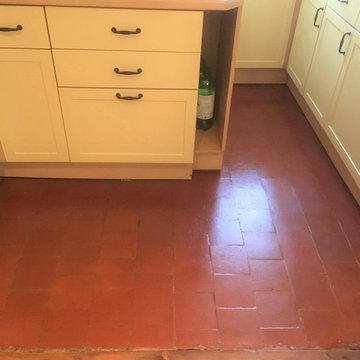
I received a call from this client in Old Marston around two miles north east of the centre of Oxford. They had lifted a lino floor in their kitchen and found an old Quarry Tiled floor underneath and decided to see if they could have it restored.
I went over to survey the floor and could see that the tiles had been covered with a thin layer of levelling screed to ensure the lino didn’t sink into the recesses. I ran some tests to demonstrate how the screed could be removed which worked well and it was apparent that the tiles underneath were intact and could be renovated. I submitted a quotation for removing all the screed, deep cleaning the Quarry tiles and then sealing the tiles to protect them. The client was really pleased that we could restore the floor and the quote was accepted, with a date booked to do the work.
To start the work, I applied undiluted Tile Doctor Grout Clean-up worked in with a small carbide brush attached to a hand-held rotary buffer. The combination of the acid in the Tile Doctor Grout Clean-up combined with the scrubbing action of the brush were effective at removing most of the screed. The small bits of remaining screed were carefully removed by hand, using a floor scraper. The floor was then rinsed with water and the soil removed with a wet vacuum.
For the second phase of the cleaning process I applied Tile Doctor Oxy-Gel which was scrubbed into the floor with a stiff brush rinsing after with water and the soil extracted again using the wet vacuum. After cleaning the floor to remove the dirt I could still see some evidence of the screed on the tiles, so I decided to give the floor an Acid Wash using Tile Doctor Acid Gel which was scrubbed into the floor and rinsed off as before. Tile Doctor Acid Gel is of course an acidic product so once it was removed, I decided to rinse the floor with Tile Doctor Neutral Cleaner to neutralise the pH levels in the floor. The wet vacuum was used again to remove as much moisture from the Quarry tiles as possible before leaving the now clean floor to dry off fully overnight.
I returned to seal this floor the next day. First, I checked the floor was fully dry with the damp meter, it was within the recommended range, so I was ready to complete the sealing process.
The client was not too sure if they wanted a matt or sheen finish, so I first put a coat of Tile Doctor Colour Grow on the floor to show them the matt finish. Colour Grow is an impregnating sealer that enhances natural colour and protects from within by occupying the pores in the tile. After reviewing the floor, they decided it was not for them, so I followed up by applying several coats of Tile Doctor Seal & Go which adds a nice sheen finish and is compatible with Colour Grow.
The combination of sealers worked very well together, and they were very satisfied with the final result and of course that we had been able to restore the Quarry tiles.
Barry Woodward
Oxfordshire Tile Doctor
 Griggstown Construction Co.
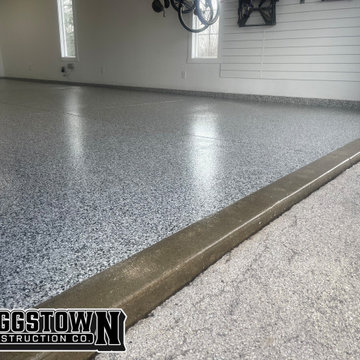
Transform your space with our high-performance epoxy flooring. Beyond its visually appealing glossy finish, it offers unparalleled resistance to wear and tear. Designed to combat stains, chips, and abrasions, our epoxy ensures your floors remain pristine and vibrant for years to come.
10