
Search results for "Respect real" in Home Design Ideas


 Get Your PHX
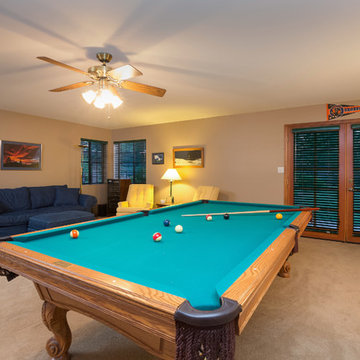
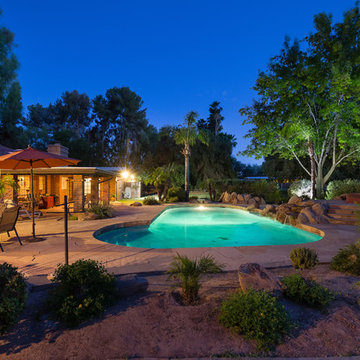
Welcome home to the Harry Tritle House, an historic Spanish Mission style property in the coveted Alvarado historic neighborhood. This estate has a long history in Phoenix. Built in 1928 for Harry, the son of territorial governor F.A. Tritle, this home has seen the growth and development of Phoenix and stands as a proud statement of historic preservation done well. You will marvel at the incredible woodwork, the coved ceilings, the luxurious grounds and the attention to detail and respect for this home's origin. The current owners have added just the right touches, including a beautiful pool. You can have all this, as well as easy access to downtown, transportation corridors, shopping, entertainment and a peaceful urban neighborhood. Call for a special showing appointment. See more at http://getyourphx.com/get_your_phx_listings/
Find the right local pro for your project

 Envision Web
Stuart Wade, Envision Virtual Tours
Envision Web is a professional photography and Web Development company serving the greater Atlanta Area
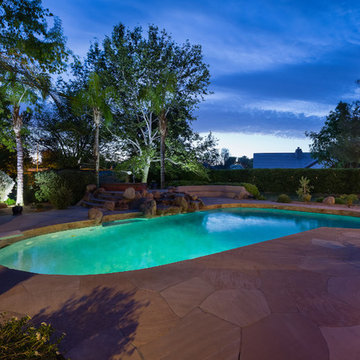
Situated along the quiet flow of the Chattahoochee River, this gated, nature reserve community offers its discerning residents all the beauty of an unspoiled natural environment as well as convenient access to Atlanta.
The Lodge, our new mountain-resort inspired clubhouse, embodies all that is The River Club. Its enduring architecture is immediately welcoming, and the level of service offered to members is unrivaled in all of Atlanta. From dining and golf to massage therapy and game nights, The Lodge is the center of life here.
Every detail at The River Club has been crafted with a sincere respect for the land – creating the ideal place to raise a family and form lasting friendships. With stunning architecture, a signature Greg Norman golf course, our expansive Lakeside Family Sports Center, a Kids' Klub and a riverside nature trail, The River Club is very much a retreat from the hustle and hassles of everyday life.
Welcome to The River Club.

 Jacobson Construction
“If everyone is moving forward together,
then success takes care of itself.”
- Henry Ford
It’s no secret that one big reason for Jacobson Construction’s success is because of our people. I’ve always hired the best people who work together as a team while respecting our customers. These are real professionals who work together and get the job done.
Sean, our project leader, has been with me since 1995, and my electrician has been with me even longer. Many of my current staff have been with me for over 15 years. I am fortunate to have these skilled professionals working with me.
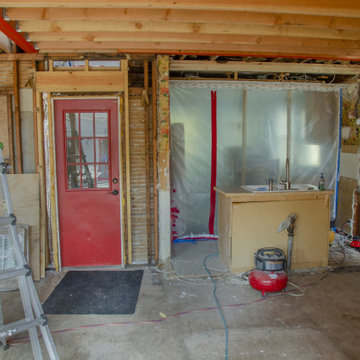
The addition is coming along. There’s a hole in the kitchen where there used to be a supporting wall. Framing’s done in the basement, and a gas fireplace is ready to be installed. The second-floor dormers are framed, and all of our windows have been delivered.
Now that it’s taking shape, looks like one of our new favorite spaces will be the new second-floor bedroom. Because it’s adjacent to the master suite it could make an ideal nursery and add value to my home.
Paying for things you can’t see is hard. For example, putting on a new roof is expensive, and because you can’t see it this seems like an even bigger expense.
What you can’t see on this addition is how much effort is made in securely tying the addition to the existing home – originally built in 1936.
We needed to support part of the old roof and all the new roof with stacked support posts. To do that we installed 3 stacked posts to carry the load from new footings in the basement to the beam three stories up.
The red marked beam in the photo at the top of the page is supported by footings three stories below, halfway into the existing home.
We also physically connected the new addition with beams that extend halfway into the current home.

Sponsored
Columbus, OH

Wannemacher Interiors
Customized Award-Winning Interior Design Solutions in Franklin Cnty OH

 Envi Interior Design Studio
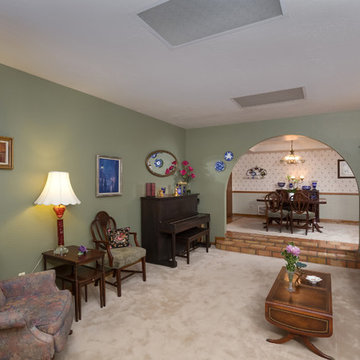
This new building, designed in conjunction with Carney Logan Burke Architects, is the community center in the Village of Big Sky, Montana. The center houses a real estate hub, café and a retail center (Big Sky Real Estate Company, Compass Café by Sola, and Montana Supply respectively) under one roof. Each space maintains its own brand yet feels in harmony with one another. Materials, lighting and furnishings help connect each space and create a seamless dialog within the space. The contemporary architecture allows for a modern aesthetic, though the environment remains comfortable and welcoming.
 Envi Interior Design Studio
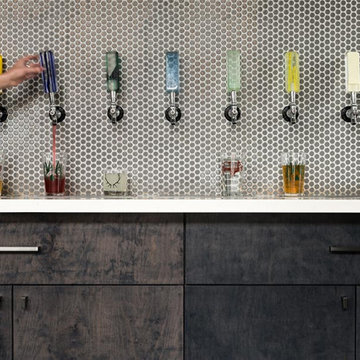
This new building, designed in conjunction with Carney Logan Burke Architects, is the community center in the Village of Big Sky, Montana. The center houses a real estate hub, café and a retail center (Big Sky Real Estate Company, Compass Café by Sola, and Montana Supply respectively) under one roof. Each space maintains its own brand yet feels in harmony with one another. Materials, lighting and furnishings help connect each space and create a seamless dialog within the space. The contemporary architecture allows for a modern aesthetic, though the environment remains comfortable and welcoming.

 safe ZOnea
Every year, the same thing happens. The first real snowfall arrives, demand for de-icing materials spikes overnight, and the businesses that waited too long find themselves scrambling for supply at the worst possible moment. Facility managers, property owners, contractors, and municipalities all depend on a steady supply of salt and ice melt to keep their properties safe and operational through winter. The ones who plan ahead sail through. The ones who don't pay more, wait longer, and take on real risk.
Sourcing de-icing materials well is not complicated, but it does require thinking ahead and understanding the options. The choices you make about what to buy, how to buy it, and who to buy it from have a direct effect on your costs, your reliability, and your ability to keep people safe when conditions turn dangerous. This article lays out what matters.
Why Your Choice of Supplier Matters More Than You Think
It is easy to treat de-icing material as a commodity, something you grab whenever you need it without much thought about where it comes from. That works fine until the moment it doesn't, usually in the middle of a storm when everyone needs supply at once and the casual sources have run dry. At that point, the relationships you built before the season become the difference between staying stocked and being stuck.
Reliable supply is the whole game in winter operations. A property that runs out of ice melt during a storm faces safety hazards, liability exposure, and disruption, none of which can wait for a back-ordered shipment. This is why establishing relationships with dependable rock salt suppliers before the season starts is one of the smartest moves a facility manager or contractor can make. It locks in supply, often locks in better pricing, and removes a major source of mid-winter stress.
The lesson here is to treat sourcing as a planning decision rather than a last-minute errand. The businesses that come through winter smoothly are almost always the ones that secured their supply chain early, chose suppliers who could actually deliver when it counted, and never had to gamble on finding material during a shortage. Reliability bought in advance is far cheaper than scarcity paid for in a crisis.
Bagged or Bulk: Matching the Material to the Job
One of the first practical decisions is whether to buy de-icing material in bags or in bulk, and the right answer depends entirely on the operation. Each format has clear advantages, and many operations end up using both for different purposes.
Bagged material offers convenience, control, and easy storage. It is simple to handle, easy to distribute to different locations or crews, straightforward to store without special equipment, and convenient for spot application by hand. It suits smaller properties, businesses without bulk storage, and situations where portion control and tidiness matter. Bulk material, on the other hand, tends to make sense for large operations that go through high volumes, where buying in quantity lowers the per-unit cost and the operation has the equipment and space to store and handle it. The tradeoff is between the convenience and flexibility of bags and the volume economics of bulk.
For many operations, the right approach is a mix: bulk for the high-volume core of the work and bags for flexibility, spot treatment, and locations where bulk handling is impractical. The key is to match the format to how the material will actually be stored, moved, and applied, rather than defaulting to one or the other out of habit. Thinking this through in advance avoids both the waste of over-buying bulk you can't handle and the expense of relying entirely on bags for a large operation.
Rock Salt Is Not Your Only Option
Rock salt, or sodium chloride, is the workhorse of winter de-icing for good reason. It is effective, widely available, and cost-efficient, which makes it the default choice for most operations most of the time. But it has limits, and understanding the alternatives helps you choose the right material for the conditions you actually face.
The most important limitation is temperature. Rock salt becomes less effective as temperatures drop, and in genuinely cold conditions it can struggle to do the job at all. This is where alternatives come in. Calcium chloride, for instance, works at much lower temperatures than rock salt and acts quickly, which makes it valuable when conditions are severe or when fast melting matters. Operations that face hard freezes or need dependable performance in extreme cold often keep calcium chloride for sale on hand for exactly those situations, using it alongside rock salt rather than instead of it.
The practical approach is to understand the conditions your property faces and stock accordingly. For many operations, rock salt handles the bulk of the work while a faster, colder-rated material like calcium chloride covers the extreme days when ordinary salt falls short. Matching the material to the temperature and the urgency of the situation is what separates an operation that stays ahead of winter from one that is constantly reacting to it.
Securing Your Supply Before the Season
Knowing what to buy is only half the equation. The other half is making sure you can actually get it when you need it, which means securing your supply before winter arrives rather than after it has already started. Timing is one of the most underrated factors in winter operations.
The logic is simple. Demand for de-icing materials is highly seasonal and spikes sharply during storms, when everyone needs supply simultaneously. Prices and availability both move against the buyer at exactly those moments. By contrast, planning ahead, estimating your needs and arranging supply before the season, puts you in a far stronger position. Working with established rock salt suppliers ahead of time means your material is accounted for before the rush, often at better pricing and with the confidence that it will be there when the first storm hits.
This kind of planning also lets you think clearly rather than react under pressure. You can estimate your seasonal needs based on your property and past winters, decide on the right mix of materials and formats, and arrange storage in advance. Operations that do this consistently spend less, worry less, and never find themselves making frantic calls during a storm. The effort of planning ahead is modest, and the payoff in reliability and cost savings is substantial.
Storing and Handling What You Buy
Securing supply is not much use if the material degrades before you can use it, which makes proper storage and handling an important and often overlooked part of the equation. De-icing materials are sensitive to moisture, and poor storage can turn a good supply into a clumped, hardened mess that is difficult to apply.
The fundamentals are straightforward. Keep material dry and protected from moisture, since salt and ice melt readily absorb water and can harden if exposed. Store it in a way that suits the format, whether that means a proper bulk storage area or a dry space for stacked bags. Keep it accessible, so crews can get to it quickly when a storm hits and time is short. And handle it with the right equipment for the format and volume, which protects both the material and the people working with it. None of this is complicated, but neglecting it can undermine even a well-planned supply.
Good storage practices protect the investment you made in securing supply early. There is little point in arranging your materials ahead of the season only to have them degrade before use. Treating storage and handling as part of the overall plan, rather than an afterthought, ensures that the material you secured is actually usable when the moment comes. It is the final link in a supply chain built to perform under winter conditions.
Estimating How Much You Actually Need
One question trips up operations of every size: how much de-icing material to buy. Order too little and you risk running short during a storm. Order too much and you tie up money and storage space in material you may not use. Getting the estimate reasonably right is a meaningful part of sourcing well.
Several factors shape the answer. The size and type of the areas you treat, sidewalks, lots, entrances, and drive lanes, set the baseline for how much material each application consumes. The local climate matters too, since colder regions and those with frequent snowfall go through far more material than milder ones. Application frequency depends on how often storms hit and how quickly surfaces need to be cleared, which varies with the kind of property and the expectations of the people who use it. And the type of material plays a role, since different products are applied at different rates.
Past experience is often the best guide. Operations that track what they used in previous winters, adjusted for the size of the property and the severity of the season, can estimate their needs with reasonable confidence. For newer operations without that history, it helps to plan conservatively and to work with a supplier who can replenish stock reliably, so that a low estimate does not turn into a mid-storm shortage.
The goal is not perfect precision but a sound, slightly cautious estimate paired with a dependable supply relationship. That combination lets an operation keep enough material on hand to handle the season without over-committing to volume it cannot store or use. Thinking this through before winter, rather than guessing during it, is one more way that planning ahead pays off when the snow starts to fall.
The Bottom Line
Sourcing de-icing materials well comes down to a few straightforward principles: plan ahead, choose reliable suppliers before the season, match your materials and formats to your actual needs and conditions, and store what you buy properly. The operations that follow these principles move through winter with confidence, while those that improvise pay more and take on needless risk.
Winter is predictable in one respect: it arrives every year, and demand for de-icing material spikes the moment it does. The businesses that prepare for that reality, rather than being surprised by it, are the ones that keep their properties safe, their costs controlled, and their operations running no matter what the season throws at them. A little foresight before the first snowfall pays off through every storm that follows.

Sponsored
Columbus, OH
Wannemacher Interiors
Customized Award-Winning Interior Design Solutions in Franklin Cnty OH


 Barbie Burke, REALTOR® Locality Real Estate
Inspiration for a southwestern bedroom remodel in Phoenix

Sponsored
Sunbury, OH

J.Holderby - Renovations
Franklin County's Leading General Contractors - 2X Best of Houzz!
 Get Your PHX
Welcome home to the Harry Tritle House, an historic Spanish Mission style property in the coveted Alvarado historic neighborhood. This estate has a long history in Phoenix. Built in 1928 for Harry, the son of territorial governor F.A. Tritle, this home has seen the growth and development of Phoenix and stands as a proud statement of historic preservation done well. You will marvel at the incredible woodwork, the coved ceilings, the luxurious grounds and the attention to detail and respect for this home's origin. The current owners have added just the right touches, including a beautiful pool. You can have all this, as well as easy access to downtown, transportation corridors, shopping, entertainment and a peaceful urban neighborhood. Call for a special showing appointment. See more at http://getyourphx.com/get_your_phx_listings/
 Boyenga Team / Compass
Eichler X-100: A Nationally Recognized Architectural Landmark
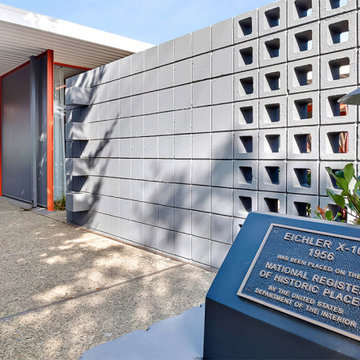
The Eichler X-100 holds a rare distinction in residential real estate—it is listed on the National Register of Historic Places, recognizing it as a property of exceptional architectural and cultural significance in the United States.
This designation places the X-100 among a select group of homes that have not only endured over time, but have helped define the evolution of modern living.
What the National Register Means
The National Register of Historic Places is the official list of the nation’s most important historic resources—properties that embody significant contributions to architecture, history, and culture.
For the Eichler X-100, this recognition affirms:
Its role as a groundbreaking experimental prototype
Its importance within the broader movement of California Modernism
Its association with visionary figures like Joseph Eichler, A. Quincy Jones, and Frederick Emmons
It is not simply a well-designed home—it is a documented piece of architectural history.
A Rare Level of Integrity
One of the key factors in the X-100’s designation is its remarkable level of preservation. Over the decades, the home has been carefully maintained and thoughtfully updated to respect its original vision.
Important defining features remain intact, including:
The steel-frame structural system
The open, garden-centered floor plan
Skylights and natural light strategies
Signature material palette of steel, glass, and laminate
This continuity allows the home to be experienced today much as it was in 1956.
Preservation Without Limitation
A common misconception is that National Register status restricts ownership—but for private residences, this is not the case.
The designation:
Does not limit private ownership or resale
Does not impose federal restrictions on modifications (unless federal funding is involved)
May offer potential incentives or recognition for preservation efforts
Instead, it serves primarily as a recognition of significance, elevating the property’s status in both cultural and real estate contexts.
A Collector-Level Opportunity
For buyers, National Register status adds a layer of meaning that goes beyond square footage or location. It signals that the property is:
Architecturally important
Historically documented
Extremely rare within the marketplace
Homes like the Eichler X-100 are often viewed as “trophy properties”—assets that combine lifestyle, design, and long-term cultural value.
Stewardship of a Legacy
Owning a National Register home like the Eichler X-100 is not just about possession—it’s about participation in a larger story.
It means becoming part of a lineage of stewards who understand the importance of:
Preserving architectural intent
Respecting design integrity
Carrying forward a vision that helped shape modern living
The Significance Today
Nearly 70 years after its debut, the Eichler X-100 continues to stand as a symbol of innovation, optimism, and design excellence.
Its listing on the National Register of Historic Places ensures that its story is recognized—but its future will always depend on those who choose to own and care for it.
The Eichler X-100 is not just a home on a list.
It is a recognized landmark of modern architecture—now ready for its next chapter. Image Sabrina Huang

8