
Search results for "Smooth consumer" in Home Design Ideas

 Consumers Kitchens & Baths
"The technology for design was a huge help with us seeing a visual of our choices before ordering."
It was true for the Ingram family’s dream kitchen, and it can be for yours!
Our accredited designers use the latest technology during design and product selection to guide you quickly and smoothly towards your project goals.
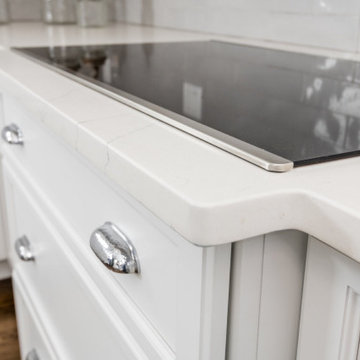 Consumers Kitchens & Baths
"The technology for design was a huge help with us seeing a visual of our choices before ordering."
It was true for the Ingram family’s dream kitchen, and it can be for yours!
Our accredited designers use the latest technology during design and product selection to guide you quickly and smoothly towards your project goals.
 Consumers Kitchens & Baths
"The technology for design was a huge help with us seeing a visual of our choices before ordering."
It was true for the Ingram family’s dream kitchen, and it can be for yours!
Our accredited designers use the latest technology during design and product selection to guide you quickly and smoothly towards your project goals.
Find the right local pro for your project

 annalynch
At the present level of development of the concept of "quality" is considered as a complex component, which includes the quality of the final product, the quality of management, quality of deliveries or work, the quality of life of people (employees) and society as a whole.
Quality management is coordinated and interconnected management activities, which was built in such a way as to ensure safe and smooth operation of the organization.
Organization Management, with regard to quality means that all activity is subject to the objectives set for quality, and to achieve these goals, the organization has developed a system of plans, have the necessary resources, carried out actions to achieve their goals.
Quality management - a very important element for any business. After all, quality is one of the criteria of the high popularity of a brand among consumers. Besides good quality will save the company from warranty repairs, lawsuits, etc.
Quality management includes four basic components:
• quality control;
• quality assurance;
• quality planning;
• quality improvement.
There are 8 basic principles of quality management system:
• The principle of orientation to the user. Product success primarily depends on how the user takes it. Moreover, this principle directs the company to study the needs of its customers.
• The principle of leadership or leadership role. Quality management in the first place depends directly on the company's management, which should by their actions show his concern for the produced goods, on its quality.
• The principle of staff involvement. From more - in less. If the head of the company must set an example in their interest in the quality of products, the company and each employee must also work to improve the quality of products and must want to improve it.
• The principle of the process approach. Based on the division of the company to suppliers and consumers. Suppliers - material security that comes into the company, and which must comply with certain quality. Consumers - the product, which is depending on the materials, must be of good quality. Because this is a direct product of your company.
• The principle of the system approach. It combines two previously identified types of organization in the common system. Moreover, he claims that this system should be a common goal, and general management.
• The principle of continuous improvement. Or to put it in simple words - "There is no limit to perfection." The principle involves constant monitoring of the quality of products in order to improve it.
• The principle of decision-making based on facts. It implies that all decisions will be taken by research, scientific evidence, public opinion polls, and not on an intuitive level head.
• Mutually beneficial supplier relationships. It's simple - the supplier delivers you high-quality materials and receives respective payment. The lower the quality of the goods, the less the cost.
• It is believed that the introduction of these 8 principles in any company will improve the quality of its products and the improvement of the production process. That, in turn, affect the overall good of the company success.
About Author: Anna Lynch is a freelance writer at http://online-check-in.org/, who creates papers about business and marketing. She has a long practice and great experience in the sphere of economics and now is able to help young people.
 Consumers Kitchens & Baths
"The technology for design was a huge help with us seeing a visual of our choices before ordering."
It was true for the Ingram family’s dream kitchen, and it can be for yours!
Our accredited designers use the latest technology during design and product selection to guide you quickly and smoothly towards your project goals.
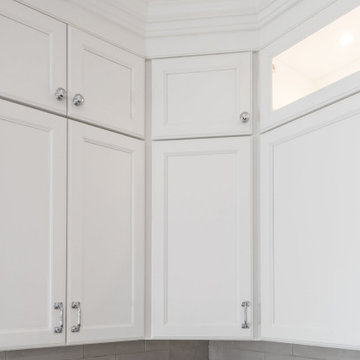 Consumers Kitchens & Baths
"The technology for design was a huge help with us seeing a visual of our choices before ordering."
It was true for the Ingram family’s dream kitchen, and it can be for yours!
Our accredited designers use the latest technology during design and product selection to guide you quickly and smoothly towards your project goals.

 Levis 4 Floors
Levi’s 4 Floors opened for business in 1986, and ever since we have been creating a pleasant and comfortable shopping environment for each and every customer. We have the top sales consultants and designers in Central Ohio, with an average of 25 years experience in providing our customers with premier service. In addition, Levi’s 4 Floors is the only authorized STAINMASTER FLOORING CENTER in Columbus, and one of the largest independently owned specialty flooring stores in the United States.
We only carry the latest fashions; no seconds or discontinued styles. Being a STAINMASTER FLOORING CENTER is more than just a name. It means that our sales staff has extensive product knowledge so that you can focus on choosing the correct style and color for your home, as well as your individual lifestyle. Along with our wide selection of products, we offer exclusive warranties, a customer satisfaction plan, and a low price guarantee. Levi’s 4 Floors will help you find the exact floor for you, whether you are looking for residential, commercial or even custom-builder flooring.
Our commitment to your satisfaction doesn’t end with just our flooring choices. We have been given top ratings by the Better Business Bureau and numerous other consumer organizations because our salespeople personally guide you through the purchasing process. Our expert advice and no-pressure sales style guarantees that you will get the best product at the best price. Levi’s 4 Floors continues our service to you by offering the finest installation available, and our installation warranties and cleaning services assure that your floor will continue looking great long after your purchase.
Value means getting the products you want at the lowest prices, and at Levi’s we consider it our number one priority to deliver the highest value to every customer. We don’t sell every brand of flooring, only the proven best quality and highest value products. The perfect floor, low prices and easy, professional installation… that’s why we say, “because your home deserves the very best!”
 Consumers Kitchens & Baths
"The technology for design was a huge help with us seeing a visual of our choices before ordering."
It was true for the Ingram family’s dream kitchen, and it can be for yours!
Our accredited designers use the latest technology during design and product selection to guide you quickly and smoothly towards your project goals.
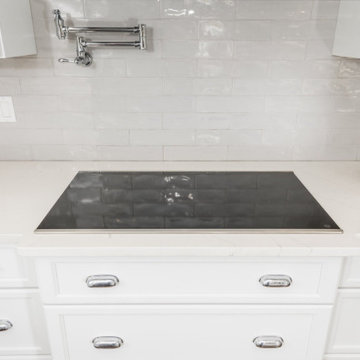 Consumers Kitchens & Baths
"The technology for design was a huge help with us seeing a visual of our choices before ordering."
It was true for the Ingram family’s dream kitchen, and it can be for yours!
Our accredited designers use the latest technology during design and product selection to guide you quickly and smoothly towards your project goals.

 safe ZOnea
Every year, the same thing happens. The first real snowfall arrives, demand for de-icing materials spikes overnight, and the businesses that waited too long find themselves scrambling for supply at the worst possible moment. Facility managers, property owners, contractors, and municipalities all depend on a steady supply of salt and ice melt to keep their properties safe and operational through winter. The ones who plan ahead sail through. The ones who don't pay more, wait longer, and take on real risk.
Sourcing de-icing materials well is not complicated, but it does require thinking ahead and understanding the options. The choices you make about what to buy, how to buy it, and who to buy it from have a direct effect on your costs, your reliability, and your ability to keep people safe when conditions turn dangerous. This article lays out what matters.
Why Your Choice of Supplier Matters More Than You Think
It is easy to treat de-icing material as a commodity, something you grab whenever you need it without much thought about where it comes from. That works fine until the moment it doesn't, usually in the middle of a storm when everyone needs supply at once and the casual sources have run dry. At that point, the relationships you built before the season become the difference between staying stocked and being stuck.
Reliable supply is the whole game in winter operations. A property that runs out of ice melt during a storm faces safety hazards, liability exposure, and disruption, none of which can wait for a back-ordered shipment. This is why establishing relationships with dependable rock salt suppliers before the season starts is one of the smartest moves a facility manager or contractor can make. It locks in supply, often locks in better pricing, and removes a major source of mid-winter stress.
The lesson here is to treat sourcing as a planning decision rather than a last-minute errand. The businesses that come through winter smoothly are almost always the ones that secured their supply chain early, chose suppliers who could actually deliver when it counted, and never had to gamble on finding material during a shortage. Reliability bought in advance is far cheaper than scarcity paid for in a crisis.
Bagged or Bulk: Matching the Material to the Job
One of the first practical decisions is whether to buy de-icing material in bags or in bulk, and the right answer depends entirely on the operation. Each format has clear advantages, and many operations end up using both for different purposes.
Bagged material offers convenience, control, and easy storage. It is simple to handle, easy to distribute to different locations or crews, straightforward to store without special equipment, and convenient for spot application by hand. It suits smaller properties, businesses without bulk storage, and situations where portion control and tidiness matter. Bulk material, on the other hand, tends to make sense for large operations that go through high volumes, where buying in quantity lowers the per-unit cost and the operation has the equipment and space to store and handle it. The tradeoff is between the convenience and flexibility of bags and the volume economics of bulk.
For many operations, the right approach is a mix: bulk for the high-volume core of the work and bags for flexibility, spot treatment, and locations where bulk handling is impractical. The key is to match the format to how the material will actually be stored, moved, and applied, rather than defaulting to one or the other out of habit. Thinking this through in advance avoids both the waste of over-buying bulk you can't handle and the expense of relying entirely on bags for a large operation.
Rock Salt Is Not Your Only Option
Rock salt, or sodium chloride, is the workhorse of winter de-icing for good reason. It is effective, widely available, and cost-efficient, which makes it the default choice for most operations most of the time. But it has limits, and understanding the alternatives helps you choose the right material for the conditions you actually face.
The most important limitation is temperature. Rock salt becomes less effective as temperatures drop, and in genuinely cold conditions it can struggle to do the job at all. This is where alternatives come in. Calcium chloride, for instance, works at much lower temperatures than rock salt and acts quickly, which makes it valuable when conditions are severe or when fast melting matters. Operations that face hard freezes or need dependable performance in extreme cold often keep calcium chloride for sale on hand for exactly those situations, using it alongside rock salt rather than instead of it.
The practical approach is to understand the conditions your property faces and stock accordingly. For many operations, rock salt handles the bulk of the work while a faster, colder-rated material like calcium chloride covers the extreme days when ordinary salt falls short. Matching the material to the temperature and the urgency of the situation is what separates an operation that stays ahead of winter from one that is constantly reacting to it.
Securing Your Supply Before the Season
Knowing what to buy is only half the equation. The other half is making sure you can actually get it when you need it, which means securing your supply before winter arrives rather than after it has already started. Timing is one of the most underrated factors in winter operations.
The logic is simple. Demand for de-icing materials is highly seasonal and spikes sharply during storms, when everyone needs supply simultaneously. Prices and availability both move against the buyer at exactly those moments. By contrast, planning ahead, estimating your needs and arranging supply before the season, puts you in a far stronger position. Working with established rock salt suppliers ahead of time means your material is accounted for before the rush, often at better pricing and with the confidence that it will be there when the first storm hits.
This kind of planning also lets you think clearly rather than react under pressure. You can estimate your seasonal needs based on your property and past winters, decide on the right mix of materials and formats, and arrange storage in advance. Operations that do this consistently spend less, worry less, and never find themselves making frantic calls during a storm. The effort of planning ahead is modest, and the payoff in reliability and cost savings is substantial.
Storing and Handling What You Buy
Securing supply is not much use if the material degrades before you can use it, which makes proper storage and handling an important and often overlooked part of the equation. De-icing materials are sensitive to moisture, and poor storage can turn a good supply into a clumped, hardened mess that is difficult to apply.
The fundamentals are straightforward. Keep material dry and protected from moisture, since salt and ice melt readily absorb water and can harden if exposed. Store it in a way that suits the format, whether that means a proper bulk storage area or a dry space for stacked bags. Keep it accessible, so crews can get to it quickly when a storm hits and time is short. And handle it with the right equipment for the format and volume, which protects both the material and the people working with it. None of this is complicated, but neglecting it can undermine even a well-planned supply.
Good storage practices protect the investment you made in securing supply early. There is little point in arranging your materials ahead of the season only to have them degrade before use. Treating storage and handling as part of the overall plan, rather than an afterthought, ensures that the material you secured is actually usable when the moment comes. It is the final link in a supply chain built to perform under winter conditions.
Estimating How Much You Actually Need
One question trips up operations of every size: how much de-icing material to buy. Order too little and you risk running short during a storm. Order too much and you tie up money and storage space in material you may not use. Getting the estimate reasonably right is a meaningful part of sourcing well.
Several factors shape the answer. The size and type of the areas you treat, sidewalks, lots, entrances, and drive lanes, set the baseline for how much material each application consumes. The local climate matters too, since colder regions and those with frequent snowfall go through far more material than milder ones. Application frequency depends on how often storms hit and how quickly surfaces need to be cleared, which varies with the kind of property and the expectations of the people who use it. And the type of material plays a role, since different products are applied at different rates.
Past experience is often the best guide. Operations that track what they used in previous winters, adjusted for the size of the property and the severity of the season, can estimate their needs with reasonable confidence. For newer operations without that history, it helps to plan conservatively and to work with a supplier who can replenish stock reliably, so that a low estimate does not turn into a mid-storm shortage.
The goal is not perfect precision but a sound, slightly cautious estimate paired with a dependable supply relationship. That combination lets an operation keep enough material on hand to handle the season without over-committing to volume it cannot store or use. Thinking this through before winter, rather than guessing during it, is one more way that planning ahead pays off when the snow starts to fall.
The Bottom Line
Sourcing de-icing materials well comes down to a few straightforward principles: plan ahead, choose reliable suppliers before the season, match your materials and formats to your actual needs and conditions, and store what you buy properly. The operations that follow these principles move through winter with confidence, while those that improvise pay more and take on needless risk.
Winter is predictable in one respect: it arrives every year, and demand for de-icing material spikes the moment it does. The businesses that prepare for that reality, rather than being surprised by it, are the ones that keep their properties safe, their costs controlled, and their operations running no matter what the season throws at them. A little foresight before the first snowfall pays off through every storm that follows.

 Johnson Hardware
This 1500SC pocket door frame with Soft Close/Soft Open by Johnson Hardware smoothly glides 200 pound doors. The precision extruded jump proof track and quick release locking tab make installation easy and dependable. The All Steel Split Stud includes self-tapping dry wall and trim screws. Johnson has manufactured in the USA for over 60 years with wonderful product reviews from the trade and consumers. This hardware
provides a great way to have more useable space in your home.

 Five Star Tree Care
Utilizing the right plants can really spruce up the look of your property. But before you go and buy the first plant you see, it’s important to think about how dedicated you are to maintaining them and how much time you are willing to invest in them. All plants are alive and need love and attention. The amount of love and attention can vary depending on the plant. If you are a busy person who doesn’t have a lot of time to dedicate to the care of your plants, this doesn’t mean you can’t have plants and have them thrive.
There are many low-maintenance plants that you can choose from. These will allow you to add to the aesthetic of your property, without consuming your time to care for them. We here at Five Star Tree Services have come up with a list of the best low-maintenance shrubs for you to consider.
Flowering Shrubs
Looking to add colour and beauty to your landscape? You might be thinking regular flowers can do this, but have you considered flowering shrubs? These are something simple and beautiful that you can add to your yard.
Hibiscus
These plants come in many colours. It is also known as Chinese Hibiscus, China Rose, and Tropical Hibiscus. This evergreen perennial is native to warm temperature, subtropical and tropical places around the world. The flowers it produces can be 3-8 inches in diameter. Some resemble trumpets. Every flower has 5 or more petals and can range in colours from red, orange, yellow, purple, pink, and white. Flowers are constantly produced by this plant but each blossom only lasts a day. Its growth can be 24 inches a year and has the potential to reach 15 feet fully grown.
Forsythia
This shrub is part of the olive family. It is mostly native to eastern Asia but one is native to southeastern Europe. This plant is also known as golden bells. This is a deciduous shrub that can grow to 3-9 feet but ones with rough grey-brown bark have been known to grow to 20 feet. With opposite positioned leaves, that can grow between 2 and 10 cm in length. They produce bright yellow flowers and will bloom in early spring before the leaves come out.
Evergreen Shrubs
It is beneficial to have more green plants around you. There was a study done that showed women can have improved mental health and a longer life expectancy if you live in or near green areas. If you have a busy life and don’t have space in your home, you are able to still benefit from and experience evergreen shrubs. They are perfect for small yards and large ones alike.
Euonymus
This plant is native to places like East Asia, North America, Madagascar, the Himalayas, and Europe. Depending on what country you are in will determine the species you encounter. These have many names and you might have heard them referred to as a spindle tree, burning-bush, euonymus, strawberry-bush, spindle, or wintercreeper. There are 130 species of deciduous small trees, evergreen shrubs, and lianas.
The wintercreeper is a herbaceous perennial vine and it can grow to 70 feet. But it usually is left at 2-4 feet as a mounded shrub. It has egg-shaped leaves that measure to 1-2.5 inches long and 1-1.75 inches wide. They can vary in colour, such as dark green, green-gold, or green-white.
Blue Star Juniper
This is a needled shrub and is a member of the cypress family. It is native to the Himalayas, Afghanistan, and western China. You might also know it as flaky juniper, Himalayan juniper, or singleseed juniper. This is a dwarf shrub and when it gets to a mature size, it is a compact mound measuring from 1-3 feet high and 1.5-3 feet wide. It grows slow and has a tendency to grow out and not up. It has silvery-blue foliage and is densely packed with needles that are awl-shaped.
Privacy Shrubs
Everyone wants privacy while you are in your home or yard. Some people decide to install a fence in order to give themselves privacy. But there is a more creative way to acquire your privacy; with privacy shrubs! If you are looking for something that is different from a fence and low-maintenance, privacy shrubs are exactly what you are looking for. Not only do these plants provide you with the much-needed privacy you desire, they also add beauty to your landscaping. Some suggestions are as follows:
Thuja Green Giant
This is a genus of coniferous trees that belong to the cypress or Cupressaceae family. 3 out of 5 of these plants are native to Eastern Asia and the other 2 are from North America. This evergreen can also be known as Thuja green rocket or green giant arborvitae. They are fast growing and can grow to 3-5 feet in one season. Growing in a uniform shape, when mature, they can be 50-60 feet tall and 12-20 feet wide. They have tiny, glossy leaves that resemble scales. These overlap tightly together and create a fan of foliage.
Boxwood hedges
These evergreen shrubs and small trees are slow growing. You might also have heard them called boxes. They are native to numerous places that include Mexico, southern and eastern Asia, Africa, and southern and western Europe. These plants have been specifically grown for their foliage but they also produce a flower. They can grow from 1-20 feet tall and spread 2-8 feet wide. They have leathery feeling leaves that are lace-shaped or almost round. The colours can range from pale green to dark blue-green. They produce small yellow-green flowers in the spring.
WARNIIG: this plant produces a toxic alkaloid that can hurt humans and animals. If a person or animal were to eat the leaves, it can trigger convulsions, dizziness, intestinal distress, and respiratory failure. If you come in contact with the sap, it could cause skin irritation. It is best to avoid this plant if you have small children or pets.
Wax Myrtle Tree
This large shrub or small tree is native to the Caribbean and North and Central America. There are many names for this plant that include bayberry tree, southern wax myrtle, southern bayberry, tallow shrub, and candleberry. It is very adaptable to various habitats but it naturally will grow near rivers and streams, wetlands, dunes, fields, pine barrens, hillsides, and in mixed-broadleaf and coniferous forests. This shrub can grow 20-25 feet tall with light olive-green leaves that have serrated edges. It also has smooth thin gray-brown bark. It can also produce bluish-white fruit which grows on short stalks in clusters.
How Five Star Tree Service Can Help
When looking for privacy for your home, utilizing low-maintenance plants is a great way to do this. It is also a great way to add something unique to your yard. Some of these shrubs will require some maintenance, which is where our team at Five Star Tree Services can help! We offer shrub trimming services in Toronto and if you require our assistance, make sure to give us a call at (416) 990-3355.

 Arin Carlyle
"Maximize Your Space:
The Upstreman Black BR321 Mini Fridge
I'm a college student living in a tiny dorm room, struggling to keep my snacks, beverages, and leftovers fresh. My regular trips to the communal kitchen fridge are time-consuming and frustrating. I often discover my snacks mysteriously disappearing.
This was the exact situation I found myself in before investing in the Upstreman BR321 Mini Fridge. It was a game-changer for me in more ways than one.
One scorching summer, my friends and I hosted a movie night in my dorm room. We brought our snacks and even ice cream. Given the limited space, I doubted one appliance could handle it all. Still, with a capacity of 3.2 cubic feet, the Upstreman BR321 Mini Fridge exceeded my expectations.
As we stocked the fridge with beverages, the efficient single-door and adjustable thermostat stood out, cooling our drinks to varying preferences seamlessly. It ran quietly during our movie night, its soft 38 dB hum lost amid our enjoyment, unlike the disruptive communal fridge. It operates smoothly on 115 volts.
The freezer impressed us further by keeping the ice cream firm, complementing the ready ice cubes from the included tray. The Upstreman BR321 Mini Fridge proved excellent for storing frozen delights.
Discovering the Upstreman BR321 Mini Fridge's full capabilities was enlightening. Its crisper drawer extended the freshness of my produce, and the removable shelves made for intelligent storage. This fridge became an indispensable time and money saver in my dorm.
The included accessories, like the defrost tool, and responsive customer service added convenience. Outshining other models, it integrated into my college life effortlessly, keeping my food and drinks ideally chilled.
Pros:
1. At 17.4" deep, 33.1" wide, and 18.7" high, this space-saving, single-door design is ideal for snug spaces.
2. Customizable thermostat for personalized cooling.
3. Silent operation that doesn't disrupt your peace.
4. A crisper drawer and removable shelves for organized storage.
5. Comprehensive package with valuable accessories and reliable customer service.
6. Weighing just 39.7 pounds, this item is easily portable.
Cons:
1. None to mention, it exceeded all my expectations.
Conclusion:
The Upstreman BR321 Mini Fridge is a stellar choice for anyone needing a compact, reliable appliance. As a student, it exceeded my expectations, proving itself daily. At around $137.9, it is budget-friendly.
—----------------------------
"Chill in Style:
The Upstreman Black FR-17 Fridge with Freezer
One evening, Dad came home looking troubled. Over dinner, he shared how his office fridge was failing, struggling to keep things cold. He was fed up with its poor performance, which only added to the stresses of his workday. It was clear that a replacement was overdue.
I fondly recall how my trusty Upstreman BR321 became my dorm's cooling hero. I suggested to Dad, "It's time tlack FR-17 model. Confident in the brand's quality, it would be an excellent choice for his office needs.
old replace the old fridge in the office."
Based on my positive experience with the Upstreman BR321, I suggested to my father that he consider the Upstreman B
Sleek and space-efficient, the Upstreman 1.7 Cu.ft Mini Fridge shines in compactness and practicality. At 18.9" x 17.7" x 19.3", it tucks into small spaces easily, an excellent addition to dorms, offices, or bedrooms. The design includes a reversible door, maximizing convenience in snug layouts.
Its cooling prowess is adjustable between 33.8°F and 46.4°F, and it comes with a nifty freezer compartment for keeping edibles ice-cold. Operating at a whisper-quiet 38dB, it ensures a tranquil atmosphere.
Energy consumption is impressively low, about 0.5 kWh per day, using an eco-conscious R600a refrigerant. Upstreman backs this model with a one-year warranty, making the FR17 an intelligent, stress-free choice.
Pros:
1. Compact (18.9" x 17.7" x 19.3") - Fits well in tight spaces.
2. Adjustable thermostat (33.8°F to 46.4°F) - Suits varied storage needs.
3. Quiet (38dB) - Ensures a peaceful environment.
4. Energy-efficient - Only 0.5 kWh daily usage.
5. Eco-friendly - Uses R600a refrigerant, better for the planet.
Cons:
1. Requires manual defrosting, adding to maintenance tasks.
2. It offers minimal freezer space, which is unsuitable for more extensive storage needs.
Conclusion:
Dad's office space is complete with the Upstreman Black FR-17, offering a silent, energy-efficient cooling solution that's both space-saving and perfect for his daily needs, ensuring fresh snacks and drinks are always within reach.
—-----------------------------------------
"Chill in Compact Luxury:
Upstreman's Sleek 3.2 Cu.Ft Double Door Mini Fridge- BD-321"
Nestled amidst our salon's vibrant bustle and the rhythmic snip of scissors, the Upstreman BD321 Mini Double Door Fridge stands as a beacon of excellent efficiency. This sleek, space-conscious appliance, chosen by my mother for its style and functionality, ensures drinks and beauty products are refreshingly cold.
Its well-designed compartments, a 2.2 Cu.Ft cooler alongside a 1 Cu.Ft freezer, maintain our essentials at prime temperatures, from crisp face masks to frosty beverages. The adjustable thermostat and soft LED interior lighting cater to our after-hours operations. At the same time, the versatile shelving accommodates various product sizes.
Costing mere cents to run daily and operating in hushed tones, it's the salon's silent workhorse. With its energy-smart design and customizable options, the Upstreman Mini Double Door Fridge isn't just an appliance—it's a vital part of our daily routine, earning my recommendation for anyone searching for a stylish, reliable mini fridge for personal or professional spaces.
Pros:
1. Compact yet spacious with a 3.2 cubic feet capacity, perfect for small living spaces.
2. Offers five temperature settings and a constant -0.4 F freezer for precise cooling.
3. Features a crisper drawer and removable shelves to keep produce fresh.
4. Quiet (38 dB) operation and energy-efficient, costing roughly $0.1 daily.
5. Customizable with accessories like an ice tray and reversible doors for user convenience.
Cons:
1. Requires manual defrosting, a potential hassle for the time-strapped.
2. The 1 Cu.Ft freezer compartment may be too small for bulk freezing needs.
Conclusion:
My salon's service quality has soared with the Upstreman Mini Double Door Fridge —beverages stay chilled, products remain fresh, and the silent operation keeps the ambiance serene.
 Tile Doctor Ltd
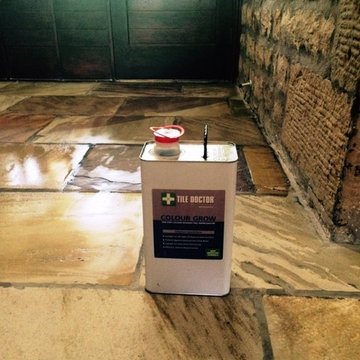
Here we have a six year old Indian Sandstone tiled floor located a property on the outskirts of Lancaster. Measuring 100 metres squared, the very large floor had under floor heating in the concrete sub base. The type of stone used inside the property is what we commonly refer to as ‘patio Sandstone’, a material which is usually used outside because of its very rough texture. It’s not particularly comfortable to walk across in bare feet, hence why many people consider it be impractical for internal flooring.
Nonetheless, the property owner was keen to make the rough textured floor as feet-friendly as possible for people walking over it. At Tile Doctor we have developed a process known as milling, which utilises diamond encrusted pads combined with a weighted rotary machine to smooth the rough surface, leaving it looking and feeling a lot nicer and more practical to live with. The milling process is only done once, but while the Sandstone will still need cleaning and sealing in the future, it won’t be nearly as difficult as when it was rough.
The job would take over two weeks to complete due to the fact that the existing grout needed to be removed and replaced with a flexible floor grout: a very time consuming process.
As mentioned, the surface of the Sandstone was very rough, and so needed to be milled down to make it a lot smoother to look after and make it easy to clean and seal. This was achieved by using Tile Doctor’s 50 Grit diamond encrusted burnishing pads, fitted to a weighed rotary machine and run along the entire surface area of the floor. Through this process the stone became much smoother and more aesthetic – completing one of our main objectives for the customer.
Next, we started breaking out the already loose and badly applied grout with our grout removal tools. The builder who had installed the floor had used a sand/cement-based grout which wasn’t flexible. As a result, it started to crumble and loosen quite quickly after exposure to the underfloor heating. We removed this and replaced it with a far more flexible grout.
Once the whole area had been successfully milled and the grout replaced, the Sandstone floor was left to dry out over the weekend. Upon our return to the property, we cleaned off any dust and resin left over from the milling and grouting processes, before leaving it to dry for a further 24 hours.
The next day we returned to seal the whole floor with two coats of our impregnating sealer Tile Doctor Colour Grow. The sealer fills the pores of the Sandstone to prevent ingrained dirt and stains, while also emphasising the natural colours in the stone. It also provides a robust matte finish, which is what the customer wished for.
It wasn’t the easiest of processes to get the Indian Sandstone into a condition where it would be both suitable for internal flooring and aesthetically pleasing, but the results proved to be very much worth the time and effort invested. The customer was very pleased with the transformation.
Russell Taylor
Lancashire Tile Doctor

 NZ Builders Ltd
A passive solar home built on Saltspring Island from Concrete Insulated Panels. Operates independently from all public infrastructure. Using Solar P.V and a battery bank as the homes power source, collecting water from the roof into a 5000 gallon rain water collection system. The heat source is passive solar, wood burning fireplace.The home consumes 4500KW per year in heat.
Photos by Leanna Rathkelly



3