
Search results for "Template" in Home Design Ideas
 Stylish
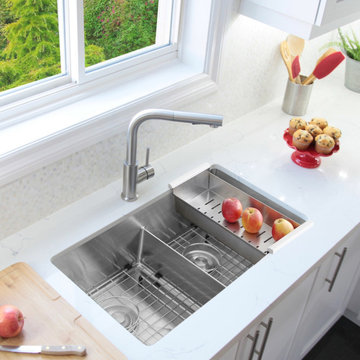
Professionally designed with functionality in mind, this 32inch x 18inch undermount double bowl slim low divider kitchen sink is everything you need when it comes to functionality for your kitchen. This undermount double bowl kitchen sink comes with a slim low divider. The slim low divider design is a genius innovation to give you a double bowl sink without banging! It splits the sink into two bowls with a dividing short wall allowing you to rotate your large pans from side to side and wash a cookie sheet without a problem, just as if you were using with a single bowl sink. This design is the perfect blend of a double and a single bowl sink. The openness of a single bowl combined with the divided functionality of a double bowl. Get the best of both with this clever design. The divider in the middle will not get in the way while washing dishes and large pots, pans, and baking sheets. Your kitchen needs this Canadian designed sink. It includes a 10-inch deep double bowl sink, two luxury basket drain strainers, cutting template, mounting brackets and two stainless steel protective bottom grids; making this undermount double bowl sink both stylish and functional. This stainless steel kitchen sink with slim low divider offers a modern, linear style with rectangular bowls and 10mm tight radius in the corners making the sink easy to clean. Made of 16 Gauge T-304 grade stainless steel with a 18:10 Nickel: Chromium content ensuring complete resistance to rust. The sink is constructed from 16 Gauge stainless steel and comes with thick heavy-duty sound guard padding and spray-coating on the outside on all sides which provides sound insulation against noise and thermal insulation against condensation. The inside of the sink is finished in commercial grade brushed finish which will help to create a uniform patina as the sink ages. This double bowl undermount stainless steel kitchen sink will fit perfectly in any 34” cabinet kitchen space. Add more functionality into your kitchen with this amazing undermount double bowl kitchen sink with a slim low divider.
 J&S by STARK
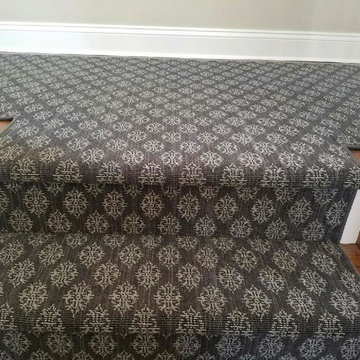
Mid-sized elegant carpeted straight wood railing home design photo in New York with carpeted risers
 Stylish
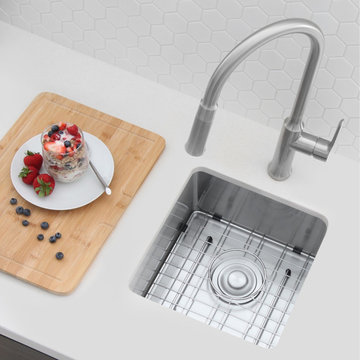
Single Bowl 15" x 15" Undermount Bar Prep Sink is Canadian designed and meets the highest plumbing standards for North America. Designed for a home bar or entertaining areas or for use as an extra sink in a large kitchen. This stainless steel bar prep sink features a noise undercoating sprayed over extra thick rubber pads to create a noticeably overall very quiet sink. This undercoating also helps prevent water condensation. This singe bowl undermount bar prep sink has drains towards the rear, for better utilization of the space under the sink cabinet. Also, the sink basin has X-pattern drain grooves for optimal drainage. Handmade from surgical grade SUS 304 stainless steel 18 gauge, with an optimized 18pct chromium and 10pct nickel content, this sink is superbly crafted to provide excellent strength and hardness. The specially chosen satin finish will hide water spots and maintain a uniform patina finish as the sink ages. All welds and corners are perfectly blended through an automated machine buffing system, and carefully hand polished, for a luxurious finish. This undermount bar prep sink has an elegant and smooth to touch 0.4" radius in the corners for easy cleaning, it also gives it a bold look. The deep basin design not only accommodates pots and pans easily, but it also hides dirty dishes in the sink basin and under the countertop line, so you can leave dishes and wash them later, without them showing. This single bowl undermount bar prep sink comes with one perfect fir bottom grid, to protect the sink from dents and scratches and a stainless steel luxury basket drain strainer, which is deeper and much more functional for catching food scraps than the regular strainers. Also included with the sink is the cutting template and mounting brackets for easy installation. If you are looking for a small sink that can be used for different spaces, such as a bar, a kitchen island, a prep sink or any small space, this is the sink you need.
Find the right local pro for your project
 Rocky Tops Granite & Marble LLC
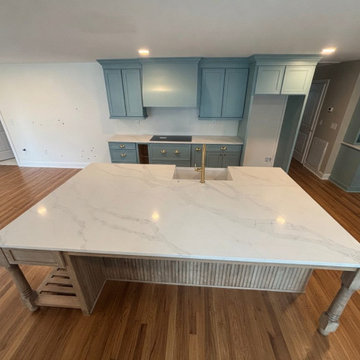
This kitchen in Lexington came together in BSI Zurich granite, and it's the kind of stone that does a lot of the work in a room just by sitting there. Zurich has a cool gray background with movement that breaks up into darker flecks and softer crystal patches, so it reads calm from across the room but keeps your eye busy up close. That range makes it easy to live with next to most cabinet colors, whether the boxes are painted white, a soft gray, or a warmer wood tone.
Granite like this is quarried in big blocks and cut into slabs, and no two slabs come out exactly the same. That's part of why we template each kitchen on site instead of working off a generic plan. We measure the actual cabinets, account for the sink and cooktop cutouts, and lay out the slabs so the veining and pattern flow the way they should across the island and the runs of counter, especially where two pieces meet at a seam. Getting that seam tight and matched so it disappears into the pattern takes a steady hand and slabs picked with the layout in mind from the start.
Granite is one of the toughest countertop materials you can put in a kitchen. It shrugs off hot pans, resists scratching from everyday knife work, and holds up to the kind of daily traffic a real kitchen sees, dishes, coffee, kids doing homework at the island, all of it. It does need to be sealed, and staying on top of that keeps it looking like day one for years. We finished this one with an eased edge, clean and simple, which is the right call for a stone with this much going on in the surface. It doesn't need extra shaping to look finished.
Lexington's seen a lot of kitchens go through updates like this one, and granite remains a favorite around the Midlands because it holds up to how people actually cook and live. This Zurich kitchen is a good example of why: a stone with real character, installed tight and clean, that's going to keep earning its keep for a long time.
 Rocky Tops Granite & Marble LLC
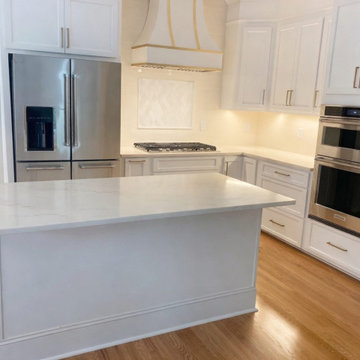
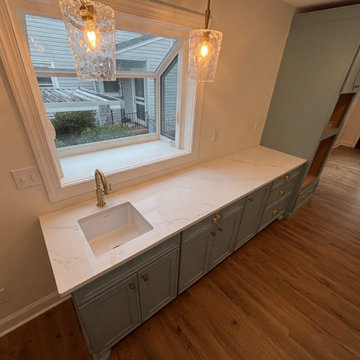
We put MSI Calacatta Vernello into a kitchen in Cayce, and it's the kind of quartz that makes a room feel brighter the second you walk in. The background's a clean, soft white, with gray veining moving through it in long, broken threads that catch the eye without taking over. Calacatta Vernello is engineered to give that bright, upscale look while still being a consistent, dependable surface to work with and live with.
That consistency is the real draw with a quartz like this. You get a bright white background and that dramatic veining, but without the maintenance headache natural stone can bring. There's no sealing to keep up with, no worrying about etching from a lemon left on the counter or a glass of wine sitting out overnight. For a kitchen that actually gets used, that matters more than people think going in.
Fabricating a quartz like this still takes real care. We template the counters to the room, not the other way around, so the seams land where they'll be least noticed and the veining keeps moving in a way that looks natural across the span. At the sink and the cooktop, that's where people's eyes land first, so we pay close attention to how the pattern falls there and at any seams nearby, keeping the movement consistent instead of letting it jump or mismatch. We finished the edges eased, which keeps the lines of the counter clean and lets the stone itself do the talking.
Day to day, this countertop is going to take a beating and keep looking good. Quartz is non-porous and tough against scratches and stains, and it handles the daily traffic of a working kitchen, cutting boards, hot pans set down too quick, kids doing homework at the island, without showing wear. It's a surface built for a kitchen that's lived in, not just looked at.
Cayce's seen a good bit of kitchen work like this lately, folks wanting that bright, clean look that still feels upscale without the upkeep some stone surfaces ask for. This one came out clean and bright, the kind of kitchen that photographs well and holds up even better once the cabinets are full and the coffee's going every morning.
 Rocky Tops Granite & Marble LLC
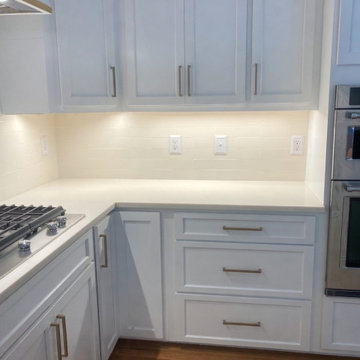
Spectrums Indulgence quartz, manufactured right here in Latta South Carolina, went into this kitchen in Columbia, and it's the kind of stone that works quietly hard in a room people actually cook and live in. It's engineered quartz, so what you're looking at is a mix of ground quartz and resin, blended and pressed to give a background that stays consistent slab to slab. That matters more than people think when you're trying to keep a kitchen looking pulled together across a run of cabinets, an island, and a backsplash.
The color reads as a soft, workable background with movement in it, enough character to give the room some depth without turning into something that fights with the cabinets or the floor. That's the appeal of a pattern like this one. It's not a plain solid, but it's not so busy that it limits what else goes in the space. Kitchens live a long time with the same countertop, and a stone that holds up visually over the years is worth choosing over something flashier that gets tiring.
Quartz like this is also just practical for a working kitchen. It doesn't need sealing the way natural stone does, it resists staining from wine, oil, and citrus, and it shrugs off the daily scratches from knives and pans that would show on a softer stone. Heat is the one thing we tell people to respect, a hot pan straight off the stove can shock the resin, so a trivet is the smart habit to build. Otherwise it's about as low-maintenance a surface as you can put in a kitchen.
We set the edge as eased, which is the clean, simple choice that lets the stone itself do the talking instead of the profile. Templating and fabrication on a job like this comes down to getting the seams tight and matching the pattern across the island and the runs so it reads as one continuous piece even where the slabs meet.
Jobs like this are what we like doing around Columbia and the rest of the Midlands, where a kitchen remodel means getting the material, the layout, and the fit all right in a space a family's going to use every single day.
 Rocky Tops Granite & Marble LLC
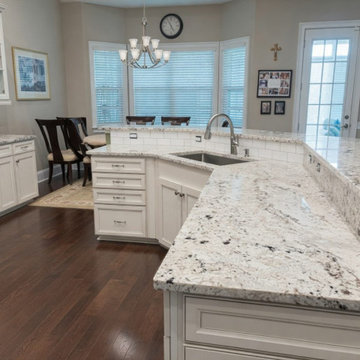
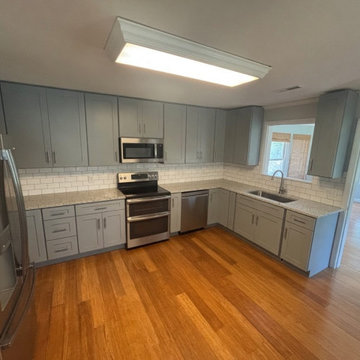
This West Columbia kitchen got new countertops in White Alpes granite, a stone with a light background scattered through with dark speckling and mineral flecks that catch the light differently depending on where you stand. It's the kind of pattern that reads calm from across the room and gets more interesting up close, which is exactly what you want on a surface you're going to be looking at every day.
Granite like this is quarried and cut into slabs, then polished to bring out that natural fleck and depth. It's dense, heat resistant, and about as tough a countertop material as you can put in a kitchen. You can set a hot pan on it without worrying, and it shrugs off the daily knife-and-cutting-board traffic that wears down softer stones. With a good sealer applied at install, it resists staining from wine, oil, and the usual kitchen spills for years before it needs to be redone.
We templated the space to fit around the existing gray shaker cabinets and stainless appliances, cutting the sink opening for the stainless steel sink and squaring up the seams so the pattern in the granite carries through cleanly from one run to the next. That's the part of the job that doesn't show up in a photo: getting the slab cut so the speckling doesn't look choppy at the seam, and getting the sink cutout dialed in so the reveal is even all the way around.
With the backsplash area still open, the countertop is doing a lot of the visual work right now, and it's holding its own. The light background of the White Alpes plays well against the gray cabinetry, and it'll give whatever backsplash goes in next a neutral, textured surface to build off of.
We do a lot of this kind of granite work around West Columbia and the rest of the Midlands. Kitchens like this one are a good reminder of why granite has stayed a go-to choice for so long: it looks good, it holds up, and it doesn't ask much of the homeowner once it's in.
 Rocky Tops Granite & Marble LLC
Spectrums Indulgence quartz, manufactured right here in Latta South Carolina, went into this kitchen in Columbia, and it's the kind of stone that works quietly hard in a room people actually cook and live in. It's engineered quartz, so what you're looking at is a mix of ground quartz and resin, blended and pressed to give a background that stays consistent slab to slab. That matters more than people think when you're trying to keep a kitchen looking pulled together across a run of cabinets, an island, and a backsplash.
The color reads as a soft, workable background with movement in it, enough character to give the room some depth without turning into something that fights with the cabinets or the floor. That's the appeal of a pattern like this one. It's not a plain solid, but it's not so busy that it limits what else goes in the space. Kitchens live a long time with the same countertop, and a stone that holds up visually over the years is worth choosing over something flashier that gets tiring.
Quartz like this is also just practical for a working kitchen. It doesn't need sealing the way natural stone does, it resists staining from wine, oil, and citrus, and it shrugs off the daily scratches from knives and pans that would show on a softer stone. Heat is the one thing we tell people to respect, a hot pan straight off the stove can shock the resin, so a trivet is the smart habit to build. Otherwise it's about as low-maintenance a surface as you can put in a kitchen.
We set the edge as eased, which is the clean, simple choice that lets the stone itself do the talking instead of the profile. Templating and fabrication on a job like this comes down to getting the seams tight and matching the pattern across the island and the runs so it reads as one continuous piece even where the slabs meet.
Jobs like this are what we like doing around Columbia and the rest of the Midlands, where a kitchen remodel means getting the material, the layout, and the fit all right in a space a family's going to use every single day.
 Rocky Tops Granite & Marble LLC
We put MSI Calacatta Vernello into a kitchen in Cayce, and it's the kind of quartz that makes a room feel brighter the second you walk in. The background's a clean, soft white, with gray veining moving through it in long, broken threads that catch the eye without taking over. Calacatta Vernello is engineered to give that bright, upscale look while still being a consistent, dependable surface to work with and live with.
That consistency is the real draw with a quartz like this. You get a bright white background and that dramatic veining, but without the maintenance headache natural stone can bring. There's no sealing to keep up with, no worrying about etching from a lemon left on the counter or a glass of wine sitting out overnight. For a kitchen that actually gets used, that matters more than people think going in.
Fabricating a quartz like this still takes real care. We template the counters to the room, not the other way around, so the seams land where they'll be least noticed and the veining keeps moving in a way that looks natural across the span. At the sink and the cooktop, that's where people's eyes land first, so we pay close attention to how the pattern falls there and at any seams nearby, keeping the movement consistent instead of letting it jump or mismatch. We finished the edges eased, which keeps the lines of the counter clean and lets the stone itself do the talking.
Day to day, this countertop is going to take a beating and keep looking good. Quartz is non-porous and tough against scratches and stains, and it handles the daily traffic of a working kitchen, cutting boards, hot pans set down too quick, kids doing homework at the island, without showing wear. It's a surface built for a kitchen that's lived in, not just looked at.
Cayce's seen a good bit of kitchen work like this lately, folks wanting that bright, clean look that still feels upscale without the upkeep some stone surfaces ask for. This one came out clean and bright, the kind of kitchen that photographs well and holds up even better once the cabinets are full and the coffee's going every morning.
 Rocky Tops Granite & Marble LLC
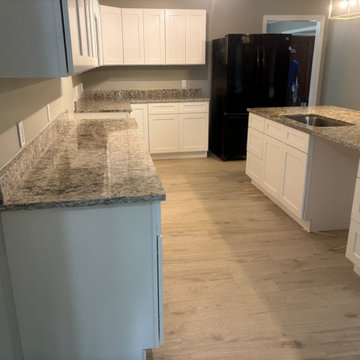
This kitchen came together with Ornamental White granite on the counters. No waterfall, no fancy backsplash story here, just solid granite doing what granite does best, holding up to real cooking and real life in a busy South Carolina kitchen.
We finished the edges with an eased profile, which is the detail people don't think about until they're leaning on the counter every day. An eased edge takes the sharp corner off the slab and rounds it just enough so it's comfortable to work against, without adding a bunch of extra machining that can chip or crack down the line. It's a clean, classic look that doesn't fight with the granite's natural pattern, and it wears well over years of use.
Granite is still one of the best choices you can put in a kitchen. It's hard, it's heat resistant, and you can set a hot pan on it without worrying. It'll take a knife dragged across it by accident and shrug it off. Every slab has its own movement in the stone, its own crystal structure catching light differently depending on where you stand, and templating a kitchen like this means matching that pattern at the seams so it reads like one continuous piece instead of two pieces bolted together.
Day to day, this countertop is going to earn its keep. Granite seals up easily and, once it's sealed, it resists staining from wine, oil, coffee, whatever gets set down on it. It doesn't scratch from normal kitchen use, and it doesn't dull over time the way some softer stones can. That's why we keep coming back to it for kitchens that actually get used, not just looked at.
We fabricate and install jobs like this all over the Midlands, and it's the same story every time: good stone, cut right, set level, edges finished clean. That's what makes a countertop last for decades instead of years, and that's what you're getting here.
 Rocky Tops Granite & Marble LLC
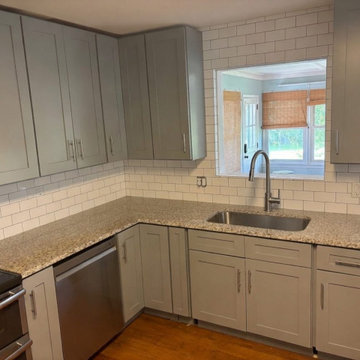
This West Columbia kitchen got new countertops in White Alpes granite, a stone with a light background scattered through with dark speckling and mineral flecks that catch the light differently depending on where you stand. It's the kind of pattern that reads calm from across the room and gets more interesting up close, which is exactly what you want on a surface you're going to be looking at every day.
Granite like this is quarried and cut into slabs, then polished to bring out that natural fleck and depth. It's dense, heat resistant, and about as tough a countertop material as you can put in a kitchen. You can set a hot pan on it without worrying, and it shrugs off the daily knife-and-cutting-board traffic that wears down softer stones. With a good sealer applied at install, it resists staining from wine, oil, and the usual kitchen spills for years before it needs to be redone.
We templated the space to fit around the existing gray shaker cabinets and stainless appliances, cutting the sink opening for the stainless steel sink and squaring up the seams so the pattern in the granite carries through cleanly from one run to the next. That's the part of the job that doesn't show up in a photo: getting the slab cut so the speckling doesn't look choppy at the seam, and getting the sink cutout dialed in so the reveal is even all the way around.
With the backsplash area still open, the countertop is doing a lot of the visual work right now, and it's holding its own. The light background of the White Alpes plays well against the gray cabinetry, and it'll give whatever backsplash goes in next a neutral, textured surface to build off of.
We do a lot of this kind of granite work around West Columbia and the rest of the Midlands. Kitchens like this one are a good reminder of why granite has stayed a go-to choice for so long: it looks good, it holds up, and it doesn't ask much of the homeowner once it's in.
 Rocky Tops Granite & Marble LLC
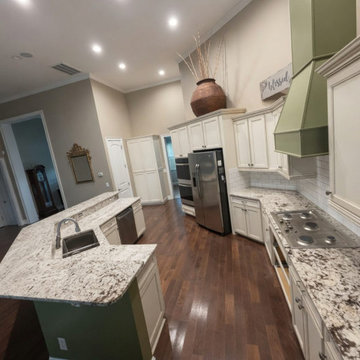
This kitchen in Lexington came together in BSI Zurich granite, and it's the kind of stone that does a lot of the work in a room just by sitting there. Zurich has a cool gray background with movement that breaks up into darker flecks and softer crystal patches, so it reads calm from across the room but keeps your eye busy up close. That range makes it easy to live with next to most cabinet colors, whether the boxes are painted white, a soft gray, or a warmer wood tone.
Granite like this is quarried in big blocks and cut into slabs, and no two slabs come out exactly the same. That's part of why we template each kitchen on site instead of working off a generic plan. We measure the actual cabinets, account for the sink and cooktop cutouts, and lay out the slabs so the veining and pattern flow the way they should across the island and the runs of counter, especially where two pieces meet at a seam. Getting that seam tight and matched so it disappears into the pattern takes a steady hand and slabs picked with the layout in mind from the start.
Granite is one of the toughest countertop materials you can put in a kitchen. It shrugs off hot pans, resists scratching from everyday knife work, and holds up to the kind of daily traffic a real kitchen sees, dishes, coffee, kids doing homework at the island, all of it. It does need to be sealed, and staying on top of that keeps it looking like day one for years. We finished this one with an eased edge, clean and simple, which is the right call for a stone with this much going on in the surface. It doesn't need extra shaping to look finished.
Lexington's seen a lot of kitchens go through updates like this one, and granite remains a favorite around the Midlands because it holds up to how people actually cook and live. This Zurich kitchen is a good example of why: a stone with real character, installed tight and clean, that's going to keep earning its keep for a long time.

 Flooret
Part of the Modin Vinyl Plank Collection, Available Exclusively From www.Flooret.com
$3.49 / sq ft, 22.08 sq ft per box
50% WIDER. 25% LONGER. TWICE AS DURABLE
Luxury Vinyl Plank, 5 mm x 9" x 60" (1.0 mm / 40 mil wear-layer)
Lifetime Residential Warranty, 20 year Commercial Warranty
Classic Oak Elegance. Arden provides a timeless template with which to define your space. We designed the grain pattern to have just a hint of rustic, but it is still clean enough that you can convincingly use it in a modern setting.
REDEFINING DURABILITY
The most important specification for determining the durability of vinyl flooring is the thickness of the wear-layer. The best wear-layers are made of thick, clear virgin PVC, which covers the paper print-film that gives the floor its unique appearance. Once the wear-layer wears through, the paper is damaged and the floor will need replacement.
Most vinyl floors come with a 8-12 mil wear-layer (0.2-3 mm). The top commercial specs in the industry are higher, at 20-22 mil (0.5 mm). A select few manufacturers offer a "super" commercial spec of 28 mil (0.7 mm).
For Modin, we decided to set a new standard: 40 mil (1.0 mm) of premium virgin PVC. This allows us to offer an industry-leading 20 year Commercial Warranty (Lifetime Residential), compared to nearly all other commercial vinyl floors' 10 year Commercial Warranty.
Beyond our superior wear-layer, we also use a patented click mechanism for superior hold, and a ceramic-bead coating.
SIZE MATTERS
Wider and longer planks create a sense of space and luxury. Most vinyl floors come in 6" or 7" widths, and 36" or 48" lengths.
For Modin, we designed our planks to be 9" wide, and 60" long. This extra large size allows our gorgeous designs to be fully expressed.
DETAILS THAT COUNT
We made sure to get all the details right. Real texture, to create the feel of wire-brushed wood. Low sheen level, to ensure a natural look that wears well over time. 4-sided bevels, to more accurately emulate the look of real planks. When added together they help create the unique look that is Modin.
DESIGNS THAT INSPIRE
We spent nearly a year just focusing on our designs, to ensure they provide the right mix of color and depth. Focusing on timeless wire-brush and European Oak styles, as well as more contemporary modern washes, our collection offers truly beautiful design that is both functional and inspiring.
 Rocky Tops Granite & Marble LLC
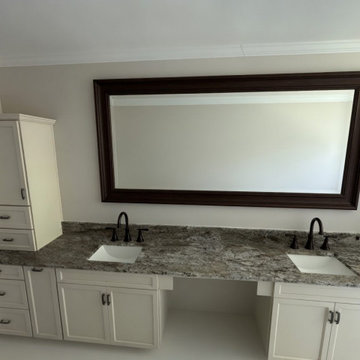
Blue Dunes granite is a striking choice for a bathroom vanity, and this one in Columbia shows why. The stone carries a deep blue-gray base with movement that shifts from soft charcoal to cooler blue tones depending on the light in the room. It's the kind of slab that reads almost like natural stone artwork more than a countertop, which matters in a bathroom where you're standing close to it every morning and evening.
Granite works well here because a vanity top takes a real beating over the years. Water sits on it, makeup and skincare products get set down and wiped up, and it needs to hold up without staining or dulling. Blue Dunes has the density and low porosity you want in that spot. Sealed properly, it resists moisture and everyday spills without much fuss, and it keeps its polish for years with basic care.
Fabricating a double or single vanity top out of a stone like this means paying attention to the slab before it's ever cut. We template the vanity to the exact cabinet dimensions, then lay out the cut so the veining and color movement land where they'll actually be seen, not just where they happen to fall. With a stone that has as much personality as Blue Dunes, that layout work makes the difference between a top that looks intentional and one that looks like an afterthought.
The edge on this one is eased, which keeps the look clean and doesn't fight with the stone's natural pattern. It's a small detail but it's the right call for a vanity where the visual weight should sit with the granite itself.
Day to day, this top will handle exactly what a bathroom throws at it. It won't scratch from normal use, it wipes clean easily, and the color stays consistent whether the bathroom's lit by daylight or a vanity light at night. For a Columbia home, it's a solid, good-looking upgrade that fits right into the kind of work we do across the Midlands, matching the right stone to the right room and making sure it's built to last.
 Rocky Tops Granite & Marble LLC
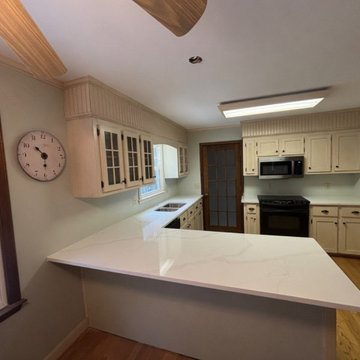
This kitchen in Columbia came together with MSI Calacatta Elysio, an engineered quartz manufactured right her in the great state of South Carolina. Elysio features a bright, clean background and soft gray and gold veining moving through it in a way that reads natural instead of repetitive. That's one of the real advantages of a well-made quartz.
Quartz like this is a good call for a working kitchen. It's non-porous, so there's no sealing to keep up with and no real worry about wine or oil soaking into the surface if it sits a while before you wipe it down. It resists scratching better than most surfaces you'd put in a kitchen, and it holds up fine against everyday knife nicks and pan drags, though we always tell folks to use a cutting board and a trivet rather than testing the limits of any countertop. The color stays consistent under kitchen lighting morning to night, which matters more than people expect once the cabinets and the backsplash are all in around it.
Getting the layout right on a job like this comes down to templating carefully before we ever start the cnc saw. We take the time to figure out where the seams fall so they land in the least visible spot, usually tucked in a corner or through a sink, and we dry fit before final glue up so the fit is tight and the finish is level all the way across. The edge came in eased, simple and clean, and it does exactly what it should, which is let the stone itself be the thing you notice instead of the profile around it.
Day to day, this is a countertop that's going to earn its keep. It'll take the coffee spills, the flour dust, the late night cleanup, and still look like it did the week we set it. That's really the whole point of putting a stone like Calacatta Elysio into a kitchen that's actually going to get used.
Columbia's got plenty of kitchens getting this kind of update these days, and it's good work to be part of. A clean white quartz with the right veining can carry a whole room, and this one does exactly that.
 Rocky Tops Granite & Marble LLC
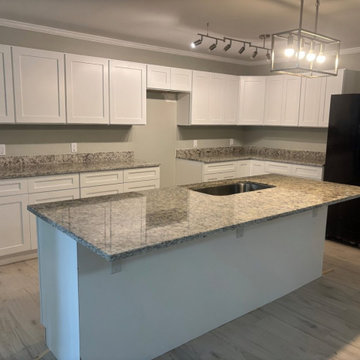
This kitchen came together with Ornamental White granite on the counters. No waterfall, no fancy backsplash story here, just solid granite doing what granite does best, holding up to real cooking and real life in a busy South Carolina kitchen.
We finished the edges with an eased profile, which is the detail people don't think about until they're leaning on the counter every day. An eased edge takes the sharp corner off the slab and rounds it just enough so it's comfortable to work against, without adding a bunch of extra machining that can chip or crack down the line. It's a clean, classic look that doesn't fight with the granite's natural pattern, and it wears well over years of use.
Granite is still one of the best choices you can put in a kitchen. It's hard, it's heat resistant, and you can set a hot pan on it without worrying. It'll take a knife dragged across it by accident and shrug it off. Every slab has its own movement in the stone, its own crystal structure catching light differently depending on where you stand, and templating a kitchen like this means matching that pattern at the seams so it reads like one continuous piece instead of two pieces bolted together.
Day to day, this countertop is going to earn its keep. Granite seals up easily and, once it's sealed, it resists staining from wine, oil, coffee, whatever gets set down on it. It doesn't scratch from normal kitchen use, and it doesn't dull over time the way some softer stones can. That's why we keep coming back to it for kitchens that actually get used, not just looked at.
We fabricate and install jobs like this all over the Midlands, and it's the same story every time: good stone, cut right, set level, edges finished clean. That's what makes a countertop last for decades instead of years, and that's what you're getting here.
 Rocky Tops Granite & Marble LLC
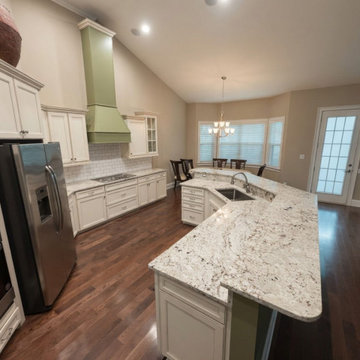
This kitchen in Lexington came together in BSI Zurich granite, and it's the kind of stone that does a lot of the work in a room just by sitting there. Zurich has a cool gray background with movement that breaks up into darker flecks and softer crystal patches, so it reads calm from across the room but keeps your eye busy up close. That range makes it easy to live with next to most cabinet colors, whether the boxes are painted white, a soft gray, or a warmer wood tone.
Granite like this is quarried in big blocks and cut into slabs, and no two slabs come out exactly the same. That's part of why we template each kitchen on site instead of working off a generic plan. We measure the actual cabinets, account for the sink and cooktop cutouts, and lay out the slabs so the veining and pattern flow the way they should across the island and the runs of counter, especially where two pieces meet at a seam. Getting that seam tight and matched so it disappears into the pattern takes a steady hand and slabs picked with the layout in mind from the start.
Granite is one of the toughest countertop materials you can put in a kitchen. It shrugs off hot pans, resists scratching from everyday knife work, and holds up to the kind of daily traffic a real kitchen sees, dishes, coffee, kids doing homework at the island, all of it. It does need to be sealed, and staying on top of that keeps it looking like day one for years. We finished this one with an eased edge, clean and simple, which is the right call for a stone with this much going on in the surface. It doesn't need extra shaping to look finished.
Lexington's seen a lot of kitchens go through updates like this one, and granite remains a favorite around the Midlands because it holds up to how people actually cook and live. This Zurich kitchen is a good example of why: a stone with real character, installed tight and clean, that's going to keep earning its keep for a long time.
 Rocky Tops Granite & Marble LLC
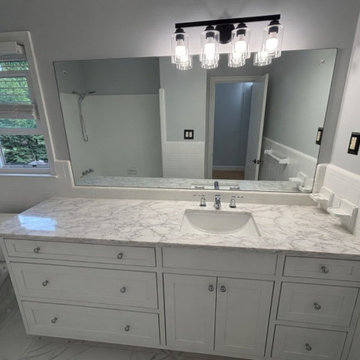
We fabricated this vanity top out of a Calacatta Ocielo remnant, engineered quartz with a bright white background and soft gray veining moving through it. Working from a remnant piece takes a different kind of attention. There's no reordering a fresh slab if we get the layout wrong, so we template the vanity carefully, dry lay the piece, and figure out where the veining reads best before we ever start the cnc saw. For a bathroom this size, it's the right way to work. You get a full quartz top with real movement in the stone without paying for a whole slab you'd only use a fraction of.
Quartz makes sense in a bathroom for reasons beyond looks. It's non-porous, so there's no sealing to keep up with and no worrying about lotions, hairspray, or standing water affecting the surface. Calacatta Ocielo gives you a bright field with soft gray veins and a clean, bright look that suits a vanity well. For a top that sees daily use, that combination of appearance and low upkeep matters more than people expect until they've lived with it.
We cut the sink opening clean and kept the edge eased, which suits a vanity like this. It's a detail people don't think about until they're leaning on the counter or wiping it down, and an eased edge just feels right under the hand. Nothing about the fabrication was rushed.
Day to day, this top is going to hold up. Quartz resists scratching and staining better than most surfaces you'd put in a bathroom, and it doesn't need periodic resealing. Wipe it down, and it stays looking like it did the day we set it.
It's a small job in the scope of things, a single vanity top, but it's the kind of work we like doing right here in Columbia. Remnant pieces like this Calacatta Ocielo let us put a higher end material into a smaller space without the waste, and the finished bathroom gets a top that looks a lot bigger than its price tag suggests.
 Rocky Tops Granite & Marble LLC
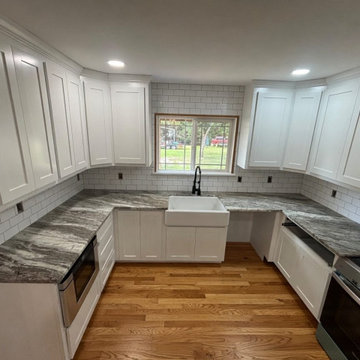
Fantasy Brown Leathered dolomite went into this West Columbia kitchen, and it's the kind of stone that changes how a room feels the second the light hits it. Leathered finish instead of polished, so you get texture under your hand instead of a mirror flat surface. It softens the brown and cream movement in the stone, gives it a low sheen, and hides fingerprints and water spots a lot better than a honed or polished slab would in a kitchen that actually gets used.
Dolomite has that soft, warm background movement, browns and creams drifting through each other, and it holds up well against everyday acids and scratching in a working kitchen. It's still a natural stone, so we sealed it properly, and the leathered texture actually helps there, it hides the wear that would show up fast on a glass-smooth surface.
Getting the veining to read right across the seams is the real work on a stone like this. We template the room, lay the slabs out, and take our time matching the movement across the corners and the seams before anything gets cut, so the pattern keeps flowing instead of jumping when you walk from one stretch of counter to the next. It's slower than pushing straight into fabrication, but it's the difference between a kitchen that looks like one slab and one that looks like pieces.
Edge came out eased, clean and simple, which is the right call on a stone with this much going on in the surface. You don't need a fancy profile competing with the leathering and the movement in the dolomite, the material carries the room on its own.
Day to day it lives well. Set a hot pan down and it takes it fine, though a trivet never hurts. It'll take the knocks of a working kitchen better than people expect, and the leathered texture keeps it looking good years in instead of showing every little scuff. That's the kind of project we like doing around West Columbia and the rest of the Midlands, matching the right stone to a kitchen that's going to get lived in, not just looked at.
 Rocky Tops Granite & Marble LLC
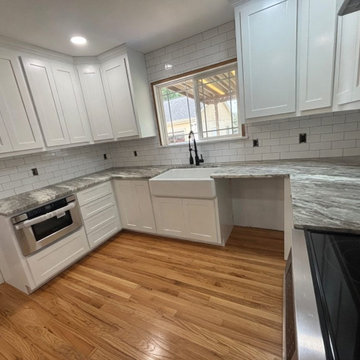
Fantasy Brown Leathered dolomite went into this West Columbia kitchen, and it's the kind of stone that changes how a room feels the second the light hits it. Leathered finish instead of polished, so you get texture under your hand instead of a mirror flat surface. It softens the brown and cream movement in the stone, gives it a low sheen, and hides fingerprints and water spots a lot better than a honed or polished slab would in a kitchen that actually gets used.
Dolomite has that soft, warm background movement, browns and creams drifting through each other, and it holds up well against everyday acids and scratching in a working kitchen. It's still a natural stone, so we sealed it properly, and the leathered texture actually helps there, it hides the wear that would show up fast on a glass-smooth surface.
Getting the veining to read right across the seams is the real work on a stone like this. We template the room, lay the slabs out, and take our time matching the movement across the corners and the seams before anything gets cut, so the pattern keeps flowing instead of jumping when you walk from one stretch of counter to the next. It's slower than pushing straight into fabrication, but it's the difference between a kitchen that looks like one slab and one that looks like pieces.
Edge came out eased, clean and simple, which is the right call on a stone with this much going on in the surface. You don't need a fancy profile competing with the leathering and the movement in the dolomite, the material carries the room on its own.
Day to day it lives well. Set a hot pan down and it takes it fine, though a trivet never hurts. It'll take the knocks of a working kitchen better than people expect, and the leathered texture keeps it looking good years in instead of showing every little scuff. That's the kind of project we like doing around West Columbia and the rest of the Midlands, matching the right stone to a kitchen that's going to get lived in, not just looked at.
60