
Search results for "Understands" in Home Design Ideas
 R.L. Baxter Building Corp
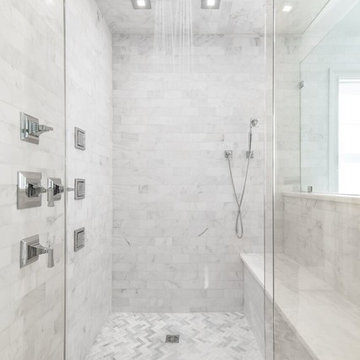
When we work on a private residence, we take every care to understand and respect that this is not just a property, structure or set of blueprints. This is your home. We listen first, working with your vision and sense of style, but combining your ideas with our extensive knowledge of finishes, materials and how to consider every last detail in order to create an overall look and feel that will really "wow."
 Robin Gonzales Interiors
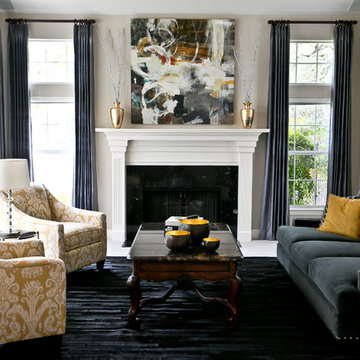
Contrast is the key to this gorgeous transitional family room. Soft greige walls are in contrast with the platinum silk draperies and charcoal sofa. Custom lounge chairs in gold ikat add a touch of glamour to this formal living space. Modern art keeps it fresh and fun.

Find the right local pro for your project
 erikajmccarthy
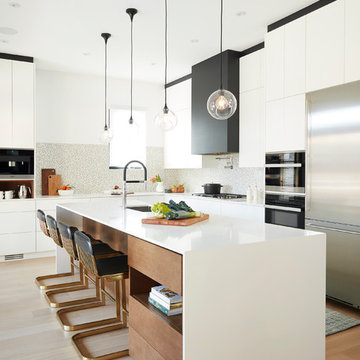
Kitchen - modern l-shaped medium tone wood floor kitchen idea in Toronto with an undermount sink, flat-panel cabinets, white cabinets, multicolored backsplash, black appliances, an island and white countertops
 Mindy Khan
Let's face it: times are changing. We're living in an era where technology advances at a fast pace and its developments have a significant impact on the surroundings. The need for environmental solutions has become more urgent with each passing day.
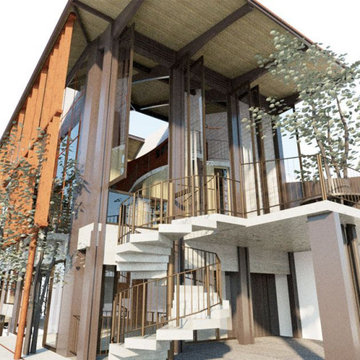
While we live and adapt to our immediate environment, it doesn't mean that we have to settle with what's present, especially when our surrounding conditions are becoming detrimental to our wellbeing. This is the reason Singapore architects are looking into eco-friendly approaches when designing residential spaces.
Singapore architects are becoming more proactive in integrating eco-friendly principles in their residential projects. Below are some of the standout reasons why:
1. You get to practice energy efficiency.
In typical homes, electricity is powered by non-renewable sources. The continuous use of non-renewable energy increases carbon footprint and worsens air pollution, both of which negatively affect the environment.
However, there are alternative sources of energy that can be included in your home's architectural design. These include solar panels and wind turbines that produce electricity that can keep the house powered. These methods do not produce toxic compounds or carbon emissions; they are also renewable and do not incur recurring expenses.
2. Eco-friendly architecture brings you closer to a more "natural environment."
The emergence of urban landscapes has deprived today's generation of the opportunity to be one with nature. Individuals these days have to travel to the countryside to enjoy nature's beauty and all the amazing benefits it has to offer.
Fortunately, eco-friendly architecture provides a route where you can better appreciate many of the benefits nature offers. As a homeowner, you must enjoy a calm, clean, and fresh indoor environment.
Eco-friendly approaches to homes aim to provide this kind of atmosphere through the use of local materials, renewable energy sources, and incorporating nature's elements (such as sunlight and air ventilation) on the structural design.
3. You save money for maintenance and upkeep.
Eco-friendly architecture is known for its low maintenance costs. At first glance, you may find it expensive to build a "green home." However, since it makes use of renewable energy sources and local resources for upkeep, operational costs become much cheaper compared to living in a conventional home.
Also, green homes promote material efficiency. Apart from using local resources, eco-friendly construction involves building processes that generate as little waste as possible.
Recycled and reusable materials are preferred in building the home, while the architectural design follows construction techniques that use less energy, water, and raw materials.
4. You enjoy better health.
Living in a green home offers a lot of health benefits. For instance, eco-friendly architecture supports the use of natural materials and it discourages having plastic by-products in the building process.
At the same time, eco-friendly architectural designs look into utilising vertical space to boost freedom of movement and air circulation. These spatial strategies allow you to breathe better even while indoors and move around the house without feeling cramped.
Lastly, utilising vertical space offers more natural light to enter the home. Natural light is essential not just because it illuminates the house during the day, it also regulates the circadian rhythm, which dictates our body's waking and sleeping hours.
In a nutshell
Eco-friendly homes can help you save money and time, not to mention improve your health dramatically. Moreover, it can also help reduce your environmental footprint significantly. From improving air quality to helping regulate the effects of climate change, eco-friendly homes allow you to live a more sustainable lifestyle.

 LEDVANS
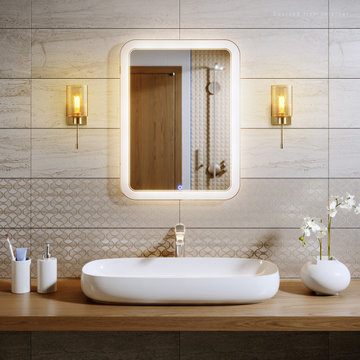
How to choose wall lamps?
Lighting needs: Determine the required lighting intensity and range based on the size and purpose of the room. If a stronger lighting effect is needed, wall lamps with multiple bulbs or adjustable brightness can be chosen.
 Margaret Donaldson Interiors
Joshua Drake Photography
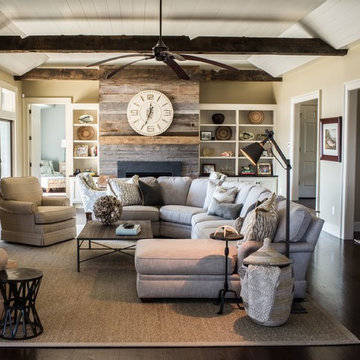
Living room - transitional formal and enclosed dark wood floor living room idea in Charleston with beige walls and a standard fireplace
Living room - transitional formal and enclosed dark wood floor living room idea in Charleston with beige walls and a standard fireplace
 Grandview Development & Construction Inc
Darren Edwards Photography
www.darrenedwardsphotography.com
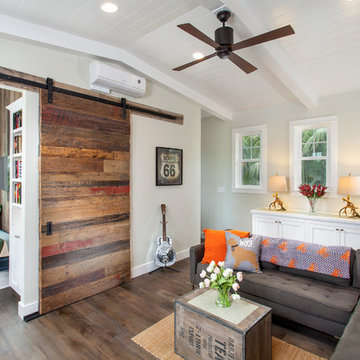
Example of a trendy dark wood floor family room design in San Diego
Example of a trendy dark wood floor family room design in San Diego
 LEDVANS
How to choose wall lamps?
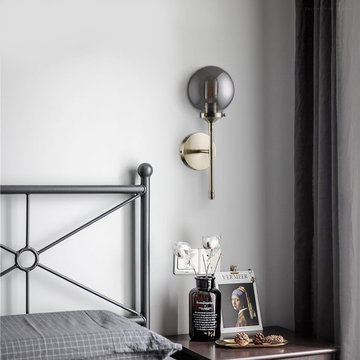
Style and decoration: Choose the appropriate style of wall lamps based on the overall style and decoration of the room. For example, for a modern minimalist style, you can choose wall lamps with clean lines and geometric shapes, while for a classical style, wall lamps with patterns or carvings can be chosen.
 LEDVANS
How to choose wall lamps?
Special requirements: When displaying a piece of artwork on the wall, you can choose to use wall-mounted picture lights instead of spotlights. Compared to spotlights, wall lamps have their unique advantages. Wall lamps can be installed on the wall near the artwork, providing more natural and even lighting around the artwork without creating strong glare on the surface of the artwork. Spotlights, on the other hand, usually need to be installed above the artwork and may require the use of a light shield to control the direction and intensity of the light.
 Jason Thomas Architect
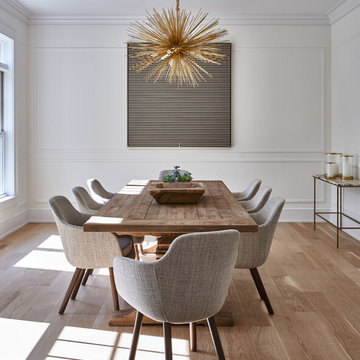
Dining room - contemporary medium tone wood floor and brown floor dining room idea in New York with white walls
 Margot Hartford Photography
Margot Hartford Photography
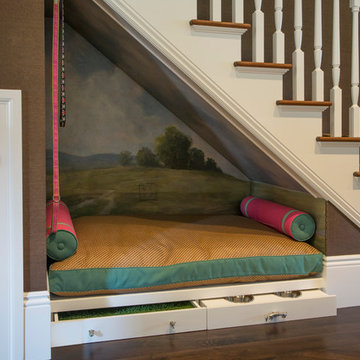
Example of a classic wooden staircase design in San Francisco
Example of a classic wooden staircase design in San Francisco
 Purple Cherry Architecture & Interiors
David Burroughs Photography
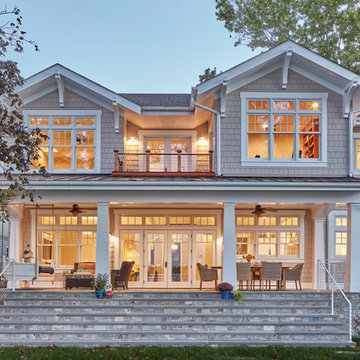
Inspiration for a large coastal two-story wood exterior home remodel in Baltimore
Inspiration for a large coastal two-story wood exterior home remodel in Baltimore
 Electric Mirror
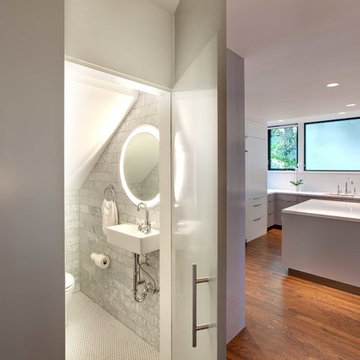
Photo by JH Jackson Photography; Design by Hugh Randolph Architects; Trinity Mirror by Electric Mirror.
For more info about purchasing our mirrors, visit www.electricmirror.com.
 LEDVANS
What are the advantages of wall lamps?
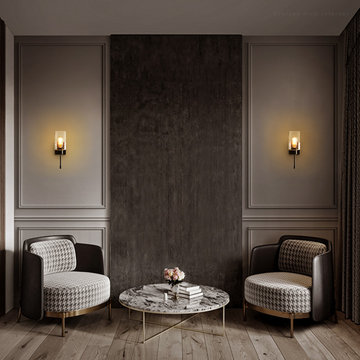
Generally speaking, wall lamps have good energy saving performance because they provide localized lighting with low power. They are also DC-driven with low power consumption (single tube 0.03-0.06 watts), and have a close to 100% electric light power conversion efficiency, saving over 80% more energy compared to traditional light sources for the same lighting effect. Wall lamps are usually installed at a lower height, making them easier to clean and maintain. Additionally, they have a good decorative effect.

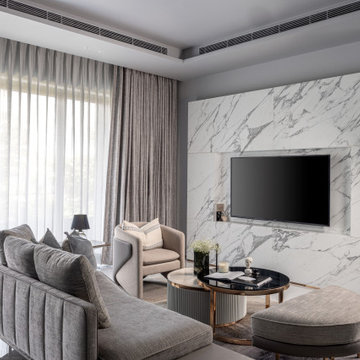


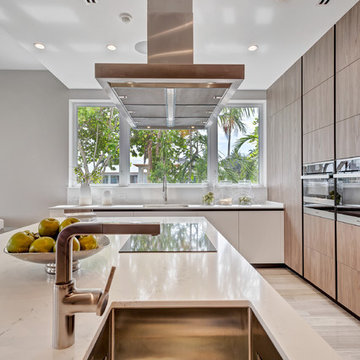
 LINEA STUDIO - CESAR KITCHENS
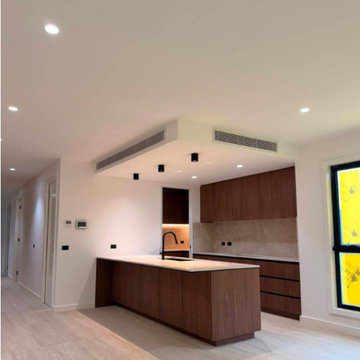
Cesar Maxima 2.2 is a kitchen system with a creative character that is highly versatile, with over 90 finishes to choose from. Cesar Maxima 2.2 plays with expectations, employing various opening methods to create a unique user experience. Depending on what kitchen features it’s paired with, Cesar Maxima 2.2 can take on an architectural aesthetic or a warm textured one.
4