

Calling all Houzzers: Have you recently purchased a fixer-upper?
14 years ago
last modified: 14 years ago
What advice would you offer to someone considering a similar investment?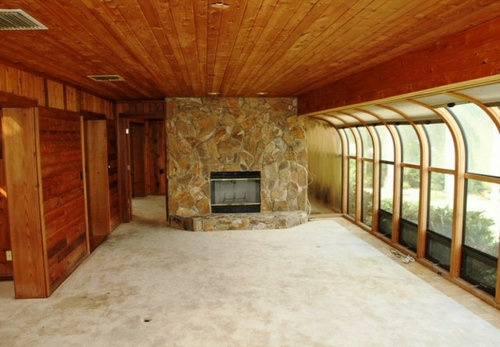
Featured Answer
Sort by:Oldest
Comments (40)
 14 years agoLocation - and we brought our trusted contractor through to find out what it would really cost to take the house from the original 50's to something more modern.
 14 years agoWe are currently working on a fixer-upper too. We've done it many times before and I agree with Liza; be sure to take a professional you trust through and get a good grip on the reno cost & timeframes (then add 10-20% on both). Expect to find surprises & get a thorough home inspection, radon test, sewer scope, etc. before closing on the deal. If it is your first renovation you might even ask someone who has been through it to be your reno "mentor". It can be so fun, if you are prepared and anticipate that things CANNOT always go as planned!
Related Professionals
Jackson Interior Designers & Decorators · Beckley Interior Designers & Decorators · Waterloo Interior Designers & Decorators · South Sioux City Interior Designers & Decorators · Santa Maria Interior Designers & Decorators · McAllen Architects & Building Designers · Ottawa Architects & Building Designers · Port Saint Lucie Kitchen & Bathroom Designers · Valdosta Kitchen & Bathroom Designers · Concord Kitchen & Bathroom Designers · Davenport Kitchen & Bathroom Designers · Moline Kitchen & Bathroom Designers · Fall River Kitchen & Bathroom Designers · Plymouth Kitchen & Bathroom Designers · Juneau Kitchen & Bathroom Designers 14 years agoMy first house was a major fixer-upper that I bought at a probate sale. My biggest tip would be "communicate, communicate, communicate." I drove up to the house one day to see that my contractor and pulled out all the beautiful original wood and antique glass windows from the front of the house, because I hadn't made it clear that the windows on the front were staying and we were only replacing the windows that didn't face the street.
The scope of a project like this can be so large, that it can be easy to let a detail like that slip through the cracks. Decide what stays and make a plan with your builder to work around those details. 14 years agoAccount for a 10% cost overrun...believe me, you'll be thankful you included it in your budget!
 PRO14 years agoLiza is exactly right. Take a contractor with you... one that is very experienced, not a "handy man" They will help you decide what can or can't be done, will come up with ideas you haven't, and help you decide whether it's worth it or not.
I purchased a foreclosed house and we slept in a pop-up camper in the back yard for three months while I got the upstairs to a point we could at least turn on the air conditioning. We put mattresses on the plywood decking and hung plastic over the end of the stairs. We made sure our kids were part of the renovation. They learned so much about what they really are capable of doing.
All of the photos on my profile that have stone work and the kid's bedrooms are from our house. It's been a great ride! 14 years agolast modified: 14 years agoLong ago I had an architect rebuild a 50's master suite addition, as part of a complete house remodel. Reuse all that wood. Paint/stain it. lay it somewhere else in the house. allow for 20% cost overrun. you'll be happy if you're only 10% over. A designer or architect will help in defining what stays, and where new systems and electrical goes. a great GC will use software to manage your build and order schedule. Living in the site is quite stressful.
- PRO14 years agowow great room, I have done several restorations and the difficulty is not what you see, it is what you can not see. I recommend you go slow.'Here, I would remove carpet, re carpet with inexoensive wall to'wall with trim edge and live in the house for a while if you can,'Watch the light, and tje'changes.'You will have lots of ideas, but they take time to form. If you are not in a rush enjoy and take your time.
 PRO14 years agoI go look at properties my clients are thinking about buying. It helps both of us! I want the whole house reno when it comes along and they want to see what the possibilities are!
I think buying a fixer is a fantastic investment, financially of course and I truly believe it fosters personal growth.
It helps by defining aesthetic and training the eye to see potential, valuing hard work, demystifying brick and mortar, customizing, working hard and learning deep respect for the amazing craftspeople who elevate their trade. It gives clients a new vantage on the process and how great feeling spaces become that way. A hands on client teaches their team alot too. What people actually look for in daily life, what's helpful and what's just a silly cost that people don't really need/use.
Also everyone learns about how people lived and entertained in the era of the home, and can decide what to reference in the new design and what to modernize to fit today's needs. Phone rooms, milk man foyers, ice box accesses, California coolers! So fun!
Fixers are the best!- 14 years agoI'm currently in the middle of one. Avoid main roads - poor resale. Good bones are essential which translates to decent sized rooms and a good flow of space. Small boxy bedrooms are a turn off from a resale point of view. Avoid low ceilings. Spend your money on bathrooms and kitchen but don't go overboard. If you're after a quick turnaround go for the latest trend. If you intend to stay awhile stick to more classic designs that won't date so quickly, I've bought a heap of materials from Ebay - high end tiles I've picked up for a song cos they were left over from a bigger job. My free standing bath I bought for half the retail price. All tapware came from China and the plumber says it is great quality. Very cheap but I advise you ask them to include spare ceramic cartridges because you may not be able to source them locally in years to come. A good idea for a vanity is to buy a cupboard on Ebay or similar and add a marble off cut top or a sheet of glass. I got a $350 custom made 'splashback' top for a $200 2nd hand cupboard, added glass bowls ($50 each) and fancy taps from China. It looks like a $2000 custom made piece. I'm also an Ikea lover but not their kitchens. Great for lighting, laundry and bathroom fit outs though.
 14 years agoset a limit on the over run. when you get there STOP. our fixer upper almost bankrupted us. we are living with one less room which we now realized we did not need. at least we are not house poor by trying to impress the neighbours.
- 14 years agoKnow the average market values on your block and in your area, and don't remodel your house out of that range of values. You may think you're going to be there for a long time and resale doesn't matter, but life throws you curve balls on occasion. Also, if you are financing, your appraisal will be critical and appraisers pay a lot of attention to comparable square-footage homes in the area.
 PRO14 years agolast modified: 14 years agoI've had clients who have bought "fixer uppers." Typically, I walk thru with them and ask questions, some of which they have already asked themselves. But it is important to establish parameters.
1. Was the house bought to live in, as an investment to maintain, or to "flip"?
2. What is the budget?
3. How much "sweat equity" if any will be going in to this?
4. Stand back and look at the whole perspective from the exterior and establish the pluses and the negatives. What existing conditions can be taken advantage of? What views from the interior can be taken advantage of? What indoor/outdoor relationships can be taken advantage of? What indoor/indoor relationships can be taken advantage up?
5. What outdatedness needs to be improved on, replaced?
6. What is the "flow" from one room to another?
7. How can a smaller space be made to feel larger, more open, brighter?
8. What is the condition of the mechanicals, roofing, windows and doors?
9. Are there any hazards that need to be corrected?
Then create a priority as to what needs to be addressed sooner than later and in such a way that you are not doing something twice.
And of course, talk to an Architect, best of all, hire an Architect if the project is extensive. 14 years agoHome inspections are critical when buying a 'fixer-upper'. I have recently purchased a home that was in desperate need of bring into this century (70's ranch). We ran into large dollar cost that were not expected. If we had a home inspection done, several of these items would have been identified and we may not have a)paid the asking price, b)not bought the house, c)budgeted for these repairs and d)kept my previous house to live in while working on this one. My mistake, often the things behind the walls, and around the foundation are things we can't see. And just remember there is a reason why someone hasn't fixed up the place...could be bigger issues going on.
- 14 years agolast modified: 14 years agoWe just bought a foreclosure on 5/21/12...our first home and its a minor fixer upper. Its been vacated for 2 years and needs some TLC. I love it because its not cookie cutter and its going to have OUR personality on it.
Our Real estate agent is also into property management so she took a number of contractors out there with us to give us quotes on the potential costs needed for repairs.
The home inspection is SO important and made the difference. We specifically hired the MOST ANAL home inspector we could find based on references. I mean he was thorough. But he had a laundry list of minor things that needed to be done. The home itself was well built and has good bones. It was built in 2006!
Our appraisal was also great. Once he compared the few homes in that area that had similar square footage the home still appraised above purchase price with a 20K potential once we put the appliances in, paint, etc.
The sweat equity is relatively small compared to a REAL BIG fixer upper. The AC needed repair, and we had to hire an electrician for some minor re-wiring in one bedroom. Everything else is just cosmetic which my family is coming in to help with. This will be a fun putting our mark on it over the next few months or so.... - 14 years agoSearch for a great contractor. Find one that does his own work, not just a supervisor. We are doing a major fixer from a foreclosure that has been vacant for 3 yrs . We had many quotes from generals that wanted over $80 just to supervise. Finally found contractor that does his own work. Also ask to see some of their work.
- 14 years agoTalk with the neighbors.!!
You will find a wealth of information from the locals. I am a contractor and did my own due diligence on my third fixer-upper purchase. Had a contract to buy the home and was going to turn it into a mid-tier rental home. Planned on gutting kitchens and baths and updating mechanical systems. House was vacant for three years prior to my purchase.
After the deal was almost complete a neighbor came to talk with me after seeing me around the home numerous times. She said "what are you guys going to do about the raccoon problem?"
That was the first time I had heard of an issue and with it being a bank foreclosure no disclosures were made. She said they had gotten into the house and were living there for a while. Shortly after her conversation I went up in the attic with a flash light and looked around, to my surprise there was raccoon "surprises" everywhere. It took over 1 week of time to remove all the damaged insulation, raccoon stuff, and decontaminate the space. This would have cost thousands to do, but I work for a company that does this and have training in it so it didn't kill my budget..
Also, make sure there are no code violations on the home. Sometimes these do not always come up during a title search. You can contact the city directly and ask to speak with the department that handles code violations.  14 years agoEchoing & expanding on especially COConsultants' & Mycyk Architects' posts.
My husband & I have rehabbed many houses in a couple different states with different building codes; oldest one was 100+ years old. Now we're building one from the ground up.
If the target is a true fixer (not just something that needs some paint & new light bulbs), you'd best have some rudimentary tool skills - at least enough so that you can talk coherently with the contractors you will no doubt be hiring for part/all of the rehab job(s). If OTOH you don't honestly know how to use a screwdriver, a fixer is just not for you. It will be too expensive (because you'll have to hire so many contractors for even basic-level work), and too stressful (because you won't know enough to understand what's going on). Without tool skills, a fixer winds up being more expensive than a new house. So find something else.
Regardless of your skill level, if you decide on a fixer you'll have to study plenty, every step in every project. That way you'll be better able to identify & perform basic unskilled-labor type projects; and interview contractors effectively; & once you've hired one you'll be able to discuss the project with them, ask intelligent questions and - most importantly - understand the replies and have a decent idea of the ongoing costs.
Finally, as others said: with a fixer, PROCEED SLOWLY! If a fixer is all you can afford, be prepared to spend many weeks/months washing dishes in the bathtub (or a 5-gal. bucket; I've done both) while you're rehabbing the kitchen. You'll be bathing in the kitchen sink or laundry tub (or that 5-gal. bucket) while the bathroom's being redone. If you truly cannot live for extended periods inside a dusty and inconvenient construction project, yet cannot afford to eat/sleep/bathe at another location, then a fixer is not for you.
Going slowly is the best way to avoid lots of irreversible mistakes & to learn as you go. It's hard work but the results can be pretty sweet - if you & any partner you may have are suited to the task and committed to finishing what you start.- PRO14 years agolast modified: 14 years agoCool room! I am sure the rest of the house has similar gems.
I am in the process of working on a fixer-upper as well. It is great fun and you find all sorts of surprises in the walls as you go. We found a full Pepsi can from the 1976 bicentennial stashed in one of ours! You just never know.
My recommendation for you would be:
- Live in the house for a little while to see how it lives. Rarely does the first idea of what you want to remodel yield the best idea. Give it a little bit of time if you can.
- Be careful in the redesign not to lose the architectural details and charm that made the house appealing to you in the first place.
- If you don't have the expertise yourself, involve professionals to guide you in your options and your potential costs. Round up!
- Replace with quality. If that means doing the remodel in stages, then do so. You will appreciate it in the long run.
Good luck! - 14 years agoI recently bought a double built in 1898 that was in need of some structural repairs, among just about everything else you can think of as far as updating goes. First home purchase. Good bones and great architectural value/curb appeal though - tons of potential. My advice is to either hire someone to or do some serious research on comparable home values in your area if you have the resources to do so prior to buying anything (pre- and post-renovation). Location is the other very important thing besides architectural value/curb appeal. If you can verify that you are getting the house at a fair price, get a thorough home inspection prior to purchase to know what you're up against. After inspection, have contractors quote the work planned and keep a 20% buffer to overshoot. You WILL run into issues and things that cost far more than you have planned, trust me. The amount to purchase the home + cost of renovation/repair absolutely should equal potential future value at completion. If you are savvy and do your homework, many times you'll be able to reach a higher end value than what you've actually put into the property. (Don't overimprove!) Barring any crazy economic shifts in your area, you absolutely need to do research before diving into any project. Hire a competent appraiser along with your agent to map out what you are doing; it is worth the extra cost, as it can save you from overimproving a home and potentially losing money on resale. Cost does not always equal value - people have a hard time understanding that. (i.e. buying that $2000 vanity may not translate in resale, the $500 one will probably do...) If you have an agent helping you research, make sure they're highly regarded in your area and competent. Just my two cents, good luck
- 14 years agoCreate a budget then add at least 30% overage on it. Especially if you have to comply with new energy stretch codes.
 14 years agoHi there. I'm a journalist and writing an article about buying fixer uppers and what consumers should keep in mind for a major publication. I was hoping to speak with both experts and new homeowners. It would be a 10-minute conversation. If you're interested, please email me at alinadizik@gmail.com and I can share some more details. My deadline is Friday morning, so I was hoping to speak sometime tomorrow or this evening. Thanks in advance!
Alina PRO14 years agoMy advice would be to go ahead & do the largest room renovation first! It usually will be the kitchen or bath but has the highest resale of all the other rooms. It will also be the most expensive room so it teaches you how to budget.
Of course you have to make sure all systems are ok i.e. roofing, flooring joists, plumbing & electrical, etc. before you begin anything. I have been doing this many years and still get surprised now and again due to what you do not see.
Everyone should try it at least once.....you will learn what you are willing to pay someone else to do and what you really are not good at. It can be fun & very rewarding!- PRO14 years agoGrandy15's comment is a little misleading.
You create a budget based on what funds you have avaliable. Unlike the government, you are not able to print more money to cover your costs, so you need to stick to the budget.
You can get estimates on all of the work you have noted on your list that needs to be done as well as work you'd like to have done. But remember the operative word here is ESTIMATES.
When you finally get around to getting solid bids on individual work, expect the actual bid or cost + unanticipated extras to be 15% + higher. 30% may not be to far off at times.  PRO14 years agoI do this all the time. Get your broker to do neighborhood comps to ensure it will carry the new value. I always look at the deal first. Acquisition cost + renovation cost had better be well under what the house will be worth when done or its useless.
Then, the better the "bones" the better on the pocketbook. The less structural you do the more you can load the interior design goodies. Do you need to raise ceilings? Rewire? Plumbing OK? all of these add cost without increasing value as it is assumed they are all in functioning condition if the home was sold to a buyer that would live in it as is.- PRO14 years agoSalimuffin, Great advice, I am pleased to announce my only fixer upper being done now was built in 1981, all others were 1890 and below with ome 1913 done and still
my favorite stunning one. So, a 1981 is a new bird and all she needs is paint, kitchen etc. Simple, we opened a wall the other day just to check and there they were pleasant clean pipes, great water pressure etc. I just smiled and left. Return in a week and all will'be done.
I do love tomwatch the diy shows'where it looks so easy, but they do not tell you how much they spent and when there is no budget gee it looks easy.
I sincerely hope we are not headed for many people putting out their savings and then fimding the header does not reach the floor above, or there is asbestos in the home. I hope we are all careful in all we do. I agree with you and Joseph. Have a good evening.
PS Have you seen the new Andy Warhol tile, it is amazing and fun.
A  PRO14 years agoTake a deep breath and dive right in - I love remodeling and fixer uppers - done 3 of them and am in the process! Have fun creating!
- 14 years agoI recon that it already does look modern. Lots of homes on this sight have visually heavy ceilings and minimal lines with few moldings.
I recon: go hard! and go heavy! Add more mood to the ceiling if you can match it, and the visual equivelents of mouldings, and stone and rugs to the floor.
The ceiling is low, so you could go Frank Lloyd and have a horisontal emphasis. - 14 years agoWe are in the middle of a major remodel on a farmhouse. It is so rewarding to get things done the exact way that you want them. We do have low ceilings in the
kitchen - they are just a tad under 8' - with huge cedar log beams. I plan to hang baskets and my collection of graniteware from the 1850's - and maybe some herbs to dry. Low ceilings don't have to be a negative!
Remodeling lets you be creative - don't be afraid. My husband and I are both
senior citizens - we can't do any of the physical work. But, with one good carpenter and a helper - and a year of working on Saturdays - we will have the cutest little 1200
sq. foot house ever. Find yourself an honest carpenter and get started. My
husband supervises from his wheelchair - he knows how he wants things done - and I
know what I want them to look like. Together we can accomplish anything with our
wonderful carpenter.
Don't be in a hurry - enjoy the process - set at least one goal each week. - 14 years agoIf a tradesman is on site, you should be on site. Never leave them on their own. Check up on them constantly. You'd be surprised at the different ways they can interpret drawings & instructions. I left the home for 15 mins and a wall was tiled that wasn't supposed to be tiled even though it had all been discussed & diagrammed.
 14 years agoWe remodeled a 1959 house once you remove the sheetrock be ready to replace everything is worth it, new electric,new insulation and you can check for any damage wood that needs to be replaced, we added 14 inches round skylights in each bathroom we never have to turn on the light in the day time the best thing ever. We found a carpenter/contractor and artist he put so much pride in each cabinet that he built that all the house cabinets get big complements he built them in the property so he could check all the other people that we hired to do the other jobs, I had the chance to choose every board of African Mahogany that we used for every door in the house they are beautiful.Before we started remodeling when the house was empty we took pictures of the interior and exterior and printed them in a letter size paper in black and white and made several copies of them, we drew all the cabinets options, we added hight to the ceilings sinks etc. this help us visualize cabinets, floor tile,windows etc, in the exterior we planned our landscape and walkway I felt like a kid again drawing all my ideas. If you have a chance use universal designs in case you want to stay in the house until you get old or maybe your parents or love ones can have better access in your home, rolling shower, entry ramps and this is the time to do it ,the workers are already there in your home.Enjoy the process, keep a binder with clear pockets sheets and keep all the paint sample you will need them someday,receipts, pictures and everything in between you will be glad you did.Do not be afraid to look for scratch and dent appliances they come with a warranty and sometimes you can not even see the defect and buy expensive tiles for 50 to 70% off ask the big tile store where they sale their left over tile they might have a warehouse closer than you think ,usually they discontinue their tile when they have 2.000 sq.feet or less that is enough for a small room or bathroom always buy a few extras Enjoy the ride.
 14 years agoLocation is important as it dictates the level of renovation you should consider. It's no good renovating a property to be worth a million if everything else in the neighbourhood is worth 200k and vice versa.
Also, take your time, don't be rushed into a decision and always have a plan B; are you planning to rent it out or sell it on, make sure your overall cost of purchase,taxes and renovation costs still allow for a good return, aim for a 8% - 10% yield if you are going to rent it out for instance.
Finally,do your homework, don't unknowingly buy a property with hidden issues or building restrictions hat make suddenly pump your renovation costs right up.
I lied, I have another final thought, give yourself a realistic amount of time and budget to complete your project. Allow for overage in both areas of about 25% and you should be good to go. Making sure you also leave time for family or you will grow to hate the project. It can be really hard work, especially if you plan to do some or all of the work yourself (I renovated a sixteenth century farmhouse in the Channel Islands and my hair almost turned grey by the time we were done.) but also very rewarding. Good luck with your project. 14 years agoThe major reason behind most of the cost overruns is a lack of or incomplete scope of work definition. Take your time and define what needs to happen up front. Write it up - hire pros to help you with this step - preferably someone without a direct stake in the outcome. Decide on must-haves vs nice-to-haves, select your finishes and don't change your plans once construction has started. The cost of planning upfront is usually much lower than the cost of changes while under construction. Budget wise, plan on 25% cost overage.
- 14 years agoRemodeling Cost vs. Value Report 2011-12
http://www.remodeling.hw.net/remodeling-market-data/about-the-report.aspx - 14 years agoI agree about hiring experts. An engineer or even a geologist if needed. I'll never forget spending thousands on drainage and sumps, then hitting an underground stream, while putting in a new retaining wall. If only I'd known. :~)
 PRO14 years ago1) Only buy a fixer upper if you have the funds to fix it up
2) Foundation issues are more than likely drainage issues
3) Hire a professional
4) Walk through with your contractor before you purchase. Even though a home inspector might have a construction background, they might have been out of the trades for some time. Your contractor can help you decide if the home is worth the investment and effort to fix up.
5) Keep in mind that things change quickly with regard to new material and pricing
6) Set aside 10-20% for contingencies. Things come up once you start that might not have been expected. PRO14 years agoCheck out the local building restrictions, maintenance ordinances, and preservation mandates. In our historic district, you cannot upgrade exterior appearances unless you go all out and make them look original. For example, if a house has 1960's wide aluminum siding you want to remove, you must agree to replace all missing historic moldings and trimwork if the original trimwork isn't complete underneath the siding. It is like writing a blank check because you don't know what the exterior looks like until the siding is removed and you can't reinstall modern siding if you don't like what you find. The only acceptable substitute for smooth cedar clapboards is fiber cement (hardie board) which is also expensive.
Plus, extra time is needed because all exterior changes must go through a design review committee which only meets once or twice a month.
I always recommend checking out all records the local municipal government has about the property. Since you aren't the current property owner, you may need to file a freedom of information request to get the info. Ask for all past building permits and code violations. You may also wish to ask the police department for info about any past calls to that address.- PRO14 years agoI think one must be very careful in costs in this market, if this market continues to dump foreclosures on the, market that may be the new market for the next 10+ years. So, if you pay 300,000 for a house that would have sold for 500,000 as is in 2005 and spend 200,000 to fix it up it's highest price may still be in the 300,000 range till we get rid of all the foreclosures and those who want or need to move and take the hit. I would be careful and plan on being there for a long time or make sure you can rent.
A

Related Stories
REMODELING GUIDESCan You Handle That Fixer-Upper?
Learn from homeowners who bought into major renovation projects to see if one is right for you
Full Story
REMODELING GUIDESConsidering a Fixer-Upper? 15 Questions to Ask First
Learn about the hidden costs and treasures of older homes to avoid budget surprises and accidentally tossing valuable features
Full Story
BEFORE AND AFTERSHouzz Tour: New Life for a Historic Georgia Fixer-Upper
By Becky Harris
Renovation restrictions didn't limit a couple's enthusiasm for this well-sited Decatur home
Full Story
REMODELING GUIDES5 Ways to Protect Yourself When Buying a Fixer-Upper
Hidden hazards can derail your dream of scoring a great deal. Before you plunk down any cash, sit down with this
Full Story
DECORATING GUIDESMake Your Fixer-Upper Fabulous on a Budget
So many makeover projects, so little time and money. Here's where to focus your home improvement efforts for the best results
Full Story
HOUZZ TOURSMy Houzz: Saturated Colors Help a 1920s Fixer-Upper Flourish
By Mad Mod Home
Bright paint and cheerful patterns give this Spanish-style Los Angeles home a thriving new personality
Full Story
HOUZZ TOURSMy Houzz: Global Handicrafts Personalize a Fixer-Upper
Worldly artifacts and splashes of bright color give a family’s home in the Netherlands one-of-a-kind flavor
Full Story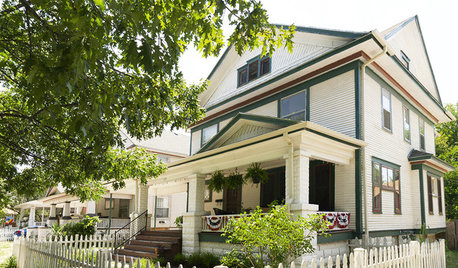
HOUZZ TOURSHouzz Tour: A Fixer-Upper Becomes a Labor of Love
By Houzz
A thrifty spirit and endless vision enable a hardworking Kansas couple to create a charming home on a small budget
Full Story
ECLECTIC HOMESMy Houzz: Eclectic Bohemian Style in a 1976 Fixer-Upper
These Southern California homeowners patiently added color, style and function to their outdated home
Full Story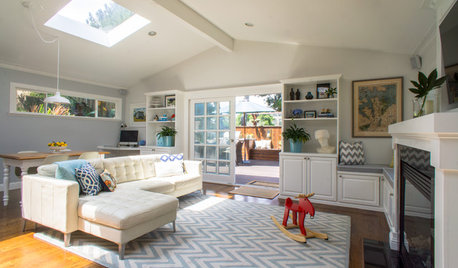
HOUZZ TOURSMy Houzz: Bright and Airy Updates in a California Fixer-Upper
An Australian family tackles an unloved Cape Cod–style house, turning it into an inviting home that reflects their history and travels
Full StorySponsored

Kuhns Contracting, Inc.
Average rating: 5 out of 5 stars26 Reviews
Central Ohio's Trusted Home Remodeler Specializing in Kitchens & Baths


laurielynne