Software
Houzz Logo Print
chris72_gw

The right sand for bulbs

17 years ago

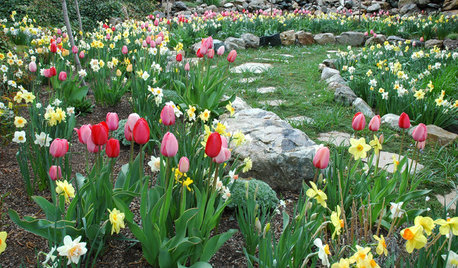
Hello! I recently bought a bagful of bulbs (daffodils, tulips, etc). Now I'm getting set to plant them, and after doing some reading learned that I should mix some sand into the soil went planting. I'm confused about what kind of sand I should buy. At the local hardware store they don't have anything called "coarse sand" or "horticultural sand," and since my gardening books advise that the wrong kind of sand will turn into concrete, I definitely don't want to get the wrong kind.

What kind of sand do regular folks get for the bulbs? What should I look for in stores?

Thank you!

PS: I'm in the Seattle area, if that helps.

Comments (5)

  • 17 years ago

    As long as your soil drains well, there is no need to add any sand. And if your soil is clayish or not well-draining, then organic matter and not sand is what you should be adding to loosen and improve drainage.

    Depending on where you live in the Seattle area, you may already have relatively sandy soil - Magnolia, Wallingford and Ballard tend to have rather sandy soils. I live in Shoreline and although not particularly sandy, my soil is rich and well drained and I have never added sand when planting bulbs (nor ever read instructions to do so).

    FWIW, if you are looking for sand to add to your garden, you need to locate builders sand, which is almost a fine gravel, not playground, beach or aquarium sand. Horticultural sand can also be found at better garden centers or landscape supply companies but it is unnecessarily expensive and not generally used for this purpose - builders sand will do the trick.

  • 17 years ago

    Squirrels dug up my tulips (they love tulips) and crocuses. Worse they (or the rabbits) eat the heads of the sprouting crocus.

    I used the spray that comes from the stores which contains fox urine/ etc., and also another one that has cayennes peper wax. I also put some stuff from the store that contains pepper and garlic into the soil (takes about 3 liberal applications over 3 successive applications). Finally I lay in a 2-3 inch layer of mulch over that. So far this year they have not come.

    But they probably will...

    Regards,
    Nikhil

  • 5 years ago
    last modified: 5 years ago

    Next time you plant immediately put down moth balls. Squirrels, rabbits and Deer HATE moth balls. By the time the moth balls dissipate the squirrels won't be able to smell the bulbs and the paper that falls off the exterior of the bulbs when you plant them. If squirrels are constantly digging up bulbs in your yard, I'd put down moth balls more consistently and invest in a good pellet gun. Yeah i know everyone hates to do that, but squirrels are a real NUISANCE and can cause thousands of dollars of damage to your home, chewing things up. That will keep their population under control and the moth balls are cheap. You might also want to invest in a good dog. Dog's love to chase squirrels and believe me they will keep them away.

  • 5 years ago
    last modified: 5 years ago

    Realize this is a very old thread but.....NEVER EVER EVER EVER EVER EVER add sand to your soil. That creates cement and anyone that tells you to do that is an idiot and doesn't know what they are talking about. This is especially true when it comes to clay. If you have heavy clay parent soils like many of us do, adding sand will turn that hard to work soil into rock hard cement that your shovel will bounce off. The only solution is to break up that clay and mix in compost year after year after year, deeper and deeper.

  • 5 years ago

    It may be an old thread but reactivation may garner new readers so it is important to point out that using mothballs in a garden setting is highly discouraged!! They are a pesticide and are sold under a strict EPA pesticide label that restricts usage to only as described by the label. To use for another purpose or in another manner is a violation of federal law.

    Mothballs contain a couple of highly toxic chemicals - naphthalene or paradichlorobenzene - both of which leach into soil and groundwater. They can kill off necessary soil organisms and even damage the plants they are intended to protect. They can seriously harm pets, can be attractive to kids and also present a risk to you when applying as those chemical easily volatilize into gasses when exposed to air that irritate eyes and lungs and are suspected of causing cancer.

    Instead, use wire cages to protect bulbs from predators or an appropriate spray or granular deterrent.

    ps. because of their toxicity, I wouldn't even use mothballs to deter clothes moths....the only pests they are registered for.

Sponsored
Top Choice for Reliable Tile & Stone | Franklin County, Ohio