Software
Houzz Logo Print
corin99_gw

Transplanting Carrots??

18 years ago

I know they say not to, but I got tired of waiting for the ones outside to show up. So I started a bunch in those peat pellet things. They came up pretty quickly and I'm going to put them right out in the garden. Has anyone tried this before? Am I wasting my time?

Comments (15)

  • 18 years ago

    All the books say not to do it, but when I interviewed the head gardener at Bountiful Gardens Ecology Action) in California a few years ago, she said they transplanted everything -- including carrots. It was the best way they had found to make sure they didn't get skips in rows or crop failures. So, it can be done, but you will need to protect those seedlings from cold and wind for a while yet. Milk carton cloches (1 should cover 4 seedlings) or a low rowcover tunnel should work well.

    Here is a link that might be useful: my website

  • 18 years ago

    corin99

    The netting on the peat pellets will prevent the carrot roots from growing. You need to remove it before transplanting them.

  • 18 years ago

    Sounds good...If this works, I think I may do it all the time.
    I never seem to have much luck getting carrots to germinate outside.

    Thanks!

  • 18 years ago

    While reading through one of my old garden books the other day I came across the "wet" method of transplanting carrots. First wet and germinate your carrot seeds on a damp paper towel in a warm place. Once they've popped, make up a gel of sorts with water and cornstarch on your stove top, cooking it just enough to thicken it. Let it cool then put it in a small zip lock bag. Add your pre sprouted (very early stage of germination where just the root is coming out) carrot seeds to the COOLED gel and snip off a small hole on the corner of the bag. To sow the seeds you just pipe them in a small furrow in your garden like you would if you were piping icing onto a cake. Cover and water like normal.

  • 18 years ago

    Next time try it without peat pellets (or peat pots). They cause more problems than they solve. A gritty potting soil makes it easy to "prick out" the little seedlings.

    Here is a link that might be useful: my website

  • 18 years ago

    Wow, the cornstarch gel trick above sounds like a really neat idea. Thanks for sharing that one. I'll definitely try this with some things this spring.

    I used to work at a garden center that sold carrots and beets in cell-packs. For carrots, they used the Parisian type -- the round, golf-ball type carrots. This worked ok. Obviously, an Imperator type with a twelve inch root isn't going to work. Beets actually work ok with this method, too, since it only matters that the top about 2 inches of root grow straight and true. After that depth, it doesn't matter how twisted or distorted the roots are, as long as they grow.

    And yes, people will actually buy carrots and beets in cell packs.

  • 18 years ago

    I like the cornstarch trick too. My outdoor carrots finally germinated and it will be interesting to see if they catch up/surpass the ones I started in peat pellets. I suspect they'll both be ready around the same time.

    Buying carrots in cell packs...that's pretty funny.

  • 18 years ago

    winter sowing might work for beets n carrots...

  • 18 years ago

    "Buying carrots in cell packs...that's pretty funny."

    I could tell you lots of funny stories about what people buy or what people want at the garden center, or the strange questions they ask.

    The people who bought carrots in cell packs were usually the novices or the first-time city gardeners. I used to have people come up to my register with a flat of mixed vegetables, one four pack of each thing, and tell me how much they hoped to be able to grow and put in their freezer from it. For some things, yes, a 4 pack of zucchini probably would yield plenty to freeze. The people who had one or two four packs of corn and told me they wanted to freeze a lot of corn, however, just cracked me up.

    We used to have a lot of people ask us for the saliva (salvia) and the sweet assylum (alyssum). Many people would ask where the pre-annuals (perennials) were.

    The absolute best time was when a woman walked up to me and asked "Do you know where I can get chlamydia?" I kid you not, that was EXACTLY what she said. I felt like saying "well, I'm sure you could catch it from someone in the red light district along 8 Mile Road in Detroit" but I just bit my tounge and said "What?" She said, "you know, chlamydia vines, those vines that have the purple flowers?" I said, "Oh, you mean CLEMATIS -- those are out in the nursery area (of the garden center)."

    A whole lot of people buy into urban legends, too -- quite a few customers had to tell me about the cactus that burst open and was full of giant, venomous spiders. I swear, every time, the spiders got bigger and more poisonous!

    People can be such a hoot sometimes.

  • 18 years ago

    I have had good success sowing carrots directly in the garden. What I do is thickly seed a row, covering with a very thin layer of soil and pressing it down with the back of a rake. Then I cover the whole row with a strip of burlap and water it thoroughly. This gets the seeds moist without washing them out and creates a moist condition under the burplap. As long as you keep the burlap moist, you will get quick and good germination (if I recall, about 10 days). Once seeds germinate, remove the burlap. Then you will need to gradually thin out the carrots.

  • 18 years ago

    I also don't find it difficult to germinate carrot seeds outside as long as a few things are understood.

    Carrots are often regarded as a cool season crop, but they take forever to germinate in cool soil. Start later or expect to wait a month or more.

    Seedlings are tiny and don't yet have much for roots. They need moist soil. Covering the soil with something like burlap as austransplant does is a good way to keep the soil from drying out.

    I think most of the causes for poor outdoor germination are too cool of temps (soil temp particularly) and not being able to keep the soil moist the entire time.

  • 18 years ago

    Older thread, but just found it :)

    I'll chime in and say I was successful wintersowing my Carrot 'Purple Dragon'. Seed were sown into wintersow container on 4/13 and by 4/18 I had about 50% germination followed another 50% (give or take) within the next 1.5 weeks. 35 seedlings were transplanted into the garden May 9th and I still have them all alive today :)
    The rest of the seedlings went to my neighbor, but hers died because she waited too long to transplant :O

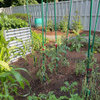
    Here the bed on May 17th
    {{gwi:34564}}
    June 11th
    {{gwi:34565}}

  • 17 years ago

    THere are some good suggestions on here. A couple of questions:

    This is for BComplx-Do you mean that they are not good for starting any seeds in, or just carrots?

    Amalthea-SOunds like a good idea, but I don't see how the roots would do well in the soil. Also, wouldn't they gel cause uneven spacing and whatnot, maybe big gaps in between?
    Thank you! I'm just still learning...

  • 17 years ago

    Everyone will tell you not to do it, but have they ever tried soil blocks? NOOOOO, they haven't. Well, for the sure fire way, the proven method to get carrots to germinate efficiently, potted on effortlessly, and transplanted flawlessly with perfect results time after time, go with soil blocks made with soil blockers made with excellent potting soil. Leave the experiments up to the novices, get proven results from professionals. See www.pottingblocks.com for complete info.

    Here is a link that might be useful: Potting Blocks.com

  • 5 years ago

    I always had a rough time germating carrots outside... because of moisture levels here..so what I did is took my jiffy plugs...mad sure they were as moist as possible..them sowed my carrot seeds....then gently opened the bottom of the netting..and piper it outside in the mounds....or even cut open the netting fully...and carefully placed the clump of peat in the soil mound... and it worked great!...it keeps the seeds consistently moist longer... and it has no danger of the netting compromising the roots!