Software
Houzz Logo Print
zshopper_gw

Shrubs for all seasons

20 years ago

For the last month we've been re-siding our home, roof, deck, and lighting. All were not that hard to make choices. But the landscaping is the last straw. We know nothing about landscape design or much about which shrub/tree placement will be beneficial to curb appeal. Also we just dont want the shrubs to look wonderful in the spring/summer and in the winter to look bare. Any ideas/suggestions will be very helpful. After working with contractors we know how easy it is to get ripped off and before making any purchases we want to be educated somewhat. I'm posting a picture of the house before completion.

Here is a link that might be useful: {{gwi:28014}}

Comments (11)

  • 20 years ago

    You can try the shrub forum for suggestions of which shrubs will have year round appeal. As to placement, that's a fairly complicated question, which will require you to study design principles a bit by reading design books and here on the forum. There have been quite a few threads about front yard plantings, you may learn something by reading them that will help you DIY.

    Anyone can buy and plant a few shrubs, and landscape design is not brain surgery, but I would say that it is similar to the fine arts. You will not be able to ask a question here and have it answered in a way that will enable you to go out and create a nice design for your front yard, just as you would not ask how to paint a good watercolor or make a good sculpture and learn how to do it on the forum. Please know that I don't mean this in an ugly way, but to explain what it is a designer does. This may be a good topic for another thread, so I'll leave it there.

    Anyway, evergreens, both broadleaf and needled, will be green all year. Some of the broadleaved ones will flower. Others have interesting winter appearance such as Red Twig Dogwood. Some have berries or other fruit in fall and/or winter, such as Winterberry Holly, Viburnums, Meserve hybrid Hollies, or Beautyberry. Others put on the big show in the fall, when the leaves color up.

    Before you can choose, you have to know what zone you're in, how much sun the area gets, what kind of soil you have, and how much moisture the plants will get. You also need to consider things like deer in the area.

    Visit local nurseries (not the box stores, unless yours has unusually knowledgeable staff) look at what's available, read the tags to learn how big the plants will get, what conditions they prefer, and what their features are. Bring a notebook and make notes when you see something you like. Ask questions if you're not sure a particular plant will suit your site or intended use.

    Not all contractors are rip-offs, nor are all contractors (even landscape contractors) trained or knowledgeable about design. A consultation with a good designer might help. Some will do a design-only and you can do the planting yourself.

  • 20 years ago

    You're right - a lot of shrub borders feature blazing color for a few weeks in spring, then nothing the rest of the year. Or a dependable but dull contribution from evergreens that need continual pruning.

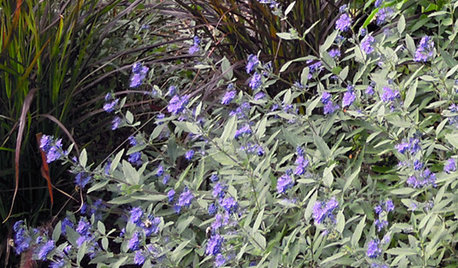
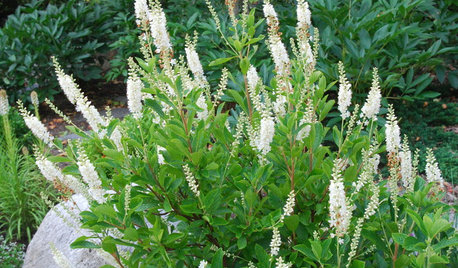
    You might want to consider a mixed shrub border featuring plants with spring or summer flowers and good fall foliage color as well as ornamental evergreens. Some are listed on this page. Others include Iteas ('Henry's Garnet' and 'Little Henry' (an even more dwarf selection), and certain Spireas, Cotoneasters and Fothergillas). More help is available in this forum.

    You'll need to plan for eventual shrub heights so that windows aren't obscured by dense growth.
    Good luck with your project.

  • 20 years ago

    P.S. the house looks great, but the planting area along the foundation looks awfully shallow for most shrubs. Beds should be deep enough to accomodate the mature width of the shrub while keeping it off the siding. You want to leave a bit of space to get behind them for maintenance, washing windows, etc., plus avoid rotting the siding.

    Keep the depth in mind when shopping for plants, or widen the beds.

  • 20 years ago

    The easiest way to have a good winter interest, but not be simply evergreens is to have multiple rows of shrubs. The back row is evergreen, the front row(s) are flowering deciduous shrubs that can disappear into the background when out of season. To do that requires space. However, if you are outside of the NYC metro area, the number of interesting broadleaf evergreens that will thrive is limited.

    Which brings up the next point, very, very important if you don't want to feel 'ripped off'. Do your homework on the plants. Even at good local nurseries I've found it difficult to find help who know more about the plants than what is written on the tags. Also, it is becoming increasingly common for the better nurseries to carry out of zone plants in an attempt to carry more interesting stock. If you understand the risks, there is nothing wrong with that. However, don't expect the nursery help to automatically pick up on the fact.

  • 20 years ago

    I agree that you should widen the planting beds. The house looks good and you want to frame it nicely. I'm also an advocate of filling in the curve of land between the house, the walk and the driveway with plantings. In your case this would allow you to plant a lovely tree and some other lower shrubs and flowers to balance that side of the house without totally obscuring those low windows.

    Patty

  • 20 years ago

    This is an interesting photograph because the shadow cast by the house at this time of day/year matches the line of the beds exactly. The more space you provide for your new planting the more opportunity you will have for choosing varieties. When looking at suggestions be aware of the effect of sun and shade. When you come to the colour selection (always a hot topic)see if you can detect another colour than grey in your siding I see pink in it but that might be just the photograph, I think it is this colour (the one you see) that would provide the harmony and its opposite that would attract most attention. If, for instance you see a cool colour like blue the dogwood with red stems for the spring and something like burning bush with red leaves in fall would give you a contrasting colour at the two ends of the growing season and with spirea with pink flowers would give you dependable early summer show.
    If you want to keep it cool plant blue evergreens (eh?) something with silver foliage and others white or blue flowers, remember the contrast is the house so don't any put yellow in. Not very specific plant suggestions but what hardly grow here could be a weed where you are so seek local advice.

  • 20 years ago

    Nice place. I can't tell fron the photo - are there any gutters or eaves on the house? If not, then the water will come off the roof and into the beds pretty hard when it rains and the snow will also really pile up in that area. You will need to have some shrubs that can take a bit of a beating - just something to mention at the local nursery when looking at plants.

  • 20 years ago

    Thanks for all of your suggestions. I'll keep them in mind when I purchase shrubs, etc. The house is not yet completed, the black shutters are about to go up along with the leders and gutters. The lights are going up soon also. Next week after the Mother's day weekend I'll have to buy some books and begin.

  • 20 years ago

    I'd also suggest driving through the neighborhood to get ideas of what looks good to you, as well as visiting historical gardens, botanic gardens, etc that are in your climatic zone to get ideas. If you are not pushed to get things in this summer, it may be useful to look at mature plantings in fall/winter to get ideas of successful plantings with seasonal interest for your area. Live with it for a year to have more time to do your research. You could always just plant some fast growing annuals and perennials for some quick cover this season, and spend more time researching your possibilities...

  • 20 years ago

    Bahia, That is great advice.

  • 20 years ago

    Take a picture of the house from a little farther away and blow it up to 8 x 11. Place tracing paper over it and sketch in shapes of trees and shrubs. This will help you with the actual placement and shape of things. Then you can start to look for trees and shrubs that match the shapes and sizes you like. BTW, I would place a 20-30 foot tree on the left to balance the house and help ground it. (Not too close to the house, of course.)