Software
Houzz Logo Print
rosiebottom

Need help with design!!

18 years ago

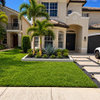
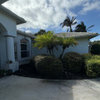
I need help with where to put my endless summer hydrangeas! I wanted to put them on the end or next to the stairs but I am not sure. I have a rhodie in the corner by the stairs now but it is not doing well. Then I don't know what else to plant to even out the landscape. All my spring bulbs are dead now and it looks so sparse. The front faces the NW and gets late afternoon sun. It will get shadier when my neighbors black walnut blooms. I will post pics. Please help

{{gwi:28696}}


{{gwi:28697}}


{{gwi:28698}}

Comments (18)

  • 18 years ago

    My first thought was that you might want to look a little harder into why your rhododendron is not doing well. I will admit that I have killed a few rhododendrons and they might like slightly acidic soil but in general rhododendrons and the hydrangeas like similar growing conditions. I cannot even pick out the rhododendron in the picture.

    Do you have two hydrangeas? My thoughts on layout would be to extend the bed under the 4 windows to be 5' deep (or at least out to the start of the first step) and plant 3 hydrangeas in that bed. Try to incorporate some hardscape or evergreen elements to provide some winter interest. Extend the other bed out to the walk and plant the rhododendron toward the center (or maybe another evergreen like a yew...there are some nice looking yews on the market these days). Fill in empty spaces with some perennials and annuals. You would then have a nice mix of shrubs, bulbs, annuals and perennials.

    - Brent

  • 18 years ago

    I would second Brent's suggestion to look into the cause of the rhododendron's decline. Also, wherever you do end up placing your hydrangeas, make sure you give them enough space. Apparently they get to be about 3-5' in diameter, so the placements you have pictured look a little tight. Again, I would second Brent's suggestion to widen the beds to account for this.

    - Audric

  • 18 years ago

    Ditto everything Brent said, and I'd expand the bed on the left all the way to the walkway as well.

    You need some substance in there, and a basic framework that exists all year round. My personal preference would be for bigger rocks, if you can manage them, instead of the small ones, which are totally out of scale for the spot and the yard. And rocks or not, a couple of bigger shrubs should definitely be on the menu, even if you buy them small, the plan should be to let them attain a significant size.

    As for sparse, the end of bulb season always is, which is why using bulbs in landscaping is an iffy proposition unless you have a plan for disguising the fading foliage (emerging hydrangeas are not a bad plan). But don't panic, this time does pass. Keeping things tidy in the area can go a long way to making it bearable. Weeding, even tying up old foliage, tidy edging, and so on.

    KarinL

  • 18 years ago

    Thanks for the advice I only have 2 endless summer hydrangeas but I do have 2 lacecaps in there( 1 on each side in the middle) that didn't do well last year either. I think the soil needs to be amended. That rhodie is in the corner behind that potted hydrangea by the stairs I will take another pic. The right side near the driveway - I should just plant the rhodie & some evergreens like yew or boxwoods? I would like the hydrangeas on both sides. Should I just re do the whole garden. If I do thet how do I get my bulbs out without cutting them in half ( I've done that before). Again thaks so much.
    Lisa

  • 18 years ago

    I think the suggestions given sound excellent.

    Part of what others are trying to get into your landscape design has to do with the issue of scale and proportion. It's been mentioned in several ways: the size / depth of the borders, the size of rocks, the "bulk" or impact that a cluster of 3 hydrangia will make over putting just one here and another one over there, even the suggestion to incorporate evergreens plays with this design issue because it keeps something in the picture "holding space" in the winter.

    I am still pretty pathetic myself when it comes to putting any of this into effect in my own landscape, but I think you've been given a good place to start. Maybe sit outside looking at these areas from key points. Imagine that you've widened the beds. Keep the mature size of plants in mind (or in a notebook). Many designers want 2' between house and perimeter growth of shrubs, so factor that in as well. Imagine three Endless Summers in a triangle, spaced not too loosely, not too close. They'll make a lovely statement together. For another grouping, it might work to have your lacecaps paired with a specimen dwarf evergreen? I've become fascinated with various Chamaecyparis obtusa and Chamaecyparis pisifera varieties. Some of these are just absolutely lovely in form and textureÂIf you want a wonderful evergreen groundcover, try Microbiota decussataÂ

    But I'm wandering away from your situation.

    After you've made up your mind about the change in the size of the planting beds, Maybe start with soil testing and amendment? Soil preparation ultimately will make all the difference in how well things do over time.

    As for the bulbs, I'm not sure what you have. Tulips do not return reliably (There are species tulips that will naturalize and certain hybrid types that will rebloom from the original bulb if "fed" well.) If we're talking narcissus, you'll be digging them up to divide them every 3 or 4 years anyway. I struggle with this issue, too. I absolutely love bulbs and find it hard to disturb them. So I'm preaching to myself here, too. We can't let the bulbs dictate the success of our year round garden!

    Time for me to go outside and tidy up my spent bulb displayÂ

    Wellspring

  • 18 years ago

    A hydrangea on each side of the steps is another option. The two issues that I see with this are 1) you are introducing some symmetry into a non-symmetrical house and 2) it seems like that will leave you with rather small planting areas on both sides...but that is just my opinion.

    I would suggest that you print out several copies of the last picture and sketch in (to scale) drawings of the plants you are considering. If there are some ideas that you like then draw out a scale plan to verify that the plants will fit. Finding accurate "mature" sizes can be tricky but try to give you plants room to grow and a foot or so space from your house.

    Should you redo the whole garden? Are you pretty happy with how your garden looks most of the year?

    - Brent

  • 18 years ago

    Ditto to what everyone's said, and I can't offer too much more...

    I'd remove the little patch of grass to the left of the angel - really serves no purpose other than to be an aggrevation to mow/clip. And removing all the small rocks extends your space giving you a little more to work with on that side. I'd remove all the edging rocks and extend the bed on the other side, too. Had a neighbor in another time in another place with garden beds about the size of yours - she keep them cleanly edged with an old 6" boning knife that had outlived its usefullness in the kitchen.

    As for digging bulbs, we've all sliced a few, but they're easy to replace without much expense. A pitchfork might be the better tool for that - following the dying foliage, go out a few inches and down at least 6" - the usual planting depth for tulips, etc. - and you'll probably come up with the bulbs intact.

    How far away is your neighbor's black walnut? Juglone can affect other plants in the garden and landscape through roots via contact, leakage, and decay, from rainwater leaching from leaves and branches, and from falling and decaying leaves. Shrubs such as azalea, mountain laurel, and rhododendron are sensitive to juglone.

    I found a blurb that said hydrangea species will not grow within the 50 foot dripline of a black walnut. If the walnut is the culprit, you might want to put your hydrangeas elsewhere in the yard out of harms way. There are many plants/trees/shrubs that are not affected - many lists on the internet by Googling black walnut toxicity to plants.

  • 18 years ago

    Wow that is some good info thanks. I'm not sure how far away it is but I think within 50 ft. What is juglone? I have a tree in the front of my house too. Across the sidewalk. Not sure what kind the bees love the white flowers in the fall and it drops sticky seeds all over my front.
    I see what your saying about the symmetry and the hydrangeas Brent. Problem is I don't know if I can get another one this season they sell out fast here. And no I'm not that happy with the way it is- it's just so much work uugh! With a toddler running around it's hard to get what I want done done.

    I took these this am the first 2 are my backyard and the rest the front close up of the rhodie, miniature spruce, & lace cap. Do you think I can save them? Do you happen to know what that ground cover is? It is spreading so much I hate it. I like it neater looking with the plants where I put them. Thanks again every one I really appreciate your ideas.
    Lisa
    {{gwi:28699}}


    {{gwi:28700}}


    {{gwi:28701}}


    {{gwi:28702}}


    {{gwi:28703}}


    {{gwi:28704}}

  • 18 years ago

    I just read a couple articles on the internet about juglone & it seems maybe that is what's going on in the side with the 4 windows. Last yr I planted a rhodie & another one of those small evergreens & they both died. It can come from the roots, under the canopy, the leaves& walnut hulls. I am going to get the soil tested with Cornell Coop & ask about the toxcity. A couple of the atricles said it was toxic to hydrangeas and a couple said not. Thanks a bunch for informing me about that.
    Lisa

  • 18 years ago

    i don't see the cover in the back yard (hostas at fence).

    those look like violas/violets bustin here and there in the rhodo strip (left of front stairs).

    i don't mess w/rhodos (need too much h20 in heavier soil). but i wondered about your recent concrete work nearby. Could it have influenced pH? (the pH changes might not be much, since there doesn't appear to be enough concrete near enough.)

  • 18 years ago

    Hi...in addition to the prob of the Black Walnut tree, I'm afraid neither the Rhodie nor Hydrangeas are going to make it here. Both are really happy only in morning sun/afternoon shade. That said, they DO need some good sun to flower and also a lot of amendments (compost/humus) and a fair bit of moisture...especially the first year or two. And it's a very small area for a Rhodie. The ES's need at least 3 or 4 hours of sun I'd say but it should be morning sun. I'd keep this really simple and perhaps plan on hardy hostas that can take some late afternoon sun (those with gold or white varigation are good..not blue Hostas. Boxwood would do well here, lamium and other perennials that aren't so fussy. I'd use the Rhodie and ES's in an East facing location perhaps in your back yard.

  • 18 years ago

    Just re-read some of your posts Lisa...Lacecap Hydrangeas are another "morning sun" shrub. I DO see some Hostas in there that seem to be doing well. That's the answer. Just switch out some of your Hostas in the back yard, get some Green Mountain Boxwood (grows ANYWHERE in my yard and no shearing...great shape/fast grower) Keep it simple in such small spaces...too much variety looks messy and disorganized. Everything will show up MUCH better against the boxwood as a background vs the foundation. Nothing is doing well because it's the wrong spot for these plants. Put some in the back east facing and give them some good compost/water and you'll see them take off. Get some good bones/structure going there and then add some perennials/annuals.

  • 18 years ago

    Lisa...here's great info on Hydrangeas. They really won't make it in this location. If you don't want to use them in the rear, I'd return them and get some boxwoods. Your exposure here is the toughest one in a yard but we all have it. This is where I have my Hostas...no sun until 3ish and then it's intense...it's a "burning sun" not a growing sun as it is between 8am and 2pm. In addition you have the heat being reflected off the foundation....that's not going to make Hydrangeas happy....they even tend to wilt even when well watered if in too strong a sun in the afternoon. You can have great color here in the spring with early blooming sun perennials if there's sun before the trees leaf out. Arabis, Basket of Gold, Aubretia all form their blossoms or go into bloom before trees leaf out. There are others too. Here's the link.

    Here is a link that might be useful: hydrangeas

  • 18 years ago

    Geez...I'll get this yet lol! The spruce is past hope...throw it. Another morning sun plant lol. Doesn't like being close to foundations either. It's kinda funny Lisa but everything else you have growing in the backyard WOULD make it in the front ...and vice versa! Euonymous isn't fussy either. And yes, those are violets that can get invasive. Take out that little bit of grass too.

  • 18 years ago

    I have never heard that either rhodos or hydrangeas do well in only morning sun, though if "afternoon sun" is full-on heat from noon, Jant may have a point.

    But I have both those plants in a variety of locations and they are generally very adaptable given enough water (and no juglone!). Lots of rhodos are in fact sun-lovers.

    And spruces... full sun, and again lots of moisture especially if planted this late in the year.

    Your ground cover is violets, but also I think I see some Campanula behind the rhodo; can't recall the species name, punctata maybe, a lovely flower spike (the leaf clusters function as biennial) but with a roving invasive habit. I keep it in a pot.

    KarinL

  • 18 years ago

    Maybe I should start a post about juglone because that has been the biggest part of my post. I have been reading many articles & have found several that goes both ways toxic & not to the hydrangea. I also found some article about how to protect your plants. It says you can build a raised bed and put plastic or weed barrier under it. I don't think plastic would be a very good idea.
    Jant I don't have anyplace in the back to put the ES since I have 3 lilacs & 3 rose bushes. The sun will be dappled with shade and it comes around 2pm till about 7.

  • 18 years ago

    Looks like the ES needs to come out of its pot - wilty as if becoming rootbound being confined.

    There are ways to try and combat juglone beyond the raised bed and plastic weed barriers which become problematic. Proper soil drainage can also be a big help. I'd dig out and pot up the plants to be saved in the area where you want the ES then...

    Determine your planting siteÂs drainage by digging a hole approx. 16" deep and filling it with water. If the hole drains within one hour, drainage is ÂrapidÂ; if the hole drains in a few hours, the drainage is ÂgoodÂ; if water stands for a day or more, drainage is ÂslowÂ.

    I'm not up to speed on what amendments might be needed for slow or rapid drainage, but the friendly folks on the Soil, Mulch, and Compost forum surely would be.

  • 18 years ago

    Hi Rosie -
    When I looked at the photos, I thought: Is there something in the building materials of the house foundation that is making the soil more alkaline? Could that be the reason your rhodie is not doing well?