Software
Houzz Logo Print
inkognito_gw

emotions, functions and plans

18 years ago

Sylvia Plath wrote
Little poppies,little hell flames,
Do you do no harm?
You flicker. I cannot touch you.
I put my hands among the flames. Nothing burns.
Part of the poem 'Poppies in July' from the Ariel collection.
Can you feel what she feels? Could you express the emotions that arise when a flower touches you so well?
This is the wild card of design. The smell of lavender reminds me of something good and who doesn't like the smell of freshly cut grass. I don't wish to labour my point but I once had a brief to design a garden with nothing taller than the owner.

Comments (22)

  • 18 years ago

    I'm no good with words, and this is not a flower, but...
    {{gwi:36978}}
    End of the year. Full circle.
    Don't we always try to replicate another time and place in the garden.

  • 18 years ago

    The fragrance of honeysuckle brings Proustian moments for me. Unfortunately as time has passed, the recollection of what it is it brings back to me has faded and I'm left mostly just slightly wistful and loving the scent.

    Although I am not a high-intensity rose lover, I've carried with me this vision of a garden since college, and it makes me ache still: "A profusion of pink roses bending ragged in the rain." It's part of a line from William Carlos Williams and continues, "speaks to me of all gentleness and its enduring," but the image and the first part of the line are ones I return to again and again when considering a garden that touches me.

    Speaking of literary references, here's a peppy little line I love, and it indicates to me what I hope, eventually, for the gardens I will tend:

    "Won't you come into the garden? I would like my roses to see you." - Richard B Sheridan

  • 18 years ago

    I find myself curious about the client who wanted nothing taller than herself. Can you tell us something about the emotion she hoped to evoke.

    As I continue to learn in my garden, I sometimes think that the refreshing emotions--emotions of joy, awe, spontaneous delight--emerge by a strange alchemy of accomplishment and miracle. Some things are not planned but they work. Some small projects require planning and labor and patience. They provide the potential for that sense of accomplishment.

    I think that gardens are backdrops for most people, most of the time. They are the settings for something else of greater importance. For others the garden is the reality itself. I'll have to cogitate on that furtherÂI'm guessing there is a difference in the emotional landscape emerging from these differences.

    Wellspring

  • 18 years ago

    The emotion tall things, like trees evoked was fear.

  • 18 years ago

    A visual input of an inanimate object creating an original emotion unassociated with any sybolism or prior involvement of the viewer seems to be hard objective for a designer.
    A flower or landscape may look good, but that is not the same as looking at my spouse, childern, or dog with which I have an established emotional relationship.

    A visual input triggering a reminiscence of a human interaction provokes an emotional response for me.

    The one object in my landscape that pulls in emotions, functions, and plans is the childerns playset. The playset and associated cushioning sand also was my single largest landscaping expense.

  • 18 years ago

    What emotions would other people experience, when stepping into this garden of no trees? Ink, you didn't do a parterre or potager, did you?

  • 18 years ago

    For me, the garden is a refuge from the noise and fast pace of modern life. Some of my most memorable experiences of the garden are in the early morning, when it's still quiet except for the birds, and the mist the river sends up hasn't yet cleared. It weaves through the borders gently, and in the distance is dense enough to completely block out everything outside, leaving me with an intense feeling of being in another place and time and totally at peace.

    I've fostered this atmosphere by planting generous screens around the perimeter, and breaking up the interior with separate garden spaces. The transitions from one space to another add depth, layers of privacy, a bit of mystery, and a traditional feeling to the design. Flowering trees and shrubs, long perennial borders, and a relaxed approach to maintenance add charm. I hope.

  • 18 years ago

    I can't quite imagine that a client brief for a garden with no trees would make any sense in virtually any climate one might design for. Tony, I think you must be throwing this out for the shock value, and would find it hard to believe if you took the project design, yet did not try and persuade the client to include some trees at least. Now I can understand that living in a climate where the climax vegetation is typically dense woods might strike fear in some people, but a full sun garden in the midst of summer with no shade doesn't sound very inviting, either.

    The most inviting gardens in my opinion, are those that engage and respond to their surroundings, and don't try to pretend they are in some other part of the country entirely. I don't mean that they shouldn't include any exotic species that aren't natural to the area; but should be in visual harmony with the surroundings, or contrast with them in part, but not to the extent that the entire garden seems an impossible ecological construct within the surroundings.

    I am curious, did you take on the project, and did it keep strictly to the client's brief, reflecting her fears and unchallenged by you? Even if this had been an actual client of mine, and a good friend no less; I would have tended to challenge the brief and get a conversation started about how it could be adapted to preclude the fear factor while still incorporating some height! (Not all trees are equally dense or overly enclosing, and location in relation to the views and garden use would also shape the perception of the viewer/user).

    I would more likely simply respect the client brief without challenge if the brief reflected a location where dense vegetation might harbor poisonous snakes,(such as parts of Australia), or harbor ticks and other vermin, such as I imagine a typical New England environment. I currently have a client in the Berkeley Hills who is originally from Puerto Rico, and is concerned that the hillside lot be totally fenced to keep the deer out, as she fears ticks and Lime Disease. This seems more logical to me than a "No trees" edict, and leaves no room for me wanting to change her mind, even though I don't feel it is going to be fool proof given that wild hillsides here may still have ticks even if there are no deer present, as there are still lots of other animals wandering through that aren't kept out by fences.

    No doubt I do scare off some potential clients by being so quick to speak my mind when I feel they are being silly, but in the long run, it seems to work best when we work with those we feel most comfortable...

  • 18 years ago

    "it seems to work best when we work with those we feel most comfortable..." you said it David, although I believe that we must sometimes put on any hat that will help but the psychiatrist hat was a bit to tight on this occasion. During the preliminaries I did talk about what I call a 'wrap around' design as I sensed insecurity and although we did not end up working together she took this suggestion with her to the firm she did employ. It is self evident that change from tradition or the way it is usually done is ripe with fear and what she ended up with was just like everyone else in that neighbourhood has but with the 'wrap around' effect.
    Jo you have captured, precisely what I was driving at, your well written post contains emotions functions and practical advice. BTW I now have three of the tykes, two in England and one in Nova Scotia.

  • 18 years ago

    I am curious what "wrap around design" actually entails, as it has no particular meaning for me. It also seems a bit vague as to how her brief could have possibly been "just like everyone else in the neighborhood does", when a "no trees" directive seems so unusual from my vantage point. Do you mean to say that traditional landscape design in your area means few/no trees, or everything must remain low and small? I have heard of other designer's local clients preferring that all plants remain separate and never touch each other, with clear bare space between each, which also seems rather unusual to me, because I prefer to see no bare earth if the client also agrees...

  • 18 years ago

    Perhaps this could make another thread.
    Gardens in the suburb where this lady lives are not often the work of a designer, the people who cut the grass, blow the leaves and clear the snow do the annual planting out. This is ubiquitously serried ranks of impatiens, geraniums or begonias amongst cedars, the same arrangement appears during the same week each spring and is removed during the same week each fall. This is done at the front with nothing much at the back.It is the cost of this that brings some people to me but then I often discover that they do not want to do anything radically different as it would expose them and they feel uncomfortable with that. There are street trees which bring the only horticultural decision, in the shade there are impatiens in the open there are geraniums.
    A 'wrap around' arrangement in these circumstances changes the shape of what amounts to foundation planting, and wraps around the house or the front walk which is more integrated in my view. Small decorative trees such as Malus give the vertical interest and provide further movement, ornamental grass provides volume but then you know this stuff. Even when this is done it is difficult to move people (the owners and maintenance crews) away from what is normal in terms of what to expect and every shrub gets pruned (?) during pruning week and perennial given the same treatment as annuals in the fall. The lady in question used the shape I had suggested but had her gardener plant it out in the spring with an arrangement that looked like a misshapen pizza with nothing higher than an olive rolled in an anchovy. Designing to accommodate an emotional response to a flower a tree or a smell is difficult but a lot more interesting than stamping cookie cutters wherever you go even if that is what the client wants.

  • 18 years ago

    And change, even positive change, generates stress. Some individual's experience almost any change as uncomfortable. To move beyond a neighborhood norm would generate anxiety for many. There is so much change that is beyond our control that many prefer not to create it in their own back, or front, yard.

    I hope some day to move to a different home. Don't know where, don't know when. In my mind I imagine this next home as "better". After moving soooo many times in my life, I dread the idea of a move. The choice of least emotional cost is to stay put. No change, no stress, and also no improvement.

    I guess I'm suggesting a distinction between the emotions elicited by the prospect of change--the risk of being different from everyone else, the risk of failure (however one defines that), the risk of not liking the "new thing" (better the devil you knowÂ)--and the quality of emotional depth and satisfaction once something is achieved in the landscape that has the potential to move and engage the soul.

    Doesn't the designer walk a tightrope between these emotional points? How to carry the client across the chasm between the safety of known perspectives, however mediocre, and something more satisfying sounds precarious, particularly if the client really wants to end up right where he/she is.


    Wellspring

  • 18 years ago

    Thanks for the explanation of the terms, I now have a much better idea of what the "look" is. I guess we really are a bit different here in the People's Republic of Berkeley, because there is so much variety from house to house, garden to garden, that there is no one norm or style to uphold. It is more general that a potential client is wanting change to make their garden more personal, and not necessarily to blend in with the neighboring style gardens. In addition, most new clients are attracted to seek me out in particular because they have seen my work for a neighbor, or at an open house during a garden tour or when a house is for sale and open to the general public. This tends to make it easier to sell the new client on design, but there is still the bridge to cross with what can be achieved within a set budget, as any designer is all too aware, most potential clients are not aware of what things can cost...

  • 18 years ago

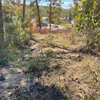
    Timbu, please explain your photo to me, along with the caption.

    Thanks, Maro

  • 18 years ago

    I'll try...
    One possible function of a garden is to arouse emotions and memories. To be able to make a garden function that way, I'm trying to learn from nature, since nature often surpasses gardens in that respect. The photo above is one step on the journey, where I capture different spaces, seasons, moods, and lights. It was taken in late November, in deep woods, and the emotion associated with it is quite the opposite of Plath's poppies, yet both could be a starting point for a garden.
    Did I answer your question, Maro, or were you looking for some other aspect?

  • 18 years ago

    ". . . the emotion associated with it is quite the opposite of Plath's poppies, yet both could be a starting point for a garden."

    I like that very much, and the idea that something as narrow in scope as just poppies can be the germ of a garden. If developing a garden plan seems overwhelming, that concept could be one answer. Many who ask questions here, including myself, struggle with 'unity' when trying to plan their gardens. Imagine having a poppy as a starting point; the whole plant selection and even the placement could be influenced by where the poppy patch is, the color and size of the poppy(nothing taller than a toddler?). Imagine then the impact of poppies which have emotional ties. I admit that that seems far-fetched, but still . . .

    Timbu, you partially answered my question and, even better, gave me inspiration for more garden planning. The part of the question still unanswered is, what IS that in the photo - what are we looking at? Is it a decaying tree trunk? It almost looks superimposed on a background of trees.

    What emotion does it bring to you, and how would you use that in planning your garden? For example, you might be thinking of a quiet, dark retreat. How would it influence your plant selection (rough, subdued?)

    Thanks, I hope I wasn't too far off base.

    Maro

  • 18 years ago

    It is a decaying tree stump, lying on the side in moss, with fungi growing out of it - a spruce uprooted by a storm, then cut.
    If it were a garden... it would be one leading to contemplation; reduction of mental noise, so to say. It would likely have a well-defined focal point, and a contrast of permanent and impermanent materials... certainly quiet. A place to talk to one's ancestors... Cemetery or tea garden? Depends if your mindset is Western or Asian.

  • 18 years ago

    Yes, I see.

    Perhaps edging away from the original topic, but really not far, can you imagine taking that pattern on the decaying trunk and laying out your garden that way? -- and, as in the mondrian-like ground pattern discussion a while back, elevate the pattern in certain places, to create a beautiful design? Can you imagine that design, complete with colors and enhanced with its own logs and moss? I see it as that dreamy, contemplative spot you have envisioned.

    Often I think my thoughts don't make it in the translation to words.

    Maro

  • 18 years ago

    Somewhat related to some of the comments in this thread - for those of you who design professionally, how do you feel when you see later that they've somewhat or meaningfully changed what you did. I am reading a book right now that has some discussion of Frederick Olmsted and his intolerance for changes or meddling in his concepts (and of course he had some strong aesthetic vies), and I wondered how you all felt about this, particularly if your aim in a particular installation did have an overriding emotional or philosophical/aesthetic perspective (as opposed to a merely pleasing, attractive and workable design).

  • 18 years ago

    For me, the garden is about scent as much as "looking pretty." Every spring my viburnum x burkwoodii comes into bloom--and for a few moments I'm 19 and newly in love with the man who is my husband. Then the honeysuckle and multiflora roses in the woods come into bloom...and for a moment I'm a young mother. (The fence at the back of our first home was covered with both.) Jasmine and gardenias came into my life at this house...and they make me feel happy and content. I can be having an absolutely terrible day, but if my gardenias or jasmine are blooming, for a moment all is right with the world. I'm still looking for a later-summer scented plant that makes me smile. My scented echinaceas may prove to be the ticket.

    I love the looks of many plants...but (for me) it's the smells that evoke emotion.

  • 18 years ago

    As passionate as you are it is a mistake to invest too much, emotionally in someone else's garden because as much as you think you understand, that someone will always personalise it. I remember Michelle telling and showing a beautiful design of hers and her shock and horror when she went back and saw a cactus in a white plastic pot prominently displayed (some of the details may be off). On persons object of an inner journey may be another's old stump. The difference is that here on this forum people can explore the possibilities, or not, and business doesn't enter into it. In business you are probably better to stick with an affordable "pleasing, attractive and workable design."

  • 18 years ago

    Maro, I'd rather not follow the picture so closely (circles, spirals and other sign-like shapes tend to be over-used, not always meaningfully), but I imagine someone with talent could make that work as a garden layout.
    More about using a flower as a starting point: I learned to draw the "wrong" way - starting from detail, such as an eye, then putting a face around it, then the body, then its surroundings. I still like to start from the "eye" with many things, but I try to work with the "big picture" too and maybe meet in the middle :) In fact, my present garden is evolving around a hammock, which in this case plays the role of the "eye".