Software
Houzz Logo Print
newbiehavinfun

My first vegetable garden

17 years ago

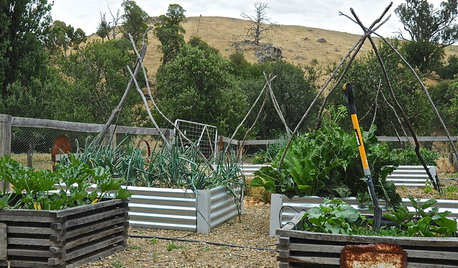
I planted my first ever vegetable garden this year. My husband made four raised beds (4' x 11' x 1' high) and we filled them with screened topsoil. We encircled everything with 2' tall chicken wire with 3/4" openings. Then I just direct sowed right into the soil. So far, everything but the herbs and peppers have come up. It's like magic! :-)

So, what I'd like to ask all of you seasoned (get it?) vegetable gardeners is, what do I need to know about my first vegetable garden? What mistakes did you make when starting out?

Thanks in advance for any and all advice!

Megan

Here's what I planted:

corn

beans (lima, green, wax)

peas

carrots

beets

chili peppers

zucchini/yellow squash

cucumber

tomato

buttercrunch lettuce

spinach

Swiss chard

cabbage

radish

herbs (basil, dill, oregano, parsley, sage, rosemary, thyme)

Comments (15)

  • 17 years ago

    Everything looks good, except for the tomatoes and peppers. They should be planted out when they're about 6 to 8 weeks old, which means they should be started from seed early, about 6 weeks before the last frost.

    Your maters and peppers may eventually catch up and produce fruit, but you're off to a better start with transplants that already have 4-6 sets of leaves.

    If you decide to just let these go the way they are, then I'd like to hear how they grow - will they catch up to the larger, transplant-grown tomatoes?

    Best of luck with your garden. Seems like you put some good consideration into the beds as well.

  • 17 years ago

    You wouldn't want my first garden info.. nor 2nd.. I must be a slow learner, it took ages for me to get that "green thumb" and every so often, just for humility I suppose, I can wipe out a flat of seedlings or plant out tomato transplants too soon and they get nailed by the seasons last frost!

    If you are looking for gardening info, my suggestion would be to point yourself at your local library and read every single book they have on gardening. When you find an author that resonates with you, look in the bibliography - any books your library doesn't own, they can probably get through inter-library loan.

    Us online types can pitch in sure, but as you are about to find out, it's rare to find two gardeners who can produce the same results with the same recipe for success. You're on your own - but you are not alone :)

  • 17 years ago

    It sounds like you will have a beautiful garden!

    Keep planting basil every couple of weeks, so that you will have a steady supply all summer.

    If you want a supply of thyme and sage this year, you might want to buy a couple of small plants and transplant them into your garden, since these perennial herbs get off to a slow start from seed. Thyme tends to be short-lived and so may need to be replanted some years. Same deal for rosemary, which usually doesn't survive the winter in northern climates.

  • 17 years ago

    Response to late tomato planting. I compost, and all kitchen scraps go in compost. From what I understand, and experianced, tomato seeds do not compost very well. I always have tomatos come up from my compost. Most get weeded out, choped up, etc. But I always let two or three of the most vigorous I see continue to grow. Depends where they grow sometimes I even transplant them to a new spot. Of course fruit bearing is late compared to those that are started early and then put out. But I have always got something off of them. If my memory is accurate I think the grape/cherry variety have been the most prolific in coming back up.

  • 17 years ago

    You don't have to keep replanting basil if you keep picking it.

    In my climate I can take my kitchen shears and prune it down to branch stubs several times each summer as it threatens to bloom. I have to be careful to stagger this and not do all the plants at once if I can or I end up with more basil than I can readily process before it wilts/rots since it doesn't keep well once picked.

  • 17 years ago

    Looks to me like you're off to a great start. You've been given good advice. You might like to keep track of how things are progressing as a reference for next year--things that did well, things that didn't etc. and make note of where you planted things so you can rotate you crops from year to year. My only real advice to you is to get a compost pile going if you don't already have one. It's such great stuff for your garden. You can get help with that on the Composting Forum and there are endless sites on the internet with lots of info re: composting. Best of luck in your new hobby!!

  • 17 years ago

    Thanks for all the great responses! I think next year I'm going to start some seeds indoors, at least for the tomatoes, peppers, and herbs. The tomato plants are very small right now and the peppers nonexistent. I might put a couple of tomato plants in where I have some room. And great idea about composting--I have a perfect areas for that, away from where the dogs could get to it.

    I'll post some pics when plants get bigger. This is so much fun!

  • 17 years ago

    My recommendation would be not to try too many things first off, but to focus on things you like & need successive planting.

    Unfortunately I'd like to follow my own advice, but every year get too excited about different things to plant, lose track of what's what (even lose labels!). The local Italians, who've been here for 20 years, have the right idea... they focus on garlic, tomatoes, onions, lettuce, peppers and one or two other things. Their plots are works of art.

    Here is a link that might be useful: An English Allotment

  • 17 years ago

    Planting indoors from seed is pretty rewarding experience since you can get a jump on the season. I never bothered with this because I thought I needed the $400 setups that are featured in most seed catalogs. Now I know that all you really need is a $25 investment to get a 6 foot shop light, 2 florescent bulbs, a little extra chain length, some S hooks and a timer.

    You might want to plant successive crops every two weeks or so unless you want everything to mature at once for canning.

    Here is a link that might be useful: Preserving berries, green beans and peas with dry ice

  • 17 years ago

    With all the comments about starting tomatoes and such ahead, I'm surprised nobody has mentioned wintersowing... you can sow tomatoes and many other seeds in milk jugs or other containers (with holes added for drainage), and then leave them outside rather than needing shop lights and indoor space. You'll get a good jump on the season that way. Check out wintersown.org for more info.

  • 17 years ago

    WOW!!! Youve got all the great standards and you are going to have a blast this year!!!!
    Next year you can try some different exotic stuff. I love growing things that are interesting to look at too!!! I specifically grow heirloom tomatos because I love giving a nice beautiful green striped tomato to non-gardeners and hearing what they have to say about it!!!!!
    Have a great time with your new peice of heaven!!!! -cass

  • 17 years ago

    I would recommend you keep a journal and save it from year to year. You can even add pictures. This has proven invaluable to me as what, where, and when things were planted. It helps stave off the dementia I'm plagued with.

    Brook

  • 17 years ago

    Wanted to add 2 things, one "brookw" mentioned. I started a journal, a few years ago and wrote almost nothing in it each year, until last year, two pages maybe, and this year I already have 5 or 6 pages filled. It is a great referance for you paticular garden, because in every climate/region, each little area has its own quirks. The second and what I find the most helpful is to make sure you spend time in your garden every day. wether it is taking a walk through the garden in the morning with your coffee mug, or in the evening with a glass of wine or beer. You will enjoy it more, notice things earlier, and learn much more. I plan to spend five minutes every day and once I get in the garden it never fails I end up spending at least 30 minutes there.

  • 17 years ago

    I made all three of the most common mistakes...

    The first was starting out too big (much larger than your plot - yours sounds like a nice size) & quickly getting so overwhelmed & disgusted that it was a couple years before I tried again.

    Second mistake was overwatering - I quickly learned to stick my finger deep into the soil & if it's completely dry it's time to water.

    Third mistake was not fertilizing. That's as bad as overfertilizing. It took a few years of trial & error, but I finally figured out that an inch of composted cow manure on each new crop is all I need for most things. I use fish emulsion & liquid seaweed if I need something extra, & am trying turkey compost on the heavy nitrogen feeders this year.

    One more piece of advice for you - if you ask five gardeners the same question you'll get six opinions, so try not to get overwhelmed by it all.

    Good luck! And don't ever forget that this is supposed to be fun. :)

  • 17 years ago

    Great ideas, guys (I especially like the one about walking around the garden drinking wine!). Thanks again!

    Megan