Software
Houzz Logo Print
hzdeleted_8959062

gardening 'methods'

13 years ago

OK, I apologise because I don't hang around here much although I do grow heaps of veggies and fruit but anyway...... Reading another post, the term 'Mittleider Method' popped up. Because I am curious, I looked it up and promptly almost fell asleep reading the many rules and regulations. And, in fact, it occurs to me that almost anything to do with methods (or similar terminology) just fails to gain much traction because what I mainly just want to do is romp about amongst the flowers, growing some nice things to eat, ignoring all the parts of the plot which start to look a bit rough (this is a seasonal cycle and is fairly predictable) and mostly develop a selective vision where I can rest my eyes on something lovely at least every day. Of course, I would like to be an even better gardener but obviously, I have some prejudice about 'methods' which sound more like hard work - yes, even the so-called no-work ones. Lasagne gardening (gah), no-dig (yeah, right!)
So, what do you think? Am I seriously missing a trick? Does anyone here have a method or style or even a self-defined title other than just gardener (organic, biodynamic, permie, hydroponic, tropical, greenhouse etc.etc.) Do you pick and choose between theories? Or vaguely hope and try to keep your eyes open (unfortunately, mine are often looking in the wrong direction). Do you follow timetables and calendars? Or, like myself, have the attention span of a gnat and standards low enough to delight rather than mortify?
Confession - I believe I was exposed to a biodynamic handbook at a formative stage of my development and was deeply traumatised. Quite apart from the insane amount of organisation involved, all that cowhorn and magic potions stuff did my head in. But, to be fair, I had the same problems at horticultural college, trying to get my brain to memorise chemical terms, nitrogen cycles, electron stages, bacteria and fungi names...... blah blah - I spent a lot of time skiving, in the greenhouses or wandering about the grounds.

Comments (24)

  • 13 years ago

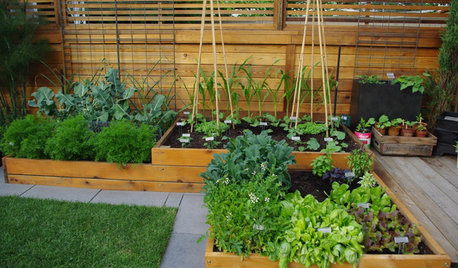
    I guess I'm pseudo following the square foot gardening method. I built raised beds and am using SFG spacing. Really though, I was using similar spacing methods in ground before. The main reason I went to raised beds was because our clay soil was too heavy to grow decent root vegetables (I tried carrots and onions and nothing grew), and drainage was just a disaster.

    Really, in the end, for whatever you want to grow, you need a compatible soil type, proper nutrients, right temperatures, enough space, and proper light. Get those right, and you'll have plants that are happy and productive (okay, for non-self pollinating plants, you need a method of pollination as well I suppose, be natural or manual). Whatever method you use is just a way to try and get those things right.

  • 13 years ago

    me i just do what i can in the space i have, by far the best method (no religion) is raised beds.

    len

    Here is a link that might be useful: lens bale garden

  • 13 years ago

    Am I seriously missing a trick?

    Probably not. it all depends on what your goal is and what you have to work with in terms of available land, climate. and soil.

    We rural gardeners usually have the room to play around, experiment, try lots of different things and in the process over time create our own combi-method that is flexible enough that it can always be revised. Suburban/urban gardeners not so much.

    IMO "methods" seem to develop out of some imposed limitation. Either (a) a lack of basic garden knowledge combined with "whole-hog-go-for-broke" approach and so failing at all while learning little or (b) physical limitations such space, availability of materials, containers vs. in-ground, home owner association rules, ability to haul, equipment storage, etc.

    If you can modify (a) and eliminate or modify (b) then any "method" becomes much less important.

    I focus on improvement/maintenance of the soil you have. Then you can pretty much do anything you please when it comes to gardening.

    Dave

  • 13 years ago

    Campanula - I feel after many years on these forums that there is a real difference in attitude to gardens and gardening between the UK and the US. Maybe it is because of our relatively benign climate but on the whole a lot of US gardeners appear (and I emphasise appear - it's only my impression) to make things vastly more complicated and technical than they need be. There is also a tendency to the pursuit of perfection and the 'correct' way of doing things in many of the questions, especially from new gardeners. Ernest newbies come along asking about buying 'mix' and I just want to tell them to go out and buy a fork. But I don't because the whole gardening culture seems so different. I also sense that there is a much greater imperative to do things at the 'right' time in much of the US or the weather will catch up with you, whereas we can fail to do a job for weeks on end and it won't make a lot of difference. I didn't know you could actually buy soil, or that gardens had to be 'built' or 'made' before coming here. I'd never heard of a 'zone' or a 'last frost date'. But on the other hand it is these differences which make these the only on-line forums I frequent - it's because they are so different that I find them endlessly fascinating.

  • 13 years ago

    Flora,

    I think part of it is definitely climate and environment generally. There's such a wide range of soils, temperatures, pests, and seasons here that different regions have all developed their own calendars, habits, methods, etc.

    The other reason I'd suggest that gardening knowledge is so systematized is the development of land-grant universities of the 1800s. These schools were given land in order to develop agricultural knowledge (among other fields) that could be used by the community and by the country more generally. That's where the extension office comes from.

  • 13 years ago

    Aw Flora you know we here in the colonies have to do things different. :-)

    But seriously, you make some good points that in a way ties into my "limitations" comment above. The great diversity of climates here imposes some of those limitations on us and is probably the main reason why no one method will work for all.

    i think one thing that makes us appear to be more complicated on this side of the pond is we don't pay enough attention to those zones when posting and answering questions. Too many make the mistake of assuming when asking and answering that how something is done in Georgia will also work in Vermont or that Oregon practices will work in Florida when nothing could be further from the truth because the climates are so vastly different.

    So out of curiosity, are methods of gardening very different in the climates of say Wales vs. Yorkshire or Scotland or is the climate actually that uniform across all the country?

    Dave

    PS: brittanyw - excellent point about the land-grant colleges! Many tend to forget how much they contribute to local gardening information and that every state has one.

  • 13 years ago

    I would think the scottish highlands must have a pretty different gardening climate from Cornwall, for example.

  • 13 years ago

    I agree with what's been said. Along with the varying climate and environmental conditions that are totally legitimate, I think gardening is also seen as this really difficult thing that only a few people are capable of doing. Some people have green thumbs, some don't. At the same time, we are bombarded by ads (TV, newspaper, magazines) telling us that (1) we have to have a perfect yard and garden and (2) only this fabulous product will do the job. So maybe all of this makes us think it's more difficult and complicated than it actually is.

    And, don't get me wrong, it can be really hard (in my case, pure clay soil and hot, dry summers). It takes time to learn what works and what doesn't. Experience, trial and error, and some (good) practical advice make a big difference. I wish I'd had a mentor to help me out when I first started.

  • 13 years ago

    I do not believe nor practice engineered methods. But as Dave said we need to adapt our methods to the environment that are different. I, my self, have gardened in Connecticut, Georgia and now in state of Washington. They are all three environments, having limitations and advantages. I could not grow okra in Ct, nor can I in western Washngton .

    But the basic principles of soil, nutrients ,plant characteristics .... are almost universal.

    In my opinion, gardening in a way , is an art and hobby form. You want to grow a record pumpkin or tomato, and the hottest pepper on Richter scale (LOL). You do it anyway you want. But if you have to depend on your tomatoes and beans, then you have to do it in a manner that the product of your labor and resources are optimized. Maybe in this case, we can talk about methods of optimization and the economics of gardening. Until then I will be just a hobbyist.

  • 13 years ago

    "I would think the Scottish highlands must have a pretty different gardening climate from Cornwall, for example." You're right pnbrown. But it's mainly a matter of season length and temperature I would say, not techniques. I would sow peas exactly the same way in either place, just later in the Highlands. The link shows how uniform the climate is.

    Another thing is that I have never met a gardener who knew the pH of their garden, because it just isn't that much of an issue in most places. Campanula do you know your pH?

    Here is a link that might be useful: {{gwi:55477}}

  • 13 years ago

    The many different techniques in the US/Canada vs England or Britain might be explainable due to the probably much greater diversity of traditions with the eastern and southern europeans following the british and german settlers, not to mention the crops and techniques that came with the African peoples stolen and imported to north america early on. Not to mention the existing maize-and-bean culture of the natives in some regions.

    Another factor is that home gardening came rather closer to general extinction in the US than in Britain, I suspect. After the WWII victory-gardens it declined steeply as the population massively shifted to suburbs. From my childhood I do not recall a single vegetable garden in the many different neighborhoods we lived in, in many different regions. Only one of my grandparents kept a garden, and that in a rather desultory fashion. When the hippies came along it was almost required to attempt a garden, but then was given up as a hippie became a yuppie.

    So many - I would guess most - people who get into vegetable growing have no family tradition to turn to. So one can easily overcompensate for what feels like total ignorance with attempting to learn and know every possible thing. A few years of real experience generally gets rid of that compulsion :)

  • 13 years ago

    I'm one of those crazy people who gardens by the moon, and it works for me. I guess you could call that a method. I remember watching my Dad plant a garden, and by gosh those rows had to be straight!!and no walking in the garden unless you put down a board to walk on, no packing down the soil. He always had a great vege garden, and people came from all over town to see his flowers. He was Swiss by the way.

  • 13 years ago

    Thinking some more about this (and especially in reference to the landgrant? colleges, I realise that in the UK, many of us are still labouring under Victorian regimes. Whatever one thinks about the Victorians, there is no question that they absolutely invented scientific rigour in the garden. Tools, techniques, controls, hybridising - all exploded in a very short (80 years or so) span of human time....and many of us are still fighting off the shackles of dogma. When I first started gardening, I had a few years of blissful ignorance....and then the pests started to build up and I realised how very little I actually 'knew'. 4 years of horticulture college (so yeah, I did know my PH Flora,) only served to throw me into a tizzy as I desperately attempted to assimilate knowledge and experience. That was back in 2003 and finally, I am in a much happier (if considerably slacker) place (despite still having a nasty little competitive streak when it comes to allotment produce).

    Of course, there is also the dislocation between theory and practice - for sure I know a lot of theory....but do I practice any of it - well no, not really. Too lazy, too disorganised, too...scatterbrained with fingers in far too many pies (jack of all trades and all that).
    Also, to be fair to our friends across the pond, I am often shocked at the extremes of US weather. Much as we moan and vent about our endless grey rains and ceaseless winds, we are basically working in a temperate environment where we can grow literally thousands of different plants (although I have had many, many epic fails - last years tomatoes were so awful I had to (shudder) buy some plants!

    True though, Flora, these are the only forums I frequent and I find them to be a source of endless amusement and much useful wisdom (which, naturally, goes in, fails to penetrate the mists of vagueness and is usually lost again...but for a fleeting time, I am energised with new resolutions).

    I also confess to finding the growing of vegetables endless hard work and have turned more and more of the allotment over to fruit - although I am now reaping the (ahem) rewards - months of sweary, shouty spoon stirring over a hot preserving pan - although we now disdain the common old jams and only ever sup on the finest jellies and killer ketchup.

    Finally, this is exactly the sort of stuff which is music to my ears....'I focus on improvement/maintenance of the soil you have. Then you can pretty much do anything you please when it comes to gardening.'
    I have three humongous compost heaps and even with only one turning a year, we can make several tonnes of decent stuff - but I also have 2 sons who are both extremely keen on composting and pee on the heaps with frequency (after I tried (and failed)to clambour up the heap up one day, I now keep a bucket behind the shed )

    And, because we Brits are basically shameless, I also used to do some disgusting things with tampons (but had storming squash and...

  • 13 years ago

    I garden for fun and also to get fresh produce. There are people who have it down to a science what with exact quantities of fertilizers, automatic everything, and even computer records.
    Some people have sex for fun, and others do it purely for procreation.
    People tend to live their lives in ways that make them happy, so I guess the moral of the story is we all get happy with different things.

  • 13 years ago

    campanula - think too about how very long you all have been gardening and practicing structured agriculture compared to us. Centuries of different practices that have been handed down (and not just from Victoria).

    The info from Flora on zones is almost mind boggling to me - to see almost and entire country that is basically all the same gardening zone.

    But it makes me wonder how the soil differs from region to region too. So I went Googling and discovered that for the most part there is little variance through out the country (see GB Soil Maps compared to {{gwi:55479}} where it often has to be broken down not just into individual states but into parts of each state. Makes for a lot of diversity in gardening methods here that you all may not have to cope with.

    Dave

  • 13 years ago

    I have to say , those maps are very interesting, I had to look where Im at.. Spodosols , no wonder our main native crop is basically blueberries.

    Methodolgy = advertising to make profit off you.. dont fall for it. Build your soil, compost, manure, water and mulch.

    I built my own raised beds out of logs, birch, maple and oak, that I cut by hand and dragged out of the woods , its not so much pretty as its free. If you do not have access or ablity to compost, see if your town does it, alot of towns do, if they do not, try to start the program yourelf. Visit your local farmers or horse owners and ask if you can have manure for free, how much and how often. Horse tracks around here offer it for free, so do some zoos, some dairy farmers could care less, other then having some for thier modest veggie gardens, they do not need manure from 200 cows sitting around. Some sell it, but others cannot, or do not have easy access for back loaders and trucks.

    Methodolgy might be ok to break you into gardening, move past it when you learn enough to be confident on your own. Do not allow a company to make a profit off from you, when you can simply do alot of it yourself, for free!

    Silverkelt

  • 13 years ago

    Yes, pn - hence the lack of faff about pH. I just know whether an area has blue hydrangeas or pink and that's about it. Reading about the various difficulties you face makes me full of admiration that some of you even bother. People who have to garden in 10 minute spurts interspersed with breaks in a lounge chair holding an iced drink and wearing a bee keeper's veil and with ice cubes in their hat because of the bugs and heat??? (It's true - I read it on the Cottage Gardening forum) And irrigation .... aaargghh - I can just about muster the energy to water a few pots.

  • 13 years ago

    Silver, I don't see that, methodology has no necessary connection to advertising or hucksterism.

    Flora, sounds like the deep south in summer. Still, much depends on the fitness of the gardener. Personally, I look forward to the hot weather when you have to time your weeding carefully or risk sunstroke. It's kinda fun.

  • 13 years ago

    Actually, that ph map for England gives the wrong impression at first, the impression being that all that blue indicates nearly consistent ph everywhere.

    Hardly the case: the dark blue is the sweet stuff, 6-6.5, and while indeed an impressively large area is that, most is light blue which ranges a whopping 6.5-10! So anywhere from ideal to completely unusable, we don't know. And all that highly acidic ground in Scotland, ph 3-5. Again though, that is a big range. Ph5 is not too difficult to move into good production range, especially for potatoes, ph3 would be simply not feasible.

  • 13 years ago

    Lucille- sex and gardening seem just about right for me! LOL Nancy

  • 13 years ago

    mmmmm, I agree, nancy.....and when we are too old for gardening, there is still some (slow) rumpy-pumpy carnal fun to be had.

    Of course, my children think I last 'did it' was around the time the youngest was born, 26 years ago.

  • 13 years ago

    That's a smart usage, Camp, I never thought of that. There are a lot of menstruaters around here, though keeping a seperate bucket in the loo may not go over well.

  • 13 years ago

    Dave - I'm really interested in the US soil map but I can't read the legend because the resolution's not so good. Do you know another place to find a map like that?

  • 13 years ago

    Anne, check out the national soil survey site by the USDA.