Software
Houzz Logo Print
hzdeleted_16331601

Would like help w/ backyard landscape...

19 years ago

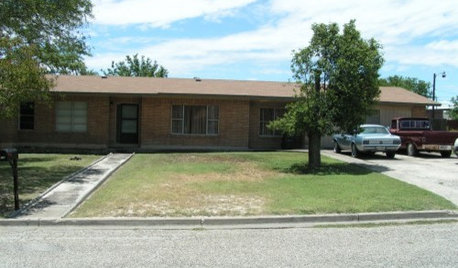
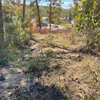
I have spent a lot of time on the cottage forum in the past year. I would love to get some help from this direction on my backyard area. I had several trees removed and the stumps ground. I then had a brick walkway and patio built and a fence erected. I built the rock walls. I planted a few perennials and then Alabama entered a D4 severe drought period that we have not left yet. I purchased the shrubs you see in the pic and have not planted them yet since I can't get a feel for how to place them and how many more I need. I really want to hide the fence since I think I made a mistake and it is not as attractive as I hoped even after staining. The whole fence is about 50 ft long x 6ft high and faces NNE . Once you get about 5 ft out the area does get a lot of hot sun in the summer PM. I have read a lot of posts on this forum and looked at pics but haven't seen anything that really pertains to my climate and situation. Any suggestions would be most welcome. The shrubs in the picture are Dwarf Leucothoe, Sweet Daphne, Fl Anise, Rhodea Japonica and a Tea olive. The azaleas in the far right have been moved now.

{{gwi:53151}}

{{gwi:53152}}

{{gwi:53153}}

Comments (6)

  • 19 years ago

    I think the fence looks fine, and once you get some plants in to break up the solid mass it now presents, it will look less imposing.

    As far as plant spacing and arrangement, most plant tags give you the approximate mature height and width of a plant. If you don't have the tag info, get some books and look them up, or use the internet. Leave enough space around the plant so that it can fill in at least to that mature size unobstructed, and leave additional space behind them on the fence side for maintenance, painting, leaf removal, air circulation, etc., at least 18 inches more than the plant will take up.

    Plants usually look better planted in zig-zag or staggered arrangements rather than straight lines unless you are deliberately creating a formal planting with a straight hedge. Taller plants in the back, shorter in the front, but pull a medium or taller one forward occasionally to create a slight variation in the layout and avoid a strict short-to-tall sloping planting and make it more interesting.

    To determine whether you have enough plants or not, you need to make a scale drawing of the area. Graph paper makes it easy, you can use 1/4 inch equals 1 foot, or whatever scale works best for you. Plot the plants you have using their mature size on the drawing, and space them appropriately. That's how designers do it. You will then know exactly where they will go when it's time to plant, whether you have enough plants or too many, and you can experiment on paper instead of with a shovel. Even better, get some tracing paper and lay it over your drawing of the area and experiment on the tracing paper so if you want to try something different, you can just use a fresh piece of tracing paper, and still have your old design if you want to go back to it.

  • 19 years ago

    The advice you just got is sound, and from the list of shrubs it sounds like a nice combination. The temptation is always to space things too close, and then have to prune. You will have a much better idea how big each of these gets if you drive or walk around your neighborhood and look at these same plants in mature gardens. California is so different from Alabama, but we also grow quite a few of these same plants out here.

    I would suggest that you allow a 4 to 5 foot diameter for the Daphne odora, and use this as a foreground shrub to the taller ones, since it usually only grows about 2 to 3.5 feet tall. The Florida Anice is one of my new favorite plants, as it is not that common here in California, but the beautiful almost everblooming deep red flowers are gorgeous. This one gets big here, and I have seen it 8 feet tall by 6 feet across. The Sweet Olive,(you are referring to Osmanthus fragrans?), can get 10 to 15 feet tall and act like a small tree, so I would definitely give this one some room at the back, and not crowd it. The Dwarf Leucothoe I am not that familiar with, but imagine that it is in the same size range as the Daphne.

    Just looking at your photo, I would guess that you could double the spacing between plants and stretch this out along the fence, and closer to your new stone wall. If you want a fuller look immediately, you could always plant either perennials or annuals as filler between the shrubs until they get some size. Some perennials with good evergreen foliage might include things like Bergenia, Hellebores,(Heleborus x argutifolius is a personal favorite), Japanese Anemones, etc. Not sure if these are all good choices for the deep south, (I have no idea what it is like to garden in a sauna in summer). I do know that other evergreen bulbs like Crinums and Hippeastrum would love your conditions. I'd also look to add foliage plants such as native ferns to the mix, and I would also recommend ferny foliaged plants like the Dwarf Heavenly Bamboo, Nandina domestica 'Harbour Dwarf'. Do the dwarf Viburnums, such as Viburnum davidii do well in your area, this is also a nice shade shrub that stays reasonably low.

    You will probably get better plant specific advice for your local climate if you post this on one of the regional forums that deals with your part of the south.

  • 19 years ago

    Thank you for the solid suggestions. I had not thought to use the graph paper w/ tracing paper !! I have to admit to wanting it all BIG now and close together...LOL. YOu know how that goes. I have 2 helebores I can move and 4 ferns that I can move and a bunch of different kinds of Hostas too. I don't care for Nandina but will look up the others and see. The nurseries around here clear out everything til spring ...weird and frustrating since Fall is the best time to plant in the hot south. WIth the drought I need to get more toward a xeriscape plan too. Thank you again for the good ideas. Caroline

  • 19 years ago

    Unless you really do hate them, don't rule out that particular nandina--it's much nicer than the Firepower, small unlike the standard nandinas, and looks nice flowing over the edge of the wall, takes full sun and drought, has more subtle winter color, and berries, blends with both shade and sun shrubs and perennials --i.e., can be used to give some repetition in a bed which moves from sun to shade.

    Camellias are a good medium tall broad-leaved evergreen for your area, for partial sun, and take more drought than azaleas. Need some space; larger specimens can be expensive if you want height really quick, but the box stores often carry 3 gal for less than $20.

  • 19 years ago

    Frankie,
    It sounds like you like to use Nandina 'Harbour Dwarf' as well, and you made a persuasive case for why this cultivar is such a good one to have in the garden. You also reminded me with your suggestion for Camellias, and I would further add that the Sansanqua camellias are in many ways more useful in the garden; they will take more sun, are not as tall growing for the most part, and bloom late in the year, rather than spring time, when flowers are especially appreciated.

    Even with the bigger growing Nandinas, I think it is a matter of how they are maintained, and if allowed to become big monstrously thick bushes, they can look a mess. Thin them out abit, leaving multiple trunks with foliage at different heights, and clean out the dead leaves and old flower stalks, and they can almost be sculptural. These also seem to combine with other foliage plants like Fatsia japonica or Acanthus mollis, which have bold leaves to contrast with the fine texture of Nandina.

    Are Magnolias like M. stellata as popular in the south? This is another favorite for a semi-shady border, and is also more managable in size than the bigger M. soulangeana cultivars. I'd also suggest that some of the Hedychiums such as H. flavescens, H. gardnerianum or H. greenei could also be used as quick filler between the shrubs, or as a leafy contrast between shrub groupings.

    Another new favorite shrub of mine for shade would also include Edgeworthia chrysantha, a Daphne relative that goes deciduous, with very sculptural form and lush foliage in season, and even a bit of fall foliage color, and then subtly fragrant pale yellow blooms on bare branches in the middle of winter. Choisya ternata 'Sundance' could also combine nicely with all of the above, and has such colorful chartreuse new foliage as well.

    Perhaps on the fence you could also soften it with some vines, and several southern vines would do well, such as Gelsemium sempervirens, or Bignonia capreolata 'Tangerine Dream', or Trachelospermum jasminoides. All will bloom well in dappled shade, and are relatively quick to cover.

  • 19 years ago

    thank you frankie: I looked up the dwarf and it is an attractive plant. I have camellias in several places in the yard and plan on more. I wanted susanquas too which are in bloom now but the "dumb" HD has gotten rid of almost everything ..%^&&^(*). So I will have to save a place on the graph paper and place one or two next year. I really appreciate all the help. Thank you, Caroline