Software
Houzz Logo Print
jstover_gw

Fuji apple tree condition.

17 years ago

I planted a bare root Fuji apple tree on M27 root stock last February, so I haven't seen a full annual growth cycle yet. The tree has adapted well, although I think that allowing it to bear 3 apples the first year kept it from growing as it should have. Now the branches have grown a kind of white fuzz all over them. My question is, is this a normal winter covering, or does it suggest a problem? Hi-res photos may be viewed at ftp://ftp.gilland.com/pub/ (click on jpg filenames).

Comments (9)

  • 17 years ago

    jstover:

    Is it possible that you have an infestation of cottony cushion scale or something like that? If so, you should apply an oil spray until it is gone, and get right at it before serious damage is done. Powdery mildews are often seen on the leaves of apple trees, but I have not observed them on branches.

    I have only seen CCS on greenhouse plants, but your climate is quite different than mine. Is this tree in-ground or in a container, and what kind of weather have you been experiencing?

    I cannot get your link to open; it seems to lack the necessary info. You are certainly correct that you should not have allowed the tree to bear the first year.

    Don Yellman, Great Falls, VA

  • 17 years ago

    Sorry, the link was not set up for opening by clicking on it - strictly intended for cut and paste. I have added a click-to-open link to this response. The condition is definitely not cottony cushion scale.

    Here is a link that might be useful: Hi-res Fuji Apple Tree pics

  • 17 years ago

    jstover:

    I did cut and paste it. That didn't work for me, and the link doesn't either although some text is diplayed. Can't get a photo to appear.

    It is fortunate that the condition is not CCS, but I can tell you that white fuzz on an apple tree is not a normal winter covering.

    Don Yellman, Great Falls, VA

  • 17 years ago

    Hi Jstover & Jellyman-
    I was able to view the pics by copying/pasting the text in the 1st post. I was able to see the pics by clicking on the link in the 2nd post.
    It looks to me like normal winter covering.
    -Glenn

  • 17 years ago

    I have had wooly apple aphids, and it kind of looks like them, but also kind of looks like normal fuzzy apple leaves (some apples are fuzzier than others)

    Here is UC Davis on wooly aphids:
    http://www.ipm.ucdavis.edu/PMG/GARDEN/FRUIT/PESTS/woolyapaph.html

    I am wondering, though, why you still have leaves on your apples? It should be dormant right now.

    Carla in Sac

  • 17 years ago

    Thanks for your responses.

    Jellyman - I don't know why you had a problem with the photos; must be some incompatibility in our software.

    Glenn - Have you regularly seen this condition as a normal winter covering? We had a few days around freezing in late December/early January, but have had a mild winter since then (mid-40s at night). I'm not sure when the fuzzy covering took over, but it is only on the upper half of the branches, not the trunk or lower half of branches.

    Carla - Well, it was just one leaf, and that has since fallen (photos taken 1/21). The tree is dormant, and the last leaf was mostly covered with the white fuzz. I have looked at the link you provided, and my tree's condition does not look like wooly apple aphids. In fact, I cannot detect any pests. I found one tiny spider this morning, but the fuzzy stuff is not like spider web.

    The tree generally appears healthy, if small, with many budding joints. I have reviewed photos at http://www.caf.wvu.edu/Kearneysville/disease_descriptions/disease_images/viskeyatbt.html, and I'm now reasonably certain that the condition is powdery mildew. I had not seen it on branches before - only leaves. Does anyone else have information contrary to my diagnosis?

    Here is a link that might be useful: Apple Tree Diseases

  • 17 years ago

    Hi Jstover-
    I'll let the experts give the final word here... but...

    As Don mentioned, there is a fuzzy covering that appears during the winter. The first time I saw it, I was surprised too. If memory serves, it only happens on new wood.

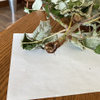
    I searched through my pics to see if I had anything which showed it, but didn't come up with much. I had taken the pic below to ask about the fat little branch going to the left. By posting here, I found out it's called a "burse", and that was the reason for the pic. Granted, this picture doesn't show anywhere near as much fuzz as your picture does (though mine was taken in mid April), but aside from the quantity of fuzz, it does look similar.

    I've never seen as much as your pics show though... especially the last one.

    I'm sure the experts will chime in soon. Good luck,
    -Glenn

    {{gwi:53674}}

    Here is a link that might be useful: {{gwi:53673}}

  • 17 years ago

    jstover:

    The fuzz is normal, typical for new growth. The M27 is a poor choice for your zone, and will not put on much growth as long as you allow it to bear apples (it cannot grow apples and wood at the same time). It is typical to allow it to reach full size before bearing, which is why I go with more vigorous rootstocks, Bud. 9 at the least. If a branch gets broken off your M27, it takes forever to regrow, and heaven help you if your sprinkler timer putts out during a hot spell!

    The black flecks under the leaf are a dead aphid carcass that's been sucked dry by an ladybug.

    Applenut

  • 17 years ago

    Thanks to Glenn and Applenut for your additional input. It's good to hear this is a normal occurrence.

    Glenn - Thanks for the photo. The furry coating is very much like what I have on my tree, especially the little branch coming toward the viewer. I rubbed some of the furry stuff with my thumb, and it comes off like matted lint.

    Applenut - Yes, I agree that M27 was not the best choice, and can't tell you now why I chose it, but this is my first try at a backyard orchard. I re-read the description of M27 today, and think that the current height of the tree, about 5 ft. after one year in the ground, is pretty much to be expected from this extremely dwarfing root stock. So, I don't think that the 3 apples stunted it much. Only one survived to maturity (more than 6 months to ripen!), but it was the best apple I have ever tasted. I actually didn't notice the dead aphid with my naked eye, and only caught it when I looked at the macro photo.