Software
Houzz Logo Print
wysecj

Pruning apple trees

18 years ago

Hi,

I just purchased a house this fall with two somewhat overgrown apple trees. I'd like to get them back in shape. I've looked through pruning information and used that to do some preliminary pruning, but I don't know what to do with the rest of the tree. There are about 20 sprouts coming off the end of the branch, all in a big clump. Each of the three major branches has that. Also, the branches are getting pretty high - not sure if I should try to train them lower.

Neither tree has a central trunk - one has a double trunk, and the other splits into three branches a couple feet from the ground.

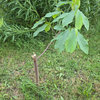
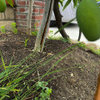
I've attached some pictures of the trees - if anyone can tell me where I should prune, I would really appreciate it.

{{gwi:65059}}
{{gwi:65060}}
{{gwi:65061}}
{{gwi:65062}}
{{gwi:65063}}
{{gwi:65064}}
{{gwi:65065}}
{{gwi:65067}}

Chris

Comments (8)

  • 18 years ago
    last modified: 11 years ago

    I'm worried about a couple things; one is with those big limbs lopped off, you may be setting up for sunscald and borers.

    Second, if you drastically prune the ends in winter, you'll most likely get a big knot of watersprouts again. I'd leave it for now and thin them out in the summer so you don't grow them all back.

    I'm sure you'll get other suggestions, so I'll leave it at that for now.

    Applenut

  • 18 years ago
    last modified: 11 years ago

    Hi Chris, Im new to fruit tree pruning so keep that in mind; I have been doing a lot of study though.

    It really all depends on what you want the trees for. If you want them for shade or if you want them for fruit production and if for fruit production do you want to have to climb a tall ladder, a short ladder or be able to pick most of the fruit standing on the ground?

    First off you will need to paint the open wounds you have created with solution of 50% interior flat latex white pain and 50% water.

    If you want to be able to reach the fruit from the ground its best to wait until the tree is leafing out in the spring around April and cut off 1/3 of the tree the first year and another 3rd the next year in April. The reason for this is to allow the tree to stay strong and give it time both to recover and time to grow some lower branches. It also looks like you could make a lot of thinning cuts too during the summer to allow better light penetration through the canopy.

    There are lots of ways to prune a tree and many of them are good. The only thing I would not recommend is trying to cut them so short the first year that there would not be enough branches and leaves to allow enough photosynthesis to support the life for the large root system. People learn to prune by pruning and as long as you donÂt get to aggressive or injure the trees by pruning to much during the wrong time of year there is not to much you will be able to do to hurt trees of that size and IÂm sure that once you start pruning and see the results you will see all kinds of cuts that you will want to make the next time you prune them which I am find to be just part of the learning curve.

    I have been doing all of my study on how to prune trees for fruit production where I will be able to pick fruit while standing on the ground so most of this information may be irrelevant thatÂs how I would do it and I would wait till they are leafing out before doing anymore sever pruning.

  • 18 years ago
    last modified: 11 years ago

    Chis, if you have not watched these two videos you should as you will find lots of great information in them. It does not all apply but a lot of pruning is covered here and there thoughout the videos.

  • 18 years ago
    last modified: 11 years ago

    Hi,

    Thanks for all the info.

    Regarding the pruning that I did, the biggest limb I took out was already dead, and only a few feet long. So the branches were already exposed to quite a bit of sunlight. Hopefully that means I won't get sunscald.

    As for the watersprouts, you answered the main question that I had. I wondered if I cut the big limbs back I would end up with another knot of water sprouts by the end of the summer. I'll try thinning them through the summer.

    I'll paint where I pruned with the latex solution.

    The videos are great. They are a big help. I didn't find those while I was researching how to prune.

    I'm left with one question. What do I do with the double trunked tree? Should I remove half the tree this year? I haven't pruned it all yet. Or maybe just cut one side down half way, and cut the rest next year. I think I also need to head the trunk that I keep if I want to be able to reach the fruit.

    Thanks.

    Chris

  • 18 years ago
    last modified: 11 years ago

    You don't have to worry about sun-scald. In my experience this injury occurs not simply by removing large limbs but by an overall excessive removal of small wood from large wood. This causes cambium damage in the Spring on the large wood because of inadequate sap-flow to cool the wood just as the trees are budding out.

    I have renovated thousands of neglected apple trees over the years and relatively young trees like yours are hard to damage by pruning as evidenced by there condition right now. They were butchered a few years ago with large stub-cuts apparently and need a ton of thinning to bring back to productivity and attractiveness.

    This is accomplished by thinning the most vigorous wood (whole branches) in favor of less vigorous wood. Against frequent book reccomendations I would remove 80% of secondary branches. You have to create a completely new scaffold structure where just a few branches readiate from the trunk and have adequate space to send out well exposed secondary wood. Your trees are an absolute mess.

    It would take pages of text to articulate the procedure this entails (at least for me). I recommend you join NAFEX and use their library as an information source. They have books like "Ecological Fruit Production in the North" that devote whole chapters to apple tree renovation. They also have at least one useful video.

    Pruning is a complicated craft and cannot be completely taught by research- that would be like trying to learn how to play flute by reading about it.

  • 18 years ago
    last modified: 11 years ago

    Hi Chris, I will try to help but I have very little real world experience though lots of books and videos.

    I cant really see for sure from the pictures if it is a double trunked tree or two trees right next to each other. If it is one tree that splits into two just above the ground and if the angle is too steep you may want to get rid of the weaker less attractive one. If this is the case you could wait to do so after you see how well each of them respond to your topping and pruning.

    I would head cut/top all of them roughly ½ the height you want removed. I have both read and seen videos that say you should wait until Spring and others that say to do it right now. The trees are a total mess but there is a lot of healthy growth which makes me think they could stand being topped now if you are up to the task as there are still many branches lower down that will undoubtedly put on a lot of new growth come Spring which will provide more than enough photosynthesis to keep the trees alive. Then you will need to prune again after you get a lot of new growth sometime in late Spring or Summer. The whole point to this is that you do not know if the tree will put out branches in the lower part of the trees after the first topping and if it does not you could end up killing the trees which is why you dont want to do it all at once.

    You will of course still need to do some late Summer-Fall Pruning. The results of your topping and pruning will tell you what you should be doing next year. If you start seeing branches growing out of the lower trunk at a workable height then you will know that you can top them again down to your desired finished height next year. If not then you will just be aggressively pruning or grafting or scoring the bark to encourage growth lower on the tree but you will just have to wait and see how the trees respond. You are not going to kill them if this is done in stages so dont even worry about that. My bet is that you are going to have some VERY productive trees with easy to reach fruit 2-3 years from now.

    I have seen some other very good online instructional videos on pruning and when I get a chance I will post some of them in this thread. Getting the proper concept of why you should top/head cut or make thinning cuts for a given type of tree is what you really just need to get down. The rest is just cutting out dead and diseased wood or to give it a particular desired shape and thats all up to you as you see your work grow and respond to what you are doing.

    I would not say that the work ahead of you is extremely complicated but there are things to learn. I would call it more tedious and time consuming and somewhat dangerous if you are not used to chainsaws and ladders.

    I also found the UCTV videos with instruction from a professor who is a master gardener very helpful as well as some other videos. With a little watching and learning I am confident that you will not screw things up. Not knowing your skill with a saw and ladder scares me a little though because your trees are tall and you could get hurt.

  • 18 years ago
    last modified: 11 years ago

    Hey Chris,

    I want to correct one thing from above. You should NOT paint the open wounds! This is an "old school" practice that has been found to be more detrimental than helpful. The recommendations you will find for this practice are based on conventional practice not current scientific study. Trees can can compartmentalize their wounds far more effectively than you can seal them with paint. The trees may indeed suffer from having such relatively large limbs removed, but painting them won't help.

    There is a guy (Spruceman, I think) over in the tree forum that makes a good argument for using a certain type of copper fungicide. He has done some limited studies on this and has had some very promising results. You could search the tree forum for "copper fungicide" if you're interested.

  • 18 years ago
    last modified: 11 years ago

    You might want to get your hands on a book titled "The Home Orchard", University of California Agriculture and Natural Resources Publication 3485. One of the technical editors is Chuck Ingels and he is one that does the UCTV Home Orchard Video. I would refer you to page 96-98. I would do this before I did anything else. I was able to get the book through the library loan system, in fact my copy came from Napa, California. After reviewing the book, I decided to add it to my home library. I was able to purchase it from Amazon. It was a good investment, just about all you need to know to have a home orchard.