Software
Houzz Logo Print
michael357

Sapsuckers be damned!

15 years ago

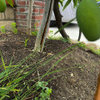
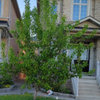
Seems a Sapsucker or 2 have developed a real fondness for my peach tree over the last 2-3 years and it is getting pretty darned bad, worse yet, my oldest apple is now beginning to show signs of the same bird problem. Anybody have any suggestions to deal with the avian infestation?

Oh BTW, pretty much all of the peach scaffolds have been ruthlessly pecked to varying degrees, I don't think wrapping them to physically exclude the bird(s) would be practical unless you have a way to do it that works.

The .22 with bird shot loads sounds good but it is a Federally protected species, permits can be had to "deal with" such critters I've read. Gee, should I let one bird kill a mature peach tree or kill one bird? I'm not one to kill things I don't eat and wouldn't care about the damage to the tree if it was just a little snacking here and there but, THIS BIRD IS A GLUTTON!!!

Comments (15)

  • 15 years ago

    I hate a nuisance critter. Sapsuckers are cool birds but not in this case. Sometimes a man has to do what a man has to do and disregard the law. I "deal with" cowbirds all the time. My reason for this is they kill bluebird eggs in nest boxes and bluebirds are awesome to have around an orchard.
    I wonder if one of those plastic owls would keep the sapsuckers out of your trees?
    At least it's not a pileated woodpecker... talk about destruction!

  • 15 years ago

    I have pileated woodpeckers galore and lots of sapsuckers but have never suffered any trunk damage. I wonder why they bother your trees? Are the trees otherwise vigorous and healthy?

    Of course wildlife behavior varies site to site.

    Tangle trap could be smeared on areas of most activity and that would probably break the habit quickly but might kill the birds.

    You could also wrap the trunk with burlap or something similar- use electric tape to fasten and it wouldn't take too much time.

    Better be sure they aren't after borers.

  • 15 years ago

    Thanks Hman: I thought about Tanglefoot but wasn't too sure if it would be ok for the tree, there is a lot of damage area to be covered. Still looking for burlap, maybe window screen, who knows.

    I've yet to find borers and have been pretty diligent about controlling them, maybe the Sapsuckers have been doing it all for me! Hopefully I can at least find out when Sapsuckers are present around here, that would help.

    I'd hate to have to deal with those Pileated Woodpeckers, talk about a big Woodpecker, they sound like someone beating on a tree with a hammer in the woods.

  • 15 years ago

    I'll will tell you this, I've seen plenty of woodpecker holes in old apple trees but never in young trees and never in peaches.

    Pileated Woodpeckers are wonderful birds that generally stick to dead wood of forest trees. You're lucky to see them and I've never heard of them called destructive before. Of course wildlife behaves differently at different sites.

  • 15 years ago

    I've been putting out those cheap $1.00 rubber snakes around my grape and blueberries. So far so good. A returning family of titmouse birds have been dispatched by my rubber snake. Of course I let the brood hatch and fly away, then applied the snake. They haven't returned as they usually do to continue the cycle.

  • 15 years ago

    I agree that pileated woodpeckers are wonderful birds. I enjoy having them around. They can be destructive, but I would never intervene with this bird. Thankfully they leave my fruit trees alone. On my property, they concentrate their attacks on the maturing saplings of all types of trees, coniferous and evergreen. Usually ones about 4" dbh. They start around chest high and work all the way around until the tree weakens and falls over. The next year it is laying on the forest floor and full of insects and they return to feed on them.

  • 15 years ago

    Are you sure that it isn't the beetles that are weakening the trees? Do you have some other information about this habit as studied scientifically? I'm genuinely curious, not playing gotcha. You are suggesting the birds wound the trees to attract insects, which seems somewhat unlikely to my thinking.

  • 15 years ago

    Well yes, Sapsuckers can damage healthy trees to a extend that they die. Now I'm looking for damage and cover up with some chicken wire and seal wounds.

    Male
    {{gwi:97419}}

    Mommy with offspring
    {{gwi:97420}}

    Fur tree damage
    {{gwi:97421}}

    Wasp drinking juice, moth at night.
    {{gwi:97422}}

  • 15 years ago

    Like Konrad's area, the Sapsuckers here like to hit the birch trees but also damage many other varieties as well. Because of the smooth, white surface of the birch, it is easier to tell that the trees weren't not perviously being attacked by bugs. The sap holes attract several kinds of bugs including ants and wasps. The sapsuckers will return for both the sap and the bugs. From my observations, they seem more interested in the bugs that the sap has attracted. I would definately say "yes" to sapsuckers doing tree damage to attract a bug meal in the future.

    As far as the Pileated killing a tree to get bugs in the future, I don't know. That seems like a long span of time between the task and the reward. We have a lot of Pileated here as well and they just work the dead trees and occasionally my house siding. Big damage - very fast. I agree that birds can behave very differently by region.

  • 15 years ago

    Sapsuckers have killed and weakened many trees I have planted on my property over the years, especially American and European Mountain Ash. There is only one effective method to control them, albeit an illegal one.

  • 15 years ago

    Their name is Sapsucker and to my observation they do drink allot of sap!
    I put up a motion camera on a Colorado Spruce Tree and found out that in average they come about one's a hour for a drink, amazingly these birds go in very dense branched trees...check
    your trees regularly for damage!

    see link

    Here is a link that might be useful: Sapsucker

  • 15 years ago

    I lost track of the conversation. I was talking about paliated woodpeckers and not sapsuckers. I didn't really know anything about sapsuckers besides their names which I certainly found suggestive that they were after more than worms.

    However I appreciate the photographs as now I know what's been killing my Scotts pine trees. And here I was blaming beetles and wondering why I couldn't find them. Glad I'm not too attached to the pines- I won't be shooting any sapsuckers.

  • 15 years ago

    Those are cool pics Konrad. I have a motion camera that I use during deer season and I have recently used it on my chicken coop to see what's trying to get in, but I don't think it's sensitive to pick up something as small as a bird. Do you mind sharing what brand and model camera you are using?

    Regarding the pileated..what I have observed outback is they choose to pick on a young healthy tree and work it over so that it falls to the ground where, over time, it becomes infested with bugs. They return to feed on the bugs. This behavior is in addition to eating bugs present in standing "snags".

  • 15 years ago

    thomis, that's interesting. Haven't observed such behavior here as the big birds usually stay up high and work the snags. However, this year I've had one come lower and close to our house, behaving as I've never seen before from this species- pecking the ground for insects and such. It never surprises me anymore when animals behave differently in different areas.

  • 15 years ago

    Pileated I have only seen foraging on diseased wood.

    Thomis,..it's pretty well the same as a trail camera hunters use, I build them myself, you can't get any commercial cam's with this quality... here is a thread, let me know if you need more info.

    Here is a link that might be useful: Homebrew motion camera

0