Software
Houzz Logo Print
redskinsnut

Blueberry PH-One Year Later

17 years ago

I planted 3 blueberry bushes last year and tested the PH today to see if I was on the right track. I bought two different do-it-yourself PH kits at Lowes and to my horror they both read 7.0!!!

I planted the blueberries in whiskey half barrels because I thought I could manipulate the soil and provide the drainage that these plants need. I mixed peat moss, sand and some pine mulch. I topped the plants with a 3 inch layer of pine saw dust as recommended by the Virginia Tech Extension service among others.

The plants are getting good sun and the leaves are nice and green. I have no idea what more I could have done. I have since planted planted 6 more blueberry plants in raised beds along the fence thinking I could really produce a bunch of berries (my 3 year old daughter loves them). I need help. Jellyman? I am in Haymarkett, VA not far from you. Any advice?

Comments (12)

  • 17 years ago

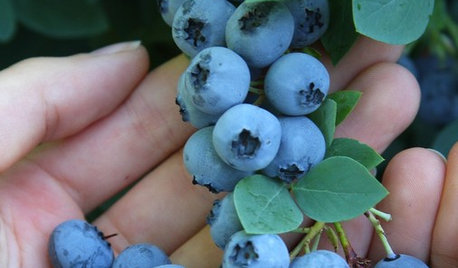
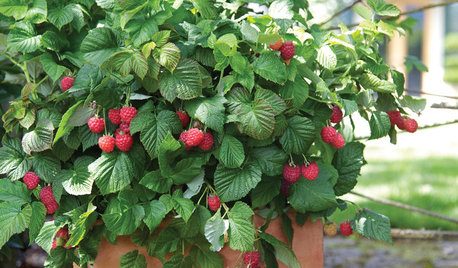
    Here is a picture. Sorry not sure how to display.

    Here is a link that might be useful: Blueberry Bush

  • 17 years ago

    If they look good, then something must be right! What are you using for water? You could switch to rain water if possible or mix some vinegar in with your hard water. How about fertilizer? Switch to something that is for "acid loving plants"... Really, i wouldn't worry a whole lot, and how accurate are those test kits?

  • 17 years ago

    Glad you brought up water because that was something else I was going to ask. I do water them from the hose and have often wondered if I should try conserving rain water. Still, I can't imagine the water could raise the PH so drastically.

    I fertilized with the acid loving stuff that you mentioned. I have done a lot of reading on blueberries and thought that I was doing everything right.

  • 17 years ago

    I'd bet money its the water. You should try that test on your tap water.

  • 17 years ago

    If the blueberry leaves are green, then the pH must be acceptable at the location of the roots. It might be higher a few inches from the roots. How are you testing pH?

  • 17 years ago

    I used two different tests. One was a test tube type where you put a bit of soil in and mix it with the capsule powder and some water (I used water from todays rain). The other was from a device I bought today called Mosser Lee Soil Master. I is a two pronged rod you stick in the ground and it gives you a reading by needle.

    I am pretty sure our tap water is hard and a little on the alkaline side. I just can't imagine it would send the PH through the roof like that considering everything else suggests a lower PH should exist.

    Did you guys see the picture I posted? That particular one is a bluecrop blueberry bush. It seems to be doing really well. I just don't get it. I looked at the test again and you could easily say that the reading was closer to 8.0 than 7.0.

  • 17 years ago

    Well, to me the obvious question (and forgive me if I missed your answer if you did) is did you measure the PH last year when you first planted? If you didn't, and only have the results from the tests you just did, maybe the soil was never lower than 7.0, despite your careful mixing last year. And your plants have always been happy just the way things are.

    Otherwise, I would say add something to your water to acidify it for a month, and check again. Coffee grounds would be cheap.

    Carla in Sac

  • 17 years ago

    Looking at the photo, there is no way the pH is at or above 7. Your plant says the soil is just fine. This just shows that those pH test kits may be useless. I would recommend you send a soil sample to a professional lab for testing before making any changes.

  • 17 years ago

    Since the leaves of your blueberry bush are green, and the plant appears healthy, I can't see any reason to make any large or drastic chemical addition to the soil. Our tap water is quite hard, here in Madison, Wisconsin. I use it on our blueberry shrubs, and yes, it does raise the soil pH over time. If your tap water comes from a municipal source, they should be able to provide you with a measure of total hardness, or pH, and this information should be provided at no charge. If you are using well water, from a private well, then you might consider getting your water tested, for hardness, and pH.

  • 17 years ago

    I've heard the posit that acidic soil ph for blueberries is not the main thing, rather it is good drainage that yet manages to retain moisture (as blueberries are basically swamp creatures); hence peat moss (when kept wet - don't let it dry out) and decomposed pine needles. Is sand all that acidic? - yet look how well blueberries do in the pine barrens of New Jersey.

    My blueberries seem to get by with this (I keep telling myself I need to work in some cottonseed & bloodmeal).

    Did take a few years to get the soil right, though, with copious amounts of the aforementioned pine needles.

  • 17 years ago

    Interesting point about the PH vs. drainage theory. It makes sense. I certainly don't have to worry about that with the use of containers and raised beds. I assume that the pine sawdust I use is just as good as the needles.

  • 17 years ago

    I wouldn't put too much trust in those pH test kits. I bought 2 different brands of test kits to test the pH of some compost I got from a municipal compost center. The compost center had the compost tested a few months ago by a professional lab, and they said the pH was 8.3. I was worried that was too alkaline, so I bought the test kits to see if it had changed. Or I thought maybe my compost could be somewhat different than the sample they tested. My first test kit, from RapiTest only goes up to pH 7.5, and the test I ran today, using distilled water, gave me a color that was off their chart. Probably in the alkaline direction. So maybe it was right. I ran the same test twice yesterday using water from my reverse osmosis system, and got much different results. My other test kit, from Mosser Lee, seems to be telling me my pH is about 6 today, using distilled water. I wish it was. I think it gave me similar results yesterday using the reverse osmosis water. But the important thing both test kits told me, was that I'd be better off either: a) not wasting my money on these test kits, and having the testing done by a professional lab, or b) not worrying about the pH of my compost, unless there seems to be a real problem. I'm thinking I'll continue with my planting, and get the soil tested professionally later. Unless it's too late to do anything about it, by the time I get around to it.

    Good luck with your blueberries!