Software
Houzz Logo Print
karenlies

Raised bed keeps getting invaded with roots

16 years ago

[Apologies in advance if this is posted in the wrong forum; I'm new to both these forums and gardening!]

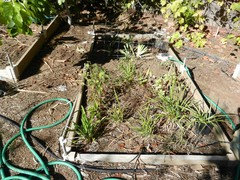
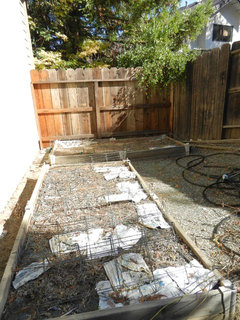
I installed a raised bed in my mom's garden about two years ago for her. We ripped out two old bushes to make space for the bed. I don't know what there were (I know virtually nothing about plants) but one of the bushes was already half dead while the other had a pretty hardy root system that took some time to hack out. The raised bed is about 8-12 inches or so and since we installed it, my mom has had problems with roots invading her bed.

Less than a year ago she installed some weed block at the bottom of the bed but now roots are returning again. She thinks it's from the bushes we removed; I suspect it's from a nearby tree.

So my question for you all is what we should do. These are the ideas I have so far:

1. Moving the bed

2. Doubling the height of the bed

3. Adding another sheet of weed block

4. Tilling

I'd appreciate any advice you might have on our dilemma. I know next to nothing about gardening and just manage to grow tomatoes and cucumbers during the summer.

Comments (34)

  • 16 years ago

    Roots invading a bed will come only from a plant with a top. The bushes won't have roots without tops. Many trees are bad about invading any place with rich soil and water. If you can move far enough away from any large trees that would be best. Additional root barrier will help but it will be a never ending battle. Tillage and a higher bed are temporary help at best.

    Tree roots can spread as wide in all directions as the tree is tall. So moving a few feet won't help. Moving 40-50 ft should help.

  • 16 years ago

    If you run a trencher about 3 ft deep all the way around the bed that will give at least a years relieve from invading tree roots. Put some very heavy poly liner in the trench before back filling will give several years relieve.

  • 16 years ago

    Thanks so much for your help! You validated my suspicions regarding the roots. I'll let my mom know and let her decide what she wants to do (and I'll execute). Better to get an idea of what the chances of success are before we get into any new projects.

  • 16 years ago

    Also you need to think about the damage you might do to the tree by cutting roots. If the bed is very large and close to the tree, depending on the kind of tree, you could kill it. Some are more sensitive to root damage than others. Just something else to throw into the mix when you make your decision.

    Sandy

  • 16 years ago

    Ah, whoops. My previous reply didn't post.

    So I updated my mom, and she's thinking of abandoning the box (which isn't that big, Sandy, thanks for the tips) for pots.

    I was wondering if it would be possible to just line the box with a thick poly sheeting with a couple of holes for drainage, thereby making a big box-shaped pot. Does anyone have any input on that?

  • 16 years ago

    The tree roots will almost certainly find the holes in the poly sheeting, and it won't take more than a year! Tree roots can sense where the water and nutrients are and then grow in that direction. It is pretty amazing, besides being frustrating.

    I am in the process of abandoning two nice raised beds that are well outside the drip line of a maple, but the roots found them. Nothing grows well in those beds.

    I am re-using the soil mix that has a nice texture-- it was started as a lasagna bed two years ago. I'm sure I'll need to mix in fresh soil and compost, since the tree roots got the best, but the texture is valuable here in clay land.

    I hope your mom can find a new place for her garden

    Hepatica

  • 16 years ago

    Alas. But it's better to know now!

  • 16 years ago

    fruitnut gave the best advice, but since a trencher is a big mean machine (I used it only once, to run a 300 yds irrigation line, with plenty of space in every direction, in case I made a mistake)...

    in my easily excavated sandy soil, going down a double spade and cutting what you find with said spade, will give you one or two years of respite. A decent spade will cut roots up to 1 inch. Help yourself with an ax for anything bigger. Done in early spring, when the soil is at its softest, helps. I have beds that are at least three drip lines away from trees, and still, the roots come in from 70-80 ft away. They sense the compost.

  • 16 years ago

    My husband loves trees and has planted many saplings (we've been at this property for less than two years) all over our lot. How horrifying will it be once the roots make it to my productive, hassle-free raised beds!? My goodness, I had no idea. We probably will be living elsewhere by the time that's a problem.

  • 16 years ago

    A bit of perspective: I had an above ground/in ground pool that was within about 20' of a huge tree, one whose canopy covered part of the pool. In 15 years, not a single root caused a problem. Roots seek water, they will grow under the plastic - that tree's root did - all the way to the other side of the 28' wide pool!

    Mike

  • 16 years ago

    Please let me add that before anyone even thinks about doing any trenching or tilling or laying of plastic, etc. that the value of the trees to the property be considered. (What Sandy said.) Remember, those pesky roots are the sole support of the trees, both physically and physiologically.

    Tree roots don't 'sense' anything. They simply grow best where there is plenty of oxygen, moisture, room to grow, and nutrition. If you build up that bed to 6 feet (yikes), the roots will grow up to the surface area of that bed, too. Not because they sense anything, but because they need the oxygen.

  • 11 years ago

    I just had 75% of my vegetable garden ruined by a large Doug Fir that has a drip line 10 feet beyond the garden. I think that all root barriers will fail over time. The only solution I can think of it to build garden boxes filled with compost and elevate them above the ground with cinder blocks. It's hard work and vegetable roots don't always get the space they want, but tree roots are worse than limited space.

    Jim R.

  • 11 years ago

    It has been three years since I put in raised beds. The roots of the live oak tree have invaded the boxes. This winter I plan to raise the beds up so the bottom of the box is about 12 inches from the ground and have a wooden and/or hardware cloth bottom.

  • 11 years ago

    I like your idea. Other wise you are just fighting nature and guess who will always win? Roots will go where they want to go- underground. But above ground, we get to win.

  • 10 years ago

    I've been fighting this same problem for years and years. Guess I'm a slow learner, it took a while before I realized that the tree roots were causing all the desiccation, stunting, and mineral deficiencies. They even invade containers if they're set on the ground.

    I cut all the roots back when I started the vegetable garden in its current location, but they just grew back really fast. I've got dozens and dozens of big pines on my property.

    Tried root barrier cloth, totally did not work. The roots grew right through the cloth and shredded it. I use intensive methods with raised beds, no wooden sides.

    Next step is trying my digging bar around the whole garden, going down two or three feet. A sharp digging bar can chop through big roots with no problem.

    Recent research has proven that tree roots DO sense nutrients and go in their direction. Plants have sophisticated chemosensors on their roots and foliage. They are living organisms just like us and they use their own ways to sense their environment. Oaks have even been found to communicate with chemical compounds, signalling to surrounding trees when a tree is pruned or attacked by insects. The surrounding trees then release repellents to protect themselves.

  • 10 years ago

    Another example of why no-dig gardening doesn't make a lot of sense for many. No-dig is essentially a "preserve those roots!" gardening. Whenever I dig in my beds, which aren't far from trees and shrubs, I slice through and pull out roots that have invaded my bed. I'm not talking about tilling a few inches deep. That's pretty close to no-dig. I'm talking about getting in there with a shovel and turning the soil to a depth of a foot or so, which is where I want the roots of my crop to reach. Many years ago, when I first started my beds, digging that deeply was a big effort. After years of turning, and adding loads of organic materials, it's now easy to do. There are those who abhor double digging on the basis of preservation of soil structure, and I think that abhorrence is largely myth-based.

  • 10 years ago

    you could still have no-till, and trench all around to get rid of roots.

  • 10 years ago

    That might not work if the roots are coming up from a deeper lateral root. That's the way it works with oaks, at least. Besides, digging a one foot perimeter around one 5x8 foot bed isn't a lot easier than digging the whole bed.

  • 10 years ago

    I had maples, and dug two feet down (actually it is not correct, I probed two feet down with the spade, then cut roots either with the spade or a handsaw in winter, with very soft soil). I only dug on the side of the woods, so it was about 15 ft of digging for 5 beds. Your geometry may vary.

  • 10 years ago

    I'm in the pacific Northwest, and Douglas fir roots ruined my garden last summer. My solution is to raise beds on cement blocks with plywood floors and cedar boards for walls. I think it's my only solution. I can't grow plants that require deep roots, but tree roots otherwise make gardening very difficult. We are dry here in the summer and tree roots will always go to where I water.

    We're fighting nature.

  • 10 years ago

    Another tactic I should have mentioned is using the really large (number 20) nursery containers set on block. It's not a perfect solution, but it's worked for me. You can buy them with shipping for about ten bucks apiece. I use a cart to move them around and slide them onto the block.

    This season...we plant a lot of greens and temperate crops now...I'm trying the digging bar around the perimeter of the garden. But I'm afraid it might not work, because these pine trees go really deep into our sandy soils to find water and they might just come up vertically into the garden from deep in the ground.

    These pine roots grow really fast, they can take over a planting bed in just a few months, and I suspect that they poison the ground with terpenes to kill off competing roots. A pine-infested bed has a very pungent odor to it when I dig it up.

    I just don't have the energy anymore to dig up every planting bed with each crop replanting. I feel like all my compost work is just making my pine trees bigger. This is a tough problem.

  • 10 years ago

    I agree. I have the same issue with Doug firs. It is as if you're just feeding trees. Some say cut down the trees, but I like trees too much to do anymore than I have already done.

    I like the nursery container idea. Good luck.

  • 7 years ago

    I have the same problems. I am now considering gardening in containers, and of corse, not putting them on top of soil where tree roots will try to thrive.

  • 7 years ago

    I have the same issue. Mature Maple trees and Silver Maple Trees in neighboring yards that are even worse. I built a lovely raised vegetable garden 3 years ago and I thought, maybe just the bed closest to the tree would be a problem. I thought, maybe every other year, I might have to dig a few roots out. Nope. Every year there are roots that have to be dug out. And I lined beds with hardware cloth.

    So I've resigned myself to digging the bed over before planting every season. Part of the point of a raised bed is having easily planted soil that hasn't been compacted by walking on it. But - it's okay. I have good soil, I can dig out the beds, when I get sick of doing that, I'll make some other decision. Who knows what. For now, I am content, that i just dug out one of my beds and I'm ready to put my home grown seedlings in the ground. [g] I have 4 more beds to go. Oh boy.

  • 7 years ago

    II will try something new for me this spring. with my raised beds invaded by roots every year. I will use a machete or a similar tool that can cut roots (small ones) just on their outskirts Apparently, once the roots are cut, those who remain inside the bed will not grow and just rot and decompose. What do you think?

  • 7 years ago
    last modified: 7 years ago

    I don't know if that will work, but I've had the same problem here, with redwoods. Ironically, the raised beds are built of redwood. The redwoods must be 10 stories high. I fought them for awhile, and would look up at them and imagine them laughing at my futile efforts. Now I use Earthboxes.I don't know if that will work, but I've had the same problem here, with redwoods. Ironically, the raised beds are built of redwood. The redwoods must be 10 stories high. I fought them for awhile, and would look up at them and imagine them laughing at my futile efforts. Now I use Earthboxes.

    These were the boxes almost 10 years ago (when the OP started!).


    The lower part of the redwoods.


  • 7 years ago

    "...once the roots are cut, those who remain inside the bed will not grow and just rot and decompose"

    I dunno, it depends on the type of tree. I've seen Russian olive and poplars just put up new shoots and start (lots of!) new trees when the roots of the parent tree were disturbed and cut. But I doubt that pines or firs would do that. Russian olives and poplars anyway spread by putting up shoots from the roots a distance from the parent plant, so their roots are probably ready to do that if cut off the parent plant.

  • 7 years ago

    PLEASE HELP. I have eucalyptus roots invading my beds. I just want a permanent solution and if changing to wood planters with bottoms raised off the ground then that's what I will do - BUT can someone tell me how many inches to raise off ground? I was thinking 5 inches off ground with a solid bottom on all my planters. Will this work????? Please I need a response soon. Also someone mentioned using cedar to build above ground planters, why? what if I build mine out of redwood? I don't want to make any stupid mistakes so please advise.

  • 7 years ago

    Hi, I don't really know how bad eucalyptus roots are to deal with, but if your experience tells you, you are sick of digging them out, then you're right, time for a permanent solution. If you don't have a place to move your garden away from the root problem, then planters or pots would definitely be a solution.

    As long as the bottom of the pot or planter is not in contact with the soil, you should be okay. If it is a solid plastic pot, you still probably would be okay even if the pots were just sitting on the ground. You just need a container that the roots can't spread into. You could build boxes and just put feet on the corners to lift them off the ground a few inches. Depending on how large and heavy they are, you'd need to place support at the right distance around the planter.

    If I were going to permanently grow in raised planters, I'd still want to use mostly my own soil - not bagged soil from the store. I'd probably need to mix it with soil in a bag, just for the weight issue, but I'd want some of my own native soil in the planters and that is going to increase the weight. That's just me, maybe not everyone would. But you might keep that in mind and talk to other growers about that.

    Redwood, is probably even better than cedar. Cedar might be 2nd best. What you are looking for is a history of being able to withstand contact with soil and weather without deteriorating. Both those woods usually last longer than say, pine, a soft wood.

    Whether you end up building or buying, here is a link to a supplier that has a number of examples of planters that might give you some ideas.... I haven't bought any of these from this company, so I'm not recommending them. I just remember seeing them and thought it might give you some ideas.


    Gardener's Supply Planters


  • 7 years ago

    Excellent advice. Yes eucalyptus sucks the water and life out of veggies, the roots are small but they invade within one year DENSELY and the entire box was mostly small dense roots! We cleaned them out last year but even more came back this year. So we are no longer going with garden planters that don't have bottoms. When choosing to build above ground planters, I just wanted to make sure that the roots wouldn't find their way through drainage holes if we lift them off the soil about 5 inches because we want to be DONE with this battle!

  • 7 years ago

    Yes, I guess you do have to wonder about drainage holes. I have Maple roots to deal with and it wouldn't surprise me to see them make their way up through drainage holes. [g]. Well, I like the planters that are built to be waist high that are at Gardener's Supply. I might like to try something like that - wouldn't that be nice, no bending. :-). And they have those galvanized planters that are on feet, but - I'd wonder if they would get too hot in the sun.

  • 7 years ago

    Don't underestimate roots. I had a big nursery pot get invaded and desiccated by Ficus roots when it was raised eight inches on concrete blocks. And that Ficus was about 40 feet from the pots. If you've got a pot or planter that's hard to keep hydrated, check for invading roots.


    I grow in nursery pots now due to root invasion from pines and I check for root invasion by shifting them around on the block now and then. A big plus with nursery pots: you can keep a journal of crop rotation for vegetables with each pot a separate rotation schedule. That's important for me because I like to grow the same veggies year after year. Now I just plant them in different pots and follow beans with greens, etc. If I get a root knot infestation, I plant with leeks for a while.

  • 7 years ago

    I have roots coming from FAR AWAY from some native bush/tree. Unreal how tough they are. In spring and fall when damage to my stuff is minimal I pull it out was far as I can go and I constantly rip tops off. Always a battle but I seem to be holding - not getting better or worse.

Sponsored
J.Holderby - Renovations
Average rating: 5 out of 5 stars4 Reviews
Franklin County's Leading General Contractors - 2X Best of Houzz!