Software
Houzz Logo Print
clibanarius

drilling, etc. glossy ceramic(?) pots

18 years ago

Greetings,

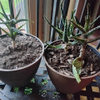
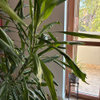
I'm thinking of modifying some of my current pots for hydroculture purposes, but am not sure how forgiving the material is. e.g., for the two "ceramic" pots below (I'm not sure that's really what these ordinary Walmart pots are made of, which is why I'm supplying the pic!), I'd like to drill a small hole on the side near the bottom of the blue pot, and I'd like to remove the water dish from the bottom of the tan pot on the left. Anyone had any experience doing these sorts of modifications? Any tips to avoid, say, shattering or chipping around the drill hole, for example?

Thanks!

Alan

{{gwi:89331}}

Comments (11)

  • 18 years ago

    My sister does this often. She uses a special drill bit that is for drilling ceramic. She has a pretty high rate of success, but obviously, don't try it on a pot that is valuable as occasionally it will break.

    Good luck,
    Elsie

  • 18 years ago

    I haven't done this myself, but have heard from others that placing tape at the spot one's going to drill helps protect it (the pot) from shattering, etc.

    Hope you won't be doing it to the above 2 plants (BTW, that Sans. on the left seems overpotted). I grow a lot of Sans. (& have given a talk on them to my Indoor Gardening Society), I suggest you place it in a smaller pot that doesn't have an attached saucer & take that top dressing off.

    If I'm not mistaken the plant on the right is a Aralia (Polyscias). I think it seems a bit leggy, I'd give it a but more light & trim it back a bit (don't think this would do well in hydroculture either as) it can be fussy abt its humuidity.

    Good luck w/ them, they're nice looking plants.

  • 18 years ago

    Ah, good points both (ceramic drill bit and tape). Thanks! I'll try to get the right size bit today.

    Pirate girl, that Sanseveiria was kind of a surprise baby from a larger S. cylindrica that I was trying to grow into a nice fan shape; I separated the baby to help keep mom's form (but then mom promptly sent out another baby, so I gave up!), and put it there to deal with later. You're right, the pot's definitely too big for the plant. You're not actually seeing a top dressing, you are seeing the sole medium in that pot (LECA), as I'm growing my Sans in hydroculture. The saucer is probably marginally helpful, as it helps me set a very low limit on how much water I give this plant (pre-hydroculture I was embarrasingly prone to overwatering my low-water plants, almost took out my ZZ plant when I switched it to a too-retentive medium).

    The plant(s) on the right are actually four Cissus rotundifolia. They are an odd vine that I'm guessing operate on a fairly gigantic scale; when I cut them back at less than two feet tall, they merely send up another single shoot. They are supposed to have tendrils, but mine didn't show a one until they've exceeded two feet (several leaves past this photo). For these guys I want to build a big indoor bamboo trellis and let them take over a window, but DW is unconvinced (perhaps she only sees what they look like now, not what they could become?).

  • 18 years ago

    Be sure to wet drill, the bit will get too hot and bend otherwise. Use the tape and ceramic bit, also get a spray bottle, every minute or so spray the bit and the pot. A lot of pots have a lip with an indent in the center, fill that area with water and drill onto the tape.

    I love Cissus rotundifolia, I killed the last one I had though. It was lost in the big frost which hit CA a year or so ago. I'd watch that leaf, it looks like it could be the start of grape leaf rust.

  • 18 years ago

    We regularly drill all sizes of holes in glass/mirrors, granite (shower door installations) and other vitrified materials (the objects people bring to us to drill holes in). Ease of drilling varies with the hardness of the material, of course. Most containers you'll encounter can be drilled with a "spear-point" drill. I'll link you to a picture from one of our suppliers. The drill is also called a 3-point drill. Highly vitreous containers (glass, or glass-like - ceramic - clay fired at high temperatures) may even require a diamond impregnated "core drill", but it's uncommon to find containers like this.

    These drills can be found at big box home improvement stores. They should be cooled with water or a 50/50 mix of water/antifreeze as you drill. An excellent strategy is to immerse the container upside down in a tub and add enough water to just cover the drilling surface as you drill. Rotating the drill clockwise at a slight angle while drilling will greatly increase ease of operation.

    Alternately (I use this method), fill a squeeze container (contact lens solution bottle is stellar) with water & squirt it at the drill/material interface as you drill. If you can't find the drill you need, you can contact me off forum & I'll be glad to help you.

    Here is a link that might be useful: This is what the drill looks like

  • 18 years ago

    Well Clib,

    How interesting abt the Leca stones, I currently have some Hoyas that I'm experimenting w/ growing in just Leca & water.

    That Sans. is quite handsome (for the sake of correctness, pls. note the proper spelling of Sans = Sansevieria, you were close). Well, maybe the mama plant just wants to put out lots of babies.

    FYI, I don't believe Sans can be trained into fan shapes, I suspect it's in the plant's genetics: S. patens seems to always grow in a fan shape while some Cylindricas do & some don't from what I've seen.

    Well I AM wrong from time to time, I like that Cissus rotundifolia (BTW Cissus is the family of Grapes) so it makes sense that you've heard it'll grow tendrils.

  • 18 years ago

    pirate girl,

    Yeah, I've seen some Sansevierias whose leaves looked just like my fanned cylindrica but they were growing in straight-up clumps, one could imagine a pile of loose leaves held together with a big rubber band and stuck into the ground. It's funny; mom's a classic fan, but one of her pups (the one in the picture) is more rosette-like, and her other pup is so far shooting out like a big spear. I prefer the fan shape myself, even though I regularly bang into mom once she got too big for the windowsill.

    By the way, I have four hydroculture pots of Sansevierias (two cylindricas and two of trifasciata), and they seem to be liking it, as even though I probably overpotted them all, after a month or so they've apparently rooted out to the point that they're pretty much locked into place in the pots; quite a rapid underground change.

    The Cissus have grown several leaves higher since that picture, and they're now putting out plaintive 3" tendrils (still haven't figured out how/where I want to trellis them up; that window exposure seems excellent but too small!).

    Cheers,

    Alan

  • 18 years ago

    So I forgot to mention that the other thing I'd like to be able to do is to seal the single larger center drainage hole in the bottom of a pot. I was pondering this last night just as Billy Mays came onto the tube screaming about the miracle that is Mighty Putty! Though I did manage to resist the temptation to blow that $30, I wonder if some sort of epoxy putty is in fact a reasonable (i.e., safe for the plants, and able to hold a seal, once cured, under an inch or two of water) way to go. Any suggestions?

    Thanks!

    Alan

  • 18 years ago

    Aquarium sealant? Once it's cured it's safe for plants, there is also a putty for salt water aquariums to keep coral attahed to rocks, this might also be an option. I think aquarium sealant might be cheaper and easier to find though.

  • 18 years ago

    I don't get it -- why would one want to seal the drainage hole? Unless, one's wanting to use these pots for hydro culture?

  • 18 years ago

    pirate girl,

    I'd hoped I'd have a perfect answer for you by now, but I've run into a bit of a hiccup. You're right that this is for a hydroculture setup. I've been pondering how to deal with all the hydroculture issues at once while meeting my DW's concerns (i.e., attractive setup, inexpensive, minimal risk of spills).

    I've gone through a couple of iterations, and this is what I'm aiming for now: a single pot system in which clear tubing (e.g., aquarium tubing) runs out of the otherwise sealed bottom of the pot and over and up the outside of the pot. When you add the water, you can see the inside water level in the outside tubing; when you need to flush the pot, you can bend the outside tubing downward.

    I've done a (leaky) proof of concept with LECA, and it all works pretty well (except the leaking), but the aquarium tubing is too narrow for turface, and the water doesn't drain well. I'm going to try to find slightly larger tubing so I can put a screen over it. Aquarium sealant works to stop the leaking but I don't think it's sturdy enough to handle the stress of bending the tube for draining.