My builder uses Houzz Pro to plan the timeline and give detailed estimates and daily updates with photos of progress, and provide invoices at pre-agreed key points in the build. This made the whole experience much more efficient and stress-free.
I found mealies growing inside the little nub of my pomegranates. Yuck. One of my fruit which cracked was invaded by those things. How do i get rid of them?
The following materials are listed in order of usefulness in an IPM program, taking into account efficacy and impact on natural enemies and honey bees. When choosing a pesticide, also consider information relating to environmental impact. Not all registered pesticides are listed. Always read label of product being used. SPRING A. IMIDACLOPRID (Admire Pro) 714 fl oz 12 30 MODE OF ACTION GROUP NUMBER1: 4A COMMENTS: Imidacloprid binds readily to soil; when the soil is rewetted and plant roots are actively absorbing water, the insecticide is also absorbed by roots. Best when applied in a drip irrigation system; otherwise, French plow the soil, apply as a ground spray, and immediately irrigate. Apply from 7-14 fl oz/acre in one or two drip irrigation applications. On coarse soils or where the longest period of protection is required, make two applications. Make the first application from bloom through the pea-sized berry stage and the second 21 to 45 days later, keeping in mind the preharvest interval. The full rate of 14 oz/acre is recommended where vigorous vine growth is expected or in warmer growing areas such as the San Joaquin or Sacramento valleys or where mealybug populations are heavy. Do not exceed 0.5 lb a.i. of imidacloprid/acre/year. Adequate soil moisture is important at the time of application; follow label instructions carefully. SUMMER Note: Make applications before mealybugs move into clusters and before bunches in winegrape varieties have closed. A. BUPROFEZIN (Applaud) 70WP 12 oz 12 30 MODE OF ACTION GROUP NUMBER1: 16 COMMENTS: An insect growth regulator. This material targets the early stage nymphs on the vine that are exposed and still moving around before they settle under the bark to feed. Good coverage is essential. Tank mixes are not recommended. Do not apply more than twice per season and allow at least 14 days between application. In regions outside of the North Coast, most effective when applied once in the delayed dormant period and once in early summer (May-June). In the North Coast, the first application of buprofezin is not recommended until late spring or early summer. Buprofezin may be detrimental to the mealybug destroyer (Cryptolaemus montrouzieri) when applied during the summer. Use allowed under a FIFRA 2(ee) Recommendation. B. METHOMYL* (Lannate LV) 0.75Â1.5 qt 7 days Raisin/Table: 1 (Lannate) 90SP 0.5Â1 lb 7 days Wine: 14 MODE OF ACTION GROUP NUMBER1: 1A COMMENTS: Do not feed treated grapes to livestock. Disruptive to predators of mites and parasites of leafhoppers. C. DIMETHOATE 400 2 qt 2 days 28 DIMETHOATE 25WP 6Â8 lb 2 days 28 MODE OF ACTION GROUP NUMBER1: 1B COMMENTS: Moderately disruptive to beneficials. The wettable powder formulation is recommended for table grapes, which are spotted by the emulsifiable concentrate formulation. The emulsifiable formulation, however, is preferred for wine grapes. Use of Dimethoate 400 allowed under a FIFRA 2(ee) Recommendation. ** Apply with enough water to provide complete coverage. + Restricted entry interval (R.E.I.) is the number of hours (unless otherwise noted) from treatment until the treated area can be safely entered without protective clothing. Preharvest interval (P.H.I.) is the number of days from treatment to harvest. In some cases the REI exceeds the PHI. The longer of two intervals is the minimum time that must elapse before harvest. * Permit required from county agricultural commissioner for purchase or use. 1 Rotate chemicals with a different mode-of-action Group number, and do not use products with the same mode-of-action Group number more than twice per season to help prevent the development of resistance. For example, the organophosphates have a Group number of 1B; chemicals with a 1B Group number should be alternated with chemicals that have a Group number other than 1B. Mode of action Group numbers are assigned by IRAC (Insecticide Resistance Action Committee). For additional information, see their Web site at http://www.irac-online.org/.


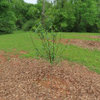

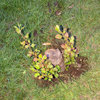
Suzi AKA DesertDance So CA Zone 9b
Related Professionals
Lafayette Landscape Architects & Landscape Designers · Cedar Rapids Landscape Architects & Landscape Designers · Rutland Landscape Architects & Landscape Designers · Port Saint Lucie Landscape Contractors · Oxford Landscape Contractors · Dayton Landscape Contractors · Cedar Rapids Landscape Contractors · Santa Rosa Landscape Contractors · Honolulu Landscape Contractors · Saint Joseph Home Additions · Sault Ste. Marie Home Additions · Brooklyn Home Additions · Williamsport Home Additions · Santa Rosa Home Additions · Salem Home Additions