Software
Houzz Logo Print
amccour

Zebra plant leaf yellowing.

18 years ago

I was talking about this in the post I made about it blooming but this is getting kind of problematic so I'd like to give it its own post (Is that alright, I hope?)

http://img353.imageshack.us/my.php?image=dscf0010iz5.jpg

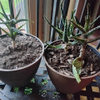
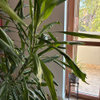
Noticed this awhile ago but it's been getting worse. Those are the worst leaves on it. I don't have any scales or spider mites. There IS a white fly infestation on it but it seems pretty mild so far, and if I'm right in identifying earlier damage they caused, it doesn't really look like this.

I've heard that white fly can spread various kinds of crinivirus, which apparently has symptoms similar to this.

Anyone have any ideas?

Comments (4)

  • 18 years ago

    OK, you have written off what pests you think may have been visiting so let's think the most obvious reasons for why plants get yellow leaves.
    Overwater/underwater; not sufficient light...or too much light; lack of fertilizer if the plant so needed; not enough humidity...and Calathea does like humidity;
    drafty loctions as in direct path of air from open doors, windows or heat vents;
    too high nighttime temperatures...most plants prefer 60 - 65º and in such air, they need that much less water;

    Most common is the too much water or water being allowed to be sitting under the roots too long after watering and good drainage. Watering with water that is right out of the tap...very cold and a shock to the roots.
    Much better to let water sit overnight to gain room temperature and lose some of its fluorine.

    If the yellow leaves are affecting only the lower leaves, probably you need to give it more light. Raise it, put it on a pedestal, a table or hang it up.
    Light colore painted walls can help increase the amount of light given to the plant. Instead of thinking watering, put a water tray nearby and while it doesn't like full sun, it can take a lot more light at this time of season as the sun values go down.
    If too much, put behind a curtain.

  • 18 years ago

    Er, sorry. It's an A. Squarrosa. Not Calathea. I should've mentioned that.

    In regards to light I'd assumed it was sunburn at first, as it was right next to a window, but it's progressed even after I've moved it away a bit.

    "Most common is the too much water or water being allowed to be sitting under the roots too long after watering and good drainage."

    I only water it when it's dry, and it's definitely not sitting in water -- no drip tray.

    I don't let the tapwater sit, but I've never had any problems with this. I do check to make sure it's not getting too cold, though. I suppose residual salt builtup could be a problem, but I'm not seeing a whole lot of it accumlating on top of the soil and I'm not sure how sensitive A. Squarrosa is to this anyway.

    Fertilizer was something I WAS considering, but if the plant is otherwised stressed, I probably shouldn't be fertilizing it and so I want to rule out other problems first.

  • 18 years ago

    Amcour, that's what has to be done, dispose of any of the usual causes one by one and if they don't apply, go to the next one.

    Sometimes, there is nothing wrong with the plant if the leaf drop is minor, there's alsway something happening to the plant which fights it off. Sometimes our plants are of size that when we allow it to dry down, maybe we let it dry down a bit too much before we water and if too much time has elapsed, the soil might shrink from the sides of the pot and when we water, the water goes straight down the sides and never make it to roots which might dearly need it.
    We see drainage and assume the pot is fully watered which aint necessarily the case.
    I have a pothos in such a state, we have let it grow up and over itself a dozen times having a 4' cedar post in the centre. It is difficult to get the water spout into the center to properly water it and often the leaves trail some off onto the floor. Since I'm aware of the problem I'm at the ready to mop up quickly.
    I give it though a watering I know is soaking the soil and I am also quick to rid the drainage after allowing a 10-minute wait for it to take up further water as it needs it.
    I occasionally see the odd yellow leaf but I know the plant is not having difficulty since it may be the only one (or two) being in such state.

  • 18 years ago

    I tend to gauge moisture based on how heavy the pot feels, when I'm watering. I've had problems with peat-heavy soil getting hydrophobic before.

    I guess I can't rule out soil mineral accumulation, but I'd like some extra confirmation that that is, in fact the problem. I really, really doubt overwatering. The only way I'd imagine this could be a problem stemming from underwatering would be that the plant is finally showing stress from getting too dry... sometime back in the middle of August.

    And, at that, when A. Squarrosa drops leaves because of getting too dry, they typically start getting tip burn which progresses up the leaf about half-way, at which point they usually drop.

    I'm also doubting it's just regular leaf senescence, as it seems to be some of the upper leaves too.

    This also seems a bit excessive for just adjusting to a new position. And, in general, it's not a normal sort of yellowing. Delonix Regia I have is dropping a bunch of leaves since I moved it indoors, and my citruses will do the same, eventually. This just looks really peculiar and sickly, which is why I was suspecting some sort of potential virus, as the white flies shouldn't be present in high enough concentrations to cause much damage, unless I'm really underestimating them.

    Also, these things do, apparently, tend to go into decline after flowering, but primarily only after the blooms start fading. Mine's flowering right now, but I've got a good month or so before I can expect the blooming process to finish.