Software
Houzz Logo Print
ladykitsu

Pear Tree - will it survive? (kinda long)

19 years ago

Hey everyone

I have a few questions about a 3 x 1 bareroot pear tree I got & planted earlier in the year. I've never really owned fruit trees before so bear with me...

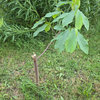
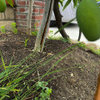
The tree in question has never produced leaves since planting (around mid May of this year), however the wood still looks very green and alive. It has not grown much - I've noticed maybe 1/3 inch growth from a couple "dead" bud heads.

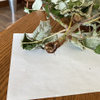
I've been spraying the snot out of it for fireblight - every 4 days.... I had another pear tree I planted early April (it was a potted 4 x 1 that I got from a local nursery) that I'm pretty sure died from it. I'm not 100% sure because it didn't look like any fireblight pictures, but it was the closest thing that it resembled....Basically the green wood started shriviling like a rasin, but never had that "burned" look. The buds that had just started to break open when I planted it, just died (they didn't have that "burned" look either).

It took me a long time to start spraying, because I thought it might be something else...I think it was too late for the big tree, but possibly saved the little bare root I have still.

Anyway...My worry is that even though the tree looks "alive" and healthy (except for the lack of budding, leaves, etc)...I'm not sure that it will survive the winter.

Should I keep spraying it to be on the safe side (I've been spraying every 4 days because the directions say that's okay for dormancy - and since it's pretty dormant, I thought it would be okay)...Or should I cut down the amount of sprayings...or just stop all togather.

Thanks for all the help

Laura

Comments (10)

  • 19 years ago
    last modified: 11 years ago

    Hi Laura.

    As I understand it your little pear is pretty much just the way it was when you planted it in April. It has leaves and buds, but the buds are barely developing, and there are no new leaves. But it appears to be alive.

    Are the leaves perky or languishing?

    If the leaves are healthy it may just be that your tree had a poorly developed root system, and has been busy growing a new one before it can put any energy into the top growth. If you can keep it healthy until it goes dormant you may be pleasantly surprised next spring.

    If the leaves are languishing you might be drowning the poor thing (you don't say what your soil is like) or you might have an air pocket if you didn't follow a good planting procedure to eliminate that possibility. (It's been discussed at length here.) But I doubt you're experiencing fireblight. It seems to me that fireblight leaves little room for doubt. The shrivelling like a raisin that you described sounds like a plum that we had that just failed to emerge from dormancy. Bit by bit the poor thing just got shriveller and shriveller.

    Good luck with your pear. They're probably my favorites. But let me warn you, I have more enthusiasm than real knowledge and you'll probably get better answers than mine- so if somebody contradicts me you're probably better off listening to them! I always stand ready to be corrected here.

    :-)M

  • 19 years ago
    last modified: 11 years ago

    Laura, your previous pear died of the transplant shock I would say, not of fireblight. Fireblight always shows its black symptoms (occasionally it may only strike low on the stem and you may miss it by mistake, but its always there if you know what to look for).

    For your new pear I can't tell if it ever had any leaves on it. Since bare-root trees are usually leafless when they come, it sounds like it never leafed out at all? If this is the case, it is probably done for since it is so late in the year. Basically it lacked the energy or good buds to leaf out so it stayed dormant. There is some chance it could be better off next spring but those chances are not very good.

    If you want to keep trying on the pears I would say to order a pear tree from a reputable mail-order outlet such as Raintree or Trees of Antiquity. Pear trees are pretty hard to kill if you start with a healthy tree, so I have to wonder if you were getting healthy trees. The only thing you need to watch for is overwatering. If the top bit of soil is not drying out between waterings, you are overwatering.

    Scott

  • 19 years ago
    last modified: 11 years ago

    I have 2 pear trees that were hit by fire blight last summer (& I sent a branch to my local University Extension service to confirm that that was what it was), so I trimmed it way back this spring but it didn't make any difference. The fire blight came back. I was told it was because of our very hot weather here (in the 90's some days) and then a lot of rain & it sets up the ideal conditions for fire blight to take over. It may also be influenced by the changing conditions in our environment & the increased CO2 in the atmosphere (look it up, that's what they say!). Anyway, branch after branch is shriveling up & turning brown & I fear it's only a matter of time before they're gone. (And I'm not about to spray them with poisons because that's not how I do things.)

    So sad... I've had these trees about 10 years & now this. Being a gardener is sometimes tough, ya know??

  • 19 years ago
    last modified: 11 years ago

    ladykitsu:

    I very much doubt that fireblight had anything to do with the problems of your newly planted pear trees. Fireblight attacks actively growing trees, and yours, as you describe them, have never begun to grow. Something else is causing your problems; perhaps bad nursery stock, but more likely something you are doing at planting time, perhaps allowing the roots to dry out, overwatering after planting, or God knows what. If you decide to try again, order in bareroot nursery stock from a good nursery, and plant very early; as soon as you can work in the soil without your fingers freezing. A May-planted tree that has not leafed out by August is dead for practical purposes. When putting in little trees, loosen the soil around the planting hole well, but do not add any fertilizers or other soil amendments in the planting hole. Do not overwater. And please do not try any more 4-in-1 or 3-in-1 trees until you have mastered planting the 1-in-1. You would be better off with two trees of complementary varieties than any of the multi-grafted trees.

    Spraying your little trees will have no effect at all on fireblight. You don't say what spray material you are using (which you should helpfully specify), but there is no spray chemical in this world that will stop an active fireblight infection once it is underway. I mention this not because I think you have fireblight, but for your future reference. If you have been spraying the trees with such frequency using a dormant spray such as oil or copper, you may have killed the trees with the spraying itself.

    For lurquizo:

    While I respect (in a way) your aversion to the use of "poisons" on your fruit trees, I ask you this question: If you had a bad case of strep throat and the doctor prescribed an antibiotic, would you take it? Fruit trees occasionally need the interventions of modern science and technology to maintain their health and productivity, and if you consistently decline to take advantage of them you will end up with dead trees.

    Fireblight is a bacterial disease, easy to spot on pear trees by the blackened leaves and the shepherd's crook bend at the ends of dead shoots. It starts early, and, while heat and rainfall may favor its spread, you can have both heat and rain and still largely eliminate fireblight by using two sprays of agricultural streptomycin; one at full bloom, and another about a week later. Streptomycin is an antibiotic, not your usual chemical, that stops fireblight before it gets started. Like so many other fruit trees diseases, prevention is the key, since once a disease like this gets going it is impossible to cure. I don't know where you are located (you should say), but here in Northern Virginia we have more than a month of temperatures in the mid-90's and occasional thunderstorms. But I have no fireblight in my orchard of over 65 trees because I applied streptomycin twice; in late April and early May. Streptomycin has no effect whatsoever on honeybees (which I keep here) or other beneficial insects.

    General "trimming" of the trees in the hope of eliminating fireblight will not work. If fireblight does appear during the growing season, pruning must be prompt and targeted at the infected branches. When you cut through a branch, inspect the interior to see if the wood is completely healthy with no signs of interior blackening. Keep pruning down until you see no more suspicious color within the branches or twigs.

    Gardening is not so tough once you figure out and cooperate with nature's cycles, and are willing to use carefully targeted chemical interventions when that becomes neccessary.

    Don Yellman, Great Falls, VA

  • 19 years ago
    last modified: 11 years ago

    Dear Jellyman -

    I appreciate you sharing your knowledge of fruit trees with me as I am a rank amateur & am trying to educate myself by way of our public library but without much guidance. Yes, of course, I would use an antibiotic & so I see your point of using streptomycin here. Only thing, we're in August now & this is the second year of this disease on these trees & I'm afraid it may be too late. Should I try to spray them now anyway? Or wait until next spring? Do I just follow the directions given or how should I do it? I do saw off each affected branch as I see them, and we're getting down to a final few branches left. I can't tell you how much this distresses me to see these beautiful trees succumbing to this! Any further advice you might have will be greatly appreciated. (I'm located just south of Chicago in Zone 5)

  • 19 years ago
    last modified: 11 years ago

    lurquizo:

    Spraying the trees with streptomycin or anything else at this point in the season would have no effect. For now, you will just have to keep pruning and hope for the best.

    If the trees still have some living wood and green cambium under the bark when they go into dormancy, I would spray them at least twice during the dormant season with a strong copper spray specifically intended for dormant use. The first spray could be in about November; the second in late March, just before bud break. I am not absolutely certain that copper is fully effective against an entrenched fireblight infection, but it seems to help on my trees, both pears and apples. I use a wettable copper product called Kocide, and apply it with a pump sprayer after mixing with water. This product may be difficult to find where you live, but you may be able to locate it online, or find an acceptable substitute of a different brand. Copper, BTW, is considered (I think)organically acceptable.

    If the trees have any fruiting wood left next spring, and there are blooms on the tree, it will be important to spray with streptomycin even if you have pruned out all of the infected wood. Fireblight usually, though not always, enters through the blooms of the tree and spreads from there. Spray at full bloom and again a week or ten days later. Streptomycin is another product difficult to find at local nurseries, but again you may find it in small quantities by shopping around online. Don't buy it much before you need it, since it has a limited shelf life, and should be kept in the refrigerator to extend that life. Sometimes pet stores sell a nearly identical streptomycin product intended for treating aquarium fish. That will work just as well. Mix it up at the rate of about one teaspoon per gallon of water, and apply with any sprayer. It doesn't take much to be effective, but try to get full coverage on the tree.

    If the trees are not too far gone, you still might be able to save them. But if you can't, don't despair. Lots of us have lost trees to diseases, and I lost a nice Flemish Beauty pear tree to fireblight years ago before I knew how to treat it. The solution is to plant a couple of new young trees. It is surprising how fast they grow up, and now that you know the signs of fireblight you will be in a position to take timely and effective measures against it.

    Don Yellman, Great Falls, VA

  • 19 years ago
    last modified: 11 years ago

    Thanks for the responses so far....I'll try to clear up a few things :)

    I'm in the denver, colorado area. The tree that died never got past bud break...the tree that I still have never got past bud stage. It is effectivly dormant - but looks very alive...just no budding, leaves, etc. It looks like a tree in winter...just a stick in the ground right now (an alive stick...but still...a stick)

    I did get it from a good source though - Raintree ;) They came highly recommended :)

    I've been spraying with the fireblight spray - streptomycin. I was spraying 2 x weekly since I read that was okay during dormancy...Either way, I'll definatly stop, sounds like it's not doing a whole lot of good.

    And I have icky heavy clay soil in my yard. I had all the holes pre-dug in the yard so I could plant stuff as soon as I got it, and wouldn't have to have everything sitting out. Because of the clay, I made sure to dig the holes about 3 to 4 times the size of the root area.

    I was giving everything a deep water about once weekly...I would normally dig down with a hand spade about 4 inches near the tree (but not close enough to disturb root growth) to make sure that it was really time to water...the trees are in full sun, so the top clay can really bake, while about 2 inches down it's still pretty moist.

    Thanks again for ALL the help so far.

    Laura

    P.S. - At least the apple tree I planted at the same time is doing GREAT! :)

  • 19 years ago
    last modified: 11 years ago

    Jellyman:

    Thanks for all your advice. I intend to follow your instructions starting in November with the copper spray. If they don't survive I will indeed plant new trees & be on the look out for these symptoms in the future. Again, thanks for the help for a newbie.

    Laurene Urquizo

  • 19 years ago
    last modified: 11 years ago

    Laura, it sounds like you did things very well. The fireblight spray should not have done any damage. I have never, ever, gotten a dud tree from Raintree (I have gotten several dud bushes and berries but never a tree), but maybe you did. My one last idea is if you planted the tree later in later May or June, trees can have a harder time getting going if it is really hot out at transplant time. But, in that case they usually at least start budding out a bit.

    I would call Raintree and ask for their horticultural expert to see if they have any ideas, and also discuss if/when you could get a replacement.

    Scott

  • 19 years ago
    last modified: 11 years ago

    When I started, all my bareroot Pears from Raintree Nursery either arrived innoculated with Fireblight or were struck when they broke dormancy-even the replacements they sent. The buds started turning black before they broke. It didn't matter what time of year the shipments came. I found that spraying with Fish antibiotics (streptomycin or one of the tetracyclines) from the petstore in a small sprayer worked wonders. I don't believe you have to first have active growth for fireblight to be a problem on the bareroot pears. I thought it might be because they are pruned so severely for shipment. Since starting the fish med routine I have not had a problem in the last 5 years.

    I think the sprays can be phyotoxic. Have you sprayed when it was hot? Maybe you over did it. I usually sprayed once a week or every two weeks and always in the late evening.