Software
Houzz Logo Print
mandolls

Worm castings - or worms?

13 years ago

I put in several new raised beds last year. The are deep beds - 18- 32 ". I filled the bottom half with local sandy soil, and then layered up composted manure/peat moss and partly composted vegetable matter from my yard.

I am getting ready to plant this spring, but there doesnt seem to be any life in the soil at this point. I am thinking about buying worms and or worm castings, but I am a bit surprised at the prices.

Any advice on the amount that I should consider? There is a WI worm farm that I am looking at as my source.

Here is a link that might be useful: WI red worms

Comments (9)

  • 13 years ago

    Red worms belong in worm bins. They'll die in the open garden.

    Just because you didn't see any obvious worms doesn't mean they're not there. Mix in compost on a regular basis and they will multiply!

  • 13 years ago

    It takes time for the Soil Food Web to inhabit newly constructed beds, so the populations in your beds may not be large enough to be noticeable yet. What other forms of soil life are present? Earthworms are one indication, not the only indication, of a good, healthy soil.
    What is the pH of that soil?

  • 13 years ago

    You can always transfer some worms from your yard into your bin. If they are thriving there then they would more likely thrive in your bin better than purchased worms. I used to grab every worm I could from my dads when he would give me plants from his yard, I think that helped establish my worm population faster than if I would have just waited for them to come to me. But either way, as long as you are providing them with a habitat they will come.

  • 13 years ago

    Thanks - I obviously hadnt done enough reading when I posted the question - I know now that the "composting worms" are a different species, and would only be good for my compost pile. I think I will do exactly as west9491 suggests and simply move worms over as I come across them is other areas of the garden. My concern about them finding the beds by themselves is they are such deep beds.

    I am struck by the fact that no one on this forum has enthusiastically jumped in and told me that worm castings & "worm-tea" are the new "black gold" of the garden world. Ive read things that make it sound like the miracle fix, but at the prices for the fresh stuff I feel like I would be placing a dollar bill under each plant in the garden. Makes more sense to just work on increasing my worm population.

  • 13 years ago

    I find that my red worms who live outside do really well, so long as the soil is kept moist and they are fed often with vegetable/fruit trimmings. I often will add some partially composted leaves from my compost bin. Although, I find that they do well without much attention in my raised beds that have lots of organic compost, I like to keep one 4ft square bed that is shaded and kept covered with cardboard to add my veggie/fruit trimmings/composted leaves. I go clockwise around the bed to add food and to remove the vermicompost as needed to use in my containers/other beds. There are so many worms in the bed that is necessary to spread the vermicompost out to let it dry out and get the worms to move back to a moister section. Try to use unchlorinated water to moisten the rest of the bed or some that has sat out for 24hrs so that the chlorine has mostly evaporated.

    Red worms will eat the bacteria from the decaying foods, and I never have a problem with offensive odors ....actually, the compost in this bed smells really good and the plants seem to really thrive on it.

    I agree that getting these worms from someone in your area may be better as they will have adapted to your local weather conditions. I live in a desert area that has temps from the 20's to the 110's and they have survived many years outside this way.

  • 13 years ago

    here is a good link to learn alot about worms and what they can do for your garden. I have no experience on making a garden good real quick. I agree that if you have worms in your area that they will find your garden and that red wigglers will do well in there if you maintain favorable habitat and conditions. I do a vermicompost type thing in my garden. I compost on the sides of my raised rows. I have a large garden, probably more than 5000 sq.ft., that is loaded with, I believe a few kinds, of worms.
    http://www.oacc.info/DOCs/Vermiculture_FarmersManual_gm.pdf

  • 13 years ago

    To your original question I would say: Both!

    I was new to worm castings two years ago and bought them locally out of the classified ads. Boy, they were expensive, but brought great results.

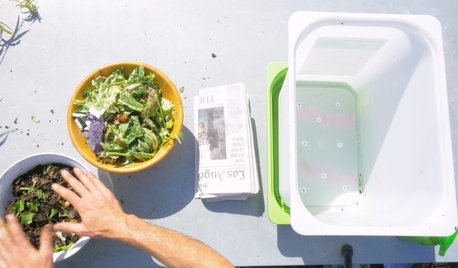
    This January my sweet fiancee bought me a worm farm. The Worm Factory 360, to be exact. About three weeks ago I emptied my starter tray into the coir/vermiculite/soil mix I put in my patio containers. It smelled fantastic. I plant things all over - the traditional garden in my backyard, the patio containers, upside down peppers/tomatoes - this year my winners are going to be the patio containers. It's a safe bet. And after the $130 initial cost, all those worm castings are free.

    I have 2000 worms in the three trays of my worm factory right now as I haven't added the fourth tray yet, but those little red wigglers can really eat!

  • 13 years ago

    If I lived in a climate where I could have a mini worm farm out doors year round I would consider it, but in zone 4 they wouldnt make it through the winter. I'm also not so sure I need yet another thing to take care of on a regular basis.

    I did move a bunch of earth worms into my new beds. I was moving a slew of Hostas and Ferns over to the side of the yard that has been neglected for years. I have been blowing leaves into it every spring for a while and when I started digging holes for the plants I was getting several worms with every shovel full. Hopefully the worms will be happy in their new home and multiply. I know the hostas will be happy - that soil looked great!

  • 13 years ago

    Mandolls - my worms are in my kitchen, not outside. Red wigglers and other composting worms don't do well outside. They're kinda picky when it comes to environment.

    I understand not adding something else to care for, though. :)