Software
Houzz Logo Print
hamiltongardener

Mexican Bean Beetles

19 years ago

I found what was attacking my beans. Mexican Bean Beetles.

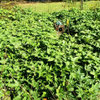
So the plants aren't too bad, I caught them early. I knocked and picked off as many as I could find into a cup of soapy water to drown them, then checked for larva and eggs. I couldn't see any, but I have been known to miss these types of things before. I misted the plants with a soapy spray (Dawn in water) under each leaf to kill any larva that may be under them, waited a half hour, then rinsed off the soap because I am scared of burning the leaves. I'm going to check them every day for the next couple of weeks in case any were missed.

Have I done the right thing? Is there anything else I should do?

Comments (9)

  • 19 years ago

    Plant an early bean crop to miss them, cover later bean crops with floating row covers to keep them away, Some people will tell you to clean up your garden "debris" so the adults do not have someplace to overwinter, but that alos eliminates cover for any predators of MBB's that may want to inhabit your garden. Encourage predators such as Spined Soldier Bugs and some parastic wasps to hang around.
    Neem and pyrethrin products could be used as last resort types of control.`

  • 19 years ago

    The guy at the garden centre said I wouldn't have to worry about overwintering because it is too cold for Mexican Bean Beetles here. They usually come up on soil, seed and bedding plants from the US.

    Planting an early bean crop isn't an option here.

    Would floating row covers still help if the bugs are coming up in the soil and plants themselves?

  • 19 years ago

    Since the commercial plants that are shipped across the border must be certified insect and disease free does it make sense what your local garden centre guy said? Since the Mexican Bean Beetle overwinters around my zone 4a/5b garden why would they not be able to overwinter in your zone 6 garden?
    If this is typical of what this local garden centre guy says i would stay away from him.

  • 19 years ago

    Hmm... That sounds about right to me. I'll do what I can to make sure they can't overwinter in the garden.

    I can't stay away from the garden center though. It's the only organic centre that I know of in my area.

    I was planning on taking the bean and pea plants in that plot at the end of the season and turning them into the soil. Should I pull them out, roots and all, and dispose of them instead? I was planning on rotating plots next year, but due to the small size of my yard, next year's beans and peas wouldn't be very far away.

  • 19 years ago

    You garden center guy isn't necessarily 'wrong', s/he just has out of date information. It used to be the case that MBB didn't overwinter successfully in the north, but these days it has been observed overwintering almost everywhere in the US.

    Not sure what the reason is for the change.

    It is also likely true that eggs/larvae do hitch rides on bedding plants.

    The idea that one should destroy (burn) attacked plants to prevent eggs from hatching is sound, but for the most part the MBB is either a serious pest in one's area or it isn't. If it is it's a safe bet it is living and reproducing outside of one's property. If there are soybean fields around, it's a safe bet you have MBB around. They are also strong fliers so removing plant material really only prevent damage from the larvae, not the adults which will just fly in.

  • 19 years ago

    No soybean fields around, I'm well in an urban area. I've never seen MBB before. I honestly thought the MBB were ladybugs because I can't really tell the difference, which is why I had to go to the garden centre. It's not a common thing around here, although the bean leaf beetles are. Maybe over the next few years, it will become more common here.

  • 19 years ago

    Insect species contain large numbers and their life cycle is comparatively short. Therefore they can adapt to their environment and move forward literally and genetically. So do not be surprised to find insects in new places and doing new things.
    All living things do this at different rates. One explanation as to why there is a greater variety of trees on North America vs Europe is that the mountain ranges run mainly east to west in Europe while in North America they mainly run north to south. When ths ice age came along the trees on the north/south ranges had time to adapt while those on the east/west ranges did not. When the ice came over the top it wiped out everything on the sheltered side.
    All this, you understand, took place long before my time. The story was handed down, word of mouth, by the ole people.

  • 18 years ago

    Hamiltongardener-- if you're in Hamilton, Ontario, they will overwinter in your soil. I'm in St. Catharines, and granted, we're a wee bit warmer here....Lake Ontario still gives us both some good warmth before the deep snows fall, adding further protection to the soil.

    Start feeding finches near your beans. They think MBB are tasty treats. :)

    The beetles come back every danged year. There's a local company here that sells beneficial insect..I found their prices out of my small backyard garden's range, but I haven't emailed to ask if I can purchase a much lesser quantity for a much lesser fee.

    And if you want to check out my garden blog, it's at http://cannedam.blogspot.com I blogged these nasty buggies the other day. My control: pick them and drown them in a bowl of soapy water. I'm getting a finch feeder, though!

    Here is a link that might be useful: NIC in Stevensville, Ontario

  • 18 years ago

    Mexican Bean Beetles are members of the Lady Beetle family, the black sheep of that family. So, everything you do to attract the Lady Beetles to your garden will also attract these wee buggers.
    To aid in control attract the predators and parasites which also overwinter in your garden debris, and feed on many of the "weeds" that grow between the plant rows, Spined Soldier Bugs and parasitic Wasps can help. Plant early and late and cover with floating row covers. If you can spray the adults, nymphs, and maybe the eggs with an Insecticidal Soap (not a detergent such as Dawn) some control can be achieved, but since the IS is a contact poison and has no residual affect direct contact with the insect is needed. If a more toxic poison is needed then Neem Oil products or possibly pyrethrins can be used.