Software
Houzz Logo Print
patty4150

How to kill worms

20 years ago

Not that you'd want to, of course!

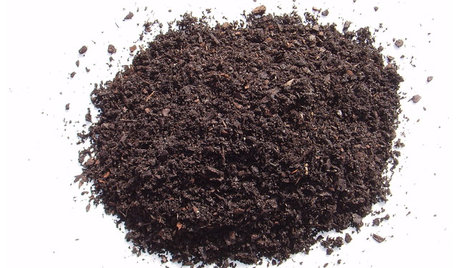
The kindergarten class at the local school had some worms for the kids to examine during their gardening unit. The teachers didn't know what to keep the worms in, so they figured that worms 'eat dirt' so some nice clean potting soil would be just the thing!

The worms were DEAD DEAD DEAD next morning.

(I wish they would have asked me first.)

I was able to provide some new worms for the kids to examine, in dirty compost, and the worms are happy and squirmy five days later.

So, the moral of the story is, if you want to kill your worms, feed them potting soil. Now, I know what you're thinking, that some potting soil will be just fine. Well, that's probably true. They didn't know what kind they used otehrwise I'd specify for you. But the whole thing was so shocking to them, that potting soil would be toxic when it is specially formulated and all.

I am very glad to have been able to enlighten the teachers about what worms *really* need, and it isn't potting soil!

Comments (15)

  • 20 years ago

    Well... DRY is the key word... i have worms in a lot of my pots that are POTTING SOIL. But dry is anathema to worms....

  • 20 years ago

    The soil was moist; that wasn't the problem. (my first suspicion is that they used the kind with moisture -retaining acrylamide - you know, the one that has the diaper material in it. Can you imagine being a worm and eating that stuff? My second suspicion is that it was packed with chemical fertilizers, which might spell death.) Heathen, I would bet you look at the label on the potting soil when you buy it! You're probably very organic, too, else you wouldn't be so active on these forums.

    Kimmsr: Right on, sister. The kindergarteners have their "Little Red Hen" unit coming up - I mentioned to the teacher that I have some wheat (still on the stalks) and a mill, and that the kids might enjoy finding the kernels of wheat and grinding some to flour (and making bread of course.) I hope she takes me up on the offer. It bothers me that our education sometimes misses fundamental aspects of what planet Earth is all about. And thanks for the pleasant response.

  • 20 years ago

    patty,
    your message struck a chord with me. i think it's great that you're trying to enrich the kids' curriculum with some real life, hands-on learning. i've often gone into my kids' classrooms to make beeswax candles or to spin wool into yarn with them. they LOVE it. just like i did when, away at college, i discovered that broccoli wasn't born in a frozen box! what a revelation that was. our middle school home ec teacher has the kids making rice crispies treats!!! i've often thought that i'd love to do just what you said -- bring in the wheat berries and carry the process through to the bread making. maybe throw in some butter making. but i know our administration would see no value in it and wouldn't raise a finger allow me to do it. it makes me crazy.

  • 20 years ago

    Patty - "moist" soil will dehydrate a worm right quick - "wet" soil is what's needed - worms are 90% water and need ample water in the soil in order to move and breathe and not have the water sucked right out of them - worms can stand chem additives as long as they're not high salt, they'll just avoid the stuff and starve or it will contribute to their dehydration - note you frequently see worms in puddles, but never in sand!

    Bill

  • 20 years ago

    Worms live in chem ferted potting mixes just fine as long as there is enough moisture and OM to eat. They will also die if the temps in the pot go above or below their range which varies by type of worm. The chem fert doesn't affect them and the moisture crystals don't either. Worms may not have very much in the way of brains, but they are smart enough to eat what is good for them (bacteria on rotting OM) and ignore the rest.

    Not being anti-organic in the least, but trying to seperate fact from fiction.

  • 20 years ago

    Worms in puddles, I had always thought, were there because the ground was waterlogged! Worms in puddles are often dead worms the following day. My daughter "hates spring because all the worms come to the sidewalk to die." We get our rain in the spring and the soil is too wet for them.

    By all means separate fact from fiction, but the worms were typical garden worms, the soil was as wet (or slightly wetter than but not much) my compost, and the room was a pleasant temperature.

    The moisture crystals and chemicals may have nothing to do with the worms' death - but the moisture content and temperature were not suspect in any way; to *this* gardener of 30 years.

    I'll dig deeper for the brand of potting soil. Perhaps that will clear this up.

  • 20 years ago

    When worms come to the surface during rain, it's not to avoid the moisture. They come to the surface because it is easier for them to move along the surface when it's wet. I think their main reason for this is to find a mate.

  • 20 years ago

    From what I have read it isn't to avoid moisture either, mikta, but to avoid the lack of oxygen. As I understand it earthworms make semi permanent burrows which fill with water during a good rain. Due to the tiny opening size of the burrow relative to it's height the worm exhausts the supply of oxygen in the water and suffocates. Not drowns as worms can breathe under water, but suffocate as they use up the oxygen.

    Interestingly, those with worm bins often report that the worms start moving -before- the storm hits. They sense a presure change or something.

  • 20 years ago

    My understanding was lack of oxygen, as well. I don't know where I picked that up, or whether it's true, but it makes sense. Oxygen can't diffuse as easily into wet soil; we all know that very wet compost can become anaerobic quickly.

  • 20 years ago

    I considerm it appropriate that I give here a copy of my post in FRUGAL GARDENING,

    "To be able to keep a pet horse would be an ideal situation for most serious gardeners, unfortunately most gardeners are, for one reason or another, unable to do so.

    Many people never give a second thought to the world of one our most friendly animals, as pets we canÂt hug or pat them.

    The lowly earthworm!

    We can of course recognize their terrific value and nurture them. To a gardener, economically, they are infinitely more useful than the more stately pet horse.

    Cultivate your worms and have a garden that will need no other fertilizers than natural compost.

    The more worms you have the better the aeration and drainage. and the fertilizers they produce is the best that one can get.

    So give them the treatment they deserve, treat them as pets and do not be squeamish about them and they will willingly be your servants in the garden.

    Go into GOOGLE and type the two words worm cultivation or the two words growing worms. There you will be able to learn much about the little creatures. You can even encourage the children to grow them as pets for the garden because that is wha they are."

    So make double sure that you do not kill your little working friends.

  • 20 years ago

    I'd suspect build up of chemical fertilizers (i.e., nothing to eat) combined with no oxygen or lack of moisture. If these were earthworms-- handpicked from outside, then the conditions in which they survive are actually pretty narrow. Their cousin, the red worm, is more easily cultivated. There is LOTS of great info out there about vermicomposting in the class room. Too bad the teachers didn't do THEIR homework first!

    Here is a link that might be useful: WormMainea

  • 20 years ago

    I pay a lot of attention to worms and what they like since I rely almost totally on my "cold" home compost pile for fertilizer/amendments. Here's what I've noticed:

    Worms don't mind the Miracle Gro potting soil I use to start seeds. I've found they will crawl into the bottom of nursery pots, from the ground. They get "planted out" along with the seedlings.

    Worms don't like onions! I separate out onion waste from my kitchen compostables now, and the earthworm population in my compost pile has grown exponentially.

    Moles (voles?) -- whatever -- they eat earthworms. Try to keep your mole/vole population down. Mothballs in mole/vole runs can be effective in encouraging them to move elsewhere. I once beat a particularly aggressive mole to death with my shoe, one of my more gothic garden experiences. But the critter was dragging earthworms out of my chard bed unmercifully. Nature red in tooth and claw -- even among the lowliest of creatures.

  • 9 years ago

    Deodorant will kill worms

  • 9 years ago

    Ground up newspaper makes a fantastic worm medium. Worms will live for months if you add some organic matter for food. But you must keep them in the frig. The teachers obviously did something wrong. Too dry, too wet? Too warm would be my guess. Buss Bedding (which is popular with fishermen) is mostly sphagnum moss (peat moss) so that should work as well. Potting soil usually consists of peat moss with sterilized soil added. Vermiculite wouldn't harm the worms.