Software
Houzz Logo Print
doxiedr

TOH/Sumac?

18 years ago

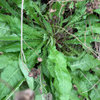
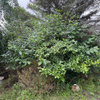
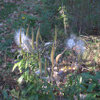
I think I know the answer...but someone please confirm what this is. Many of them growing in the woods in the NC Piedmont area; from small saplings to a 40' tree.

New branch:

{{gwi:227000}}

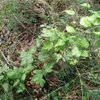
Established branch:

{{gwi:227001}}

Trunk on a smaller tree:

{{gwi:227002}}

Trunk on the 40' established tree:

{{gwi:227003}}

Thanks for the help!

Comments (16)

  • 18 years ago

    Evil Ailanthus I believe.

    Here is a link that might be useful: ailanthus

  • 18 years ago

    Sweet Lord. This should be "fun"...clearing out a 40 footer and several 15-20 footers! And probably a hundred little ones everywhere...

  • 18 years ago

    No, I am not so sure. The bark on a mature TOH is smoother, I thought. Have a look at the link which has some good information.

    If you can look at a branch, do look at how the new leaf emerged compared to the leaf scar from the previous year (more details in the link).

    Here is a link that might be useful: Comparisons

  • 18 years ago

    Definitely Ailanthus, the single lobe on the leaflet gives it away.

    HTH
    Chris

  • 18 years ago

    I'll wait for fruit before cutting to be completely positive...but the indications seem to be TOH. I guess it's worth it to wait.

  • 18 years ago

    Rip off a few leaves. If they are awful smelling and leave a huge leaf scar you can begin your clearing.

    Take heart, though. The wood is very soft. I easily cut through alot of large saplings with a lopping shears. With most deciduous trees I could not do that, neither I nor the lopper are strong enough.

  • 18 years ago

    After some ninth grade geometry, it seems the large tree in question is actually about 60' tall. The trunk diameter is probably 10-12". In other words, while the smaller trees will be fine with the lopping shears, this one will be a true pain to take down. Am I obligated as a conscientious gardener to have it removed? I'm sure it will cost a pretty penny...I wouldn't want to try it myself.

  • 18 years ago

    Could you girdle the tree and let it die? Or is it in a spot where a dead tree would be unsightly and a danger to people or property? Seems like I remember you had a large woodlot that might be okay with a dead tree here and there.

    Or maybe watch yours this year. Ailiantus is reportedly polygamodioecious with some trees being unisexual. Maybe yours is a male and won't produce seeds.....though with all the seedlings around that may be alot to hope for. There are some in my area (not my yard!) that I don't recall ever producing seeds. You can hope for the same.

    Assuming it turns out to be a seed producer, consider this. If there are other TOHs on nearby properties don't bother removing your huge one. Seeds will be spreading all over from the others anyway....so what would a few more from yours matter. Is that a good justification for leaving it? I think it might be.

  • 18 years ago

    Hi,

    The established tree picture is not Sumac or ailanthus but most likely a Black Walnut which has similar leave patterns. Sumac can be left alone as they are indigenous to the US and are non-invasive, while Ailanthus are from China, and are Veeeeerrrry invasive!! Be very careful when doing anything to an ailanthus to observe the following, or it will send out a self-preservation signal throughout the root system and hundreds of saplings will appear in a week or less!!

    If you can't get a hold of Garlon 1A, mix a heavy salt/water solution, and within 15 minutes of cutting down an ailanthus, coat the entire cut stump with this. This will effectively stop any further problem with that particular tree! You can also use a hatchet, cut at a 45 degree angle into the trunk at 2 inch intervals, and pour the solution into each cut. Best done when the trees are sucking the sap back into the root system in the Fall. Be very careful if any trees you DO want to save are within a few yards of the culprit, that treating the TOH may cause it to release a poison to the other good tree, I've had this happen, but only while treating, never after cutting one down. I've had great success with the above on my property and no recurring problems where I used this method. FYI each female will produce 300, 000 seed pods, of which at least 70,000 are guaranteed to produce!! I just hope soon the States will start to actively eliminate this threat, as with the reproductive rate, and typical growth rate of 9 meters a season, it won't take long until they take over!!

    Best regards,

    Mike

  • 18 years ago

    Thanks for the help Mike. I would love to believe a black walnut instead of a TOH, bit I'm sorry to say I can attest the trunk of the above established tree is definitely the same tree as the others (I just couldn't reach the leaves as easily). Naturegirl, I appreciate the help too--but it already now has seedpods all over it!

    I'm taking out the smaller trees this weekend, and will leave the larger one until I have the funds to get it taken out. Thanks again to everyone!

  • 18 years ago

    You have my sympathies on this, mbuckmaster. A friend of mine that is quite into native plants also recently realized that she has TOH in her back yard. For some reason, she thought it was really BIG sumac. She is taking hers out in the fall ... and actually looking forward to changing the yard around as a result of the extra sun (she has a very suburban back yard).

  • 18 years ago

    I think you are showing two different trees (especially given the leaf photos you posted in the Trees forum today).

    Luckily it looks as though the bigger tree is not TOH.

  • 18 years ago

    Lobing of leaflets indicates Ailanthus.

  • 18 years ago

    Yes, I owe an apology to chevyss65 in particular...the trunk picture above is NOT from the same leaf structure as the other trees. I mistakenly thought they were the same type of tree due to the similar leafing and being in such close proximity. Here are the leaves of the large trunk pictured originally above, which esh and Mike correctly identified as black walnut, NOT tree of heaven:

    {{gwi:227004}}

    Sorry for the misinformation--it was definitely unintentional!

  • 18 years ago

    Well, hopefully at least that means you only have smaller trees (TOH) to get rid of? You don't have a 60 foot TOH after all?

    Now you have to learn about juglone tolerant gardening!

  • 18 years ago

    No 60' TOH!...thank goodness for that. Strangely enough, there already are several established trees/shrubs nearby the black walnut. A tulip poplar (although not the largest I have), a couple spicebushes, and a medium-sized hickory are all within 6-7' of the black walnut. There's even a maple seedling struggling up right next to it! One spicebush is just a foot away from the trunk too. Maybe nature has figured out the juglone for me?.... =)

0