Software
Houzz Logo Print
zinia_gw

sickness

21 years ago

We need some advice on improving our garden soil. I haven't had a soil test, yet. I suspect we have nematodes and there may be some other things wrong. It is about an acre, in full sun, sandy, mostly well/drained. It has been farmed for 2, long generations. The vegetables have been rotated. The soil has been ammended from time-to-time with leaves, chicken manure... We have used 10-10-10, sevin, vegetable dust... Maybe 10 years ago, we had a cover

crop of red clover during the Fall and Winter and plowed it under. It has been many years since my dad put a liquid chemical, in a can with holes in the bottom and walked down freshly plowed rows to kill nematodes(probably banned the chemical he used--it was so long ago).

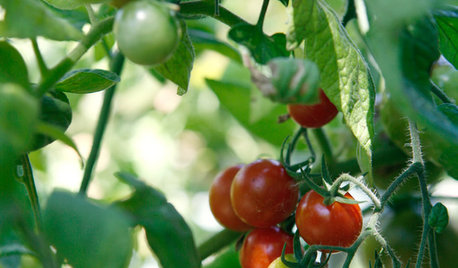
Symptoms of something gone wrong: dark brown areas in the middle of turnips, tomatoes don't do as well, various pepper plants die or look bad, eggplant does OK, but have seen it do better. Things generally don't look as healthy.

The garden is mostly plowed up, now.

What can we do to get it ready for the Spring?

Is it too late to treat it so that we can have nice turnips this Fall?

Thanks,

Zinia

Comments (4)

  • 21 years ago

    sounds like you may have a number of different problems, with the main one being this years bizarre weather - there have been various insect and disease problems all over the continent, including some places where a particular problem has never been seen, and most everyone had a late starting season - I'd investigate things in greater depth before doing anything about nematodes in particular - nowadays it's recognized that there are beneficial nematodes that are a great aid in controlling a variety of pests, particularly grubs in the lawn - the beneficial nematodes should be available at garden supply places at certain times of the year

    I'd say hold off on spending money until you have a good soil test done, as much can be improved w/ the right nutritional additions, and particularly if you try to keep your soil as high in organic matter as possible - the cover crop tilled in is great

    Bill

  • 21 years ago

    Start out by contacting your local North Carolina State University Cooperative Extension Service office and find out about how to sample the soil for a soil test an dthen get that done. While waiting for the results of that test do these simple tests to see what your soil really is;

    1) Structure. From that soil sample put enough of the rest to make a 4 inch level in a clear 1 quart jar, with a tight fillting lid. Fill that jar with water and replace the lid, tightly. Shake the jar vigorously and then let it it for 24 hours. Your soil will settle out according to soil particle size and weight. A good loam will have about 1-3/4 inch (about 45%) of sand on the bottom. about 1 inch (about 25%) of silt next, about 1 inch (25%) of clay above that, and about 1/4 inch (about 5%) of organic matter on the top. Your primary concern is the OM level and yours may be pretty good.

    2) Drainage. Dig a hole 1 foot square and 1 foot deep and fill that with water. After that water drains away refill the hole with more water and time how long it takes that to drain away. Anything less than 2 hours and your soil drains too quickly and needs more organic matter to slow that drainage down. Anything over 6 hours and the soil drains too slowly and needs lots of organic matter to speed it up.

    3) Tilth. Take a handful of your slightly damp soil and squeeze it tightly. When the pressure is released the soil should hold together in that clump, but when poked with a finger that clump should fall apart.

    4) Smell. What does your soil smell like. Pleasant, rich earthy odor? Putrid, offensive, repugnant odor? The more organic matter in your soil the more active the soil bacteria will be and the nicer you soil will smell.

    5) Life. How many earthworms per shovel full were there? 5 or more indicates a pretty healthy soil. Fewer than 5, according to the Natural Resources Conservation Service, indicates a soil that is not healthy.

    Once this is done you will have a much better idea of what you need to do this fall to grow "stuff" next spring although I would doubt that you could grow turnips this fall. Your soil took several years to get into the bad shape it is in and will take some time and work on your part to make it better.

  • 21 years ago

    We have a heavily worked garden as well. It might be as old as your plot, I'm not sure. I keep making compost, and dumping the compost on the garden every spring. I can't say that our plants are always perfect and free of disease. In fact, we see some blight on the tomato plants in late summer, every year. We always see some cabbage moths, and there will be some damage to the broccoli leaves. Nonetheless, the plants are generally healthy and productive, so I will keep on making the compost and mixing it in with the garden soil. Our plot is about 10 by 25 feet, -it would take a really big compost pile to handle a one acre garden!

  • 21 years ago

    Thanks for the great advice! At present, the best we can do is get a soil test and plant crimson clover, and we can work on improving things from year-to-year. I didn't know about healthy nematodes. I'm going to research that in my "spare" time.
    Zinia