Software
Houzz Logo Print
zacherie

Adventitious Budding Kalanchoes.

12 years ago

Hello -

I was wondering if somebody could confirm and/or elaborate upon my list of Kalanchoe species that exhibit adventitious budding?

Thus far I have the following confirmed as I actually have these specimens in my possession:

K. daigremontiana
K. delagoensis (tubiflora)
K. pinnata

The following I am uncertain of:

K. synsepala (sinsepala)
K. gastoni bonnieri

Are there any other species and/or sub-species out there?

- Zacherie

Comments (16)

  • 12 years ago

    This is my incomplete list of adventitiously-budding kalanchoes. I'm not an expert, but I began keeping a list as I'm not interested in acquiring any of these:

    Kalanchoe beauverdii (aka K. jueli, K. scandens, K. costantinii)
    Kalanchoe daigremontiana
    Kalanchoe delagoensis (aka K. tubiflora, K. verticillata)
    Kalanchoe gastonis-bonnieri
    Kalanchoe x houghtonii
    Kalanchoe laetivirens
    Kalanchoe pinnata

    Kalanchoe 'Pink Butterflies' is a hybrid which makes pink plantlets, but since they lack chlorophyll, they reportedly don't turn into new plants.

    AFAIK, K. synsepala does not grow plantlets on its leaves, though it has a tendency to "walk" (the flower stalk falling over and rooting where it lands). However, I haven't grown it.

    With my list, I have the following note: GWebber myfuss wrote, âÂÂSteve [Stephen] Jankalski prepared a listing of 18 Kalanchoe which produce plantlets (bulbils, gemmae, etc.) which is part of a review that covers the family Crassulaceae." [I don't know where that list can be found.]

    There's also this article from Wikipedia, which lists well over 18. I have no idea how much of that info is correct (as a librarian, I don't have much faith in Wikipedia).
    https://en.wikipedia.org/wiki/Kalanchoe_sect._Bryophyllum

  • 12 years ago

    Thank you very much, your list is exceedingly helpful. I have always found this method of vegetative propagation to be quite intriguing. The list is occasionally difficult to confirm as, like you said, many sites are not to be trusted entirely. However, your list is pleasantly accurate and well-informed. Thank you for the side notes as well.

    - Zach

  • 12 years ago

    You're welcome. If you keep checking this thread, you will probably find that purpleinopp has posted something. Like you, she's a fan of these kalanchoes.

    Another possibility would be to ask on GW's Cacti & Succulents forum. myfuss and purpleinopp both post there.

  • 12 years ago

    Funny you would say that, Missing (and no wonder they made you the librarian - great memory.) I'm interested in the same thing, saw this earlier. The thread I started about this in C/S didn't seem worth linking here, mainly me 'getting with the program' and asking about a pic/post about Kal leaves making babies in water in particular.

    I'd like to see that Steve guy's list too. Didn't realize one had been compiled.

  • 12 years ago

    I am on the hunt for the list. :D

  • 12 years ago

    I posted in the C&S forum (on purpleinopp's post) about the list. Email me once you get my email to you, Zacherie.

    There are 2 dozen or so that produce plantlets. K. synsepala will grow plantlets on runners & gastonis-bonnieri, on the leaf apex.

    I'm interested in seeing photos of those first 3 you mentioned. Can you show us please?

  • 12 years ago

    Thank you, I just sent you a reply via email.

    I can provide the photos for you. I will search from them this weekend and post. You are referencing the three Kalanchoes that I have in my possession, correct? I also have K. manginii, but that does not exhibit adventitious budding.

  • 12 years ago

    Yes, pix of those 3 you have ~would be nice to see. :)

  • 12 years ago

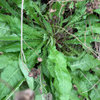
    I did not take too many photos of my Kalanchoe specimens, but here are a few. The K. daigremontiana later grew to a height of more than 4.5' and the K. delagoensis was about 2' before I had to part with them. I have new ones growing now from their pups. Hopefully, this time I will grow old with the current batch. :D
    This one is the K. pinnata.

  • 12 years ago

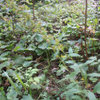
    The K. daigremontiana and K. delagoensis of old. The K. daigremontiana actually had an impressive bloom that lasted for a few months.

  • 12 years ago

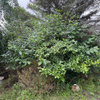
    My current batch with pups from all three.,

  • 12 years ago

    K. laetvirens, not K. pinnata.

  • 12 years ago

    Thanks for the additional pix, Zach! This last comment you make...are you saying the 1st photo shows K. laetivirens, not pinnata? I believe it is called K. crenato-daigremontiana, but could be wrong.

    In your 2nd pic, the plant on the left looks like K. x houghtonii.

    Good luck with your pups! =)

  • 12 years ago

    Thank you for clarification.

    Yes, K. laetevirens and K. crenato-daigremontiana are excruciatingly similar. I was on the fence about which specimen the first photo depicted. I will put an annotation in my spreadsheet about specimen.

    In the second photo, I was under the impression that the Kalanchoe is a K. daigremontiana only because the leaves seemed to be wider (as it got older) than the K. x houghtonii. Disappointingly the blooms appear the same as well between the two. Would you say that the K. daigremontiana has more vivid markings than that of a K. x houghtonii?

    Any suggestions on the minute factors that may allow me to differentiate the two more precisely? :D

    - Zach

  • 12 years ago

    Hey, Zach ~I'm back again! =)

    The reason K. laetevirens and K. crenato-daigremontiana are excruciatingly similar is because they are synonyms for the same plant. Check the list & you'll see one of the names in parentheses for the other.

    One thing to keep in mind is that many of these plants are variable. There is some leeway on plant/leaf size, width, etc. Check the thread I've linked below. You'll see a pic of K. daigremontiana by myfss (Yale). Reading the discussion might help as well (although, it could just as easily confuse). =) The markings will all depend on how much sun (or how little water) the plant has gotten.

    The best characteristic I can say to look for is the curl on the leaf at the petiole (see the thread mentioned)...would make me say daigremontiana, rather than x houghtonii.

    Good luck!

    Here is a link that might be useful: Kalanchoe post in C&S forum

  • 12 years ago

    Hey!

    I was conducting my little investigation into the discrepancy and I found that they are synonyms as well. Although, per online resources, I am always hesitant. Thank you for confirming my curiosity! And I checked the list, it helped out considerably.

    Variability is quite a bugger I must say. Ha. It is also the intrigue... The conversation was interesting and enlightening. Lots of Kalanchoe species were discussed and much was brought to light. I certainly hope that as this specimen matures I will able to definitively identify this as K. daigremontiana being that it is considerably more rare. I will keep you posted on its maturation. :D

Sponsored
Hope Restoration & General Contracting
Average rating: 4.7 out of 5 stars35 Reviews
Columbus Design-Build, Kitchen & Bath Remodeling, Historic Renovations