Software
Houzz Logo Print
coralbelle

Euonymus sachalinensis

18 years ago

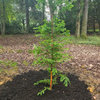
About four years ago, I was at a plant sale at the University of Guelph Arboretum. I picked up a tiny tree (only 3 leaves) called a Siberian Spindle tree or Euonymus sachalinensis. The volunteer working at the plant sale said that this was a lovely small tree, very unusual, etc.

For the first three years, it did NOTHING. I mean nothing - still only 3 leaves, no growth at all, but those 3 leaves appeared healthy. Last year I moved it to a sunnier spot, and now it has 6 leaves.

I wonder if I am wasting my time with this tree. I can't find any information on it anywhere (not in Dirr!) and I'm starting to feel like this plant has not earned a place in my garden. On the other hand, if it really is a rare and wonderful delight, maybe it is worth trying harder to make it happy?

Anyone know this tree?

Coralbelle

Comments (10)

  • 18 years ago

    I'm not familiar with the species, but the genus as a whole often has strong invasive tendencies . . . might be a good thing it isn't doing too well?

    Resin

  • 18 years ago

    "sachalinensis See E. planipes

    planipes (Koehne) Koehne (E. sachalinensis hort.) A large, handsome species similar to E. latifolius and equally colourful in autumn. The large and showy scarlet fruits are freely borne. NE Asia. I 1892. E. sachalinensis (F. Schmidt) Maxim. is probably not in cultivation. It is a native of Sakhalin with a variety in Japan"

    --The Hillier Manual of Trees & Shrubs (2002, David & Charles)

    "Far East. 1895. Nearly a hundred years in cultivation, and confused with E. latifolius, sometimes called E. sachalinensis, this has still to become a popular plant. Yet its attractions are many. It is not too large for the average garden, has gorgeous autumn colour and the large crimson fruits, showing orange seeds, colour early enough (August) to be useful in warm colour-schemes, and hang on until after the broad leaves have fallen. The fruits are slightly angled and thus come midway between those of E. latifolius and E. oxyphyllus. All this is further complicated by the genuine E. sachalinensis, which it is recorded has purplish-red flowers and which has a variety from Japan with three-lobed fruits, as opposed to the Sakkalin species with five"

    --Thomas, Ornamental Shrubs Climbers and Bamboos (1992, Sagapress/Timber Press, Portland)

    Here is a link that might be useful: Google Results

  • 18 years ago

    Thanks for the info. Bboy, your quotes seem to suggest that this tree is worthwhile ( I note the word handsome! ) so I think I shall pamper it a bit longer. I checked out some of the Google links - still not much info, but one of the sources did mention that it's slow growing (I'll drink to that!)
    Resin, I appreciate your comment about invasiveness, as I try to be a responsible gardener. I guess I don't need to worry until it bears fruit - then I will keep a close eye on its habits. I'm in an urban area, so not too much risk of it escaping into the countryside, and if it did.... it is so slow to get going that I think it would be out-invaded by other plants!
    Coralbelle

  • 18 years ago

    E. planipes (E. sachalinensis of gardens) is an RHS Award of Garden Merit plant. The AGM is their top accolade.

  • 18 years ago

    Then I definitely will keep pampering it!

  • 18 years ago

    I believe the Arbor Village (MO) catalog lists E. sachalinensis, describing it as "highly ornamental" (I've never seen this species myself). E. europaeus is not uncommon as a volunteer along woods edges in my area - it appears to be somewhat invasive. E. europaeus also seems to be susceptible to euonymus webworm - at times I've observed entire plants defoliated.

  • 15 years ago

    I wonder how your E. sacchalinensis is doing now. I got a small one a few years ago, and it didn/t grow very much or flower and fruit. but this year it grew quite a bit, had some flowers, and there are some fruit - i am looking forward to their mature colour. till now the leaves have not been very colourful, which I had read they would, and they fell quite early. we shall see this year.

  • 6 years ago

    I grew this tree from Arnold Arboretum seed from 2009. Asian spindle tree was the common name. Mine is a co-dominant leader about 12 ft, very columnar so it fits almost anywhere. Don't give up on it! The fall foliage is crimson pink with red capsule fruits splitting open to reveal orange seeds that attract birds.

  • 6 years ago

    Keep an eye out for masses of Black Bean Aphids in spring which love Spindle Trees and seriously impact their growth...could be a reason why you're not getting much growth? If not the problem, it may become one. If it does emerge as an issue, tanglefoot on the trunk to keep the ants away (the 'farm' the aphids and protect them) and the natural controls will handle the aphids.

  • 6 years ago

    A wonderful small tree with the cutest orange and pink seed pods. Slow to start and the deer do nibble but once sprayed with Bobbex is left alone. Very worthy!

0