Software
Houzz Logo Print
rudysmallfry

Stake new trees?

19 years ago

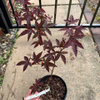
I just planted a Redbud and Japanese Maple. Each is about 10' high. Do I need to stake these until they can get their roots settled in? How long should I continue to stake?

Comments (5)

  • 19 years ago
    last modified: 11 years ago

    I prefer not to stake trees unless absolutely essential to keep them from blowing over. Trees planted in sheltered areas and those with weighty root balls can be planted without stakes. In an exposed, windy area especially with larger trees, staking may be necessary. Bare-root trees often need staking since they don't have the weight of soil around the roots to anchor them. The problem with stakes is that the ties can damage the bark and, if left on too long, can even girdle trees. Rigid staking can prevent natural flexing of the trunk which helps it develop thickness and strength near the base. Staking properly done should still allow the trunk to flex somewhat (don't pull the attachments tight), and not wear into the bark. All stakes should be removed after 1 year.

  • 19 years ago
    last modified: 11 years ago

    If you don't have to stake, I would not. They will fare better by fighting mother nature on their own. I've had to stake a few trees that are in a wind tunnel on the side of my house and one that just isn't heavy enough to stand on its own. But overall, its best if trees learn early to deal with wind ect... on their own. - Lyn

  • 19 years ago
    last modified: 11 years ago

    depends on your soil ...

    in my SAND ... once planted.. stomped in and watered ... the sand is well compacted yet allows drainage ... except for the most gangly of trees they do NOT need staking ...

    if you cant or don't dare compact due to clay .. and the tree is 'lose' in the hole... consider staking ...

    if you stake .. remove by next spring ... a tree is meant to blow in the wind .. but it is not meant to blow over and grow horizontally ...

    bottom line.. it depends on your soil ... ken

  • 19 years ago
    last modified: 11 years ago

    In addition to your soil, consider how much wind you get. I live near the foothills of the Colorado Rockies and we get extreme wind storms here, so would definitely stake a 10' tree in my area.

    We planted most of our trees a year and a half ago and still have them staked but should probably remove the stakes soon. Our neighbors planted a tree 3 trees last fall, and a few weeks later after a rain and wind store, 2 of them were lying on the ground with the root balls completely exposed. They replanted and staked them and they're doing fine now.

  • 19 years ago
    last modified: 11 years ago

    Some trees I will stake and others I do not. A lot depends on how exposed they are to prevailing winds. Another depends on how high I have planted them. Also it depends on how thick of canopy they will produce.

    Will it be a leafed out canopy which the wind blows through or one which catches the wind. Is it a fast growing, shallow rooting birch which will sway in the wind and have its fine feeder roots broken; and worse yet even, some of the root flare dislodged?

    The way I like to stake trees is to pound three 6 foot "T" stakes a short distance away from and evenly space around the root ball at the time of planting. Then I use non-damage to the bark type of ties to attach the tree to each stake. When I am finished I check to make certain that I left enough slack in the ties to allow the tree to gently sway with the wind, but also to limit the degree of back and forth sway enough to prevent the rootball from rocking in the soil, or to prevent the trunk from leaning so far one way or the other that would break the roots from the rootflare, or from breaking the fine feeder roots growing closer to the soil surface.

    Most Japanese maples grow slow enough and are usually planted in more sheltered areas to limit the amount of west and northwest sun that might otherwise stress them. If yours is planted in such a protected area, I would not recomment staking it if it were only 4-5 feet high when planted. Same thing goes for the redbud if not planted where it is exposed to high speed wind gusts

    The fact that yours were about 10 feet tall at planting, makes me more concerned, though. If they are not planted in the most protective of places, then I would suggest you stake them with the 6' "T" stakes the way I described above. I am mainly concerned about them needing that, because it could take up to 3 years or more for their root balls to establish well enough to be in proper balance with their canopies.

    the only trees I have stake with less movement potential than I described above has been my Lily of the Valley tree. If all its new growth is so soft that it weeps and would look more like a weeping shrub, if I did not stake it in a manner which trains the main leader trunk to harden off in a tall and straight pattern. I will keep it it staked that way until it grows to be 8 feet tall. Only after that will I consider removing the close to the trunk stake.

    the other tree which I have staked closely like that is my Ogon Dawn redwood 'Gold Rush' tree that I planted last spring. It is almost 6 feet tall and has a trunk which is less than an inch thick.

    It may be another year before I remove that close to the trunk stake, and change over to the "T" stake system described above for another year or two before I trust it enough to remove the stakes.

    On the other hand, any tree I let grow from seed, or find which has grown from seed, I do not stake at all. Those trees roots are so perfectly in balance with their top growth that in most cases they usually never need to be staked to prevent root damage or blow over from prevailing wind gust events.