Software
Houzz Logo Print
natisto

pin oaks: why does this tree look sick? problem help!

17 years ago

I just moved to a 10-year old development in Durham, NC. There are 3 pin oaks on my property, presumably planted when the houses were built about 10 years ago.

1 pin oak looks great and is doing well, 1 looks decent, but the third one is really struggling.

Here are some pictures:

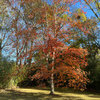
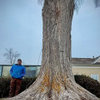
This is the sickly pin oak:

http://nathan.esheff.com/pinoak/IMG_4791.JPG

This picture shows the healthy ones, with the sickly one in the background:

http://nathan.esheff.com/pinoak/IMG_4793.JPG

I'm pulling my hair out trying to figure out what's wrong. I've looked for insects, fungi, or diseases but can't find any evidence. My thought was that the sickly one doesn't have as good soil drainage...but pin oaks are supposedly able to grow in poorly draining soil just fine. Can anyone point me in a direction?

Thanks for your help.

Comments (8)

  • 17 years ago

    Maybe soil compaction? Or old builders' rubble hidden in the ground below the tree?

    Resin

  • 17 years ago

    I'm with resin.

    Dan

  • 17 years ago

    Maybe its just me, but it doesn't really look sickly. Maybe the first two had more established branching that survived the initial planting...and that's why they're wider.

    The "sickly" one seems to be putting on good growth. It is just a little behind but in a few years you won't be able to tell any difference. The relatively new looking flower bed could have something to do with it though. Perhaps you buried the established roots that were there??

  • 17 years ago

    From the picture I can't see what's wrong with the tree. Can you describe what you're seeing?

  • 17 years ago

    More thots --

    In the first image:

    1. the tree is planted too deep.
    The clue: it enters the ground as if it were a telephone pole.
    That is, it lacks root flare.

    2. It appears that the bark on the "front" side -- rightish as viewed in the pix -- appears damaged.
    Is it?
    If so, could be a dead root causing a strip of dead wood up the trunk.

    3. Can't see enough of the yard to know, but do the 2 "healthy" trees have more root space than the one you call sick?

    4. Possible, but only a guess -- the "sick" tree was planted sometime after the other two. Not really sick, just younger & smaller.

    5. Finally, all plants are individuals. The "sick" one may have root problems you can't see.

  • 17 years ago

    Thanks for the responses!

    Does anyone have any suggestions for remedies to these problems?

    @ pineresin and dan_stanley: If it is "soil compaction" or "builders rubble" like say, is there a solution? Will adding topsoil to the grass in the area help?

    @ bigdancehawk and jqpublic: it seems "sick" to me because it is very undersized (about 1/3 the branch width, half the height, and half the trunk thickness of the bigger tree. And besides just being small, its form just looks...bad. The others look like trees, this one looks like a bush growing on a stick. Does that make sense? The branches are all bent in and crooked--they don't go out straight.

    The flower bed has been there for awhile--we recently revamped it. The tree looked that way before the change, so that isn't it.

    @ jean001: Is there any way to solve this? You are right--the two larger trees definitely have more root space. Is that enough to cause such a huge difference? I guess if this is it, then there's really nothing to be done...I'm 99% sure they were planted at the same time.

    If it is "root problems," how do I solve them?

    Here's a closeup of the bark you mentioned:
    http://nathan.esheff.com/pinoak/IMG_4797.JPG

    Thank you all for all your quick responses!

  • 17 years ago

    Thanks for the close-up.

    Yes, the smaller root area will limit growth. Nothing to do but live with it.

    But the bigger problem is what's going on in the trunk.

    That strip of bark has been bashed here and there. Plus the somewhat dry & cracked look means that the underlying damage is rather extensive. It's most likely overlying a dead strip of wood. Later on, that bark will start coming off the entire strip.

    As for will it survive, and for how long. Only time will tell.

    If the damage is from a dead root, one wonders how it was damaged.

    Several possibilities come to mind:
    1. Perhaps when the flower bed was put in?
    2. Or because the tree is set too deep in the ground.
    3. Or because it has a girdling root somewhere under the soil surface. Might be within inches, might be deeper.

    I recently saw a tree that had been planted too deeply about 15 years prior. The root flare about 10 inches below ground. A girdling root was at about 8 inches.. Not a good thing.

  • 17 years ago

    This is very common in subdivisions. For a particular tree, there is no remedy except a one-inch heading cut and replacement.

    The first picture I agree the plant is too deep. No remedy. Very common. Your builder cut corners. Sorry.

    The second picture shows no ill plant health at a distance. What it does show is inadequate space for these plants. There is no remedy except a one-inch heading cut and replacement.

    I also, in the foto, don't see a sidewalk on your side. Putting aside my urban planner lectures on why this is bad, this is an indicator of cutting corners, as is the pavement quality and rolled curb job (from here, their engineer failed to slope the grade adequately for anything greater than 5-yr precip) . Your side setback is still inadequate for these trees (shame on the city's planners). Nonetheless, this is still an indicator of fill and little if any OM, indicated by the lawn health. At least the spp. selection is OK

    I doubt you want to get a bobcat in there and fix the initial oversight. The alternative is to deal with it, as fert for trees is not a good way to spend your money. I suspect the second-hand trees and limited root growth are problematic and the remedies are in the 4 figures. The externalities are low now, but costs accrue yearly and the amortization has a high percentage.

    Dan