Software
Houzz Logo Print
gailuvscats

MY Yard has gone to hell

16 years ago

My serviceberry has rust, rendering the berries inedible to the birds, and I just took a good look at my Holly, which the robins did not strip of its berries this year. It's berries have little black spots on them, which I am assuming is another type or the same fungus(rust). On top of that my florida dogwood dropped 75% of its leaves, barely flowered and has no berries.

What am I going to do? I am 62, not all that athletic, and can't stand to see this mayhem. I did spray the magnolia and the serviceberry early spring,(I have a 15 foot ladder, and it is not easy hiking the two gallon drum up to the top to spray) but only once, and it rained a day or two after, and continued to rain for weeks.

I pride myself on my native yard, and food producing plants, this is killing me.

Please give me step by step of what to do. I got from another posting that I need to buy an extension wand for my sprayer and to clean up the yard in the fall.

Should I try to remove the diseased holly berries? There are the green ones right next to the red ones, are they doomed already?

All suggestions are greatly appreciated.

Comments (7)

  • 16 years ago

    gailuvscats, some years are just like that. Perhaps the weeks of rain you mentioned added to the problem.

    Something like plants well suited to your typical environment have off years when exposed to atypical conditions.

  • 16 years ago

    you claim a native yard... yet claim they are all high maintenance ... i dont understand how natives can be all that problematic ...

    perhaps its time to get out the hand saw.. and start getting rid of the giants.. and moving toward smaller plants.. rather than trying to kill yourself with chemicals ...

    is not a serviceberry a shrub which can be rejuvenated to a smaller size??? .. i am asking you peeps .... since i have no experience.. if so .. start pruning ....

    think outside the box.. instead of figuring out how you can become wonder woman at this point in life ... perhaps its time to scale back.. bring in new things.. that dont require all that hard labor ... nor all those sprayings ....

    good luck

    ken

  • 16 years ago

    First I would get a hold of your county extension service and make sure the ailments are properly ID'd. Second, know that ailments can be cyclical and just because you got hit this year, or the last two years doesn't mean you're doomed. Cedar apple rust, for example, was in my yard for three or four years running and the last two years nothing. Condition just weren't favorable for it. I still have apples and I still have junipers but not rust. So get the proper ID of the ailments. That is always key to forming an action plan and your county agent can help you with that as well.

    tj

  • 16 years ago

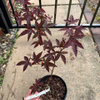
    Thank you TJ, I will do that. Also, I have jerry whatshisnames book that has a lot of organic or not too toxic sprays that I might try. compost tea, another concoction of baking soda and other stuff. I know the almechiar has rust, I don't know about the holly.Here is a picture of it, if I can. can't will try it as a new post.

  • 16 years ago

    First, toss the Jerry Baker book out the window - much of what it contains is nonsense and in some cases, the "concoctions" can actually be detrimental to the plants and soil health.

    Weather has a great deal to do plant health as do common gardening practices. And I do agree that many plant disease issues are very cyclical in nature - some years worse than others. Plant diseases are a fact of life. Some are or can become critical to the plant's survival - a great many more are more cosmetic than not and do not necessarily require our intervention. The rust appearing on your amelanchier is of the latter - it is disfiguring but but not a fatal condition. Dormant spraying with an appropriate fungicide, removal of any possible host plants (junipers) and practicing good garden sanitation will go far to curb this issue.

    If your garden consistently presents a lot of disease problems, then it is probably prudent to consider eliminating or replacing those plants that persist in presenting these problems. There are many very disease resistant varieties of most plants available on the market. The dogwood is a prime example. Cornus florida, the eastern flowering dogwood, is very prone to a number of fungal diseases, primarily anthracnose, which can be fatal. But there are other species and hybrids that are anthracnose-resistant and these should be planted instead where this is an issue.

    I'd also look to overall garden conditions as well. Building a healthy soil, practicing good garden sanitation and maintenance, observing correct watering and fertilizing practices and proper plant siting will all go far to reduce or even eliminate many disease issues.

  • 16 years ago

    I agree, throw the book out. And always get a proper ID of the problem before taking action. You don't want to use a bazooka on a mouse.

    tj

  • 16 years ago

    PERHAPS... and i am purely speculating.. is that your precious young garden has matured.. to a problem ...

    those nice overhanging trees.. have become the monsters they were meant to be .... causing a change in your micro climate..

    less sun.. causing mildews... less sunlight.. causing gangly growth...

    and large shrubs reducing available wind .. causing dead air which is prone to cause mildews.. and rusts.. etc ...

    it really is time to rethink the whole garden.. while you are still able to ....

    or i am wrong.. lol ...

    in 10 years.. on 5 acres... i use no sprays ON my plants.. what you do .... or are contemplating.. just seems so over-whelming.. that there has to be some underlying problem.. that you arent seeing thru the forest...

    ken