Software
Houzz Logo Print
lou_spicewood_tx

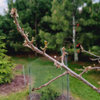
Branch kinda splitting off trunk (oak tree)

19 years ago

{{gwi:363170}}

{{gwi:363171}}

{{gwi:363172}}

Will it heal on its own like that? I had to prune that branch off because it was fixing to take part of trunk out. It was really blowing last night when the storm came and i guess it caused that branch to split a bit off the trunk.

Comments (26)

  • 19 years ago

    Is that an oak tree?

    I am sorry to say, you have a nasty wound there. It may be best to replace the tree.

    But some tree surgery is possible and I would know how to do it, but I am not sure I can give good instructions.

    The tree will not heal the split on its own. The only thing to do would be to cut away the branch stub that is left and cut off all the part of the split trunk that is attached to it. What you want is to have the remaining part of the trunk with little or no split wood left.

    Then, if the remaining trunk seems strong enough to support the top of the tree, you will be OK.

    But you will have to treat the wound so fungal rot will not enter. To do this, wait about 4 months or a little more, and then treat the wound with liquid copper fungicide. I have posted about this several times before--just do a search of this site for "liquid copper fungicide" and when you get to the topics that come up, you can scroll down through the entries fast looking for my end tag, "--Spruce."

    If you have any questions, please ask.

    The tree is young enough that it can recover--the main question I would have is whether the trunk after surgery will be strong enough. But there is no harm in trying, and if the tree doesn't break in a year or two, it will get stronger and stronger and may well survive.

    But if doing this surgery is not going to be fun for you to do, you should probably just replace the tree.

    --Spruce

  • 19 years ago

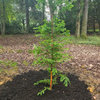
    It's a shumard red oak. It was doing great until this happened unfortunately. It was planted in October 2005 (7 gallon size). Just great looking tree. It has put on a lot of new growth this spring. Replacing it immediately isn't really an option with the summer approaching so I might as well try and save it and see how it does for the rest of growing season.

    Thanks.

  • 19 years ago

    {{gwi:363173}}

    Before the unfortunate incident...

  • 19 years ago

    I'd prune off more of the stub, back to close to the base of the split. Normally one wouldn't do so (as that would mean cutting through the branch collar), but since the branch collar is already split, it will occlude the wound more quickly by cutting back to the base of the split.

    It is a vigorous young tree with no decay-prone heartwood yet; wound occlusion should be quite quick (2-3 years?) with minimal risk of future decay problems. I reckon it'll be OK.

    Resin

  • 19 years ago

    you might have better luck with a sharp razor/stanley knife then a saw .... on the first picture... make a line almost straight across level with the branches at 2 and 8 o'clock ....make multiple swipes rather than trying to do it all at once ... oak is tough ...

    normally we say more leaves ... makes more energy ... means faster establishment ... etc ... but if you are in a wind or storm zone ... you might consider canopy reduction .... basically you have a sailboat there .... IN MY WORLD .. lol.. always questionable ... lol ... i would take a few branches off the bottom .. and start thinning small branches up the trunk .. so that air will more freely move through the tree, rather than whipping it around ... in effect the tree did it to itself in the last wind storm .... if you take action ...you get clean wounds the will heal faster and easier ...

    it probably isn't the best time to do this ... but i would rather suggest you do it ... than suffer more damage this summer ....

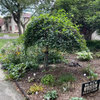
    hard to tell from the pix... but in the last picture of the full tree.. i might start raising the tree to the point of the spigot on the wall ... it might be a lot for a recent transplant .... but it appears that this tree is well established and taking off like a rocket ...

    what i would do .. and what the experts might suggest might be divergent .. i don't know...

    good luck

    ken

  • 19 years ago

    I agree with Spruceman - "The tree will not heal the split on its own. The only thing to do would be to cut away the branch stub that is left and cut off all the part of the split trunk that is attached to it. What you want is to have the remaining part of the trunk with little or no split wood left.

    Then, if the remaining trunk seems strong enough to support the top of the tree, you will be OK" - This I have done with great results...
    ~ THEN ~
    I would let the tree grow this year. It is young and will grow vigorously.
    I would think with a good growing season, it would heal the wound quickly and the trunk caliper will expand to strengthen the tree. I would guess & hope that the trunk will expand and begin to "enclose" where the stub used to be. Being a member of the Red Oak family it will grow at least 2 or 3 times this growing season. Give supplemental watering if necessary and lightly fertilize. Do not fertilize any later than July 4th.
    I would shorten any narrow branch structure that are similar to this one so this will not happen again. During the next dormant season, remove these branches completly.
    I am sure that the tree will do fine...

    ~ Gerry

  • 19 years ago

    Now that you have said you want to do the surgery, I have a couple of hints that may help you do a better job.

    First, after you have made an "approximate" cut with a saw, being careful not to cut into any wood that in undamaged, the best tool is a good woodworking chisel. If you have a woodworking store, or maybe a good hardware store will do, get one of those broad slightly curved chisels with a fairly broad cutting blade. This will help you get into any concaved areas that are very difficult or impossible to get to with a saw. This will help you clean up all, or almost all of the split wood. Water will go down into the split, and that is not good. But you donÂt have to be a perfectionist. A straight chisel can also help with trimming other areas.

    As for the rest of the wound--its edges, etc.--donÂt try to do too much. It is best to wait to see what actually dies and see where the new growth begins to appear under the edges where the bark is ripped off. For any final trimming of the wound, It may be best to wait until late summer.

    As for the healing time. Yes, this is a fast growing tree which may heal the wound fairly quickly, but for me it is easily large enough for the copper fungicide to be useful for eliminating the risk of rot entering the wound.

    --Spruce

  • 19 years ago

    Bad news...

    A violent storm just came through....

    The tree broke in half...

    Bye bye nice looking tree...

    Thanks for taking your time to help me out. Now I look for a new tree and start over.

  • 19 years ago

    The tree might yet be very useful in that it can yield valuable information. It looks to me as if there was some decay going on for some time. The coloration of the split area suggests that it may have occured weeks ago. Then the trunk breaks in half. I would do some further cutting and looking for something going on inside the trunk, possibly coming up from ground level.

  • 19 years ago

    Ronalawn-

    I agree with you that the split might have occured a while back from the look of rotting when i took stub off earlier today. I've had several violent storms this spring. The one tonight was the worst of all. I think the winds were around 60-70 mph at least. My bur oak is bent a bit but i can't see if there's any damage in the dark. It has grown a lot as well. That could mean 2 trees to replace. :(

  • 19 years ago

    Agree that the split happened some time ago, but I don't think there is any deeper problem any further down the trunk.

    Resin

  • 19 years ago

    make a clean cut on the trunk .. and lets see how fast this thing recovers from the storm ...

    after it has put out some new leaders.. reduce to one or two .... within a few years reduce to one ....

    i think you will be amazed how fast it will bounce back ...

    its a good experiment to learn about it all .... ken

  • 19 years ago

    Yeah, I'm going to saw the top off and clean it up and see what happens for the reminder of the growing season. Easily best looking red oak tree in my neighborhood that can tolerate alkaline limestone/caliche soil. Apparently, it's hard to get a true shumard oak that can grow in alkaline soil... Some red oaks in my neighborhood look like Pin oak or maybe southern oak or northern oak that grows light green leaves here. Oh well just my luck....

  • 19 years ago

    Here is what I would do--cut it off flush with the ground and wait for it to sprout from the base. I have never done this with a shummard oak, but I have with northern red many times and seen it hundreds of others in my forestry work and other observations. In fact, the most spectacular red oak I have ever seen is just off the eighteenth green at the Echo Lake Country Club in Westfield, NJ. It has three trunks that are obviously of stump sprout origin. Each is about 4 feet or more in diameter. The whole mass of wood and foliage could be among the top ten most beautiful trees in all of NJ.

    If you just cut the top of the broken trunk off cleanly and wait for new sprouts, you will never have anything but an ugly tree in my opinion.

    OK, if you like my idea, here is what you do: cut the stump off about 3 inches above the ground--no more, no less. Now you wait and do nothing for at least several weeks. This stump should send up a lot of sprouts. After they are about 2 or three feet tall, look to see if any are growing from the top of the stump or very near (within one inch). If there are, and there are equally or more vigorous ones lower down, remove those from the top of the stump. Even if some of these are vigorous, they will not be as good or strong as those lower down. Leave all the others for the rest of the year.

    Next year, after the sprouts have grown for a month or so, check to see if you have any very vigorous sprouts that are growing close together. If so, thin one out--the one that may be a little less vigorous, or is higher on the stump (remember those lower down make better trees), or not as straight. Now let these grow for another year. The third year, you can make a choice about which is best, and remove all the others.

    Now you may say, "oh, I don't want to give up my tree and start over--I want to keep the part of the tree that I have left--I don't want to go down to ground level and start over. I don't want to wait.

    Well, this will be a mistake. Now I don't know your tree and how vigorous it was, but I have seen stump sprouts from red oak grow 6 to eight feet the first year, and even though they slow somewhat the second and third, a good red oak I give this treatment to in my timberland could easily be 10 to 12 feet tall by the end of the third year. And you will have a sound, well-shaped, vigorous tree with no ugly wound from where the trunk broke off three years earlier.

    For me this is a "no brainer" kind of decision.

    --Spruce

  • 19 years ago

    Spruce,

    I'll do it your way. Hopefully it'd work out well for me after 3 years. I need the shade badly though since it's on the south side of the house. Thanks again!

  • 19 years ago

    I'd say that's a bit hasty! I still think this tree will make a good specimen once the split branch wound has occluded.

    Resin

  • 19 years ago

    At any rate, your split off trunk is an excellant example of why it is a bad idea to even let hard wood trees grow v angle attached branches. The thickness of your first split off trunk appeared in the photo as if the branch was trying to become another leader trunk, making the tree to take on a modified leader form, instead of developing into a stronger single main leader tree.

    Other than that, have you ever staked the tree in a manner were it could still be blown back and forth slightly by strong winds, but not beyond a healthy stress point?

  • 19 years ago

    Katrina1,

    you're probably right about that v angle branch. I noticed about it in the past but didn't think much about it. Lesson learned...

    I never saw the need to stake this tree since I planted it in October 2005 which had no leaves. It was only about 6 feet tall in 7 gallon container when I planted it and it wasn't that weak like most trees you'd see at nurseries. The trunk was already strong when I bought it which was pretty unusual. Didn't really move much against winds.

    I usually buy short trees and let them grow develop naturally in my environment more quickly without stakes. Sometimes i make an execption for rare trees (like monterrey oak which has weak trunk but it proved to be a bit too much work) if the price is right and try to baby them for the first year or two. It just depends.

    I have a couple of Sugar maple 'Caddo' were around 3 feet tall, maybe 2.5' that I planted last fall/winter. Still straight after all these violent storms. No staking at all.

    I have shantung maple that's about 6 feet tall and I have to stake it because I planted it in early march in an exposed place and knew that violent spring storms would come so I staked it just in case. That turned out to be a very wise decision.

  • 19 years ago

    Resin:

    My understanding is that a storm subsequent to the first one that split the branch off, broke the whole tree off. My reasoning is that trying to reestablish the growth of a trunk that has been broken off is very difficult and will result in a weak trunk that is very likely to break again. I would not try this with any broken trunk much more than an inch in diameter, and this tree is substantially more than that.

    I can't guarantee that the tree will sprout as vigorously as the red oaks I have experience with, but oak sprouts, especially those like northern red, and I assume at least as well with Shummard, can grow very fast and make really fine trees if done right. At least the "restart" will be with an established root system.

    --Spruce

  • 19 years ago

    I bought a Shumard oak at HD that was on sale because it was deformed. As soon as I got it home I planted it, chopped it off at the ground, and put a cage around it. It is now about 8ft tall and thriving.

  • 19 years ago

    Hi Spruce,

    Unless I'm reading it wrong, I think there's only been the one split, with the split branch being the now-pruned one shown in the photo; the other branch of that fork is not broken, so far as I can tell.

    Resin

  • 19 years ago

    Spruceman' s suggestion is a very good one and I would do that if I was confronted with this problem. It will grow very strongly as the roots are established. Most tree species will grow extremly well/ respond very well to a "wound" of this nature due to the fact that it has an established root system.
    I would try spruce' s idea - you will be pleasantly surprised!

    ~ Gerry

  • 19 years ago

    That tree is offically a 3 inches stump! ;)

    I'm curious to see how it turns out!

  • 19 years ago

    i think resin missed that part where a subsequent storm did way more damage than the split branch?????

    can we see a new picture of post storm damage .... to decide if it should be cut at the ground or higher up ..

    ken

  • 19 years ago

    It turned out to be old split based on the rotting inside. The latest storm broke the trunk completely where the old split was. It was half the width of the trunk when I scraped out the remaining stub to where the splitting occured. It didn't take long before the storm come and took it out. Didn't even get a chance to prune branches to lessen weight. Oh well.

    I can always replace it if resprouting from stump didn't work out. I have about 5 months for that...

  • 19 years ago

    I just want to make sure. Lou just said the tree was now officially a three inch stump. That is right. I saw another comment about cutting it to ground level--that would scare me. Here is why. First, I have to admit that I have not done studies and have no official knowledge--what I have is just a lot of ovservations.

    The sprouts I have seen on red oak trees seem to me to come from points above the root collar--I can't recall ever seeing red oaks sprout from roots, even after the tree is cut. I can't say it doesn't happen, but I do know that a red oak tree will usually sprout vogorously from points just above the root collar. Hence my recommendation for the three inch stump. If the tree were much larger, I would have recommended a 5 inch stump above the obvious root flare.

    Anyway, to be on the safe side I recommended a three inch stump, "no more, no less." But if any of you have any more specific knowledge concerning this recommendation, let me know. I do know that the vigorous sprouts that come from as close to the root collar as possible make the better trees and have less risk of inheriting any rot from the old stump. But I recommend a "margin of error," hence the idea of leaving three inches above the root collar for sprouts to grow from. Also, the more sprouts for the first two or three years, the better, to maintain the health of the root system, which will be the support of the future growth of the tree.

    I know some other trees will sprout from the roots if cut. But I have a serious question about whether red oaks do, and if they do, whether the probability and/or quantity of sprouts would be sufficient.

    Well, I invite information from others on this point--even though I am getting "long in the tooth," I am as eager to learn as ever, if not more so.

    --Spruce