Software
Houzz Logo Print
batyabeth

Poison Eucs (longish)

16 years ago

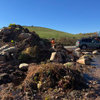
I just came back from a week in Cyprus - first real vacation in over 20 years! - and stayed at a hotel run organically and sustainably by a retired botany professor. So we chatted about compost, and he had the same eucs on his property that I have: E.camaldulensis. Those tall, fast-growing ones that were planted all over Cyprus and Israel and lots of other places by the British to drain swamps and avoid malaria. He was very clear that they were full of a strong allelopathic growth inhibitor. Verdict: NO to using the leaves or any other part in compost, mulch or anything else. Then I went online and found this:

"Abstract

In California the annual vegetation adjacent to naturalized stands of Eucalyptus camaldulensis often is inhibited severely. Annual herbs rarely survive to maturity where Eucalyptus litter accumulates. In the ecotone between the trees and herbs a "bare zone," lacking both litter and significant herbaceous vegetation, often is encountered. The occasional herb occurring in this zone is stunted less severely than those in the litter. Grassland of gradually increasing vigor begins at the edge of the bare zone. This pattern was not explained by differences in edaphic conditions, differential grazing, seed removal, or competition for light or nutrients. Competition for water was significant in the production of bare zones, but was not responsible for the lack of herbs in the litter zone. Here soil moisture levels were usually comparable to those in the grassland. Several volatile and water-soluble toxins were found in Eucalyptus tissues. Cineole and α-pinene, both highly toxic terpenes, were found adsorbed to colloidal soil particles of the litter and bare zones. Adsorbed terpenes were toxic to germinating seeds and seedlings. Water-soluble toxins found in the litter inhibited herb growth in laboratory, green-house, and field experiments. Of 10 isolated phenolic toxins, five were identified as caffeic acid, chlorogenic acid, p-coumaric acid, ferulic acid, and gallic acid. Eucalyptus fails to inhibit annual herbs on sand. Conditions for allelo-pathic interference were optimal on soils that were poorly drained, poorly aerated, shallow, and high in colloidal content. These factors permit toxin concentrations to reach physiologically significant proportions. Eucalyptus camaldulensis is representative of a wide variety of plants capable of establishing gradients of toxicity in an otherwise relatively uniform environment. Such gradients drastically alter the species composition and thus are highly important to the study of vegetation composition...."

So, campers, I won't be using all the euc leaves that rain on my little piece of land for anything but sweeping to the side and letting sit there forever. I will be trying to lasagne the area and build soil up so that soon it won't be completely a "bare zone" which it most certainly is now.

I'm sure other species of eucs may differ, but these are the ones I've got, and I'm going with the Prof.!!

Batya

Comments (12)

  • 16 years ago
    last modified: 11 years ago

    {{gwi:301809}}
    {{gwi:301810}}
    {{gwi:301811}}
    {{gwi:301812}}

    And it's not just a few select plants that can tolerate them. In fact, they're used extensively in landscapes in conjunction with a dizzying array of plants and I've never once come across a particular plant that refuses to grow under eucalyptus. I'm sure there are plants out there that won't but I have no idea what. They've also been used extensively and successfully as windbreaks in row crops for many years. The allelopathy of Eucalyptus (which is a real thing) isn't nearly the issue that many try to make it out to be. Some people just love to flip out over Eucalyptus though. I'm really not sure why that is.

  • 16 years ago
    last modified: 11 years ago

    Eucalyptus mulch is widely used in both California and Florida and is very much in demand in other areas where growth of eucs is less common. A high concentration of essential oils make it an excellent choice for insect deterrence as well as a resistance to rot (much like cedar). Studies have shown (Australian Journal of Botany) that the allelopathic effects of eucalyptus tend to be overstated and that most of any allelopathic characteristics of either the wood, bark or leaf litter have dissipated after a period of 3-5 months.

    Of course, composting will have a similar effect and with perhaps a significantly shorter time frame.

  • 16 years ago
    last modified: 11 years ago

    g'day batya,

    first up outside australia euc's should be almost considered and enviro' weed, as other zones don't have the natural controls we have.

    this allelopathic thing can be a bit of a wives tail, we have grown many things in gardens under gum trees including lawn and used the chipped wood and leaves on our gardens with no ill effect. yes in certain circumstances the gum will drop leaves laden with some sort of oil to prevent other trees from growing within their feeder root or drip zone.

    the conditions needed are drought or lower than average rainfall so they have no competitors for the available moisture, on our property rain averge between 660mm and 880mm had good natural grass and shrub type plants growing under gum trees. our best pasture grasses frew under gum tree.

    the type of gum trees shown in the pics should never be in suburban gardens they can be too dangerous for that, i have seen them in tv pictures as street trees in the US, not over here. they drop up to major limbs and fall over without warning and without any obvious reason why they should, don't need a storm they deliver all this out of the blue even in the calmest weather. my suggestion is it is not 'if' it is 'when'.

    len

    Here is a link that might be useful: lens garden page

  • 16 years ago
    last modified: 11 years ago

    batya ... you say that the inn where you vacationed had the same kind of eucs that you do, and that the botanist-owner avoided their use in compost/mulch.

    What has your experience been with that variety? Either personal use, or what you have observed in your area?

    The link below has some interesting data about eucs, among which is info about animals who depend on eucs either for habitat or food. If not counter to the 'toxic' argument, it certainly raises questions. I've noted before that the trimmings from my own Lemon and Silver Dollar eucs compost quite as competely as other garden trimmings. The composting 'critters' don't seem to be adversely affected.

    Back to the Cyprus inn-keeper ... do you know if his aversion to euc in his garden/compost was widely practiced in that area?

    When my own experience runs counter to 'conventional wisdom', I assume that some unidentified factors have to be different in each situation to give such contrary outcomes.

    BTW - I hope you will find use for the droppings from your eucs in your garden pathways.

    Here is a link that might be useful: Wikipedia - Eucalyptus

  • 16 years ago
    last modified: 11 years ago

    We are in a drought area most of the year. I know that different plants, etc. act differently according to the conditions in which they grow. Cyprus and Israel have very similar climates (though they actually have more water). I know what I see around me: large eucs have a dead zone around them, except where there is enough water like near rivers. I am not flipping out, rather I';m trying to understand my micro-climate and what works for others may not work for me. The innkeeper/botany prof. made it clear that his opinions were widely held in his area, especially for those who use compost/organic methods.
    There are lots of kinds of eucs. For instance the ones we have (I'm pretty sure) are used less for oil - used more are the round-leaved varieties. Whatever circumstances I have as mitigating factors, the fact is that around here, these particular eucs are a pain in the bootie for trying to garden around them. As for the allelopaths dissipating, that's why I figure just to pile the leaves separately somewhere and let them rot on their own, and see what happens. As for garden paths, I wish I had some! All is very haphazard as yet. After years of lurking, it's so nice to meet you all.
    Peace, Batya

  • 16 years ago
    last modified: 11 years ago

    As far as allelopathy goes, once an item is completely composted its not longer that item... technically one could compost any allelopathic plant as long as the compost process is thoroughly completed... no using partially finished compost, when dealing with allelopathy.

    Many trees have dead zones under them, not because of allelopathy but because of competition. Competition for light, moisture and nutrients. Certain tress once mature are winning the competition. Combined with the periodically self-mulching that deciduous trees do with their leaves in temperate climates, definitely gives them advantages.

  • 16 years ago
    last modified: 11 years ago

    OH NOES!!!!! WE'RE ALL GONNA DIE!!!!

    Cineole and α-pinene, both highly toxic terpenes, were found adsorbed to colloidal soil particles of the litter and bare zones. Adsorbed terpenes were toxic to germinating seeds and seedlings.

    Cineole (aka eucalyptol) is also found in bay leaves, tea tree, mugwort, sweet basil, wormwood, rosemary, sage and other aromatic plants.

    Alpha-pinene is found in rosemary and PINE TREES!

    Are you saying that we should not compost basil, pine needles, or sage?

    Water-soluble toxins found in the litter inhibited herb growth in laboratory, green-house, and field experiments. Of 10 isolated phenolic toxins, five were identified as caffeic acid, chlorogenic acid, p-coumaric acid, ferulic acid, and gallic acid.

    OMG CAFFEIC ACID and CHLOROGENIC ACID!!!! I tremble in fear, because they are also found in COFFEE. We're poisoning out compost heaps with those Starbucks UCGs.

    p-Coumaric acid can be found in a wide variety of edible plants such as peanuts, tomatoes, carrots, and garlic.

    Ferulic acid is found in seeds of plants such as in rice, wheat, and oats, as well as in coffee, apple, artichoke, peanut, orange and pineapple.

    Gallic acid is found in plants such as tea, mangos, raspberries, chocolate, witch hazel and walnuts.

    Note for the non-chemists: when you start analyzing plants, they are loaded with scary sounding CHEMICALS! Don't panic. They are all "natural".

  • 16 years ago
    last modified: 11 years ago

    the inn keeper professor may be held in high esteem in his community that does not make what he says as carte blanche correct at all times, his opinions will still contain his personal ideas.

    te worst i can say about euc's is the forest species are dangerous at garden or street trees, and when planted in oterh climes can become a weed california and madagascar come to mind, just like any native plant from anywhee else has wed potential over here. have seen where they have caused bush fires in california where they only have a 12' clearance from power lines, 12' is way too close should be around 60 meters, to begin to be a effective safety margin.

    in the bush they are handsome looking trees.

    len

  • 16 years ago
    last modified: 11 years ago

    Now, now, no need to get silly, I'm just saying what happens in MY garden, where nothing but nothing grows around them and I wondered what y'all think. I asked a question, got a nice conversation, thank you. I'll put in the lasagna, see what happens, rake all the eucs into a corner and keep on keeping on. I use GW in all its many forums as a learning space, a community gathering and somewhere I can get excited about stuff with like-minded folks. If I want to be ridiculed, I go to HT! Batya

  • 16 years ago
    last modified: 11 years ago

    I think a more likely avenue to explore, as far as nothing else growing around those trees, is shading and competition for resources like water, nutrients, rooting space, etc. These can be either primary causes for plant decline or stress factors that weaken the plants over all and then something else like compaction, pest problem, plant disease, etc.can push the understory plants over the edge.

  • 16 years ago
    last modified: 11 years ago

    In this forum any thread has a tendency to get silly and sarcastic. Don't take offense... just enjoy...

  • 16 years ago
    last modified: 11 years ago

    Oh I do, I do.........where else can I find compostomania? And you can't live where I do for long without getting a rather thick skin, anyhow. We have a small but growing composting community here that is gaining in visibility, catching on and all that, but it's here that I've been lurking for ages. Home is where is the compost is.....B