Software
Houzz Logo Print
kylejrandall

Urban Tree Nursery

14 years ago

Hello,

I live in a Northern Kentucky city (Zone 6b) with a population of about 15,000. The area is mostly urban. About half of the city (East side) has a large number of mature trees. The other half (West side) is nothing but concrete and asphalt.

Like many municipalities, we aren't in the best financial situation. Planting new trees on the West side or replacing old trees on the East side has become cost prohibitive. Trees must have have a minimum 2" diameter (3" recommended) to be planted in the space between the sidewalk and street. The price averages around $200 for quality trees. The cost of purchasing enough trees for an average block (30 trees) is therefore around $6000, not to mention installation. Strictly speaking of price tags though, I wonder if we can't do better...

I was thinking it might be advantageous for the City to operate a small tree nursery rather than purchase trees elsewhere. There are suitable locations within the city. There are a couple of locations that are owned by the Kentucky Transportation Cabinet that we could use without tying up money in land acquisition.

I have many questions about pursuing the idea further:

-How many years (on average) does it take for a tree to reach 2-3 inches in diameter?

-In a nursery setting, what amount of trees are deemed "no good" on account of natural problems like double leaders, bug infestation, disease, etc?

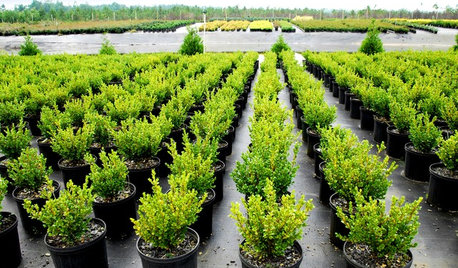
-Would it be better to grow the trees in containers or fields?

-Does anybody know of other municipalities that have taken on a similar project? How did it work out?

Is this a worthwhile idea to pursue? Would you expect real savings?

Any tips/thoughts?

Thank you!

Comments (7)

  • 14 years ago

    The speed of growth depends on the species of tree, growing conditions and soils. In good conditions, 3-5 years for most trees to get to 2".
    The skill and knowledge of your grower determine the percentage of culls. Many poorly shaped starter trees can be shaped and pruned as they grow from whips (small liners or starter trees) to good form if the grower knows what he or she is doing.
    You will probably get arguments about in ground or container growing, but I would vote for in ground if the soils are good. But, you have to have knowledgeable diggers with good digging equipment.
    Good luck!
    hortster

  • 14 years ago

    Why is a 3" caliper size recommended? As far as I've seen in articles on urban planting, the recommendation is the smaller, the better, as a smaller percentage of the root mass is lost upon being dug up.
    In any event, there are a couple of towns around here that have had their own nurseries, and AFAIK, they're all closed - you have a reduced cost of trees and increased cost of Public Works employees, water, equipment, fertilizer/pesticides, etc., etc.Since Public Works-type stuff is the first to get cut when times are tight,the nurseries ended up abandoned, for all practical purposes.

  • 14 years ago

    About how wide does the space between sidewalk & street tend to be? I've read criticism before of planting trees with a very large mature size in plots where the surface area for the root zone won't support the mature tree.

    And I agree - it's far more practical to plant a small tree where you're going to want it, then to grow it somewhere else & then move it. When you move it you cause a great deal of root mass loss, delaying growth considerably. A container grown plant will be prone to be root bound, and a bag & burlap plant will lose a LOT of root mass when you transplant.

    If anybody argues with you, point out that by the time they get money & clearance for 2" trees years down the road, smaller trees planted this Fall will have reached that size anyway, far more cheaply.

    If the issue is a city ordinance, change it.

    Richard.

  • 14 years ago

    In my area (Portland, OR) we have Friends of Trees. It's a volunteer organization that has large tree planting events where homeowners buy discounted trees and then, with their neighbors, plant the neighborhood trees. They buy 1 to 2 inch caliper trees to plant from wholesales. There are a lot of wholesalers in the area. Because they're a charity, they get donations. That may be a better way to go than having the city take on another responsibility.

  • 14 years ago

    Let's see....quality nursery stock, soil testing /prep, irrigation system, fertilizers, pest management, pruning and training of young trees, containers (different sizes for moving up), quality nursery mix, utilities and labor. If you cut the caliper requirements down to something based on actual 'best results ', you could save the city a bundle. The large dimensions listed in recent specifications are driven by the nursery industry not by actual scientific and experiencial results.

    Younger tree perform much better, adapt more quickly, and are able to outgrow their larger counterparts in a very short time. Bigger ain't better when it comes to tree plantings.

  • 14 years ago

    as i recall.. there are a number of abandoned sites like this in metro detroit ...

    the labor costs went thru the roof in the 50's or 60's... surprise.. surprise ...

    the size requirement sounds like a bunch of bureaucratic nonsense ... instant gratification.. for the 'hood' rather than what is easy and good for the tree.. size-wise .. and then sit around and wonder why they mostly fail due to lack of proper followup care ...

    ken

  • 14 years ago

    In case you haven't found it yet,here's a link to a Kentucky Department of Forestry program dealing with Urban Forests. Kentucky also has a state tree nursery and a program for replanting that may bear a closer look.

    Here is a link that might be useful: Kentucky Dept of Forestry