Software
Houzz Logo Print
therockstar

Coniferous Trees for Privacy

13 years ago

Hi All,

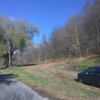
New to the forum... Love our home, but unfortunately it has a major con... the large backyard is is about 50ft downslope from the highway. It's a beautiful home whos only downfall is the humming of cars, and the non picturesque view looking out our back porch in the wintertime.

Can anyone help with a fast growing conifer to line the property? Both to shield the view of the highway and to block out some of the noise? In Fairfield, CT... considered zone 7a.

Comments (9)

  • 13 years ago

    These are not conifers, but I would consider a combination of Southern Magnolia and American hollies. They are broadleaf evergreens whose beautiful leaves will look great in the Winter + red berries on the hollies. They will grow densely over time and serve as a sound barrier -- perhaps even better than a conifer.

    I've seen so many people plant white pines around here. They grow very fast, but then eventually lose their lower branches and then you have a double problem -- loss of the screen/shield AND it's hard to grow anything under them to recreate the screen.

    Hollies and mags will remain leafed and branched to the ground.

    Edit: Just was thinking that Ilex x 'Nellie Stevens' would be a better choice than American hollies and they're easy to find and grow quite quickly if watered.

    This post was edited by dave_in_nova on Sun, Jul 28, 13 at 19:11

  • 13 years ago

    If conifers, choose Picea abies. They will stay a solid screen all the way to the ground. Here's a photo of the best-planted screen I've ever seen ( I took the photo as well).

    Picea pungens in front (avoid)
    Picea abies behind
    Of course fence posts are every 8'. These Picea abies were planted equally at 16' apart. You could plant closer but not less than 12' apart. Sixteen is great.
    {{gwi:389487}}

    You could do a double row if you'd like. That would be a great idea. 16' apart and then in front of that stagger so they're 16' apart in-between, or even make it look more natural and do the front row (toward you) a tree 12, then the next 16, then the next 13, then the next 14, then 15 or however..... do three rows if you want... you can always cut down the ones that overcrowd the plantings before they become too large right at ground level.

    Dax

  • 13 years ago

    Just an FYI - plants provide virtually no noise abatement for situations like this. Even a relatively thick screen - 15-20' - is not going to absorb much sound. To absorb road noise you need something solid - a soil berm, concrete wall, even a sturdy fence with close-spaced boards. Or a white noise source like trickling or falling water can deflect or mask the sound. Sound waves travel right through plants :-)

  • 13 years ago

    And I like the idea of more than one species. That way when the whooly emerald (insert name of your plant) comes along your whole screen does not die at once.

  • 13 years ago

    cryptomeria

  • 13 years ago

    The more number of species you plant, the better you will like the result. If you plant a whole line of one species and something happens to one of them after 10 years, you will have a hole in the line that will stick out. If you plant hollies, magnolias, spruce, fir and cryptomeria, taking one out will hardly be noticed.

    And I agree, even if you planted the whole yard in conifers, the noise deadening will hardly be noticed. To see how this works, visit a wooded public space and take notice of the sound. Sorry, wish it weren't so too.

  • 13 years ago

    Dax:

    "Picea pungens in front (avoid) "

    Out of curiosity, why? I'm just asking, not challenging your point. This is a common species (Colorado Spruce), both in 'regular' form, 'dwarf cultivars (e.g.: Baby Blue Eyes) and 'shrubby' versions (e.g.: 'glauca globosa'), so if it's seen as troublesome, I'd like to know why.

    I've got a Baby Blue Eyes & a glauca globosa version in the back yard; only big problem I've seen is on the latter this summer, I've discovered bagworms can infest them. I knew bagworms were bad on arborvitae, but this is new to me.

    Is your concern a general indictment of the species, or for the region proposed, or for use as a multi-specimen privacy barrier?

    I seem to recall they like it cooler, so maybe zone 7a is just plain too hot for them to look good?

    Richard.

  • 13 years ago

    Humidity and more rain than Picea pungens is able to tolerate long-term, Richard. I'm an advocate of long-term & that's it. Picea pungens would do great for however many # of years but then when the next person moves in, or when these folks have been there 30 years and the trees are developing needle blights and cankers and then insect problems from the fungal decline as the trees become weaker and weaker making them susceptible to insects, then this long-term project that started really not that long ago, was fruitless. People around here don't understand it either. Picea abies will live for hundreds of years at least 2-3 times of that of Picea pungens and will not succumb to disease or insect. It makes a wonderful 1-species screen if a person isn't going to "mix it up."

    Dax

  • 13 years ago

    Thanks; good to know!

    Richard.

Sponsored
Hope Restoration & General Contracting
Average rating: 4.7 out of 5 stars35 Reviews
Columbus Design-Build, Kitchen & Bath Remodeling, Historic Renovations