Software
Houzz Logo Print
grinder12000

Stake or no stake

19 years ago

We planted a Don Wyman Flowering Crab in our yard. It came in a huge pot (not B&B and not bare root).

We staked it.

Then I read - Do not stake potted trees. Does that mean DO NOT or does it mean NO NEED TOO!

It's about 10 feet tall and is not going to tip over even though we're in a windy area.

Stake? no stake?

Comments (8)

  • 19 years ago

    There are times when I stake and other times when I do not.

    It really depends on how much the wind gusts in your area, if the tree is or is not sheltered from any of the gusting winds, if strong storm fronts race through your area more often than only at freak event times, and if the tree is or is not a fast grower with a very thick canopy, which will catch more of the wind than letting it blow through.

    When I find that I do need to stake I most often use a method of metal "T" stakes pounded into the ground about one or two feet away from the rootball, and non-damaging ties which have enough slack in them, once I have used them to tie the trees to the stakes.

    My system of staking most of my trees still allows the trees to move and sway with the wind, but the ties are monitored and kept just taught enough to prevent strong windgusts from breaking the newly forming roots, and depriving the tree of its normal moisture take-up. My system also prevents strong storms from up rooting the tree before its roots have become established enough to ensure that from happening when it is not staked.

    The only situations that I have used the one stake tied along a newly planted tree's trunk is when I have freshly repotted a fairly tall and still skinny trunked tree. Then there are also times when the main leader trunk of tree has been allowed to harden off, at the nursery, in a growth pattern which is significantly growing to the side. If the trunk is still flexible enough to be tied to a straight stake, I will do that just long enough until the tree's trunk grows and expands just enough for it to remain growing straight up once I take the stake off. Even then there are still times when I do not stake those leaning main leader trunks.

    The trees I do not stake are any young tree where its leaning main leader trunk appears to be able to straighten it itself as long as I plant it with the bend in the trunk toward the north. By planting those trees that way they, by themselvs adjust and pull their trunks back up as they seek more light from their southern exposure.

    One other guideline I use, in choosing to stake or not, depends on the relationship of the size of the rootball to the height of the main leader and density of the canopy. I have found that usually slow growing trees that are under ten feet tall and that have ten gallon potted size rootballs generally do not need to be staked. Sometimes 7 gallon potted size rootballs are also stable enough, but for any rootball smaller than that, and is a tree that is 8' or taller usually needs to be staked.

    On the other hand even 6 feet tall, fast growing trees like riverbirch trees always seem to suffer, in my climate, if they are not staked. Those fast growing, shallow rooted trees even seem to do best if, when it comes time to remove the stakes, I remove the stakes gradually and let them adjust in stages to not being staked.

  • 19 years ago

    Interesting thanks - this brings up a question about River birchs.

    We're planning on putting in three clumps. So it looks like we will stake. Do you stake EVERY trunk? The largest trunk?

    Here is a link that might be useful: Rod & DJs House Building Adventure

  • 19 years ago

    Very nice. Yes, the river birch should be staked with the metal "T" stake system that I described above.

    Install enough stakes so each trunk of your clump can be tied to two opposite positioned stakes.

    Keep the tree staked for three years, except that in the third year you will need to begin removing the stakes and ties over a three stage period in the growing season of the third year. Just be sure to keep two of the stakes for the following stormy spring time, and remove those final two in stages by the time your less windy seasons begin that last year.

    One other thing to consider, is to be certain to plant your river birch tree far enough from your house so its wide spreading, shallow growing roots should not damage your patio or walkways or foundations. Many people will advise that trees do not damage well installed, and undamaged foundations, but others have sited the birch and similar trees' roots creating challanges for their foundations. I am sure it depends on what situations that reported damage occured in, but for good measure I would still take care not to plant the river birch tree closer than 30-40 feet away from the house.

    If you want shade, it might be best to plan a fast growing fairly tall ornamental tree that can take full sun and has a dappled shade canopy. Then for enduring shade plant a slow or medium growing red oak cultivar a little farther away that is a deep rooted, hard wood tree which also casts dappled shade. That way when the shorter growing ornamental tree needs to be removed, the hard wood shade tree should have grown to a nice size by then.

    Maple trees should be planted from 50 to 60 feet away so their roots do not invade your foundation landscape beds so badly.

    In the areas where the down spouts wash away the seed install over the seeds, seed-starter blankets that are secured to the ground with plastic pins.

    Over the seeds which wash away due to the sloping grade of your yard, cover the seeded area with at least a two inch deep layer of shredded bark mulch

  • 19 years ago

    katrina1 - you say

    "If you want shade, it might be best to plan a fast growing fairly tall ornamental tree that can take full sun and has a dappled shade canopy."

    We were going with a some river birch for 2 reasons.

    For the dappling shade and to screen the very snoopy neighbors. But we did not want DARK shade like from a maple.

    any other suggestions for a "fairly tall ornamental tree"?? It'll get full sun in Wisconsin. Clay soil, good drainage.

    The maple will be way away from the house.

  • 19 years ago

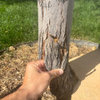
    Is that a neighbors birch clump in the photo? The mulch is piled against the trunk. Not good.

  • 19 years ago

    HA - no - just a photo I grab from the Net - good catch. The tree we planted last weekend (Don Wyman Crabapple)I have the mulch in like a donut, not against the truck.

    You can see a photo in todays blog near the bottom, just skip past all the top part of the blog.

    I JUST read that it's not good to plant a River Birch in the fall???? And I did not know they get as wide as maples - we might have to rethink three clumps!

    Here is a link that might be useful: The blog with the tree photos

  • 19 years ago

    If not a river birch, what about a Cornus kousa dogwood, which grows well in fairly good draining, moist soil. They are reported to grow fine in zone 5, and with minimal pruning, they can provide a nice dappled shade with several seasons of interest. In zone 5 they also can take full sun to part sun or dappled shade. A mature scarlet oak that could eventually canopy over the this ornamental tree will also cast a nice dappled shade just under the northeast side of its canopy. Also if the oaks canopy is raised about 6 feet above the ground, the southern and western sides under that oak's canopy will provide plenty of sun with part shade other times in the day.

  • 19 years ago

    You could instead, still plant a single trunked River birch tree instead of the clump. In that case you would only need to pound two 6.5 foot tall "T" stakes into the ground, about 2 feet from the rootball, for securing the tree with non-damaging ties.