Software
Houzz Logo Print
melissa_thefarm

The Shade Garden

16 years ago

A week ago I went down into the Shade Garden for some reason I don't remember, and was shocked by what I saw: weeds thigh-high filling the entire garden, which was on the verge of turning into brush on the way to its conversion to woodland. Obviously I needed to act, so I set aside all other garden tasks and began to weed, and that's what I've been doing ever since. Fortunately mostly these are annual weeds, easy to pull. The Shade Garden is irregularly maintained in any case, and it's shady, so the grass isn't much anyway; and then we had the flooding of the last two winters that brought down inches of manure and soil from our neighbors' cattle enclosure above, along with seeds of every weed known to man. So I've been pulling and hauling, pulling and hauling.

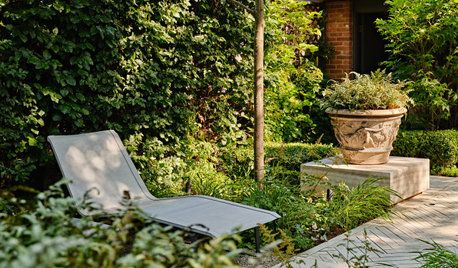
The garden that's emerging from this chaos is a pleasant place. The yew hedge is getting handsomer and handsomer, much of it up to its to-be-final height of about six and a half feet (as high as I can reach with shears without standing on a ladder). The outer hedge of the middle section is growing nicely as well: a happy mixture of pyracantha, box, ligustrum, with a sizeable hazelnut at one end. These plants were six inches tall when we planted them. There are two roses in the hedge and they're both doing well: 'Alberic Barbier' and 'Goldfinch'. I nearly lost 'Goldfinch' a few years ago, but it recovered and now it looks like it's ready to being growing in earnest. These aren't two roses I'd plant together for effect, as they don't do anyting for each other; but there they are.

Most of the roses look good. 'Dupontii' is a noble sight, a fountain of a rose with gray-green foliage and hips turning soft apricot-pink. The double white Lady Banks is enormous and thriving, as is 'Treasure Trove', which continues its climb up the black locust, twenty feet tall (the rose) and increasing. Practically nothing is in bloom now. That's all right. I like the Shade Garden in fall, with its rough grass and chicory and dead leaves under the trees, glossy foliage of the evergreen and occasional color from autumn foliage and the developing rose hips. It has nice woodland vistas.

There's a dank spot below the yew hedge that I've been wondering what to do with. Moss likes to grow there, grass doesn't. I may have found a solution. While I was weeding it out I found a single campanula growing there: this is a plant I see when we go on walks higher up in the mountains or on north-facing hills, in moist shady areas. Well. It's time to go out with a bucket and a shovel and dig up a few plants from ditches. The campanula if I can find one (I pulled up this one by accident, I leave my language on the occasion to your imaginations), a pleasant fall-blooming yellow-flowered sage, and polemonium.

We've also been pulling out things that don't work and trying new ideas. Clematis don't like the Shade Garden, considerably to my surprise. We dug up one miserable plant that evidently had put all its energy into its roots, which were enormous. I don't understand this, but anyway the clematis will be planted elsewhere, and I hope it will be happier. They seem to prefer the full sun of the big garden, drought and heavy clay and all. This clematis has been replaced by an arborvitae, which I suspect will soon outgrow its spot.

Melissa

Comments (9)

  • 16 years ago
    last modified: 11 years ago

    With clematis it really depends on a breed and kind, some actually need full sun and some will grow about anywhere. Also usually clematis like shaded roots, but not that a lot of shade for the top of the vines, where it blooms.

  • 16 years ago
    last modified: 11 years ago

    Perhaps these are full sun plants. The Shade Garden isn't in full shade. It has plenty of roses, and most of them are doing fine.

  • 16 years ago
    last modified: 11 years ago

    Sounds lovely....would love to see a picture to go with the one in my mind...

    Ronda

  • 16 years ago
    last modified: 11 years ago

    Melissa - sounds lovely. For the dank spot below the hedge, if you have more space, have you considered iris foetida? It is a very old iris that loves damp soil (it is also OK with dryer soil), and will grow happily (sometimes too happily) in sun or deep shade. It loves our Mediterranean climate here. If in dry soil, it grows with no additional water in the summer. It is also cold hardy. The iris flowers in the Spring are small and a subtle yellow/green. However, in the Fall it makes huge seed pods which open like flowers. The bright orange seeds stay connected to the pods when open, so for months they give winter color. Makes large clumps. Just a thought -

    Jackie

  • 16 years ago
    last modified: 11 years ago

    That was both lovely and interesting, Melissa. I always enjoy reading about your garden.

    Laura

  • 16 years ago
    last modified: 11 years ago

    hi Melissa.
    Shade, ha. For years, my tiny garden was permanently cowering in the lee of a massive mature chestnut. 2m high brick walls ensured that no sun found its way into the garden apart from 2 hours at noon. But, the same walls did provide structure for the climbing roses I planted all round the edges. Unfortunately, having teenagers and numerous pets, I had little money and inclination to investigate the many woodland plants I might have considered. My knowledge really was limited to hostas, a plant I dislike intensely since one hailstorm or snail infestation results in scarred and holey leaves for the entire rest of the season - not a pretty sight. The cheap and cheerful annual daisies were hopeless, so sighing despairingly, I planted a few tough shrubs and had done with. I thought I would reclaim the pavement outside the house instead - a ruse which worked so well I now have 96 pots, taking up a 4mx6m swathe of hard-standing. Even so, as my gardening knowledge grew, so did my love of foliage and the shady area began to flourish with primroses, epimediums, kirengoshoma, hardy geraniums, anemones, erythroniums, many, many bulbs, heucheras and tiarella, ramondas, haberleas and ferns. However, a few years ago, phytopthera struck the chestnut and it was felled, causing a surprising amount of sorrow but letting an extra 4 hours of sun into the garden. Oh dear - my woodland treasures were in danger of frizzling. The roses, which had previously been pruned within an inch of their lives were now encouraged to arch overhead. A beautiful tetrapanax provided a parasol of green shade and fortunately, the lush and verdant (if chaotic and crowded) jungle remains but I guess we should be careful what we wish for since all things go in cycles and everything will pass. Oh yeah, I also leased an allotment - an enormous space in FULL relentless sun - how lucky am I now I can finally indulge myself with osteospermums, ursinias, daylilies, flax, helianthemums.....the list goes on....and on but weeds! I didn't know the meaning of the word till I took on the allotment. Hours and hours are spent on my knees with a daisy grubber. Somewhere, I read that a true gardener does not have green fingers but brown knees - how true.

  • 16 years ago
    last modified: 11 years ago

    Suzy,
    It also came to me in a flash that I just MIGHT be able to have Japanese anemones at last. I like them a lot and have never been able to get them to grow. Would they do well in the kinds of conditions that foxgloves like, by any chance? My foxgloves (D. purpurea) seeded, much to my delight. However, we've also had two wet winters, the last one quite cold by local standards. Possibly if (when) warmer drier conditions return the foxgloves will disappear. This dank ground is very compact, by the way, and goes through dry seasons, as does all the garden.
    Melissa
    P.S. If I can ever get the weeds tamed I'm going to try some of the things you listed. We have native erythroniums, anemones, and hepaticas, and lovely they are, but I don't think I have (yet) any garden area quite ready for them...no woodland with a deep loose litter of organic matter. Some wooded bits are getting there: when the grass has trouble growing in these spots I'll try some native bulbs.

  • 16 years ago
    last modified: 11 years ago

    Japanese anemones grow well in all sorts of clay - a lot of local village gardens have them here. I have a couple of spare volunteers which need a new home. :P

    My biggest embarrassment regarding shade plants was that I did not know that astilbe actually are half shade-shade plants and I was attempting to grow them in full sun - until my DH googled the cause of their misery... Oh dear I won't hear the end of this lol, 5 years back I almost threw out baby hibiscus, which I thought to be dead and he spotted the leaves... he still is very proud about HIS saved hibiscus.

  • 16 years ago
    last modified: 11 years ago

    Jackie,
    Sorry, I forgot to answer your message! I have Iris foetida, clumps here and there. You're right about its virtues, and Heaven knows it's tough enough to grow almost anywhere, but in this dark spot something light and luminous--if I could have it--would be the best thing. I will continue to dream about anemones, until I'm disabused.
    Melissa