Software
Houzz Logo Print
hzdeleted_8959062

new bulbs...again

16 years ago

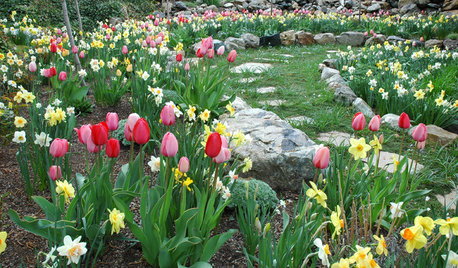
i know I swore that, having spent all my money on roses, i would not be having bulbs but ah, the flesh is so weak. I grovelled to my usual bulb supplier and uncancelled my cancelled order - they arrived today. I thought I might share some of them with various customers and save some money but....it is hard to go without when they are just a picture on a screen so when they do arrive, all fat, shiny and plump with life, such promises disappear on the wind. Like an omen, the sun is shining after a week of rain so the ground will be soft, moist and willing to accept another few hundred tulips, fragrant jonquilla narcissi and stately alliums. Along with bare-root roses, this is an exercise in deferred pleasure which carries me through January gloom.

Comments (46)

  • 16 years ago
    last modified: 11 years ago

    bulbs are one of the cyclical seasonal expenses in my garden along with bare-root fruits, perennials and roses in autumn and seeds, summer bulbs and new plants in spring. Bulbs have always been a sure fire success, the gardeners friend, so am wondering who else buys bulbs with annual regularity and is it a major expense every year. What bulbs do you buy? Any addictions (mine is species tulips and rare alliums).

  • 16 years ago
    last modified: 11 years ago

    We have a hill that we are planting to daffodils. We plant another 50 each year. I always buy a few bulbs. What we really love are lilies. We buy them at the flower and garden show. We mainly buy the big fragrant orientals. July is magical with lilies here.

  • 16 years ago
    last modified: 11 years ago

    I have the common ones: tulips, daffodils, grape hyacinth and crocus. I don't order every year because they are perennial for me. I love, love, love spring bulbs but I'm afraid I have no room for more.

    Do you have beds devoted just to bulbs or do you plant them among your roses and other herbaceous plants? I love the look of a solid mass of the same variety of bulb. It's definitely a sight for sore eyes in the spring.

  • 16 years ago
    last modified: 11 years ago

    Yesterday I planted most of the bulbs I've ordered (one order still has not arrived). I'm hoping I purchased mostly bulbs that will be perennial here.

    I have a new area just for bulbs - hoping they are not dug up by critters, and that they bloom in sequence as planned. I also planted bulbs in and around the roses. Wish I would have bought more lilies as they are gorgeous in pictures. Maybe I should place another order! lol I'm already looking forward to spring!

  • 16 years ago
    last modified: 11 years ago

    I plant bulbs like tulips and narcissi deep, at least 30cm, then often plant perennials, vegetables and annuals on top of them. I can get lots more in the ground if they are layered and the perennials do not seem to be bothered, even when the bulbs come up right next to the crowns. A lot of tulips will go in when I lift the dahlias - I also plant wallflowers and other such biennials. The downside is that there is always a lot of digging going on but, as I am a great mover/changer and meddler, I like the fact that once the bulbs are in, they stay forever. Not all tulips are reliable naturalisers but Darwin, greigii, kaufmannii and some single earlies, as well as most of the species types will come back every year. If planted deep enough, they resist the constant splitting in half, instead forming much smaller daughter bulbs which may eventually reach flowering size. I sometimes plant them in pots for the first year then feed them up until the leaves die back and replant deeply in the borders. My long-handled bulb planter has become one of my most essential tools (I use it for potatoes too).
    Oh yes, Lilies. Lily beetle has more or less done for any attempts at growing fritillarias (another expensive obsession i am saved from) but i am still willing to do the thrice daily patrol to murder the nasty little poo-covered pests and the lilies themselves are proving to be a lot more robust than frits which simply turn up their toes after just a couple of weeks of beetle munching, never to be seen again. Lilies do much better in pots for me - some of my potted bulbs are well over 10 years old. I may have to desert to bulb forum (I am assuming there is one?)

  • 16 years ago
    last modified: 11 years ago

    I have been very cautious with my bulb order this year.
    Apart from a pot of Stargazer lilies and a bowl of hyacinths, I have had no bulbs at all yet.
    I have found that, even plants that should do well here, don't always. So I have only planted, Narcissus Bridal Crown, Minnow, Yellow Cheerfulness and Geranium.
    Some more blue Hyacinths and my favourite tulip, Tulip cluisiana.
    I had to have a few alliums, so I have planted Allium sphaerocephalon and christophii.
    In theory, all of these should do well.
    I had a lot of trouble finding a supplier. The local shops, have an extremely limited range, and the cost of postage from the U.K. was too much.
    These bulbs came from Holland, but there still wasn't an awful lot of choice.
    Still, I am looking forward to seeing these in the spring, and I will still have a lot of room for more next year.
    Daisy

  • 16 years ago
    last modified: 11 years ago

    I saw those horrible lily beetles in England. We don't have them here.

  • 16 years ago
    last modified: 11 years ago

    oh yes, the lovely lady tulips - I love T.clusiana and have it in several colours - in the sun, it opens totally wide and flat like helicopter propellors. Daisy, have you tried any of the Batalini clan - lovely glaucous leaves as well as relatively long lasting blooms. I am a sucker for the species tulips and would commit terrible crimes to have a bed of T.sprengeri. Ingrid, would some of these wild tulips do well for you? - they absolutely love a viciously dry summer baking in rocky soil and are reliably perennial.

  • 16 years ago
    last modified: 11 years ago

    I just planted 60 tulip bulbs in the front of my house. They are triumph tulips, 'Menton', and only one or two will come back next year. Not enough winter chill. What do come back for me are species tulips, T. bakeri 'Lilac Wonder'. I meant to buy more from Scheepers but waited too long this year and they sold out.

    I have some daffodils on order from Old House Gardens, my favorite bulb vendor. I buy lilies from them, too. I like heirloom plants of all sorts -- bulbs, fruit trees, vegetables, and of course, roses. Daffodils have the advantage of not needing to be protected from gophers. In this area, that is a huge advantage!

    Rosefolly

  • 16 years ago
    last modified: 11 years ago

    I love putting in bulbs every year - they bring the garden to life long before the roses are ready to perform, and after a long cold winter, I'm desperate for them! I put in about 400 tulips, daffodils, allium and hyacinths this fall, and added an additional 200 in pots which I covered with piles of autumn leaves in my compost pile. They always over-winter beautifully and I can place them on the front porch, deck or driveway for color. I'm donating this year's batch of potted bulbs to our newly-formed botanic garden- we'll place them in front of the visitor center in April. I like to use the Darwin Hybrid tulips because they last for a number of years, especially when I bury them deeply. So many tulips are only good for a couple of years - not counting the species tulips. I often plant annuals in my pots of bulbs, and remove the tulip or daffodil foliage after it turns yellow. Come fall, I pull out the annuals and tuck the pots back in the compost pile. I use plastic pots so they won't crack in the cold.

  • 16 years ago
    last modified: 11 years ago

    My youngest and I plant bulbs every fall. I'm not sure he remembers planting them but, I remind him all the time that he was the one who planted those beautiful tulips. This year he's old enough that he should remember planting them. My middle daughter also helped plant alliums this year. She was slightly less enthusiastic because her neighbor friend was hollering for her to come play. Sadly, my eldest daugher is of an age where all she wants to do when outdoors is bake in the sun. I figure she'll come to her senses in about 6 or 7 years (hopefully).
    Sorry to ramble on and on about my children. They weren't the topic were they?

    Even though we add a few bulbs here and there each fall, I'm not obsessed. I don't know why. Every Spring I wish I would have planted more. I've had the best luck with tulips and alliums. I've managed somehow to kill my daffodils and, my crocus come up every year but never flower. Now that you've got me thinking about bulbs, I think there are still some available (probably on clearance) and I haven't tried hyacinths yet.
    Thanks for the motivation,
    Kitty

  • 16 years ago
    last modified: 11 years ago

    I also have a soft spot for the species tulips. I grew Tulipa batalini Bright Gem in Cornwall, but unfortunately, most of the tulips from central Asia, need colder winters than I can supply here.
    However, all of the cluisiana tulips should be fine, as should Tulipa echleri, Tulipa bakeri, Tulipa cretica and another favourite of mine, Tulipa sylvestris.
    If you haven't tried Tulipa sylvestris, put it on your bulb order next year. It has such grace, elegance and character.
    It clumped up in Cornwall, in a very sunny, well drained position. I am hoping that it will do the same here.
    Daisy

  • 16 years ago
    last modified: 11 years ago

    ramble away, Kitty - gardening with children is one of the most brilliant things to do with children and has relevance at many levels. As well as creating the gardeners of the future, you are safeguarding a disappearing skills base and enabling your children to use their heads and hands in a satisfying and productive combination. You are showing them reverence for life and nature: if, as teenagers, they drift away for a while, they still return to that sense of creativity and hopefulness they experienced watching their own sunflowers, runner beans, nasturtiums and alliums, spark with green life under their little hands - these moments never leave them so you build a foundation of great strength and vigour. Yes, get some more bulbs - try growing hyacinths in a clear jar or vase, with water just touching the base and the body of the bulb out of the water, held in place by the neck of the jar - many many roots will grow and fill the water chamber - lovely for children to be able to see that growth for themselves.

  • 16 years ago
    last modified: 11 years ago

    hm, I never had problems with fritillarias being munched, but then again I do not grow imperial ones. Fritillaria camschatcensis, Fritillaria orientalis, Fritillaria pallidiflora and Fritillaria meleagris are all clean for me, although they do not like my clay, so I grow limited amount of them. :( Still want Fritillaria persica. My most favorite bulb is Chionodoxa I think, although here I have only 4 kinds I think. Then there is the usual, crocus, colchicum, tulips, daffodils, muscari, snowdrops, anemones, etc.

    This year I think I got only 2 new packs of tulips - really need to plant main structure of the flower beds before adding bulbs.

  • 16 years ago
    last modified: 11 years ago

    I LOVE the spring bulbs----In years past I planted some every fall and they have rewarded me year after year--
    even the crocus have spread all over the front yard---

    My digging days are over but I have plenty to enjoy in the spring-----

    A few years ago I planted some Perennial tulips in a window box and they are still coming up every year.
    {{gwi:321090}}


    {{gwi:203464}}

    Florence

  • 16 years ago
    last modified: 11 years ago

    I always plant bulbs. Tulips tend to behave moer like annuals, but I planted them much deeper last year and I hope for more rebloom. I ordered daffodils,tulips, dutch iris, alliums, lilies, as usual. I didn't order hyacinths since they were still doing beautifully last year. I loce the bulbs and I have a few more hours of planting in front of me. Thirty centimeters....hmmm? Well I tried ten inches last year, which means I'm still a couple of inches shy. I'll keep that in mind and see what happens.

    And yes, I too love bulbs and cannot resist them.
    kay

  • 16 years ago
    last modified: 11 years ago

    I try to buy new daffodils each year I stay I must stay away from heirloom tulips I want so many of them and they can get quite expensive. Last year I had one of my favorite daffodils
    I hope they come back with the ones I purchased this year. Bridal Crown introduced in 1958. NY Botanical Gardens had 50% discount on daffodils.
    I have one new rose comming this spring but it's a rare gem Canary Island.

  • 16 years ago
    last modified: 11 years ago

    Today I found some T. bakeri at the best of our local nurseries. They cost more than they do at Scheeper's so I just bought a few, but I was happy to get them. Those of us in warm winter climates can grow these and they will actually naturalize slowly.

  • 16 years ago
    last modified: 11 years ago

    The front garden is my spring garden with masses of native fritillaries, Gagea lutea, yellow star-of-bethlehem, and blue Siberian squills in the lawn. I've planted islands of crocuses among them and a few botanical tulips but they live precariously because of the deer. I've put tulips like Queen of Night and White Triumphator among my thorniest roses. Deer prefer tulips before all other flowers. This autumn I've only planted poet's narcissi among peonies in a new bed. I will not plant more of the smaller bulbs in grass because I've to wait till July to mow the grass.

  • 16 years ago
    last modified: 11 years ago

    I adore spring bulbs but unfortunately so do the wild boars, which limits me pretty much to the poisonous narcissus. Bulbs naturalize splendidly here too. We're plagued by the odious lily beetle as well; I don't mind so much for lilies--this isn't really their kind of habitat--but the beetles do a job on the imperial fritillarias, and pretty much discourage experimentation with them. I do buy the smaller bulbs, chionodoxas, squills, muscari and so forth, and spread them in small clumps hoping they'll escape the notice of the wild boars and various rodents. They also assort well in my rather wild looking garden. Tulips are the first to get eaten. I had beds for tulips close to the house and protected from rodents by underground metal sheeting, but they got virus a few years ago. and while they've put a stop to my getting more tulips for the beds, the virused flowers are so beautiful I haven't been able to bring myself to dig them all up and throw them in the trash.
    Melissa

  • 16 years ago
    last modified: 11 years ago

    Allium sphaerocephalon have grown to four inches high, just ten days after planting them!!!!!!!!!!

    Lovely photographs Florence.
    Daisy

  • 16 years ago
    last modified: 11 years ago

    after a miserable week, I got down the allotment today - amazingly, there is still lots to eat (if you are not that fussy and like brassicas) lettuces, radicchio (although I never really know what to do with this) kale (only takes an hour of vicious boiling to make it edible) red cabbages, parsley, spring onions (got 50 or so garlic in today)leeks, beetroot, carrots and parsnips. At any rate, I planted more T.clusiana around the moved R.primula, lots of purple and orange lily flowered tulips next to a glorious salvia involucrata, and many little T.Praestans, T.linifolia and T. Scarlet Baby underneath the wallflowers (which I leave in to perennialise, lazy!). Amazingly, I got enough autumn raspberries to get the jam pan out. Altogether, a hugely satisfying session (although there is weeks and weeks of work still to be done - the asparagus bed looks shocking and there are more beds to be cleared for the bare root roses (the white bed). Roses to be planted at allotment: Duc de Guiche, Cardinal Hume, Nastarana, R.Helenae, Leontine gervaise, Clair/Liliana Rennaissance, Summer Song, Mrs Oakley Fisher, Sweet Pretty,Alissar Princess of Phoenicia, Prosperity,and some others which, because I have been ordering sporadically since June, I have now forgotten.
    Still another 300 tulips to go and 100 narcissi (already dangerously late) - thank goodness I have robbed my sons bulb planter.

  • 16 years ago
    last modified: 11 years ago

    Yesterday I got the last of my winter vegetable garden in -- onions, multiplier onions, shallots, and garlic. Now that duty is done, I am ready to plant roses and bulbs. I thought I had a lot to do, but reading how many bulbs you have to plant, I realize that I have very little to do at all!

    Rosefolly

  • 16 years ago
    last modified: 11 years ago

    I am down to 30 tulips yet to plant (The drill is charging. I use it to plant the bulbs). I had 350 to start, so I am almost through with these. I have 200 more coming from Colorblends, but that is usually a little later. I can plant through January really if need be.
    kay

  • 16 years ago
    last modified: 11 years ago

    I love the spring bulbs, so welcome after winter. My favorites are heirloom hyacinth. The snowdrops and crocus are some of my other favorites.

    {{gwi:321091}}

    {{gwi:228891}}

  • 16 years ago
    last modified: 11 years ago

    I'm not sure iris would count on this thread, but they are what I had the last two Springs, gorgeous tall ones in pots. Okay the first Spring, but last year nearly obscured by nefarious Iris Whitefly. So I decided No More Tasty-to-Whitefly rhizomes or bulbs! But -- once more into the breach! I got some shortish yellow and white daffodils and some Dutch Iris. We shall see... I mean to plant Cambridge blue lobelia around the edge of the LARGE pot that will hold the iris, which are a deep midnight blue-purple with yellow centers.

  • 15 years ago
    last modified: 11 years ago

    I know they're coming, but each year when the yellow daffodils get started, they surprise me anyway. This year, the surprise is huge: a patch of daffodils has already popped up--it's November!!!--though they haven't bloomed yet. They usually pop up during the last week in January here. November has been really strange here this year; we are 3-4 weeks behind on the leaf color changes that usually come around the third week in October, but we've had many freezing nights for the last couple of weeks.

    We've had a good bit of success with daffodils, though not equal success with all varieties. The two that have bloomed and spread amazingly well here are the white Ice Follies variety (light yellow cups fade to white) and a bright yellow one that I believe is Carlton. We purchased many of them a zillion years ago in some local stores. They are both good for naturalizing and they have multiplied well.

    I am always looking for other varieties to spice up the daffodil mix of the Ice Follies and Carltons, and for maybe 20-25 years have been adding a few bulbs here and there each year. One variety that we'd had good luck with I planted another 50 of last winter: Replete. I am crazy about that scented variety!

    We've tried many other varieties of both daffodils and other types of bulbs too, but nothing I just *have* to tell you about. I guess it's worth mentioning that we've tried hundreds of dollars worth of (non-daffodil) bulbs that didn't make it, thanks to our deer. (I'll never fail to take deer menus into account when choosing bulbs again.)

    For the past couple of years we've been buying bulbs at a different mail-order place--one that is in our state and has been in operation for decades growing bulbs here in NC: Terra Ceia Farms. This is a good mail-order place, in every way that I know of.

    This year we're trying out jonquils once again, but in a sunnier spot this time: 'Quail' from Terra Ceia Farms. We are also trying something new for planting right up next to the roses: a low-growing allium mix from that same place: 50 each of moly, neapolitanum, and oreophilum. I'm thinking that the roses might like some help in repelling the deer and rabbits... and I especially want to cut some of the delicate-looking flowers to mix in with rose arrangements. We also have some blue hyacinths we still need to plant. And we bought some more peonies this year. Peonies thus far: Edulis Superba, Festiva Maxima, Jules Elie, Felix Supreme, Karl Rosenfield, Shirley Temple.

    One other new plant we're trying for the first time: hellebores. I've never even seen one in person (that I remember), but its pictures are enticing. And there are plenty of places here where their need for a good bit of shade can easily be met. We are just getting started with three plants this year, but if they do well, I'd hope to get some more hellebores.

    Best wishes,
    Mary

    Here is a link that might be useful: Hellebore nursery

  • 15 years ago
    last modified: 11 years ago

    Do you all plant anything over the bulbs? I've planted tulips, alliums and daffodils and have a bunch of pansies I'm thinking of planting over the bulbs. Is this a good idea?

  • 15 years ago
    last modified: 11 years ago

    Gean,
    I have crocuses and hyacinths with peonies, and they've gotten along fine together for years. None of them needs summer water. I think if the watering regimes are the same you shouldn't have any trouble.
    Melissa

  • 15 years ago
    last modified: 11 years ago

    Hi gean
    I plant a lot of my bulbs quite deep and plant other stuff on top. Sometimes, the other stuff is permanrnt and sometimes, I plant veg on top of the bulbs, especially stuff like salads, sweetcorn, tomatoes and courgettes - ie. not roots.
    In pots, I layer bulbs as well. The point I am labouring to make is that bulbs do not mind forcing their way up through other plants and also have a handy period of dormancy. True, I did used to worry about watering for example as tulips like to be dry and baked during the summer but, as I am pretty lax about extra irrigation anyway, I have never really had a problem....and that is with growing veg over the top. As for other perennials, go for it.
    Mary, I so hope you enjoy your jonquils. These are my favourite narcissi (although I grow a lot of white triandrus and multi-headed tazettas. The miniatures have always been ultra reliable as well as often fabulously scented. Hellebores...oh dear. These are VERY addictive and very beautiful. Potentially another strain on your purse, but such pleasure. Quite apart from the glorious flowers (start with the lenten hellebores, orientalis), there is the lovely evergreen palmate foliage. Just when the blooms are beginning to show, I cut all the old foliage down to the ground so that the emerging flowers are easily seen and then lush new green foliage will grow after blooming. You will also get lots of seedlings to pot up and give to friends.

  • 15 years ago
    last modified: 11 years ago

    I'm still throwing bulbs into the ground and seeing what doesn't rot in my heavy clay soil. This last batch I amended heavily and raised the soil level some, and I planted all the bulbs a bit shallower... so I have a bit more hope this time. I also read up on which daffodils are more tolerant to my position before buying.

    though 70% of the irises seem to be very happy without any extensive coddling from me. and 3 out of 6 chines ground orchids are growing.
    and I do have an autumn crocus coming up in my thyme. :)
    and my potted blood lily and amaryllis are a joy.

  • 15 years ago
    last modified: 11 years ago

    Thank you all so much for costing my DH $51 and change. I can't stand it when you talk bulbs that won't grow here BUT Kay mentioned Color Blends so I went to their website and learned there are some warm location bulbs. Looked further and found EdenBlooms who specializes in just that. I bought 3 colors of Rain Lilies (Zephyranthes), Lycoris Radiata - RED SPIDER LILY, Lycoris Squamigera - PINK SPIDER LILY, Dutch Iris APOLLO, and Clusiana var. Chrysantha Tulips. Ninety eight bulbs, all of which are supposed to grow and even naturalize in Florida. How exciting! Now, does DH have a drill bit big enough?

    Sherry

  • 15 years ago
    last modified: 11 years ago

    OOh, Lovely! I have never grown any of the spider lilies but will pay close attention since they might do well in pots under glass, perhaps (I do have a few hippeastrums). Love, love, love the clusiana tulips. Zephyranthes, hmmm, I did grow these a few years back - obviously they did not do so well (or I was simply rubbish at looking after them) as I no longer have any but will take note. Sherry, I am really glad you have some bulbs. By and large, they are so reliable, popping up months after you had even forgotten you had planted them (cautionary tale - if you are a persistent digger, do leave a cane or something to mark where your bulbs are as there is nothing worse than chawing into a fat bulb with your spade or trowel). Next year, after you have been surprised and delighted, check out South African bulbs - there are many glorious treasures which will do very well for you in Florida.

  • 15 years ago
    last modified: 11 years ago

    I know. I'm always chopping into my caladium bulbs. Yes, I'll have to mark them.

    Sherry

  • 15 years ago
    last modified: 11 years ago

    I LOVE LOVE LOVE spider lilies. I got some of the old Lycoris radiata radiata or whatever it's called (the old version, not the new one). I'm going to see how it does.

    I also tried some south african bulbs in a more well-drained amended area of my garden (like ixia, balbania, freesia, etc.)

  • 15 years ago
    last modified: 11 years ago

    South African bulbs are mostly where it's at for me at this time and place. When Fall and the rains arrive, I run to the garage to pull out the pots of bulbs kept safe from the sprinklers over the summer. All sorts of Gladiolus (favorites are G. tristis -- which can be irrigated over the summer without ill effect -- and G. liliaceus), Moraea, Homeria, Babiana and Ixia species and an Eremerus hybrid (foxtail lily -- grew it from seed from Chiltern), as well as native Californians (Calochorus luteus, Brodiaea elegans, B. coronarium and B. ida-maia). Also, tuber-rooted Pelargoniums (P. triste, P. echinatum and some "X the unknowns" -- from Chiltern, again). Have almost no will power to resist buying new ones, but since many come from UC Berkeley Botanical Garden plant sales, my excuse is that I am making a donation. Freesia leichtlinii came with the yard and is happily everywhere, also tolerates summer irrigation.

  • 15 years ago
    last modified: 11 years ago

    catspa, how long did it take for your eremurus to bloom - I really want a drift of these in my sunny gravel area but they are expensive. were they the Shelford hybrids?
    And if it isn't S.Africa for me, it's S.America (Blue amaryllis, Worsleyii or something similarly hard to spell - want want want!
    Chiltern seeds - aren't they the business? - I try something I have never heard of every year - which is how I came to grow the wonderful iochroma/acnistus australis - this is marvellous for all those of you who grow daturas/brugmansias and is very easy from seed)

  • 15 years ago
    last modified: 11 years ago

    Campanula, yes, the eremurus were Shelford hybrids and first bloomed at 5 to 6 years old. I got nearly all yellow and orange shades, plus one white (no pinks). At 7 years old, in third year of bloom (last year), started to get 2 racemes per plant.

    I do love Chiltern and, like you, every year something new. Great for seeds you've never heard of or seeds you didn't think you could get. I also can't resist yet another Yucca and they have been a good source.

  • 15 years ago
    last modified: 11 years ago

    6-7 years! yikes. 6 years was my record ( trilliums ) which I started so near the start of my gardening obsession that I hadn't quite grasped the requirements of place, soil, habitat and so on, and were actually rubbish in my garden and eventually had to be given away. Even so, I generally manage a 3 year wait and dieramas (which have become infuriatingly cheap and common) took 5 years (although moving them put them back a year). Have you been looking this year? I am debating which adenophoras (Secret Seeds) to grow as a change from campanulas.

  • 15 years ago
    last modified: 11 years ago

    dear campanula expert,

    speaking of seeds, I've been looking at seeds for your namesake - do you buy yours as seeds or as starts?

    which do you recommend from seed, if any? what are your favorites?

    do any bloom the first year from seed and can they be direct seeded? please tell all to this would be campanula freak.

  • 15 years ago
    last modified: 11 years ago

    >campanula: Hellebores...oh dear. These are VERY addictive and very beautiful. Potentially another strain on your purse, but such pleasure. Quite apart from the glorious flowers (start with the lenten hellebores, orientalis), there is the lovely evergreen palmate foliage.

    Definitely a potential strain on the purse! My eyes are bigger than my purse...

    I didn't have much of any idea of what I was doing on this. I considered that I ought to at least glance through a book on hellebores, but our public library doesn't carry one. Then I thought that buying another book on a plant we didn't even have any of yet to know for sure whether they'd grow well here is probably not good, especially not good on the purse. (I'd just bought a book on heucheras for its help in determining varieties best in the spot I'm thinking of here; the library doesn't have that one either. No heucheras yet!)

    I ended up reading on the web some hellebore information on a few places that sell them... and thought I'd take a chance on getting started with basically no knowledge. Exciting! But anyway, the nurserywoman who sold me these hellebores seemed to think that we could get started just fine with hellebores, and buy her book later. We'll see, I guess. So far, they're doing fine.

    Any particular reason for your Orientalis species preference? Does it produce seedlings at a faster clip, or something like that?

    As far as hybrids vs. species, I really had no information at all to go on when ordering, and ended up buying 2-year unknown seedlings of three different hybrid doubles. They won't likely all be double once I find out what they look like when old enough to bloom. Orientalis is one that I do know I'd like to have, but I can't remember seeing any pictures of any hellebores that I wouldn't really like to have, either.

    One question that experience will have to answer is how well they will be able to make do with ground that tends toward the acidic side. Our daffodils are plenty happy, though, so I'm assuming the hellebores will be fine too. There are potential places where I could add some bone meal, or even a litte bit of lime, to help bring up the PH some, though the bone meal has to be very deep (problems with raccoons digging) and I don't know how deeply the hellebore roots will penetrate to reach the bone meal. (I don't think I'm going to wait forever before buying that hellebore book!) But in most of the places where I'm thinking of for hellebores at the moment, bringing up the PH (other than maybe a small spot with bone meal buried deeply) would probably not be a good idea for the nearby plants--camellias, azaleas, rhododendrons.

    I really do like the foliage on the hellebores too. We don't have anything like it, and it will fit right in with the daffodils and the native plants in the (deciduous) woodsy areas of our yard.

    Thanks for your encouragement on this one! I'm excited about it!

    Best wishes,
    Mary

  • 15 years ago
    last modified: 11 years ago

    Hi Gean? sorry for memory lapse if not) Campanulas. Well, I do start a couple from seed, especially the biennials such as the common Canterbury bells (C.Medium)and the very tall chimney breast C (C.pyramidalis) Also, one of my favourites, The peach leaved bellflower (C.persicifolia) is very easy from seed and will seed around without ever becoming a nuisance. If I wanted a specific colour, I probably would be tempted to buy one (there are some lovely doubles which will also come largely true from seed)but in general, once you have one, you will always have more.
    As for the smaller, ground-covering types, the most popular (but least useful with a short bloom cycle) are the carpaticas, often called blue clips, white clips etc. I do better with the vigorous and unpronounceable C.portenschlagiana (once called C.muralis) - beg a bit of root of someone who has some, it will easily take and spread brilliantly, even in cracks and stair risers. Avoid the Dalmatian campanula, C.pocharskyana as this really is a ground coverer (although it will also grow upwards for a couple of feet and hide leggy rose bases). There are many other ground coverers such as fairy thimbles (C.cochlearifolia) and a really deep purple, C.pulla. All can be sown from seed and should flower the second season as well as rooting from basal cuttings or soft-tip cuttings, even the smalles shred. With all camps, if they start to get out of hand, a sharp tug at a handful will solve that problem as they will easily pull out. Finally, I have not grown the tall C,lactiflora from seed but this really is a lovely plant and, if you buy one, it will grow to 60cm in its first season and the following year, it will double that in height and width. The usual varieties - deep blue Pritchard's variety or the milky blue Loddon Anna. Oh yes, for a wilder garden, C.trachelium (nettle leaved) and C.latiloba will also do well from seed.The seeds are small: sow them on top of a loamy mix and do not cover unless with a thin layer of vermiculite. many of them are evergreen with lovely rosettes of foliage. There are a couple of horribly invasive ones, chiefly C.rapunculoides, a beautiful but rampant weed with huge white roots, and also the asian C.takkesimana - another tap-rooted horror. C.glomerata falls over and is the only one which requires some support - all the others are remarkably stout. If I was only allowed one, it would be the peach leaved bellflower, C.persicifolia - graceful, elegant, long flowering and easy from seed (they all respond to deadheading).
    Hellebores: orientalis has the most variety (colours available in peach, primrose, slate, crimson, maroon, speckled and so on), the easiest (its main pest is leaf blotch fungus but if you cut the old leaves back, this is kept under control) and the loveliest flowers although some of the species come close. If you like green flowers, hellebores are winners. The corsican hellebore has fabulous filiage too while our native stinking hellebore (H.foetidus) has the most amazing sprays of green cupped flowers (and it only pongs a bit if you bury your nose in it) The only difficult ones for me are the christmas rose, Hellebore niger, which does NOT flower at Christmas and often looks a bit ratty. Like aquilegias, they will cross pollinate and seed around but you will never be sure of what you are getting. However, there are never any duds as the basic form of the plants are so wonderfully architectural ad, at the time of year when they flower, a subtle change from the spring yellows, whites and blues. Just a couple will make a sizeable clump in a year or so....but you won't be content with just 2! They don't make good cut flowers but a common trick is to just float a few flower heads in a bowl of water. You will also find some of the orientalis hybrids have upwards facing flowers (but I love their gentle nodding) If you have cash to spare, there are some exciting crosses - H.Thibetana and H.Ericsmithii to look at and those of you in hot and dry places could consider the lovely H.lividus along with the corsican hellebore. Have fun.Apols for the many typos.

  • 15 years ago
    last modified: 11 years ago

    catspa - can G. liliaceus be irrigated over the summer, too? Are there any others that are more summer-water tolerant? :) I'll definitely try Gladiolus Tristis , Freesia leichtlinii

    I hadn't thought of removing the bulbs to prevent them from getting too much water. I'm not sure if I have the time for that, but I'll consider it. thanks for the idea.

    I don't think I could currently keep a bulb alive for 7 years to wait for it to bloom. haha.

  • 15 years ago
    last modified: 11 years ago

    Ahh, thanks so much, Campanula. I'd tried seeding the Peach bellflower in Alabama w/o success and the Blue/White Chips starts fizzled in the heat there as well. I'll try again here with some you suggested. Gean

  • 15 years ago
    last modified: 11 years ago

    oh, Gean, I think it will be much easier in the PNW - you don't need to baby any of the seeds, just sow them anytime from now and either stick in a coldframe or just in a sheltered bit where the pots won't get lashed by rain. The flowers will last longer too. I think a lot of folk on the winter sowing forum do them from now to next spring. A great trick, with the chimney bellflowers is to pot them on a couple of times and bring the plants indoors before they flower, All campanulas, as soon as they get pollinated, will start to fade (usually after about 3 days for each flower) but if you keep them indoors away from bees, they will last for about 3 weeks and look fantastic. I guess you can tell I like them. Cheers, Suzy

  • 15 years ago
    last modified: 11 years ago

    Aimee, I can't say about summer irrigation for Gladiolus liliaceus. The rule of thumb seems to be that summer-growing and blooming glads (and other South Africa bulbs) tend to tolerate summer irrigation and that winter-growing/blooming ones don't. That said, the natural habitat of G. tristis is in swamps and such, so it figures it would tolerate summer water. Experience counts, too. My first G. tristis arrived as a hitchhiker in a pot of Polianthes gemniflora, which got watered all summer. It finally bloomed in about its third or fourth year of mysteriously appearing every winter, so I was finally able to ID it, and I was hooked. The fragrance, the color! It blends beautifully with Alliance Franco-Russe and Marechal Niel. And so, also, I knew it tolerated summer water. As for Freesia leichtlinii, the previous property owners watered everything all the time (even when they shouldn't have), in excess, so I knew it could take summer water. And, my mom waters her Babiana all year long -- no problem. The safest bet with the winter grower/bloomers, though, seems to be to not water. However, one could check if the species in question comes from one of South Africa's summer rain areas. Most of these bulbs seem quite happy staying in pots (probably happier than they would be in the clay soil I've got). Some (Calochortus luteus, Iris -- now Moraea -- sisyrinchium) I have had going that way for more than 15 years now.

    I highly recommend G. liliaceus. Not only is its night fragrance intoxicating, it also changes color from brown during the day to mauve at night. Absolutely fascinating.

    Suzy, sad, so sad that the campanulas I grew and loved while in Massachusetts really hate it here -- too hot. Adenophora I didn't grow, but I see that Adenophora triphylla is rated to zone 10b. Such a dainty-looking thing, with whorls! I didn't know about Secret Seeds. See that they have a strategy to deal with the latest U.S. plant import law (Chiltern has sent a "To whom it may concern" letter along with the seeds pointing out, essentially, that the law made no sense, while apologizing for skirting the law, of course). I really haven't started looking yet; the weather is still too good here and I'm out "moving stuff around". When the rains and chill really set in, in December, I'll be looking at the seed lists.