My builder uses Houzz Pro to plan the timeline and give detailed estimates and daily updates with photos of progress, and provide invoices at pre-agreed key points in the build. This made the whole experience much more efficient and stress-free.
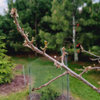
These trees are growing in Barrington Tops NP. Apparently they are in the order Fagales, so they have some realtionship to oaks, birches, hickories etc (even casuarinas)
Wow! I'm so accustomed to Australian flora and fauna being different from everywhere else, that I'm surprised when I hear about a regular North American/Asian/European type plant being native there. What does NP stand for? New Perth? Sherry
Nice trees! Which Nothofagus is this? Usually, Antarctic beech refers to South American Nothofagus antarctica, but I'd guess this is one of the Australian species?
I suppose these are evergreen species? I don't think I recall if Australia had any deciduous species of Nothofagus or not.
misssherry, If this surprises you, what would think if I said there's a genera of tree native to North America(Eastern, Western and everywhere in between), Central America, South America, Europe, Africa, Asia(Western, Eastern, Indian subcontinent, and SE Asia), SW Pacific, and Australia?
and the answer is...
Celtis! Hackberries! In 2005 I believe, the first endemic species of Hackberry was described in Northern Australia(Celtis australiensis), while at least one other more widespread Hackberry species was known to occur there before(Celtis philippensis). Mind you, both of these are tropical evergreen species, but they still look similar enough to American Hackberry species to be recognizable. I find the extremely widespread nature of Hackberries to be quite cool and very interesting. Also, they've just been put into the Marijuana family(Cannabaceae) or in their own family (Celtidaceae) depending on which publication takes precedence.(I believe the one putting them into Cannabaceae does, but not 100% on that)
Hackberries, Kman? What an ordinary tree to have that distinction! When I was researching the "family tree" of hops vines (they're a host plant to several butterflies) I noticed the confusion in the order - at least I think it's the order - of urticales. Hops vines are supposed to be in the marijuana group, too - I thought they'd be in the same group as mulberries, since the leaves are similar. Sherry
Celtis is perhaps best described as pantropical - it doesn't get into cool areas anywhere; I don't think there's any native north of 45°N or south of 45°S.
Nothofagus has perhaps an even more unusual distribution - circum-south Pacific, in southern South America, eastern Australia, New Zealand, New Caledonia, and New Guinea. Also (fossil only) Antarctica (it got a bit cold for them there!).
I believe there are some deciduous Nothofagus in Tasmania... but I never have heard of it in cultivation. I think that would be the better bet for more northernly climates that are unkind to broadleaf evergreens.
Resin, how is Gondwanan distribution unusual? Its not uncommon, as you know.
Celtis occidentalis is native to a latitude of about 51°N. I think surviving -49°F(-45°C)(the coldest recorded temperature in Winnipeg, where C. occidentalis is native) is cold enough to qualify as a "cool" area.
There's about 10 to 15 species of Celtis which grow in temperate continental climates. One interesting note is that many of the old world Celtis are truly tropical, but most all of the new world species which occur in the tropics, only occur up in high altitudes in mountains, making them more sub-tropical to temperate in nature. They also all tend to be deciduous, while the old world tropical species tend to be evergreen. Although, I suspect you might be able to grow a few of the high altitude tropical new world Celtis in lowland tropical areas as well.
The only appreciable land mass further South than 45°S is the Southern tip of South America(OK, 1 tiny sliver of NZ), so not many plants in the Southern hemisphere will fall into the grows South of 45°S.
fledgling, Correct, Nothofagus gunnii is indeed deciduous. I had to look that one up, since I could only think of the South American deciduous species.
philinsydney1, Any idea of which species you photographed?
I guess I've highjacked this thread to a degree, I hope the original poster isn't mad!
misssherry, You are right, the Mulberry family is kind of a mess. As they do more and more genetic testing and studies, hopefully they'll clear it all up. The moving of Hackberries from the Elm Family(Ulmaceae) to the Cannabaceae(previously lumped in the Mulberry Family(Moraceae)) just shows how previous purely morphological based taxonomy could be completely wrong. Nothofagus used to be in the Oak/Beech Family (Fagaceae) until they did some genetic studies which showed Nothofagus is at best distantly related to the Oak/Beech Family.
We have these big rainforest trees called "stinging trees" which are really giant nettles in the Urticaceae family. They have nasty stinging hairs which can iritate for weeks.
Anyhow, here's another picture of N. moorei, which can grow to 45m
I counted 13 species of Nothofagus in my book. Most are native to Australia / New Zealand, or Chile / Argentina. Nothofagus pumilio (Dwarf Chilean Beech) looks like it has great red fall color.
Another great photo Phil! I just wish I had the climate to grow some Nothofagus sps.
I had to look up the Stinging Tree, apparently also called Nettle Tree, and found an interesting article about them. It really seems like you are just bound to be poisoned some how(snake, spider, fish, mammal(platypus, the only poisonous mammal in the world), or plant!) if you live in Australia!
I had to look this one up to check myself, but there's currently 36 accepted species of Nothofagus. Here's the breakdown: Australia - 3 species New Zealand - 4 species New Caledonia - 5 species South America(Argentina and Chile) - 10 species New Guinea - 14 species
New Caledonia is an island group mostly made up by 1 large botanically(as well as ecologically) very important island Grande Terre, 1/2 between NZ and New Guinea in case anyone didn't know.
It appears South America has the greatest diversity of Nothofagus species with species in 3 of the 4 currently defined sections within Nothofagus, while all of the species native to New Guinea fall within 1 section.
Geez, Kman, the article said you could even get stung from the fallout of being around these trees - they shed the stingers. I don't know how common these trees are - maybe Australians need to wear a raincoat all the time? :) Sherry
Another notable rainforest plant is the climbing palm (Calamus sp.) They have whip-like appendages with hooks that seem to delight in attaching themselves to passing humans. Sometimes called "lawyer vines" because once they get their hooks into you, there's no escape.



lucy
MissSherry
Related Professionals
Quincy Landscape Architects & Landscape Designers · Elizabethtown Landscape Architects & Landscape Designers · Lafayette Landscape Architects & Landscape Designers · Muncie Landscape Architects & Landscape Designers · Dalton Landscape Contractors · Effingham Landscape Contractors · Cookeville Landscape Contractors · Plainfield Landscape Contractors · Springfield Home Additions · Oklahoma City Home Additions · Galveston Home Additions · Manchester Home Additions · Merced Home Additions · Las Vegas Home Additions · Butte Home Additionspineresin
kman04
pteroceltis
MissSherry
pineresin
Fledgeling_
kman04
kman04
pineresin
torreya-2006
pineresin
philinsydney1Original Author
torreya-2006
MissSherry
alabamatreehugger 8b SW Alabama
kman04
kman04
MissSherry
philinsydney1Original Author
philinsydney1Original Author
MissSherry
philinsydney1Original Author