Software
Houzz Logo Print
othertime_gw

tree ID, pics

14 years ago

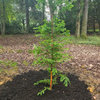
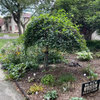
Alright, maybe a shot in the dark with the pictures but it was worth a shot cause these pics are the only ones I have with leaves on the tree.

The tree has a grey/silver trunk with off white splotches on the trunk. The trunk is smooth and does not have ribs like a maple does.

The branches are all huge and are huge all the way to the tip of each branch.

Leaves are 6 inches are long and create a fan appearance on each branch.

The tree was the 1st to loose its leaves this fall.

The tree has very erratic growth patterns and appears to either be a fruiting tree or a magnolia with the size of the branchs from my guess.

Tree is about 30-40 feet tall best guess.

here are some pictures. let me know if want some better pics of the tree with its leaves off. I have to take some tomorrow.

{{gwi:499491}}

with arrows pointing toward branches

{{gwi:499492}}

Thanks,

Sam

Comments (14)

  • 14 years ago

    Staghorn Sumac maybe????

  • 14 years ago

    Tree-of-heaven (Ailanthus altissima) hopefully its not?

  • 14 years ago

    Ditto to Ailanthus altissima.

    Resin

  • 14 years ago

    kill it NOW!!!!!!!

    cut to the ground ... and drip 100 % generic roundup on the stump

    ken

  • 14 years ago

    Better method is to girdle the tree removing the bark from about a 6 inch band; paint the exposed area with full strength Roundup and wait until it is dead; then take out the root.

  • 14 years ago

    Given how profusely Ailanthus tends to sucker, I like Ken's method better...

  • 14 years ago

    If it is Ailanthus, you can still identify it now by examining the leaf scar (which is where the leaf dropped off from the stem). Linked below is a picture.

    Here is a link that might be useful: {{gwi:499489}}

  • 14 years ago

    Its definitely an ailanthus as I have confirmed the leaf scars. There are three more trees within 20 feet of this monster, one is about 20 feet and the other 2 about 10.

    About killing these monsters, I read that I should wait till spring to cut them to the stump then treat with round up. We are almost in the dead of winter (Virginia). Is there a better option of killing the root by waiting till spring or will cutting to stump and roundup kill the root systems? What options do I have?

    another method is the hack-and-squirt or injection method is very effective and minimizes sprouting and suckering when applied during the summer. Root suckering will be an increasing problem in the fall, winter and spring. This method requires first making downward-angled cuts into the sapwood around the tree trunk at a comfortable height, using a hand ax. With spray bottle or wand in the other hand, squirt a straight (100%) concentration of a water-soluble triclopyr product (e.g., Garlon� 3A) into the cuts within a minute or two, applying 1-2 milliliters into each cut (typically 1-2 squirts of a trigger squirt bottle) so that the bottom of the cut is covered, but liquid doesn't run out of it.

    this was from here:
    http://www.nps.gov/plants/alien/fact/aial1.htm

  • 14 years ago

    what is the ideal time? I would think a day after the tree exerts all sorts of energy turning the buds into leaves is when cutting it would do the most damage. That also is when any poison would work the best.

    With the Honeysuckle I spray Round-up, cut, dig/cut and come back with more poison on the new stump or roots. I usually just have Round-up but some other poison designed for stumps has to be better.

  • 14 years ago

    I prefer treating the phloem of freshly-cut stumps with undiluted (typically, 30 to 50% concentration) glyphosate (primary active ingredient in most RoundUp products). If the tree is to be removed anyway, this method seems to me to be the least work and the most effective method. Properly performed, girdling should produce similar results, but has no advantage, that I can think of, if the tree will be removed later anyway. The optimal time for this treatment is fall, before the tree start going into dormancy. But, applications performed just after the tree completely leafs out should work well in most cases too. I've treated a large variety of trees in this manor and have seen extremely few require more than a single treatment. I would even bet that the one I'm thinking of that did require a second treatment was probably treated a day or two after it was initially cut.

  • 14 years ago

    i would do it in late winter.. before it leafs.. it would be easier to cut before the sap starts rising ....

    and then late in summer when it suckers ... hand pruners.. one drop of killer

    and trust me.. you in VA dont know what a winter really is ... lol ...

    power line trimmers kill trees year around ... the roundup.. or any stump killer ... will sit there.. until the tree become active ..

    some suggest that trees really dont go into complete hibernation.. so there is no reason you cant do it whenever ...

    buy some 41% roundup ... and put it in an applicator such as the one at the link ... brand is not important [for he container.. and the generic roundup] ... and simply apply a thin band at the bark phloem interface.. [no need to waste it on interior wood] which is usually the green band i call the cambian ... since you will not dilute it.. put the excess back in the labeled container.. rinse out this one.. and store it for next time... making sure you hide it from the kids ... or mark it appropriately.. though since it will be clean.. it should not matter ...

    no tree hugging for this invasive weed ....

    ken

    Here is a link that might be useful: link

  • 14 years ago

    Great advice guys. I now need to buy a chainsaw to cut these trees of hell down. Any recomendations? Stihl, echo, husqvarna?

    I will have to look up how to identify the phloem interface because I have never cut down a tree. Is it unmistakable once the tree is cut down? When in doubt, I will just apply to the entire stump, not to worried about the waste as long as this sucker does not come back alive.

    This tree resides right on the property line between my yard and the neighbors yard. We moved into the property last summer so we are still identifying trees and such. This tree is about 30 feet from the neigbors septic drain field. He is having some problems with the drain field leaching up into the ground and now I am pretty confident that this Ailanthus roots are probably wreaking havoc on his drain lines.

    If I am unsure of where the tree is located on his or on mine and I have never met the neigbor, should I talk to him about it or just cut the beast down?

    I am assuming that this tree was planted by the previous owners or by this neighbor, but why? Or could this tree just sprouted up by the seeds blowing in the wind and landed where it is and grew up?

    Thanks for all the info!!

    Sam

    Ken, it might not feel like Alaska in Va but we think its chilly comming from Nevada.

  • 14 years ago

    I couldn't disagree with Ken's last post any more (the part about cutting down the tree and treating the stump during winter). I believe doing this in winter would be far, far, far less effective than doing it during the growing season.

    As for chainsaws, you'll get what you pay for. If you want something that will last, go with a Stihl. Husqvarna also makes some good quality saws. But, Echos are like yugos; they're probably OK for very light/limited use, but they are on the low end so far as quality goes.

    As for IDing the phloem, just apply the product to the area right inside the outer bark. In other words, there's no need to apply it to the middle part of the stump (it won't do any good there).

    "If I am unsure of where the tree is located on his or on mine and I have never met the neigbor, should I talk to him about it or just cut the beast down?"
    Do you wanna get shot? ...or sued?

    As for where the tree came from, it's probably a seedling. Once you start looking around, you'll probably notice they are much more common than you had imagined.

  • 6 years ago

    Hack and squirt with Garlon 3 A in July, august, sept depending on zone. Sap is running down then. I do not advise cutting this monster until it’s dead as the roots will live on and continue to sprout. Stump treatment isn’t sufficient with this species. My neighbor tried stump treatment and she’s plagued with sprouts a year and a half later. Never thought I’d use a herbicide until this horrendous plant. I have several stumps from smaller trees (that I unknowingly cut) and they sprouted at the base. I took my hatchet and hacked the sides of the stumps and applied Garlion 3A. No more sprouts.