Software
Houzz Logo Print
sandiegomama_gw

Standard Seedless Kishu

13 years ago

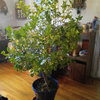
I recently purchased a standard seedless kishu (15 gal) to grow in the ground in my San Diego backyard. After considering many options, I selected the kishu mostly because of the petite fruit that my children love. All of the research I've done shows varying sizes for a mature seedless kishu (3-10 feet). Does anyone have input as to a mature height estimate? The tree is already 3 feet, so I can't imagine this is really the mature height. I was hoping for a tree that would be at least 10 feet, which is why I chose the standard, but my understanding is that the seedless kishu tree (in addition to the fruit size) is smaller than other mandarin citrus.

This is my first time posting on this forum and I appreciate any feedback in advance.

Comments (11)

  • 13 years ago

    First off, what rootstock are your considering "standard"? If you don't know, try to find out from the nursery you purchased your Seedless Kishu at (Anderson's by chance? They will be able to find out for you.) It is relatively vigorous, and tends to grow in a spreading habit. You can always keep it pruned down in size by using drop crotch pruning techniques if the tree starts to get too tall.

    Patty S.

    Here is a link that might be useful: UCR Citrus Collection: Seedless Kishu

  • 13 years ago

    Thank you, Patty.

    The nursery said they use Trifoliata for all of their "standard" citrus. I'm ok with a larger tree. My concern was mostly that the tree might be smaller than I expected, but it doesn't sound like that will be the case. Vigorous growing is my goal.

    Christina

  • 13 years ago

    Well, trofoliate covers quite a few citrus rootstock options, Christina. I'm guessing they probably use Swingle. I would ask them, "which trifoliate?" There are probably 3 or 4 different trifoliate rootstocks currently in common use here in California. Some will produce a standard sized tree (like Swingle), others are more dwarfing. What nursery?

    Patty S.

  • 13 years ago

    Hmmm...that's a little frustrating. Sounds like I'll have to take the "wait and see" approach. It was Evergreen Nursery in San Diego (Carmel Valley neighborhood). I called specifically with the rootstock question, but Trifoliate was the most specific description they could offer me. Thanks for taking your time to answer me. Much appreciated!

    Christina

  • 13 years ago

    I bought a few citrus trees from evergreen. Their employees are not very knowledgeable in regard to rootstock. I couldn't even get them to give me a name.

    I have noticed that some of their citrus trees have tiny rootstock tags on the bottom of the tree trunk. Most of the time they fall off and are in the dirt around the base of the tree. The next time you are there it might be worth checking the other standard Kishu trees (smaller 5 gal are more likely to have it) to see if you can find one of those tags.

  • 13 years ago

    It's going to take it a few years to get to its maximum size, so you have plenty of time to live with it and watch it grow. You can top it to keep it from getting too large. Ten feet sounds about right to me, but of course, that's just an estimate. I've only seen one citrus that had the rootstock identified. That was a cara cara orange that I just planted, and found a tag identifying the rootstock as Flying Dragon, which is wonderful, that will keep it pretty small. Smaller than the standard trifoliate.

  • 13 years ago

    Christina, ask Evergreen where they buy their trees from. Find out the supplier, then contact the supplier. If you can post the supplier, I can most likely tell you what the "standard" rootstock might be. There are a few growers that consider C35 "standard" trifoliate rootstock. Durling is one grower that does. C35 is a trifoliate, but not a "standard" rootstock at all. In fact, it is more dwarfing than either Troyer/Carrizo. But, it is also an excellent rootstock choice for us in S. California that have issues with Phytothphora. It is much more resistant, and it creates a nice, compact, precocious, early bearing tree. Call Evergreen and ask who they buy their citrus trees from. I'm thinking it is probably either Durling's or possibly Clausen's. Tom, I've had the same issue with Evergreen in Oceanside, although I do love their huge stock and good prices. Just have to do a little homework ahead of time with their citrus. One of the better places for citrus for us in San Diego county is Walter Andersen's or Armstrong. Pricey, but they do know citrus pretty well (although one of the fellows at Walter Andersen's in Poway thought C35 was a "Carrizo hybrid", which it is not. Completely different hybrid rootstock cross).

    Patty S.

  • 13 years ago

    Thanks for all of the comments. I went to Evergreen again today. I didn't see the post about the name of the supplier until tonight. I still can't get a straight answer about the rootstock, but one of the managers told me that the kishu I bought should reach 14 feet, based on the growth pattern of other kishus grown with this "standard rootstock." That was the biggest issue for me. I just wanted to make sure I have a tree that has a good chance of being more than 10 feet tall. I also want a dwarf gold nugget and none of the other citrus growers seem to have it. Evergreen told me they will have them in a few weeks and they promised me a more accurate answer regarding rootstock on that one. Thanks again!

    Christina

  • 13 years ago

    Christina, check Walter Andersen's for a Gold Nugget. Won't be on "dwarf" rootstock - that's very hard to find - but you'll certainly be able to find it on semi-dwarfing rootstock (i.e., Carrizo/Troyer, or C35). If Walter Andersen does not have one in stock (that would be unlikely), let me know and I can point you in other directions here in SD county :-) And, why would you want a 14' tree? Better to keep your trees within "picking" height. I'm not a fan of getting on a ladder to pick fruit, very dangerous. The number one cause of injuries (serious/fatal) in the home involves a ladder. I'm a nurse, and a gardener, and my philosophy in my garden is "no ladders needed". The only reason to have a citrus tree over picking height would be for screening purposes?

    Patty S.

  • 13 years ago

    Thank you, Patty. Yes, I wanted a partial screen given the close proximity to my neighbors, but perhaps keeping it around 10 feet is still a good idea. I too am a nurse and your point is well taken. I will look at Andersen's this weekend.

    Christina

  • 13 years ago

    Citrus make very nice screening trees, and you can keep your Seedless Kishu to 10' by drop crotch pruning. And, after having to get up on a ladder last week to put up a netting structure around my cherry trees, I realized the value of my "no ladders" rule in my garden, lol! More than once I nearly took a header, due to the uneven ground. If your rootstock in standard and trifoliate, most likely in our area (our commercial tree growers) would be Swingle. The Seedless Kishu trees at the UC Riverside Citrus Variety Collection were probably 15 to 20' tall, so no worries on getting enough height. I've included a very nice PowerPoint presentation done by Tom Del Hotal, the past-president of the San Diego chapter of the CRFG. Tom is an absolute expert with regard to fruit tree pruning. If you have any questions at all about how to maintain proper tree size, canopy for screening, etc., Tom is the person you'd want to contact. He is great, and really, really knows his stuff. He has his own business and also works in the retail nursery industry. Also, Walter Andersen does carry both semi-dwarf and standard trees. Gold Nugget is a vigorous, mostly upright and moderately large tree, naturally, so I would suggest getting your tree on a semi-dwarfing rootstock, or you're going to end up with a 20' tall tree at maturity.

    Patty S.

Sponsored
Peabody Landscape Group
Average rating: 3.5 out of 5 stars8 Reviews
Columbus' Reliable Landscape Design & Contracting