Software
Houzz Logo Print
kenzie_pom

Grapefruit - Sooty mold perhaps - help please

21 years ago

Hello Ya'll:

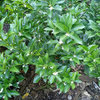
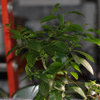
I need some help please. This is a close-up picture of my grapefruit tree. She came with the house. She was grown from seed.

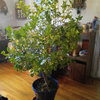
She is now as tall as the eaves on the second story of the house. I think she is pretty healty. I have fruit this year so that is good.

I have been able to locate about 14 fruits. I am really new at citrus. Any help would be GREATLY appreciated. Here are my questions:

1>Can someone please help me identify the exact type of grapefruit tree this is?

2> I am concerned about the white spots on the leaves. Sooty mold? What is the best way to get rid of it?

3> I am not on a fertilizer schedule. I did use citrus fertilizer sticks earlier in the summer. What is the best to use and on what schedule?

4> I need to cut back some of braches that are touching the house. When is the best time to do this?

Thank you very much for all the help.

Have a great week. Happy Growing.

{{gwi:620030}}

Comments (20)

  • 21 years ago

    The white spots on the tree's leaves certinly are not Sooty Mold. Sooty Mold is (as the name applies) a black mold like growth that can cover the major portion of the leaf surface. The amount of fertilizer that you apply to a citrus tree PLANTED IN THE GROUND depends on the tree's age. As your tree is producing fruit it is at least 5+ years of age and has entered the mature stage. The normal application for mature fruit trees is 1.1 to 1.5 pounds of nitrogen/tree/year applied over three applications. One applicaion in the early fall, followed by a second application in the late spring and a third in summer. In your area the three common fertilizer formulations for citrus trees being grown in the ground are 6-6-6, 8-8-8 and 10-10-10. A good application range for fertilizer formulation 6-6-6 would be 6-7 pounds per tree three times a year. For 8-8-8 apply 4.5 to 5.5 pounds per application per tree three times/year, and for formulation 10-10-10 apply 3.5 to 4.5-lbs./tree/application three times /year. You can prune unwanted branches any time of the year. - Millet

  • 21 years ago

    The white spots look more like powdery mildew -Millet

  • 21 years ago

    The white patches are egg masses and crawler webs of immature whiteflies. If allowed to mature, you will get the "real" sooty mold. An insecticide labeled for whitefly would be appropriate.

  • 21 years ago

    Dr Manners..Does Whiteflys affect the entire U.S. or are they confined to the lower states..Dale

  • 21 years ago

    Dr. Manners great thread. Here in Colorado I have never had any sort of problem with whiteflies on any of my citrus. Kenzie, your photo was EXELLENT and very clear, so after Dr. Manners identified the problem, I then downloaded the picture from my computer over to a Xerox color copier that I have. It came out great, and I put it in my citrus file. Thanks to both of you. - Millet

  • 21 years ago

    This is new to me too. Thank you very much for clearing this for us. Me, too have downloaded the picture as for future reference and at this moment my 3 tomato plants are being attached by white flies-seems like thousands of them and I am killing them by the thousands with Malathion spray. But I don't know where they are coming from, they keep on coming.

  • 21 years ago

    I don't know where all in the country whiteflies are a problem. In Florida, we have 4:

    Citrus whitefly -- the major one, and the one likely on your leaves in the photos. Tiny, pure white, always on younger foliage.

    Cloudy-wing whitefly -- very similar, but if you look closely, the wings have a darker, not-quite-white area on them.

    Wooly Whitefly -- definitely not the one in the picture. Affects mostly grapefruit, nearly always on older leaves only, and just a few insects at a time -- never the great clouds of them that you see of the first two species. Body much larger than the first two.

    Citrus blackfly -- Weirdly named; it is a whitefly with a pale gray-blue body. But the immature stages are black. Potentially the worst of the bunch, with the ability to kill a tree, but under excellent biological control in Florida, so never considered a problem worth spraying for. Indeed, when someone complains to me about having them, I always ask what they've sprayed lately, and in every case, they've been using some high-powered organophosphate insecticide, which has wiped out the beneficial parasites.

    Who knows -- maybe there are other whiteflies affecting citrus in other states. From the pics, I cannot guarantee which species you have.

    Malcolm

  • 21 years ago

    Well, looking at the pic again -- it could actually be wooly wf. These are, after all, grapefruit leaves, and it looks like older leaves affected???

  • 21 years ago

    Hello Ya'll:

    Dr. Manners - The egg masses and crawler webs appear to be on older leaves only. I have new leaves on the tree. They do not appear to have the problem/infestation. They look healthy. Thank you for all your information. I would hazzard to guess it is the wooly w f.

    Kenzie

  • 21 years ago

    Better not fertilize after July 1. Too late and the tree won't go dormant

    Here is a link that might be useful: mrtexas

  • 21 years ago

    But what is the BEST insecticide, pesticide that can control the whiteflies? Malathion only helps very little. One that will kill the eggs and larvae too.

  • 21 years ago

    I am looking for an insecticide/pesticide that would be easy to apply. The tree is quite tall. I think the best would be a "mix with water" and spray. Maybe the kind of applicator you attach to the end of a hose. Any suggestions on brands and application methods would be more than welcome. Thanking you in advance.

    Kenzie.

  • 21 years ago

    I looked up at the internet how to get rid of whiteflies and this is what I found:
    The following materials are listed in order of efficacy, but their use may not be compatible with the preservation of natural enemies.

    A. IMIDACLOPRID
    (Admire) 2F 16-24 fl oz 21
    COMMENTS: Effective against all whitefly species, but it is suggested to target primarily silverleaf whitefly with this material. Do not apply more than 32 fl oz of product/acre/year. Do not apply to vegetables grown for seed. Repeat applications of any neonicotinoid insecticide (e.g., acetamiprid-Assail; imidacloprid-Admire, Provado; thiamethoxam-Platinum) can lead to resistance to all neonicotinoids. Alternate neonicotinoids with an insecticide that has a different mode of action to help delay the development of resistance.

    B. PYRIPROXYFEN
    (Knack) 8-10 fl oz 14
    COMMENTS: An insect growth regulator. Effective against immature whiteflies only. Repeated tank mixes of this product with orthene may cause leafminer outbreaks.

    C. OXAMYL*
    (Vydate L) 2-4 pt 3
    COMMENTS: Apply in sufficient water to obtain uniform coverage of foliage. Use low rate for light infestations and high rate for severe infestations. This material works best in combination with endosulfan for the control of whiteflies.

    D. ENDOSULFAN*
    (Thionex) 3EC 0.66 qt/100 gal 2
    COMMENTS: Apply in 100-200 gal water/acre. Do not exceed 6 applications/year or a maximum of 4 qt/acre/year. Ground application recommended. Availability in many areas limited because of label restrictions for fields near waterways.
    Can anyone tell me how can I obtain/buy anyone of those treatment iether be at the store or mail order?

  • 21 years ago

    insecticidal soap works also.

  • 21 years ago

    Imidacloprid is available at garden centers (note that I did not hilight that word, and I resent advertisers' being permitted to hijack my postings!) under various names -- read the fine print, and look for products made by Bayer. I believe it is not labelled for use on bearing trees, so you should remove the fruit before applying. It's fairly safe to handle and is usually soil-applied, so easy to apply. There are sprayable forms as well.

    Pyriproxifen -- I've not used this. But insect growth regulators (IGRs) often badly affect the parasite population, so in general are not popular.

    Oxamyl -- very effective, but VERY toxic to people, so likely not available without a restricted applicator's license, and even then, likely not legal for use in a home garden. I'd avoid that one.

    Endosulfan -- have not used that one either, nor is it commonly used on Florida citrus.

    Jean is right that insecticidal soap works. Be aware that it can also burn the leaves, so try it more diluted than the label suggests, at first.

    Spray oils are excellent for killing whitefly, but I'd avoid an oil this late in the year, since they also reduce cold-hardiness, and a grapefruit in Alabama is already lucky to be alive in that regard!

    Unless you're losing large numbers of leaves, my recommendation would be to do nothing. WWF is never a significant problem here, due to heavy parasitization, as long as you haven't killed off their parasites and predators with other sprays.

    You asked about identifying your grapefruit. Difficult without actually looking at one, but here are some suggestions:

    white seedy -- Duncan
    white seedless -- Marsh
    pale pink, seedless, not even the slightest hint of pink in the albedo (white part of the peel) nor on the surface of the peel -- Thompson

    medium pink, seedless (seedless means 6 or fewer in grapefruit), slight pink blush to the albedo, and often a slight pink blush to the surface of the peel -- Ruby Red (a.k.a. Redblush)

    Much deeper red, seedless, large open core area, bright pink albedo and definite, strong blushing on the peel -- Star Ruby

    Like Star Ruby but with a smaller, less open core area -- Flame, Henderson, Ray, or any of a number of other newer varieties.

    Another key to Star Ruby is that at least some of the leaves on the tree will have pale yellow to white patches on them, resembling some type of herbicide damage.

    There is no good method, using leaves, flowers, tree habit, nor green fruit, to tell them apart.

  • 21 years ago

    Thank you Dr. Manners. You are much helpful.

  • 21 years ago

    Dr. Manners, And anyone else annoyed by the double lined links causing slow loading pages and troubles with going to threads and using back button. Here is how I STOPPED that!!! put curser over a double underlined link don't click.. wait for box to pop up.. in the upper right hand side of the box it will say "What's this" Click that.... new page will open. on that page close to the bottom of the page is a place to click to get rid of the stinkin double underlined words. it will put a cookie on your puter and any time you dump you cookies you will have to do it again.. But it is worth it!!! at least it was to me.. GW pages are loading better for me.. faster and I'm not having trouble with the back button or clicking on thread links.. I also sent them a "review" of their services. although not a bad idea. the "glitches" have almost caused me to quit GW. I don't mind the ads. after all that is how they pay for the pages.. but something that causes slow page loading and various other little problems is not good... I'll include the link that I used to get it off. but I don't know that it will work properly..
    Hope this helps!!
    Gina *BabyBlue*

    Here is a link that might be useful: What is IntelliTXT- AKA where to turn double underlined words.

  • 21 years ago

    Yes. Thank you very much Dr. Manners. Thank you as well Gina *BabyBlue* for the double line help. Ya'll take care. Happy Growing. Kenzie.

  • 21 years ago

    Followup to everyone's help. Katrina got my grapefruits. Found ten of the fourteen. No idea where the others ended up.
    Please keep the people of the Gulf Coast in your thoughts.

    Thanks ya'll.

  • 21 years ago

    I couldn't find any link on the page to get rid of the underlines. Am I looking in the wrong place?
    It took me to the ivillage feedback page.

    Tom

Sponsored
Peabody Landscape Group
Average rating: 3.5 out of 5 stars8 Reviews
Columbus' Reliable Landscape Design & Contracting