Software
Houzz Logo Print
lorna_organic

produce?

18 years ago

Does anybody else grow produce? I found onion sets in a store today. I bought two bags, 80 yellows and 80 reds. I did some more reading on companion planting. I read that corn doesn't like to be grown near onions. That must be why my corn did so poorly last year! I had them next to each other. BTW, I also read that corn and tomatoes don't like to be planted near each other.

It was 60 degrees in central NM today, sunny and beautiful. I was outdoors burning the piles of grasses I cleared out last week. Tomorrow I'm going to plant onions and a packet of kale seeds, and I have some bags of steer manure compost to dig in. Kale likes cool weather so I am going to give it a try. It is early yet, but all of the tulips have sprouted. Hopefully it will be warm enough to sprout the kale.

Lorna

Comments (14)

  • 18 years ago
    last modified: 11 years ago

    I have several types of heritage pole bean seeds which I plant every year Cherokee Trail of Tears, an italian pole bean which someone brought over from Italy some years ago and another called Tung after a chinese gardener who brought the bean seed over from China way back when. I keep and grow a french shallot that a dear friend who is no longer with us gave me about 10 or so years back and I keep a lovely Croatian lettuce going by keeping seed every year. This lettuce is IMO the best lettuce I've ever eaten, love it done up with a little olive oil, balsamic vinegar and just a smidgen of minced shallot. I haven't found a open pollinated determinate type tomato that I like well enough to start saving my own seed yet so keep on planting Celebrity which does very well for me and I love the flavor.
    I still grow a few British Sovereign strawberries, this is an old timer that isn't in the trade anymore. I like to keep my own seed and therefore do my bit in keeping these heritage types going. I've been growing the same italian beans since 1966.
    We have a Tulameen raspberry bed, the berries are very large but I still think I like the flavor of Willamette better.

    Annette

  • 18 years ago
    last modified: 11 years ago

    We love our veggie garden! My dh does most of the work back there but there is always plenty for me to help with when I get the flowerbeds squared away.

    We grow French filet beans (YUM!), lots of tomatoes of various kinds, peppers, yellow squash, zucchini, onions, cucumbers, okra, cantaloupe, watermelon, and eggplant. Last year we tried corn but our sandy soil was too loose to hold the stalks erect long enough to harvest (weird, huh?). This year we are trying some "cool weather" crops like sugar snap peas and brussels sprouts and dh says he is going to plant potatoes, too. I know he has seeds for carrots.

    We are trying to get some blueberries started. I'd love to have raspberries and blackberries, too, but haven't gotten around to it.

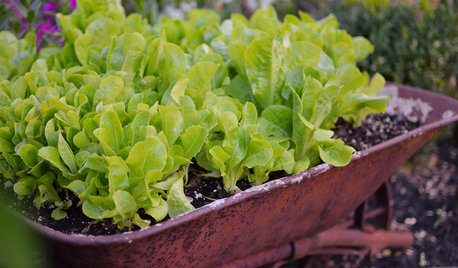
    I grow lettuce in a big half barrel on the upper deck - very nice to go out and cut just enough for a fresh salad! I have a herb garden in containers on the lower deck. I've found they grow best for me in that protected spot and they are very convenient for harvesting as needed. This spring we should be able to cut asparagus for the first time. The plants have been growing for 3 years now and should be strong enough. VERY excited about that!

    I have a good recipe for zucchini bread and we can and freeze a lot of the produce for use during the rest of the year. And, of course, there is always plenty to share with friends.

  • 18 years ago
    last modified: 11 years ago

    Sure, Lorna, I produce a little produce every summer. I grow most of the usual stuff for my area: radishes, peas, lettuce, spinach, beets, beans, sweet corn, carrots, tomatoes, potatoes, onions, winter squash, and pumpkins. I haven't heard of the onions vs. corn thing, or tomatoes vs. corn, but I'm the first to admit that I don't know much about companion planting. It's hard to know how much of it is sound advice, and how much old-gardener's tales.

    Being a little bit of a skeptic, I do wonder about how plants could have very much effect on each other just by being within a few feet. I could understand it better if they were interplanted in the same rows.

    Corn is known to be a pretty heavy feeder. Is it possible that there wasn't enough soil fertility in your corn patch?

    ThinMan

  • 18 years ago
    last modified: 11 years ago

    Yes, I have/had a big veggie garden in the back yard. I usually grow, peas, cucs, onions, radish, lettuce, beets, beans, carrots, parsnips, potatoes and tomatoes. I try squash and peppers but the season is never long enough.

    Since we added the greenhouse I grow the tomatoes, cucs, green peppers and speggetti squash in there. Last year I also tried some pole beans in there and that drew hummingbirds into the greenhouse.

    There is also asparagus and strawberries in the veggie garden and last year I moved the 2 blueberry bushes into there.....then a friend gave me 2 more blueberry bushes. These bushes if they survive the move will have this year and maybe next year to produce....if not they are out of there. I also have 2 kinds of red raspberries and one yellow kind...along the other side of the deck and along the shed.

    This year the back yard veggie garden is going to be turned into mostly a dahlia and a controlled wild flower garden. Of course the blueberries, strawberries and asparagus will still be in there......and I will also plant lettuce in with the flowers.

    The greenhouse this year will have tomatoes and cucs and maybe a few other things. I haven't really decided yet.

    Sierra

  • 18 years ago
    last modified: 11 years ago

    The heirloom seed saving is very cool, Annette. I am impressed that you've been working with the same Italian beans since 1966.

    TM, the idea of companion plants makes sense to me in terms of chemistry. I am mostly interested in companion planting for the purpose of repelling insect pests. Basil and naturtiums are listed as being extremely good for repelling a variety of pests. Borage repells some insects, and it also adds potassium and calcium to the soil making it a beneficial plant for others which need that stuff. Beans provide nitrogen so they are benficial for nitrogen loving plants.

    I've got grapes, strawberries, blueberries, asparagus, garlic, shallots, onions, arugula, tarraagon, oregano, thyme, and one artichoke in place now. I'll be planting seeds for corn, chilies, yellow and orange peppers, cantaloupe, honeydew, lettuce, limas, kale, French green beans, carrots, various squash, beets, radish, basil, and parsley. I've got some organic fingerling potatoes I'm going to use for seed potatoes. I'll buy one plant for Japanese eggplant. I saved some seeds from last year, but most of the seeds I'll be using were purchased.

    I had a bumper crop of excellent green chilies a couple of years ago. I planted them in a place which I had heavily composted with fresh horse manure the previous year. Last year I planted the chilies elsewhere, and only got about ten chilies! The plants were producing, but the chilies were not good. I think it was a mixed problem. I planted them next to squash, which attracted a pest beetle. When the beetles had decimated the squash, they moved onto the chilies. Also, I think the soil wasn't as good for them. I don't remember how well I fortified the soil last year, so I am not sure about corn.

    I'm going to be planting radish and nasturtium with the squash this year in hopes of warding off those horrid beetles, and the chilies will be planted in the area where they did best. I am going to do the Three Sisters (Native American) method of planting corn, squash and beans together.

    Sierra, I was given a small Kahili ginger plant many years ago. I planted it in the yard (California). It grew well, but it didn't produce any flowers. In spring of the fifth year, I stood over the plant, and told it if it didn't bloom that year, I would take an axe and hack it out of the ground. It produced many magnificient, fragrant blooms that year and ever after. Coincidence?!

    Lindakimy, there are smaller varieites of corn, which only grow about tree feet tall and produce small ears. Maybe you'd like to try that type.

    It is another beautiful day in central NM. I think the sun is strong enough to justify wearing a floppy garden hat. It has been such a relief to be able to work outdoors! I didn't realize I had so much pent-up energy to work off.

    Lorna

  • 18 years ago
    last modified: 11 years ago

    Lorna, after the dreadful time dh had trying to get the corn to stand back up after a windy thunderstorm last summer I am surprised he even eats corn!! LOL Personally, I think we should wait until we expand the size of the garden before we try corn again. It does best when you grow a lot.

    I'm very interested in what you wrote about nasturtiums and radishes to discourage the bugs on squash. We had a bad time with squash vine borers last season - not nearly our usual crop because they killed the plants so quickly. I did a quick search and read a little. We'll have to try that, too. We already plant marigolds throughout the vegetable garden - very pretty whether it helps or not.

  • 18 years ago
    last modified: 11 years ago

    Lorna said TM, the idea of companion plants makes sense to me in terms of chemistry.

    Great, I'd love to talk chemistry. Are you familiar with any chemistry behind the idea that onions can affect nearby corn plants? How does that work?

    How about the borage? I'm wondering where it gets the potassium and calcium that it adds to the soil? I have an idea how it might happen, but I'd like to know for sure. What are your thoughts there?

    Thanks, Lorna.

    Better living through chemistry, :-)
    ThinMan

  • 18 years ago
    last modified: 11 years ago

    TM, I don't know the answers to the questions you posed. I suppose borage produces calcium and potassium because of the particular nutrients borage prefers. I think onions put off a sulphur gas. I believe I read that somewhere. Maybe roses like that gas, and corn does not. If plants are in competition for the same nutrients, if for instance (and I'm not saying this is how it is) corn and onions were both heavy nitrogen feeders, perhaps that would make them poor companion plants.

    You know a heck of a lot more about chemistry than I do. None of the lists or articles I have read about companion planting give any citations.

    I copied this from Organic Rose Gardening:

    "A symbiotic relationship is a relationship that is beneficial to all participants in the relationship. Mycorrhizal fungus creates an important symbiotic relation with roses and other plants. Mycorrhiza attaches itself to the roots of your roses and other plants. It uses some of the carbohydrates stored by your plants to grow, but helps your roses and other plants by making minerals more available. In a healthy soil environment, the mycorrhizae attached to one of your roses will grow and become interconnected to the mycorrhizae of other roses and plants. In effect, it provides a secondary root system for your garden plants.

    Roses and other plants also release exudates from their roots that attract beneficial organisms. As an example, exudates from rose roots attract friendly bacterium that ward off pathogenic fungi.

    Beneficial soil organisms, which are found in natural humus and compost, also make minerals more available to your roses and other plants. Beneficial soil organisms also help protect roses and other plants from predatory life forms.

    Another important thing to understand is that plants of all kinds are a little bit like humanssome get along very well and some donÂt. Some plants grow well together and actually help each other survive. Other plants inhibit neighboring plants. Plants that grow well together are referred to as companion plants. Companion plants are an important factor in any garden. We will talk more about them later.

    Organic growers recognize that pathogenic attacks are an indication that the plant or plants are out of balance. Organic growers know that pathogens canÂt get a foothold on a healthy plant.

    Commonly used chemical fertilizers, herbicides, and pesticides destroy soil organisms and throw roses, flowers, and other plants out of balance. The imbalance created by these chemicals attracts pathogens...

    Companion Plants
    Once you have decided on the roses you like, you need to learn about companion plants. Roses really do love garlic, as well as other plants of the onion family. Onions are of the order Asparaginales and family Alliaceae. The onion family is made up of 500 species.

    Although planting garlic in your rose garden will help protect your roses, there are many other onion varieties that will protect your roses and also provide beautiful flowers to enhance your roses. Marigolds, mignonettes, and thyme are also good companions for roses.

    When you are deciding on companion plants for roses, check to see when they bloom. Other characteristics, such as texture and height, should also be
    considered before deciding on your companion plants.

    An excellent book on companion planting is Roses Love Garlic by Louise Riotte."

    Lorna


    Lorna

  • 18 years ago
    last modified: 11 years ago

    Thanks a lot, Lorna, for your answer. It seems to be difficult to find many details about how plants affect each other, and I wonder if maybe there hasn't been much research done yet. Maybe the agricultural colleges are spending their research dollars on other things. Too bad, because I think this is really interesting and wish I knew more about it. I appreciate your trying to give me a hand.

    Happy gardening,
    ThinMan

  • 18 years ago
    last modified: 11 years ago

    Oooo...I hope that goes for garlic chives, too. I planted some around my oldest rose last year just because I thought it looked nice there. Maybe I should add more around the others.

    I read last year that onions and green beans should not be planted close together. That was two days after dh had planted a row of onions right next to the filet beans. It didn't seem to cause problems, though. We had a huge crop of filet beans and the onions were fine even though he picked them up for next to nothing because they were old.

    The whole subject of plant interaction to benefit growth or health is still pretty new to me. We do always watch out for the possibility of problems concerning flavor - sweet peppers that are hot because they were planted too near the jalapenos or watermelons that don't taste right because they were too close to the cucumbers. That has resulted in our vegetable garden spreading out into "outpost" patches for certain plants in other parts of the property.

  • 18 years ago
    last modified: 11 years ago

    Thin Man, try this link, below, the scientist's email is provided at the end of the article. There are more articles on the right side. Good reading for a sleepless night?!

    MeMo

  • 18 years ago
    last modified: 11 years ago

    Good link, MeMo. The abstract was interesting, but unfortunately, they didn't give away any details. For those, I'd have to pay thirty bucks to get the whole article, and I'm not quite that desperate for soporific reading material. Still, there was enough there and in some other abstracts to show that there is apparently some research going on in the area of plant-to-plant communication. It seems like that kind of info would help us to understand something about companion planting.

    Thanks for giving me a helping hand.

    ThinMan

  • 18 years ago
    last modified: 11 years ago

    I have gradually been moving from a mostly ornamental garden to one that combines beauty with utility. In my eyes that is a true cottage garden. At first it was just cooking herbs, then my husband's tomato patch, then some experiments with squashes and beans. Last year it was a couple of grapevines and this year we are putting in an orchard. The roses, shrubs, bulbs, perennials, they are still there, dominating the front and side garden. In the back the vegetables and fruit trees take over. I think they are all beautiful.

    Some of the forum members here have stunning kitchen gardens. Perhaps some will post pictures. they'll knock your socks off.

    Rosefolly

  • 18 years ago
    last modified: 11 years ago

    I agree, Rosefolly, that a mix of flowers and produce makes for a very interesting garden. I think the Japanese eggplants are very attractive plants. The chili plants are such a vibrant green. When the chili fruits go red, they are eyecatchers. Squash flowers are gorgeous.
    It is so much fun to walk around with garden scissors and a basket collecting stuff, then deciding what tonight's meal will be depending upon what was collected.
    Lorna

Sponsored
NME Builders LLC
Average rating: 5 out of 5 stars2 Reviews
Remodeling Company in New Albany, Ohio