Software
Houzz Logo Print
teresa9663

Bald cypress issue

12 years ago

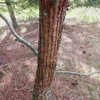
We have an issue with some Bald Cypress, Pond Cypress and Dawn Redwood trees. A month ago (mid August) we started noticing some of them looking a bit yellow. Upon close inspection of all we found that a lot have what appear to be injuries to the trunk. There are large areas where the bark is no longer attached to the trunk, these 'wounds' range from very narrow and short to 2 or 3 feet long and some are half way around the tree. We peeled away a few and found that on all there is healing at the edges. Some have weeping areas ( appears to be dried), most don't. The majority are on the east and south side of the trunks, no branches are affected. The very young trees are not affected. No other conifers are affected.

Could this be winter/sun scald injury? As you know last winter was brutal. We are in the northern Shenandoah Valley in Virginia. Could these trees be hit because they loose their needles in winter?

Please tell me this isn't some horrid disease!

The pictures are here (sorry, couldn't figure out how to post them).

http://trtlrock.smugmug.com/Cypress/

Thank you!

Here is a link that might be useful: Bald cypress

Comments (13)

  • 12 years ago

    I believe exfoliating bark is a normal characteristic of Taxodium distichum. Could this just be normal?

  • 12 years ago

    very old injuries ... no clue what ... some healing shows on some pix..

    7th pic.. looks like some type of borer holes ...

    i had a z4 winter in my z5 MI.. IMHO.. last winter had nothing to do with this ...

    at your photo site.. look for HTML codes... and paste them where you type.. on preview.. if you see them.. we should also ...

    probably time to talk to your COUNTY extension office... ask for a referral to the forester ...

    this is not normal in any sense of the word...

    ken

  • 12 years ago

    I have never seen that on these. Exfoliating bark is normal but this is torn xylem and phylum.

    Are they all on the east side of the trees?

    Any signs of critters?

  • 12 years ago

    Thank you all for the responses.

    No critters present. We suspect the borers and other insects are all secondary.

    And yes, most injuries on the south and east sides.

    Ken, you said this looks like older injury. We did have an October snow in 2011 that was heavy and these trees all had their needles on. Could it be injury from that far back? Although a few of the trees were not here yet (but perhaps were grown where the conditions were the same).

    Anyway, next step is getting some people out who may know what this is, including a forestry person. The problem is that not many people grow these trees around here, so they don't know the issues.

    I will let you all know what we find out.

  • 12 years ago

    Some of that damage looks almost too severe for a buck-rub, but it could be. When did you first notice it? Could it have occurred last autumn?

    Pretty sure it's not cold damage -- I'm a bit northwest of you and had no damage on any of my bald/pond cypresses or D redwood.

  • 12 years ago

    There doesn't seem to be one cause for all the different types of damage.
    Mike

  • 12 years ago

    It's not buck rub, I'm all too familiar with what that looks like. Most of these trees are too big around for that anyway.

    Beng, you are very close to us. Do you have a good number of all three of these trees? Did you have the heavy wet snow in Oct. 2011?

    We just noticed the damage a month ago, but it does look like old injury. I don't know how old though.

    The property is sited along a large creek and has lots of seeps and springs, so these trees are well suited to the site. Being a low area it is typical to be 5 or more degrees colder than surrounding areas.

    Anyway, we are mystified.

  • 12 years ago

    Sounds similar to my stream-bordered, low lot at ~900 ft elevation. I have 13 seed-grown baldcypresses in the soggy primary floodplain, 3 pondcypresses & a dawn redwood in the higher, upper floodplain that is well-enough-drained. The BCs don't grow as fast as the others since the soil there has little oxygen. D redwood is 30' tall & a foot diameter at the ground after 10 seasons.

    The 4"-wet snow in late Oct, 2011 actually did much more damage than the 36"-snow in Feb 2010 -- mostly because leaves were still on the trees. It bent my 15' silver maple so the top was frozen onto the ground! None of the redwood-family trees were permanently hurt, tho.

    If those aren't buck-rubs, then I'm stumped. Looks like physical damage instead of sun-scalding. Never seen sun-scalding on a redwood-type tree, but plenty on young soft-maples.

    Got an obsessed squirrel that likes to chew on redwood-family trees? Or a porcupine?

  • 12 years ago

    Nesting behavior. A critter learning to go after that nice relatively soft flaky bark. Somehow I have scratches on a crab apple. Perhaps a squirrell trying to run up it. Who knows. Man. All facing more or less the same way though....

    If you ever figure it out, let me know.

  • 12 years ago

    I have some similar damage/injury to my bald cypress, like what is shown in your pics 1 and 7. The damage on my trees is about 8 ft from the ground on 18 ft(ish) trees, all on the ESE side. I noticed the injury this summer when I saw sap oozing from strange narrow "lifted bark" wounds in the trees. The bark has since flaked off the areas in question, and now they appear to mostly be healed/healing. Much less severe than some of what you are seeing, so I wasn't going to worry about it unless it got worse. I assumed the issue with my trees was caused by the severe ice storm, that damaged many trees locally in coastal NC. I am always amazed at how flexible my bald cypress are during hurricanes and tropical storms, and the ice storm was no different. They were completely coated with ice, and the upper 1/2 of each tree was almost bending to the ground from the weight. A strong NW wind blew to really get things mashed up with the weight of the ice.

  • 12 years ago

    Ice can cause stress cracks.
    I see it here once in awhile, up in the foothills SE of Seattle.
    Where are you located?
    I also get deer and elk rubs during the Fall rut season.
    Look what an elk did to one of my prize Japanese maples. He has since gone after that blue Sequoiadendron in the background even though I stacked branches from another tree around it after the picture was taken.
    He also messed with a Pinus bungeana.
    Looks like I'm gonna hafta get rid of the salt block my kid put out. ;-)
    Mike

  • 12 years ago

    Good God! That elk rub makes me glad we don't have elk here!

    Well, we've had several knowledgeable people out to look at the trees and the consensus seems to be that it is not a pathogen, but is most likely injury caused by weather events, probably more than one. As we cut the loose bark away it became evident that there were different stages of healing going on. So it appears that for whatever reason these trees are susceptible to winter injury here. They all appear to be healing nicely, so we'll just keep them clean and wrap them for the winter to protect that bare trunk a bit, and see what happens!

    Always something new to learn!

  • 12 years ago

    Teresa, I agree the trees will recover, assuming no more damage occurs . But they will grow much more slowly than before.

    I'm still flummoxed by the extent of that damage. Like I said, only thing similar I've seen are buck-rubs, but not that magnitude. But, you see Mike's damage. Like Mike's damage shows, there's often a "dig" visible right in front of a buck-rub, at least right after it happens.