Software
Houzz Logo Print
bill_mn_z3b

2026 Summers end update (Mostly newer Conifers).

last month
last modified: last month
This is basically a continuation of the 2025 report posted HERE:

Some of those trees no longer exist or were covered in their own thread already, so this will be the ones that are left and a couple new ones. 😉

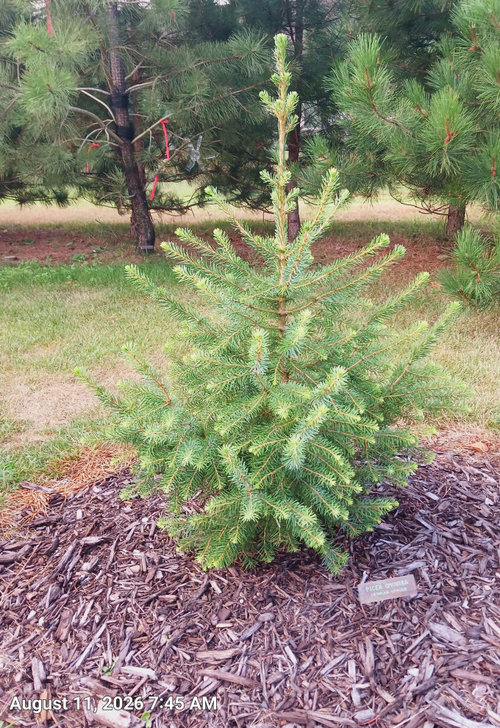
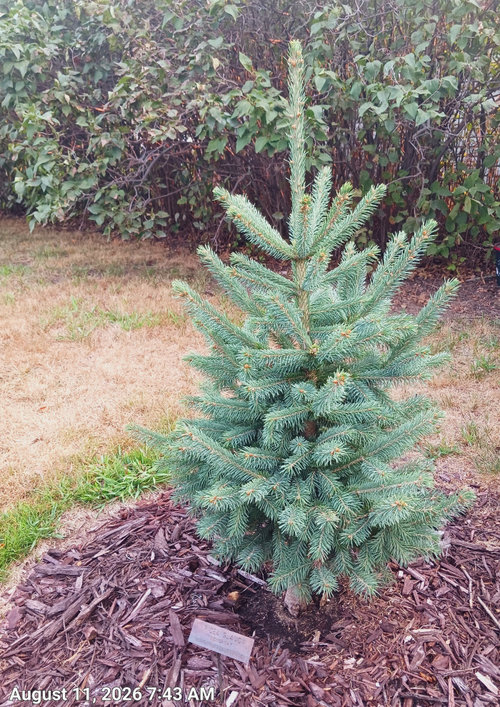
Picea (Glauca) Densata: Black Hills spruce.

Another 10" this year on the main leader. 34" tall.

This one too had some frosted sprouted buds, earlier from the April thaw/freeze but not nearly as bad as some of the other spruce here (beginning to look like a tree you would buy in a 3 gal. pot.


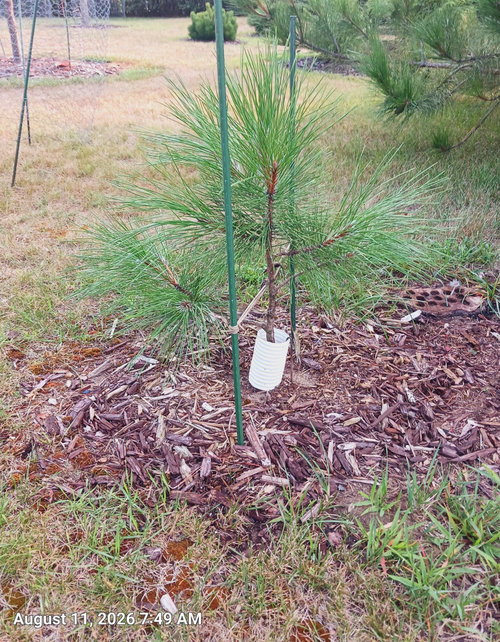
Pinus Resinosa:

Not as much length of growth as I expected but 4" new growth on every branch.


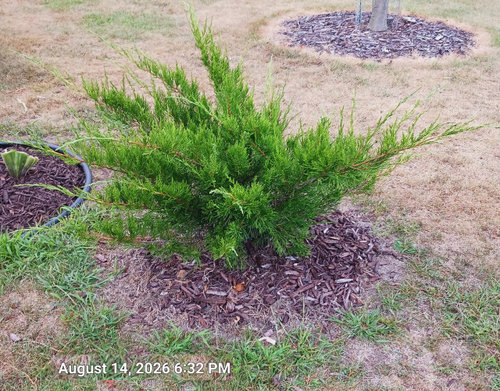
Juniperus Chinensis 'Sea Green'. Good growth!


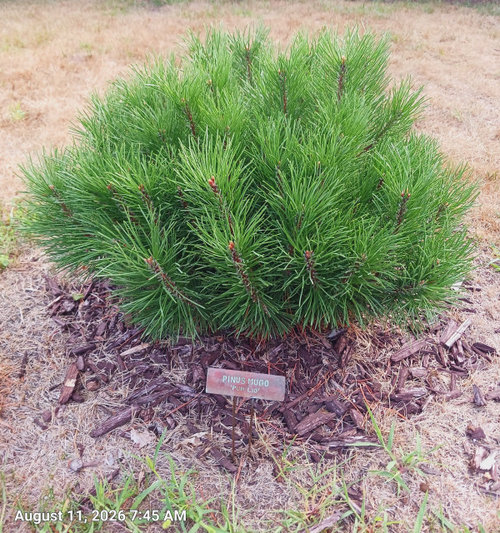
Pinus Mugo 'pumilio'. One of my newer Mugos. The rest are fine and growing good!


Picea Omorika #1: 36" tall after a 14" leader spurt this spring, that may be still going.

Nice recovery after being pot bound for who knows how long?


P. Omorika #2: Appears to be doing about the same as #1 did last season.

2" of overall growth (I had to screen many of my newer trees bc newer neighbors are'nt aware of the local lease laws).


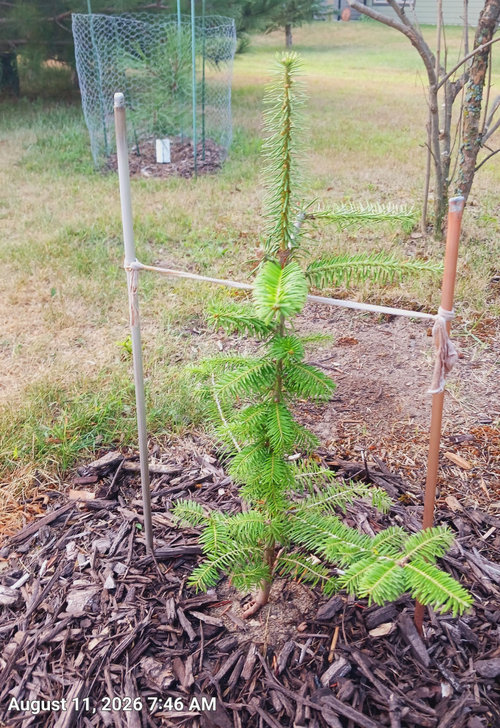
Abies Balsamea var Phanerolepis (West Virginia Fir).

New this season. Small pop band purchase early May.

20" tall with 6" new growth leader. woohoo! 🤣


Pinus Mugo 'Tannenbaum':

Newest addition. Is another Nursery 'back lot' pot bound rescue.

33" tall. New growth varied from 2" to 1/4" on different branches.

It made candles for new growth on even the most moribund little branches, some candles as little as 1/8" L.

but flushed with full length needles even being so short.

For $30 otd, I couldn't help myself. 🫤


And not to forget the J. Squamata 'Blue Star'.

It ended up in my new 'planting bed' where its slow growth was a prerequisite for acceptance.


;-)

Comments (11)

  • last month

    Ah, I remember those days. Thanks for the pics.

    tj

    BillMN-z4a thanked tsugajunkie z5 SE WI ♱
  • last month

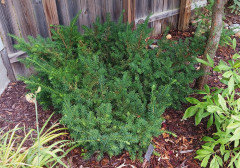
    Hicksii Yew: Not new but had a bad last couple of winters

    .

    Ended up chopping the winter damaged top off.

    No fert, no supplimental water. It grew a little but we'll see how it does next season.

    Maybe next time around, it will have a more mature root system and fare better. 🤞

    >>>>>>>>>>>>>>>>>>>>>>>>>>>>>>>>>>>>>

  • last month
    last modified: last month
    Yes, Terry.

    My Taunton yew has been thriving.

    The first few years after planting, it withstood winters, without snow cover, in full, direct sun with little or no damage, so it's a keeper.

    The last few years, the Japanese Tree Lilac has grown wide above, shading it, it doesn't seem to mind that at all.

    Even back when deer were a problem in my yard, I never noticed any browsing on this one and of coarse, it's one of the few 'rabbit proof' shrubs one can own. 😏


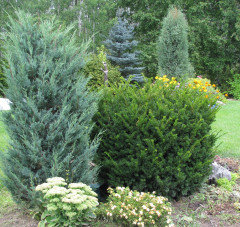
    Tauntonii yew:


    I did see a Morden for sale a couple years ago but with an already full cart and few spots left for planting (not to mention a high asking price) I passed.


    The Hicksii in the earlier post above is out of sight, in the far back corner near the red pines and yeah, it most likely will be removed once I get tired of seeing it dead above the snow line.

  • last month

    It's interesting that the Taunton yew, a cross between English and Japanese yews, is so cold-tolerent.

    BillMN-z4a thanked bengz6westmd
  • last month

    Yeah, could it be some seed diversity from plants used for the hybrid?


    It's in a wind protected spot there, but being close to the house (warmer soil), the snow doesn't accumilate and could help with survival, idk.


    I don't keep pictures from 'way back' anymore < BUT THIS LINK > has the the history and pictures when first planted.


    It's under the drip edge of the house so every little shower waters it, even a heavy dew.


  • last month
    last modified: last month
    Bill, thanks for the update on 'Taunton', is looking good there!

    Bengz6, I had been concerned of the hardiness of 'Taunton' and intentionally placed it along the sidewalk and drive where snow gets heaped piled high over the specimen. Now, though, three winters ago was of low snow totals and a brutal January brought the coldest temperatures in 40 some years down to a whopping -45 F ... I had believed for sure those exposed tops were lost to it all ... but, not even a speck of damaged sustained!

    Here's 'Morden Upright', wants to be a big thick dense fella, had grown to 4 ft across and was given a substantial whack back two years ago, the selection would make for very desirable nothern hedging material!


    BillMN-z4a thanked FrozeBudd_z3/4
  • last month

    The only other Taxus I own now is T. canadensis, I grew from cuttings.

    Located in 2 places, one is between the lilac hedge and garden shed.

    Quite a bit of dappled sun in the Fall.

    #2 Taxus c. is in the same bed as the Tauntonii.

    It does okay here but must be something different at this location bc it never appears to be as lush and dark green as the #1 t.c. above.


  • 27 days ago
    last modified: 27 days ago

    9-14-2026:

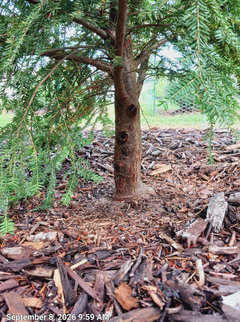
    Tsuga Canadensis:(2)

    I might as well tack these here. 😉

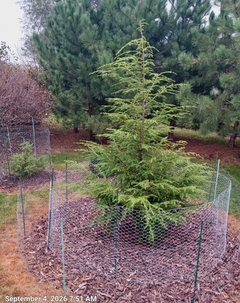
    TC1

    Did fine considering a very dry spring and early summer followed by heavy rain and 2" hail.

    It's only 7ft. tall bc the 14" nodding leader broke off sometime late during the growing season.

    The double chicken wire was to avert the influx of brown thrashers, thrashing. 😏


    The trunk is beginning to have the same gnarly look as the tree I pulled in '23.

    But it will be another season to reach the same maturity as that original tree.


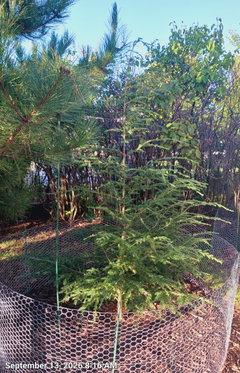
    TC2

    Is a little taller than TC1 but growing in a shadier spot, it's not nearly as full in form.

    It is a full year younger than TC1 so that can be expected.

    I'll do some more trimming on the Red Pine (left) next season, to let more sun shine in.


    The trunk appears less mature too and I removed some lower branches to add winter varmint protection, same as TC1.


    So, I'd say they're both established, after about 5 years in the ground from seedlings but not that big of a tree, either one, so I'll probably still have to keep an eye on bc T. canadensis is known for lack of drought tolerance, and we get some real doozies for dry spells around here.

    Just have to see what next season brings.

    ;-)

  • 17 days ago
    last modified: 17 days ago

    9-24-2026:

    A FWIW update on a rainy day.

    Winter preparations for my plantings has begun. As I've mentioned before, why wait until it's no longer nice outside, to begin work that's more pleasant to do when tempertures are above 60's and sunny with out wind?

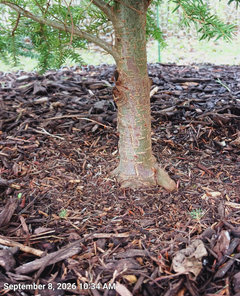
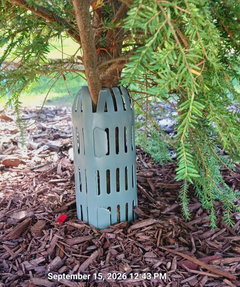
    I've continued to use some sort of protection around the base of smaller trees during winter, to deter mice and voles from burrowing through the snow, along the top of the frozen ground, eating the green grass as they go until they reach a tender young tree and gorge themselves on the thin, tasty bark, girdling and sometimes ruining/killing the tree completely.

    Even though since using wood mulch around the base seems to stop the foraging and causes a change of direction in their journey, I just don't want to take that chance, on what I've experienced several times in the past.

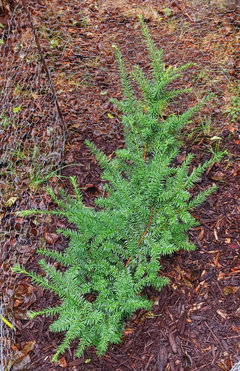
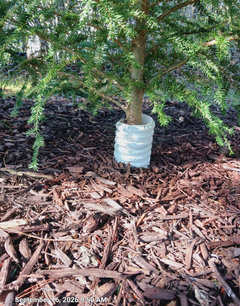
    T. canadensis #1.


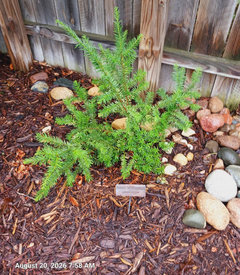
    T. canadensis #2.

    The sleeve above doesn't fit on this smaller tree and I've use HD aluminum foil in the past but I have plastic tree protector on hand).


    My winter protection regiment has diminished greatly from what it was just a year or so ago (yah!).

    I no longer have plants that haven't proved to be 'winter hardy' and many of the smaller, 'rodent candy' trees and shrubs are no long small 'seedlings' that have to be protected.

    So, with that said, here are a few shrubs/trees of mine that still may need sun protection and/or varmint protection this winter coming.

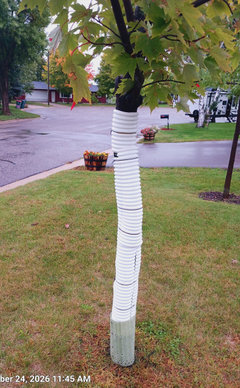
    Acer rubrum:

    4" caliper.

    This one experienced sun scald last winter, not real bad and I had it 'tree tubed' but I'm not sure if it was because the tree tube I used was colored with a greenish translucent hue and that's what caused the trunk to heat up more readily, or if red maples truly are a worthless piece of junk tree that's to be avoided. 🤣

    Anyways, it's helping with front yard shade until some of my other trees grow larger so I thought I'd protect it once again this winter, using a white colored tube, with the option of someday removing the tree altogether. Another so called experiment. :-))


    In the same category.

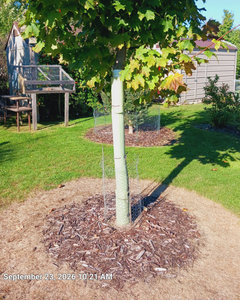
    Acer Saccharum:

    This season, at 4" caliper, it was a toss up if it even needed sun protection, but the bark, although getting some thickness to it, still isn't 'furrowed' at all, and I have noticed some healthy, larger maple trees with sun scald wounds in town (still healing) and would hate for this one to scald, when protecting it one more year is so easy to do (it's the tube with the greenish hue but considering everything, I'll risk it). ;-)


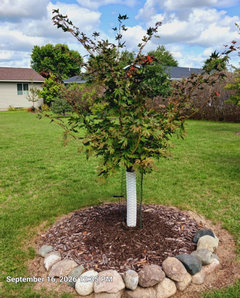
    Acer pseudosieboldianum:

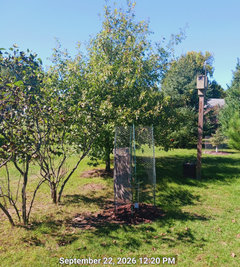
    Not much to do on this one anymore. It's tall enough I just used a sun tube (chicken wire's been on almost all summer for rabbits and bucks).


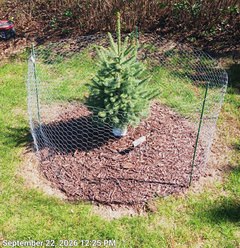
    With all my shrubs, I used 2ft. chicken wire cylinders. not so much because the might get nibbled, but lately there's been so many roving dogs and tom cats using my plants for a place to relieve themselves, and I did have rabbit caused damage on my Norway spruce last winter when the snow was deep and animals were getting desperate for something to eat. Also, my smaller trees have a chicken wire cylinder to prevent 'buck rubs' (I've never had a white spruce 'sun burn', ever, for any reason).

    Picea (Glauca) 'densata':


    >>>>>>>>>>>>>>

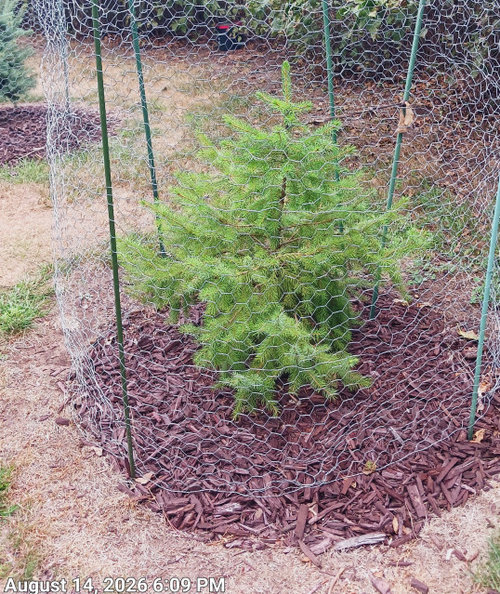
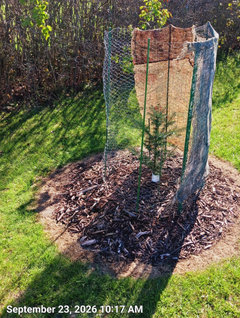
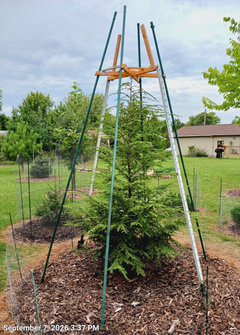
    I did sunshade the Abies Nordmanniana because I have no idea if it would still be sensitive to 'winter sun/frozen ground syndrome'. So why not? Helps buffer the wind too.


    The Canaan fir is in it's own little heaven.


    The Picea Omorika (2) are getting shade already from the 'Pine Grove' so nothing to see here. 😉


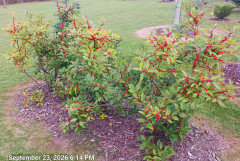
    And, for the first time ever this year, I'm not protecting the winterberries at all.

    They're big enough they should be able to take a beating and still recover.

    The only way I'll know for sure is to try it but different years can be different. :-)


    And let's not forget protection for the Hemlocks (like that would happen). 🤗🤭

    Hemlock #2 (the smaller of the two), came through last winter with flying colors.

    So, that one is on it's own with no extra, artificial shade enhancements (I promise).

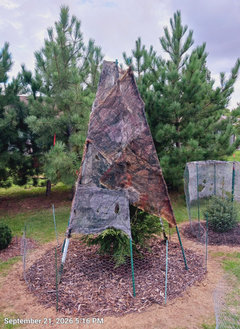
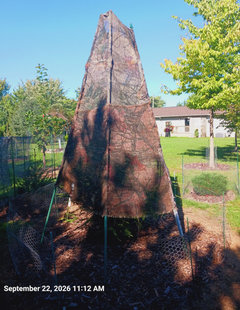
    #1 Hemlock (older/larger) was a bit concerning. I had removed the one red pine and one white pine that flanked the P. ponderosa, thinking with the 2 to 3 foot annual growth of that tree, it would have easily filled the gaps left by the trees that were removed (plus a height gain).

    Well, after the sapsucker attack, the tree only put out a foot, at most on the branches, leaving a little more sun exposure on that Hemlock than I'm comfortable with during late winter (also the remaining flanking trees will take a while to increase growth energy into those now open areas after growing in the shade for years).

    So, not wanting to buy more materials to construct a taller 'sun shade' mechanism for maybe only another year (or two), I revamped the upper frame, making it a 6 pole structure and used the 8 broken, 6-1/2 ft. L. poles to make into 6, 9-1/2 ft. L. poles (much easier to assemble but the 'T' posts were the limiting factor for height, 7').


    I don't think I needed a 'Full Shade' enclosure, so I used well used burlap to cover parts of it (to allow UV sun in) and left the lowest burlap probably 3 ft. off the ground hopefully for earlier sun exposure and ground thaw.


    The shade isn't totally absent but I'll feel better when it reaches to the top of the tree inside, and right now, there's a couple of pronounced sunny 'V's that pass by daily, where the two pines were removed, so when I get all day partial shade, I'll be ready to let this one go.

    This is the time of year, the sun angle closely matches middle of April when the frost goes out and all is good, so, I can get an idea of what will work for next spring. The goal here is, all day, part shade or filtered sun. It's been a process but I like challenges. ;-)


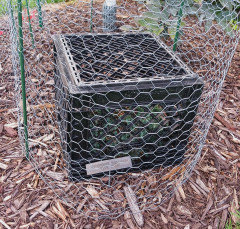
    eta: Juniperus Squamata 'Blue Star':

    I'm trying a milk crate this time.

    Lets light in, supports snow pack.

    What could go wrong? 😏


    So that's about it (until I think of something else haha)! A couple nice days out in the yard none the less. :-)

  • 12 days ago
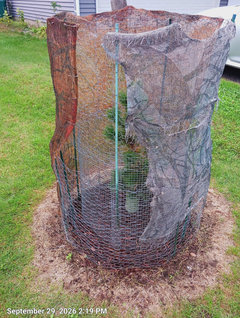
    Just a few last minute additions.

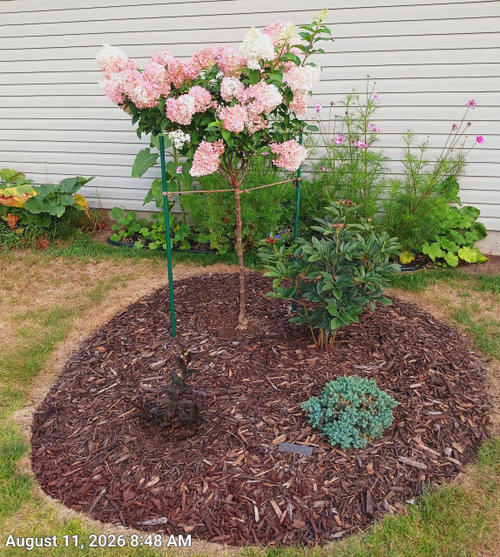
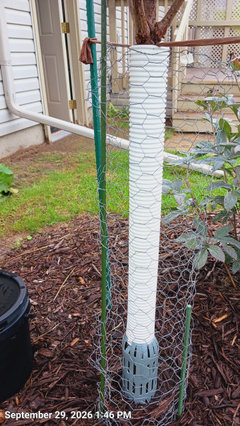
    I couldn't find any credible information on whether or not a tree hydrangea is subject to winter sun scald. So, being it's a new planting and quite thin in stature and in full, all day sun, I can't take a chance. On goes a tree tube.


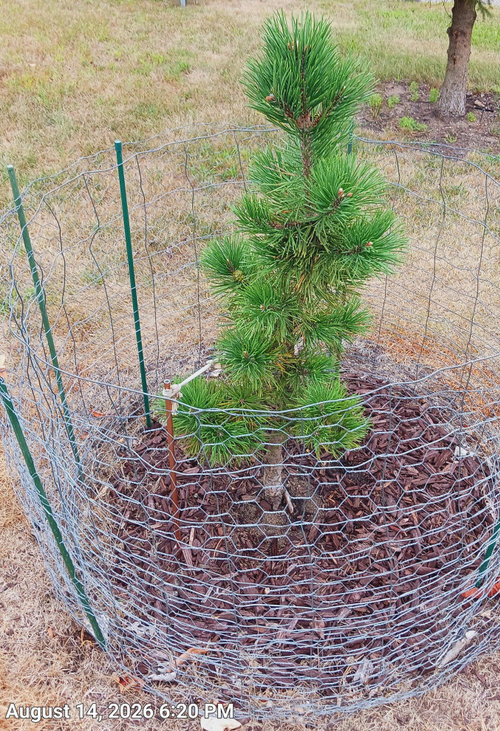
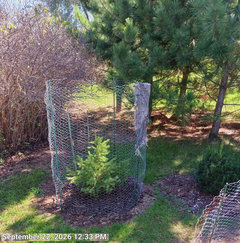
    The Tannenbaum pine was a potted, now first year in the ground, transplant this llast spring and is in a very windy, wide open location, so gave it a little wind break and sun shade, at least for this first winter.


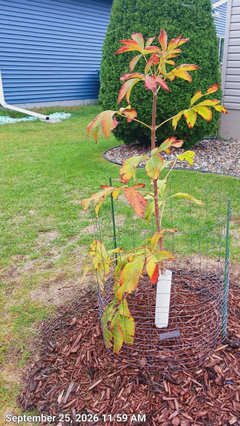
    Aesculus glabra, almost a Fall color candidate.

    The wire cylinder is more for a chance of a buck rub than anything.

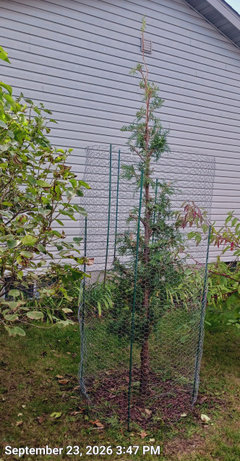
    Thuja occidentalis, got a severe pruning after I noticed a lot of competing leaders from the side branches, so I installed a 6ft. high chicken wire cylinder around it just in case a deer would decide to make a salad bar out of it.


    That's really about it for this season. Time for a vacation. 😌